Written by your expedition advisors

Chris Commisso · Expedition Expert
Signature Travel Expert
Erika Commisso · Travel Experience Architect
CLIA Elite Cruise Counselor · ASTA Verified Travel Advisor · Signature Travel Expert
Chris and Erika have sailed ten expedition voyages and toured seven more expedition ships. Favorite explorations so far: Antarctica, Svalbard, Greenland, Iceland, Norway, Alaska, the Galápagos, the Scottish Hebrides, Churchill and French Polynesia.
Last updated . Reviewed against 2026-27 operator schedules and AECO guidance.
You pay the same as booking direct. Here’s how we’re paid.
At a glance
- Two seasons
- Expedition cruising late May to early September; Northern Lights late September to late March
- Main regions
- Svalbard, Arctic Norway, Canadian Arctic, Franz Josef Land. Greenland, Iceland and Alaska have their own guides
- Typical trip length
- 8-12 days Svalbard; 12-16 days for Northwest Passage or multi-region crossings; 5-7 nights minimum for an aurora trip
- Main gateway
- Longyearbyen, Svalbard — the northernmost town in the world. Also Tromsø, Norway
- Governing body
- AECO, the Association of Arctic Expedition Cruise Operators
- Headline wildlife
- Polar bears, walrus, Svalbard reindeer, Arctic fox, beluga and bowhead whales, puffins, guillemots and Arctic terns
- Midnight sun
- Up to 30 days of continuous daylight around the June solstice; 187 days at the North Pole
- Penguins
- None. Penguins live only in the Southern Hemisphere
- Aurora trip length
- Book at least 5-7 nights to allow for cloud and low activity
- Physical demand
- Moderate. Zodiac landings on uneven rock and tundra; aurora trips are far less demanding
What Is an Arctic Expedition Cruise?
An Arctic expedition cruise is a small-ship voyage through the high northern latitudes, most commonly around Svalbard, sailing from Longyearbyen in search of polar bears, walrus, glacier fronts and seabird cliffs. Voyages typically run 8 to 12 days between late May and early September, when sea ice retreats enough to allow navigation. Days are spent on Zodiac cruises and tundra landings, guided by naturalists and armed polar bear guards.
The Arctic is an ocean surrounded by land. Antarctica is land surrounded by ocean. That single geographic fact explains most of the differences between the two trips, and it is the first thing we say to anyone who has done one pole and is considering the other.
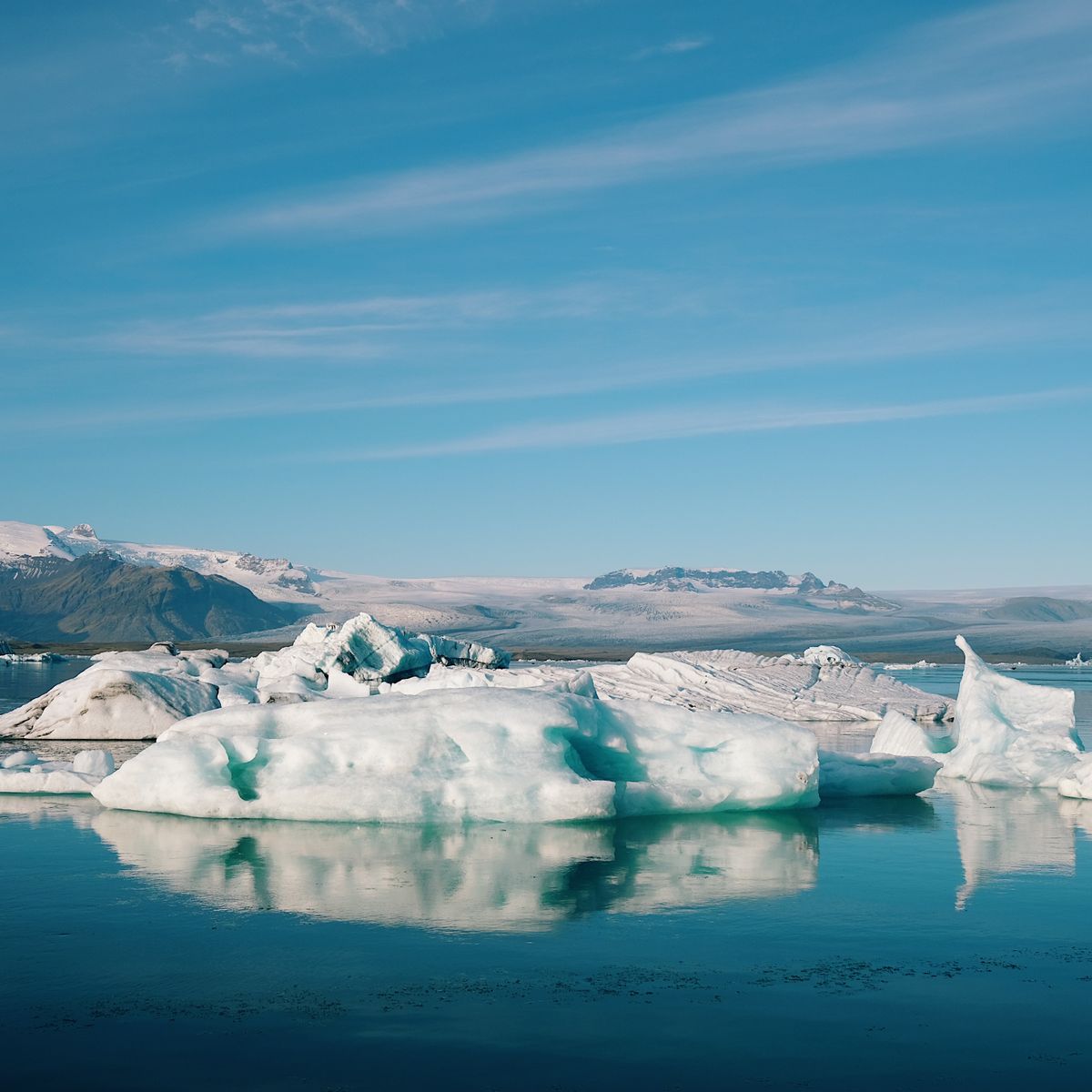
The Arctic Ocean covers roughly 14 million square kilometres, about twice the size of Australia, and most of that is drifting sea ice that ebbs and thickens with the seasons. Ships work the margins of it. In late May the ice still sits low enough that a vessel may spend a whole afternoon nosing along a floe edge; by August the same coastline is open water and the ship reaches further north instead.
Unlike Antarctica, there are towns here, and airports, and mining history, and people. Roughly four million people live in the Arctic, about 10% of them Indigenous, and their presence changes the character of a voyage: you may land at a research station, walk through a settlement, or listen to a lecture given by someone who lives at 78° north rather than visits it.
The ships are similar in size to Antarctic vessels, but the rhythm differs. There are more shore walks and fewer mass landings, longer stretches of ship cruising along glacier fronts, and a constant watch from the bridge. On a good Svalbard voyage the announcement you are waiting for can come at any hour, because in midsummer there is no night to wait through.
On this site, the Arctic covers Svalbard, Greenland, and the Canadian Arctic and Northwest Passage — there is no separate Canadian Arctic hub.
Where Exactly Is the Arctic, and Which Part Should You Visit?
The Arctic spans eight countries: Canada, Greenland, Iceland, Norway, Finland, Sweden, Russia and the United States. For expedition cruising, most travelers choose Svalbard for the highest polar bear density and easiest access, Arctic Norway for fjords and winter aurora sailings, or the Canadian Arctic for the Northwest Passage and Inuit communities. Greenland, Iceland and Alaska are distinct enough to warrant their own trips.
Svalbard, Norway
The default first Arctic voyage. Longyearbyen is the northernmost town in the world and the gateway for almost every summer sailing. Pack ice, glacier fronts, walrus haul-outs and the best polar bear odds anywhere.
Known for
polar bears, midnight sun, walrus
Arctic Norway
Tromsø, the "Gateway to the Arctic," plus the fjords and the Lofoten islands. Works in both seasons: summer coastal sailing and winter aurora voyages with Sámi cultural experiences and whale watching.
Known for
aurora, fjords, Sámi culture
Canadian Arctic
The Northwest Passage, Baffin Island, and Inuit communities. Longer, more committing voyages with genuine historical weight and far fewer ships.
Known for
Northwest Passage, Inuit culture, narwhal
Franz Josef Land
Russian high Arctic, reached on longer Svalbard crossings when permits allow. Among the most remote coastlines that expedition ships visit.
Known for
extreme remoteness, walrus, basalt columns
Churchill, Manitoba
Not a cruise destination but the "Polar Bear Capital of the World," and a strong land-based alternative for bears, belugas and aurora.
Known for
land-based polar bears, beluga, aurora
Greenland, Iceland and Alaska
Arctic by geography but distinct trips in practice, each with its own season, logistics and reasons to go.
Known for
In practice, most first Arctic trips come down to a short list. Svalbard is the default because the logistics are simple — a scheduled flight via Oslo, a night in Longyearbyen, and you are aboard — and because the wildlife density around the archipelago is unmatched anywhere you can reach on a scheduled sailing.
Arctic Norway is the region that works in both seasons, which makes it the answer for travelers who want the aurora on a ship rather than from a lodge. The Canadian Arctic is the committing choice: fewer departures, longer voyages, real historical weight, and communities that receive very few visitors.
Greenland, Iceland and Alaska are Arctic or sub-Arctic by geography, but they behave as separate trips with their own seasons and logistics, so we keep them on their own pages: Greenland, Iceland and Alaska.
When Is the Best Time to Visit the Arctic?
It depends entirely on which Arctic you want. For polar bears, walrus, seabird cliffs and the midnight sun, sail between late May and early September, when the ice opens enough for ships to navigate. For the Northern Lights you need darkness, so travel between late September and late March. These two seasons do not overlap, and no trip delivers both.
The expedition season
Late May-June
Ice at its most dramatic
Heavy pack ice still in place, so bear sightings on ice are at their best. Seabird cliffs filling. Snow still on the tundra. Some northern routes not yet navigable.
July
Peak access
Ice retreats and ships circumnavigate Svalbard when conditions allow. Walrus haul-outs active, tundra flowering, chicks in the cliffs. The busiest and priciest weeks.
August
Longest reach
Maximum open water and the deepest northern penetration of the season. Strong whale activity. Good balance of access and availability.
Early September
Season's end
Autumn colour on the tundra, the first darkness returning, and the earliest chance of aurora on a late sailing. Fewest ships.
The Northern Lights season
Late Sept-Oct
Shoulder
Darkness returns while temperatures are still moderate. Fewer crowds. Equinox periods often bring strong geomagnetic activity.
Nov-Dec
Deepening dark
Long viewing windows each night. Polar night begins in the far north. Coldest-feeling months for many visitors.
Jan-Feb
Peak darkness
The longest nightly viewing opportunities of the year, and the classic aurora window. Pair with dog sledding and snowmobiling.
March
Best odds overall
Long dark nights combined with more stable weather and returning daylight for daytime activities. Many advisors' preferred month.
These are genuinely different products, and the most common mistake first-timers make is expecting one trip to deliver both. Around the June solstice, north of the Arctic Circle, the sun simply stays above the horizon — for up to 30 days depending on latitude, and for 187 days at the North Pole. That is wonderful for wildlife viewing and fatal for aurora hunting; the lights are still there, but the sky never darkens enough to see them.
Conversely, an aurora trip in January puts you in exactly the right darkness and the wrong season for a ship-based wildlife voyage. Svalbard in deep winter is polar night, the harbour is frozen, and the expedition fleet is thousands of miles south working the Antarctic season.
Within the summer season the month matters more than people expect, and it is usually the fastest way to narrow an operator list. If ice and bears are the priority, we push clients earlier; if reach and whales matter more, later. A fuller month-by-month breakdown lives in when to visit the Arctic, and the aurora season is covered in the Northern Lights guide.
What Are Your Chances of Seeing Polar Bears in the Arctic?
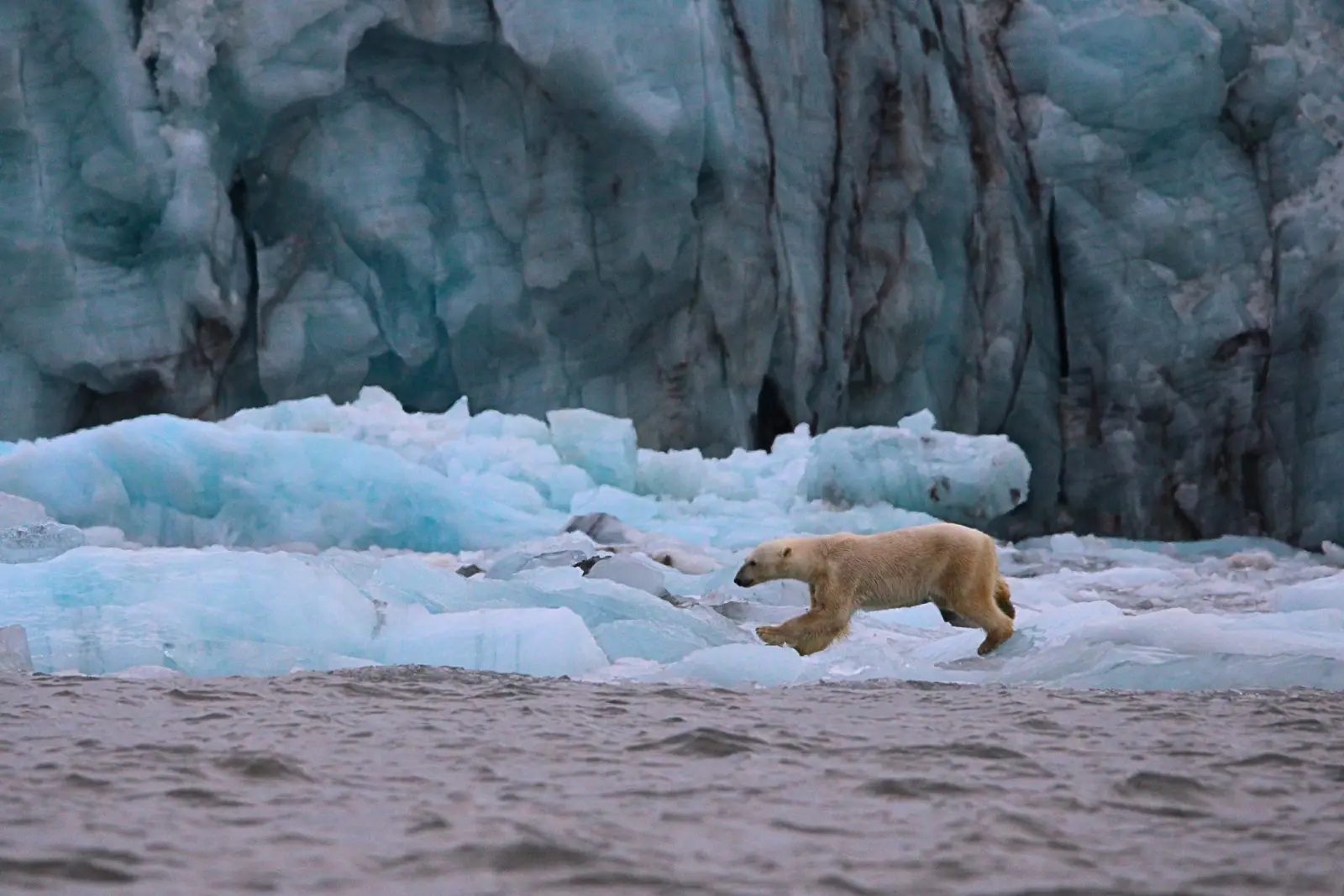
Svalbard offers the best polar bear odds of any accessible Arctic destination, and most summer voyages there record at least one sighting, though no operator guarantees it. Bears are usually seen at distance from the ship on pack ice rather than on landings. Early season sailings, when ice is still extensive, generally produce better encounters than late-August departures.
Polar bears are found only in the Arctic. They are the largest land carnivores on Earth and hypercarnivores — over 70% of their diet is meat, mostly seals — which is why they belong to the ice rather than to the shoreline. Cubs are born about the size of a guinea pig in snow dens in the depths of winter, and emerge in spring already able to follow their mother onto the sea ice.
With sea ice in rapid decline the species is now classified as vulnerable. That is part of why AECO conduct rules and responsible operator choice matter here rather than being box-ticking: approach distances, engine noise and the decision to turn a ship away are all judgement calls made by the bridge, and good crews make them conservatively.
We would rather be honest with you than sell the picture on the brochure. This is a wildlife sighting, not a zoo. Some sightings are a cream-coloured smudge two miles off on a floe, watched through the ship's scopes for an hour; some are a young bear working a seal kill four hundred metres away while nobody on deck says a word. The bridge is manned continuously, and the best encounter of a voyage often comes at 2 a.m. under full daylight.
Ashore, every landing party in Svalbard carries armed polar bear guards. That is a legal and practical requirement, not theatre, and it shapes how landings work: guides sweep and post a perimeter before guests step onto the tundra. More detail sits in the polar bear guide.
What Other Wildlife Will You See in the Arctic?
Beyond polar bears, expect walrus hauled out in groups, Svalbard reindeer, Arctic fox, and enormous seabird colonies of puffins, guillemots, kittiwakes and Arctic terns. Beluga, bowhead and minke whales are regular. Svalbard reindeer are so unbothered by people that they wander through the streets of Longyearbyen. There are no penguins in the Arctic.
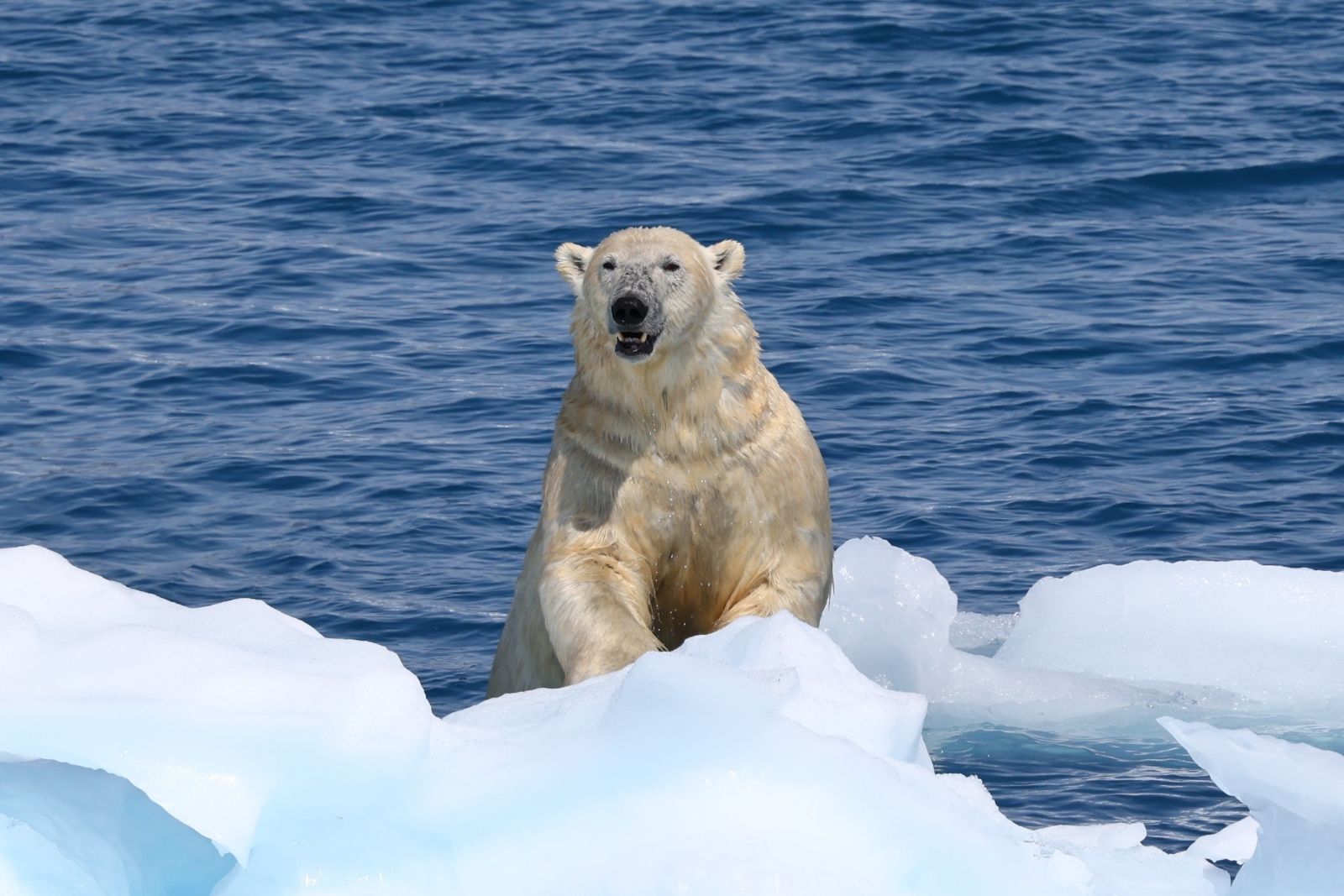
Polar bears
Found only in the Arctic, and only reliably from a ship on the ice. Svalbard gives the best odds.
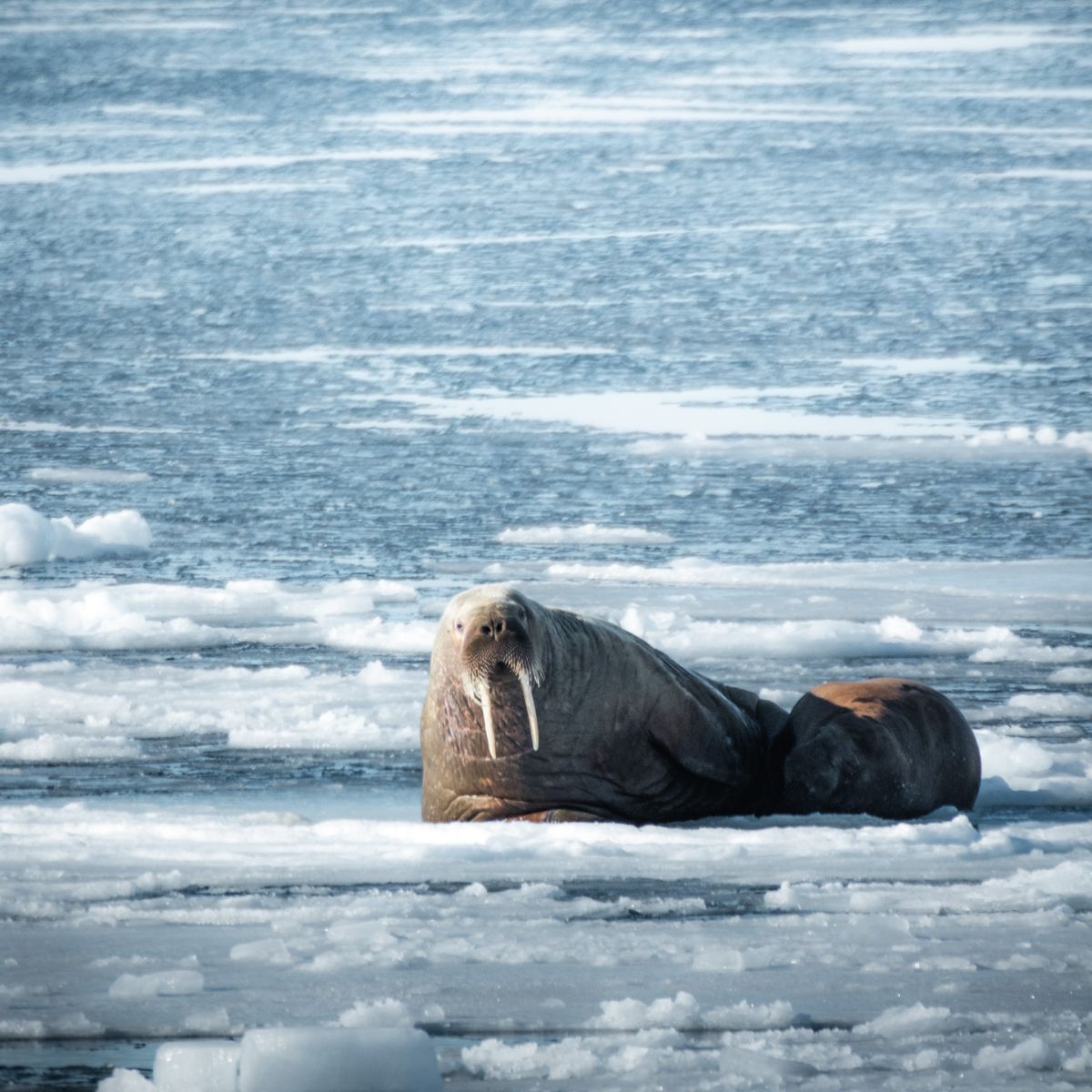
Walrus
Social and hierarchical. Their scientific name, Odobenus rosmarus, means "tooth-walking sea horse," and rank depends on tusk length, body size and attitude.
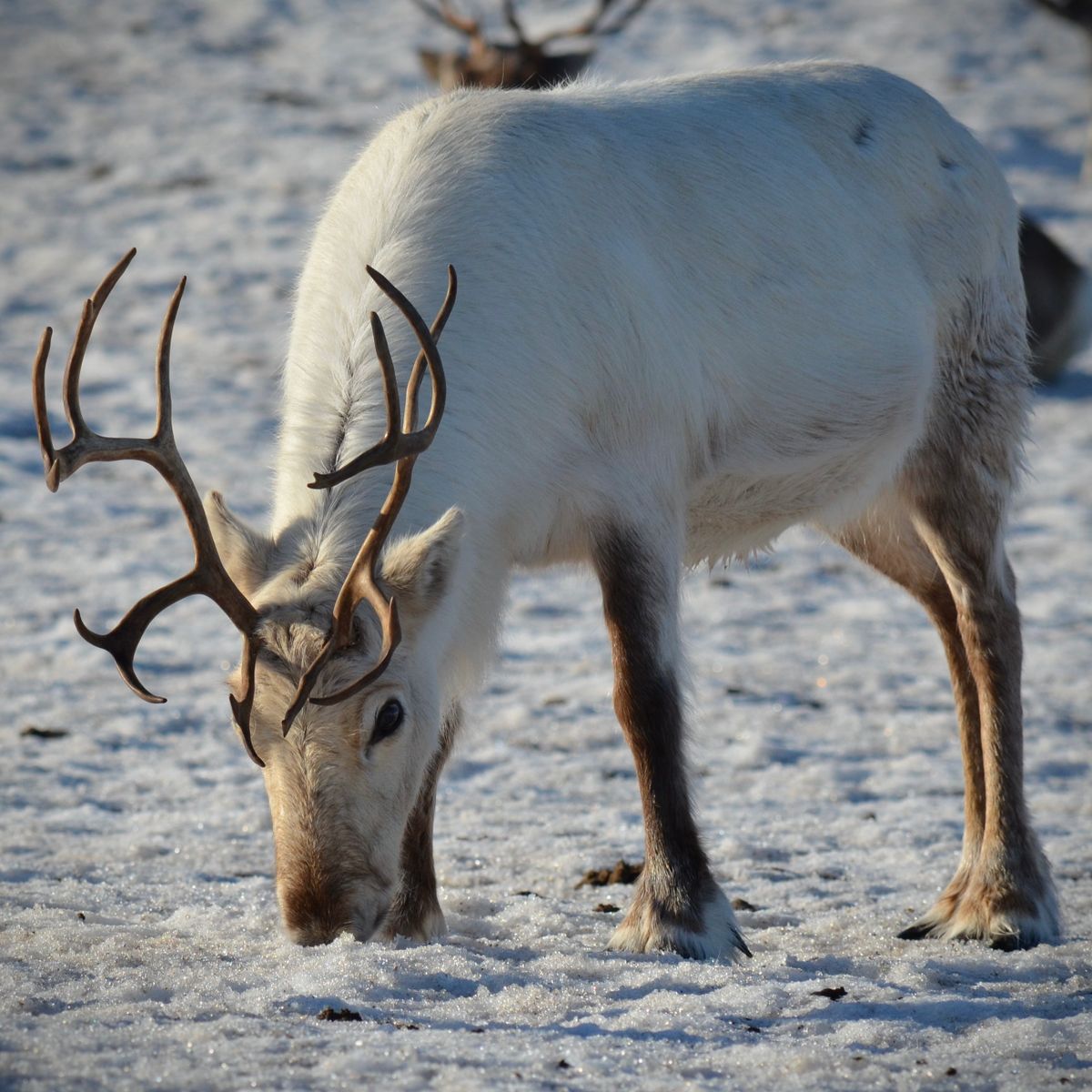
Svalbard reindeer
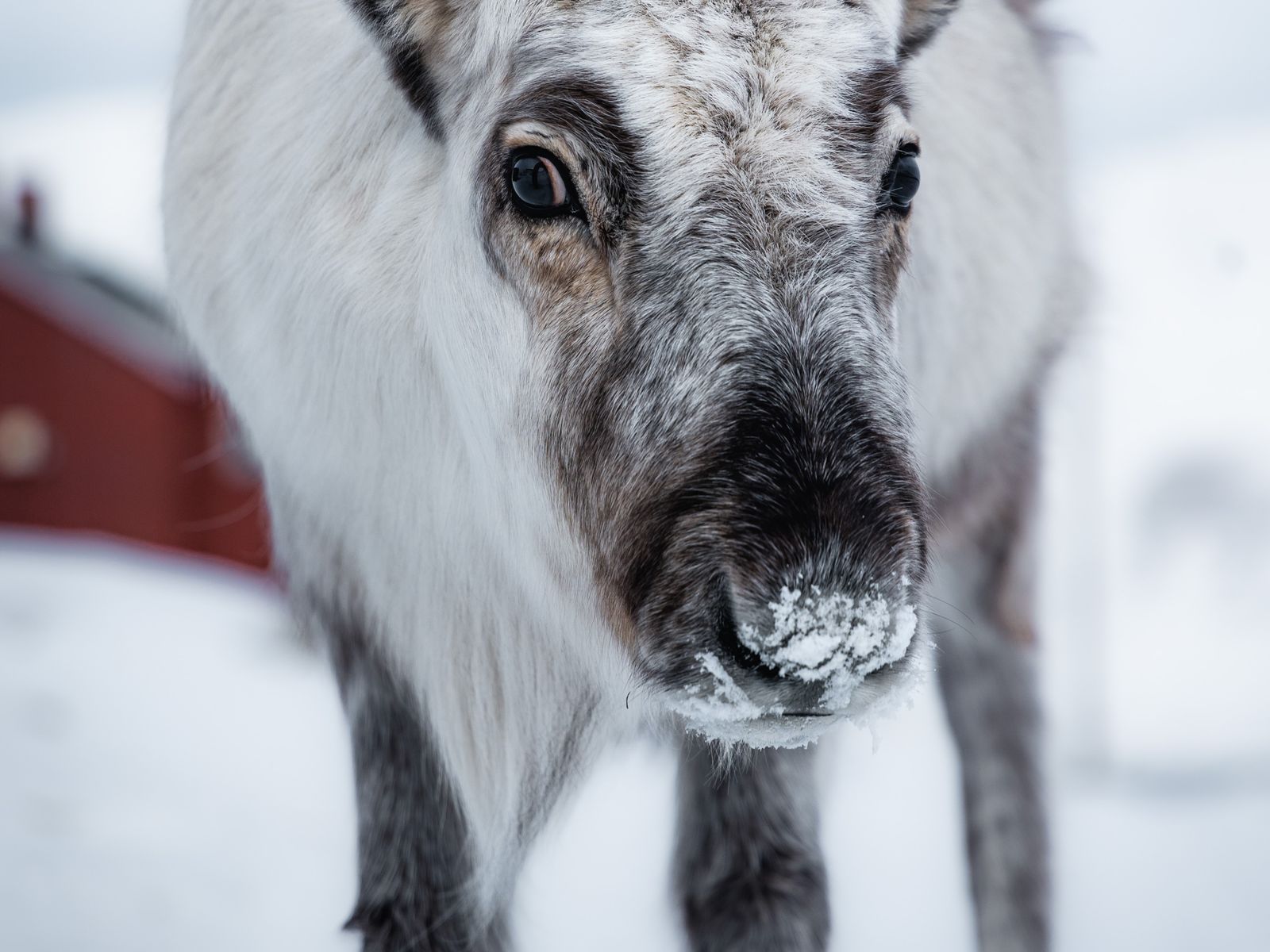
Short-legged, Arctic-adapted, and completely indifferent to people. Expect to meet one walking to dinner in Longyearbyen.
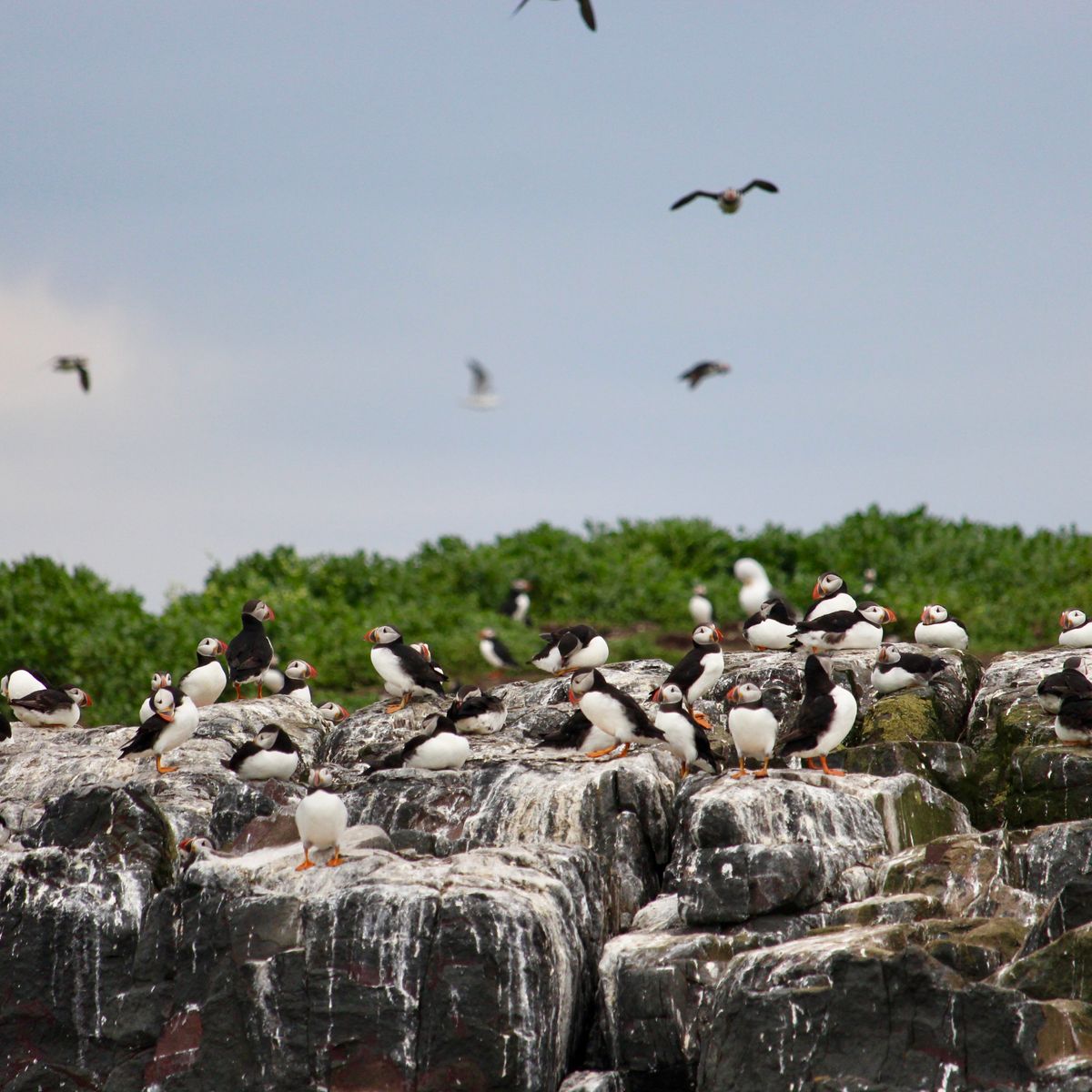
Seabird colonies
Puffins, guillemots, kittiwakes and Arctic terns pack the cliffs in summer. The noise and smell are part of the experience.
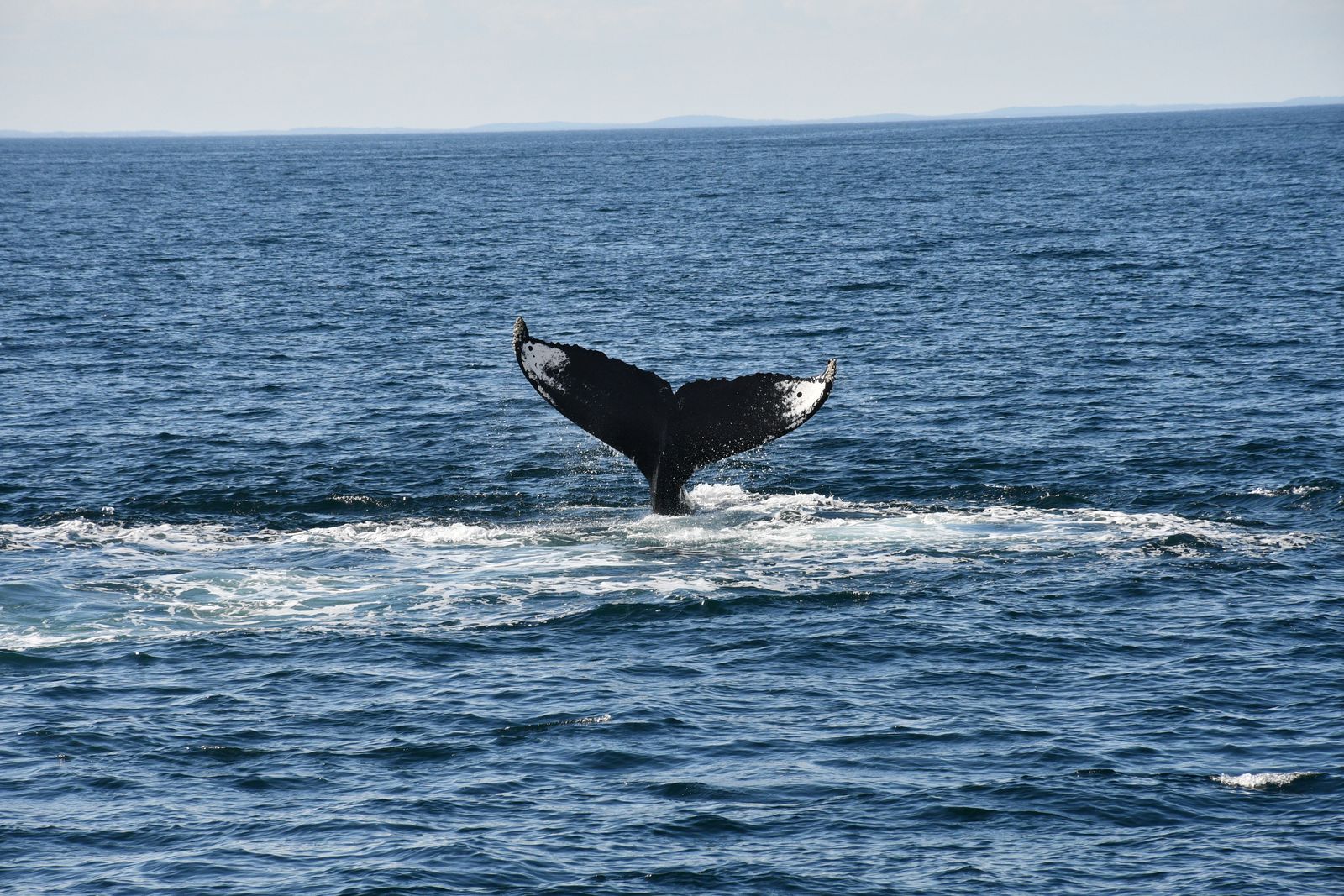
Whales
Beluga, bowhead and minke are regular; blue whales appear on some Svalbard itineraries. Often seen from the deck rather than by Zodiac.
No penguins
Penguins live only in the Southern Hemisphere. If seeing penguins is the goal, you want Antarctica or the Galápagos, not the Arctic.
The no-penguins point is worth stating plainly, because it is one of the most common misconceptions we encounter and it changes trips. Travelers who picture penguins standing on ice are describing Antarctica, or in a warmer version of the same instinct, the Galápagos. Booking Svalbard expecting them ends in a polite, disappointed email.
AECO guidance sets wildlife approach distances across the Arctic, and operators apply them to bears, walrus, denning sites and bird cliffs alike. It is why walrus haul-outs are approached slowly by Zodiac and never on foot: a haul-out is a stack of one-tonne animals that will stampede for the water if a line of people appears above the beach, and injuries in that scramble are to the walrus, not the visitors.
There is one behavioural difference from Antarctica that surprises people. Arctic animals evolved alongside land predators, including humans, so they are genuinely more wary. Nothing here walks up to your boot the way a curious gentoo penguin does. The reward is different in kind: a bearded seal holding its position on a floe, a fox trotting a cliff base for fallen chicks, a herd of reindeer that lets you pass at thirty metres because it has decided you are not worth the energy. Species and behaviour are covered further in the Arctic wildlife guide.
How Do You See the Northern Lights, and Where Should You Go?
You need three things: darkness, clear skies and geomagnetic activity. Travel between late September and late March, stay at least five to seven nights to absorb cloudy nights, and choose a location under the aurora oval. Tromsø, Fairbanks, Churchill, Icelandic and Lapland bases all work. Apps forecast activity, but an Arctic lodge's aurora wake-up call service is more useful than any of them.
| Destination | Why it works | Pair it with |
|---|---|---|
| Tromsø, Norway | The "Gateway to the Arctic," well under the aurora oval with strong infrastructure and a real city to return to | Fjord cruises, Sámi cultural experiences, whale watching |
| Fairbanks, Alaska | Sits directly under the aurora oval, giving high activity and a longer viewing season | Dog sledding, ice sculpting, Alaskan wilderness |
| Churchill, Manitoba | Remote, flat and almost free of light pollution | Polar bears and beluga whales, depending on season |
| Iceland | Highly accessible with dramatic volcanic backdrops, though weather is fickle | Hot springs, glaciers, waterfalls, the Ring Road |
| Lapland, Finland and Sweden | The fairytale version: glass igloos and forest cabins | Reindeer sleigh rides, Santa Claus villages |
The Kp index measures geomagnetic activity, and it is the number every aurora app leads with, but clear skies matter just as much and are forecast separately. Pair an aurora app with a cloud-cover forecast and you have the whole picture. My Aurora Forecast & Alerts gives a simple percentage read, Hello Aurora adds community sightings from people standing outside right now, and Aurora Alerts or SpaceWeatherLive go deeper into solar wind detail if that is your temperament.
Then the counterintuitive advice: avoid frantic tracking. Refreshing an app every twenty minutes for six nights is a reliable way to be exhausted and indoors when the sky opens. Ask your hotel or lodge whether they run an aurora wake-up call. It puts your name on a list for a middle-of-the-night room call when staff spot a strong display — you sleep, a local expert watches. Check the moon phase too; a full moon washes out fainter displays.
Chris grew up in Northern Ontario, where the lights were a common sight on cold clear nights, and the lesson from that is the same one the data supports: the single biggest predictor of a successful trip is nights on the ground, not app sophistication.
One operator promise is worth knowing about. Hurtigruten's Northern Lights Promise offers a free voyage if the aurora is not sighted on an 11-day or longer coastal voyage during the season, from September 20 to March 31 — a genuinely unusual guarantee in a category that mostly sells hope. More detail sits in the Northern Lights guide and in photographing the aurora.
How Much Does an Arctic Expedition Cruise Cost?
Most travelers spend $8,000 to $16,000 per person for an 8 to 12 day Svalbard expedition voyage including gear, meals and excursions. Luxury vessels and suites run $20,000 to $40,000 or more. Longer Northwest Passage and multi-region crossings sit at the top of that range. Land-based Northern Lights trips are far cheaper, often $3,000 to $7,000 per person for a week.
| Factor | What it means | Typical impact |
|---|---|---|
| Region | Svalbard round-trip versus a Northwest Passage transit or Franz Josef Land extension | Longer crossings can double the fare |
| Ship class and cabin | Expedition-standard porthole versus a balcony suite on a luxury vessel | 2x to 4x within the same sailing |
| Season timing | July is peak; late May and early September are shoulder | Meaningful swing on the same cabin |
| Getting to Longyearbyen | Flights via Oslo, plus a pre-cruise night that is effectively mandatory | Add for airfare and hotel on top of the fare |
| Optional activities | Kayaking, hiking programmes, photography workshops | Priced separately, places capped |
| Single supplement | Solo occupancy on a ship with few dedicated solo cabins | 0% on solo-cabin ships; up to 100% elsewhere |
| Cruise versus land | A ship-based bear voyage versus a lodge-based aurora week | Land trips typically less than half the cost |
Ranges are 2026-27 planning estimates and move with season, currency and availability. We quote live fares on specific departures rather than publish numbers that go stale. A fuller breakdown sits in what an Arctic expedition costs.
The Longyearbyen flight is the item people forget. There is no cheap way to reach 78° north: connections route through Oslo, seats on the Svalbard legs are finite, and the pre-cruise night is effectively mandatory because a missed connection means a missed ship that will not wait. Budget for the airfare and the hotel night before you compare two fares against each other.
Aurora trips are a different economic animal entirely. For a client whose real goal is the lights rather than the wildlife, a lodge week in Tromsø or Finnish Lapland costs a fraction of a voyage and puts them outside under a dark sky every night instead of some nights. We have talked more than one couple out of a ship and into a cabin with a glass roof, and nobody has come back unhappy about it.
Our planning costs you nothing extra. Pricing matches booking direct, with Signature amenities added where they are available, so the comparison you should be making is between voyages rather than between booking channels. A fuller breakdown sits in what an Arctic expedition costs.
Polar bears or the aurora? They are two different trips.
Tell us which one you are actually picturing and we will point you at the right season.
Which Arctic Itinerary Should You Choose?
Svalbard round-trip voyages of 8 to 12 days from Longyearbyen are the standard first Arctic trip. Circumnavigations of Svalbard need roughly 10 to 14 days and depend on ice. Northwest Passage transits run 16 to 24 days and are the most committing option. Norway coastal voyages work year-round and are the main ship-based way to combine the aurora with a cruise.
8-12 days
Svalbard: polar bears and pack ice
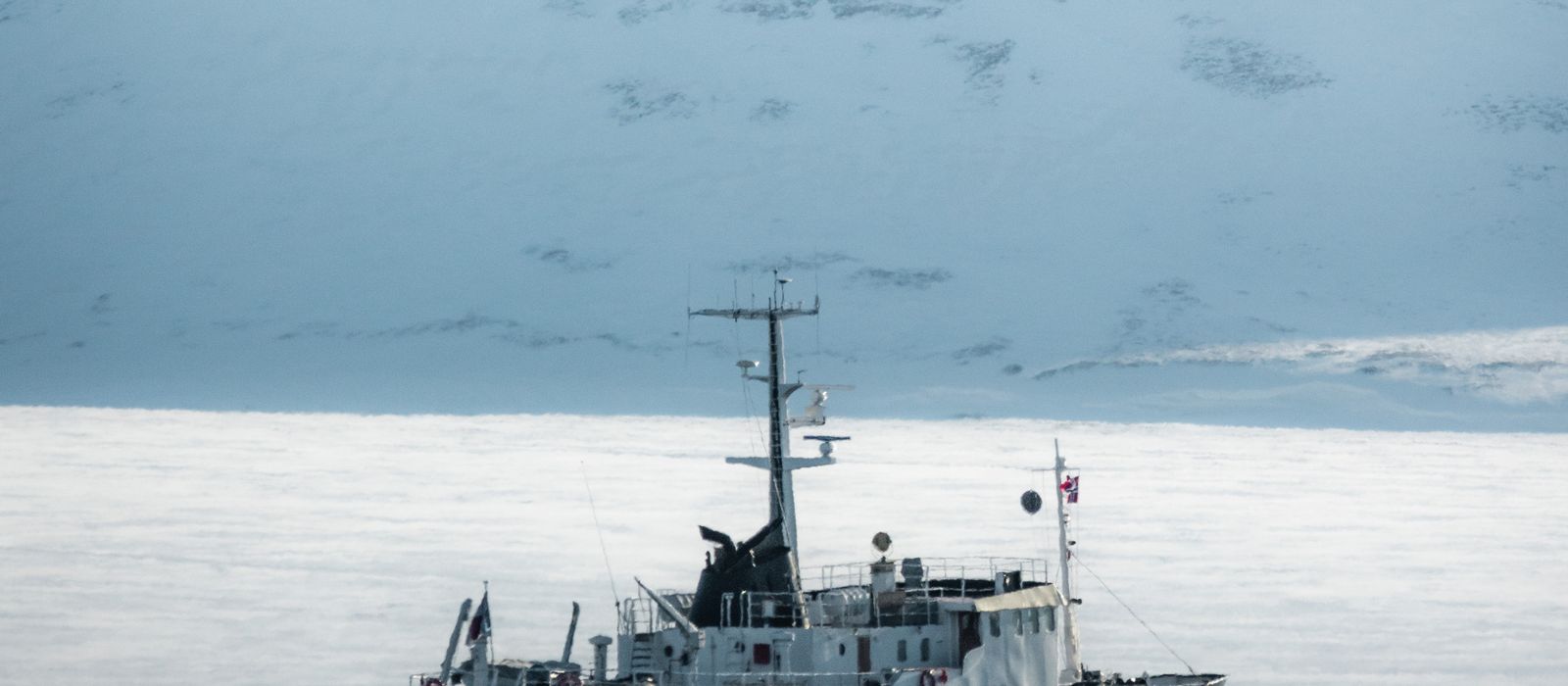
Round-trip from Longyearbyen, pushing north to the ice edge. The highest-density bear and walrus itinerary in the Arctic.
Best for: First-time Arctic travelers and anyone whose priority is polar bears.
10-14 days
Svalbard circumnavigation
A full loop of the archipelago when ice allows, reaching the eastern islands most ships never see.
Best for: Travelers wanting the widest possible range of landings and a genuine ice-dependent route.
12-16 days
Svalbard and Franz Josef Land
Adds the Russian high Arctic when permits allow. Among the most remote coastlines expedition ships reach.
Best for: Repeat polar travelers chasing remoteness over convenience.
16-24 days
The Northwest Passage
A historic transit of the Canadian Arctic with Inuit community visits and genuine expedition uncertainty.
Best for: Travelers with time, patience and an interest in polar history.
6-12 days
Norway coastal and aurora voyages
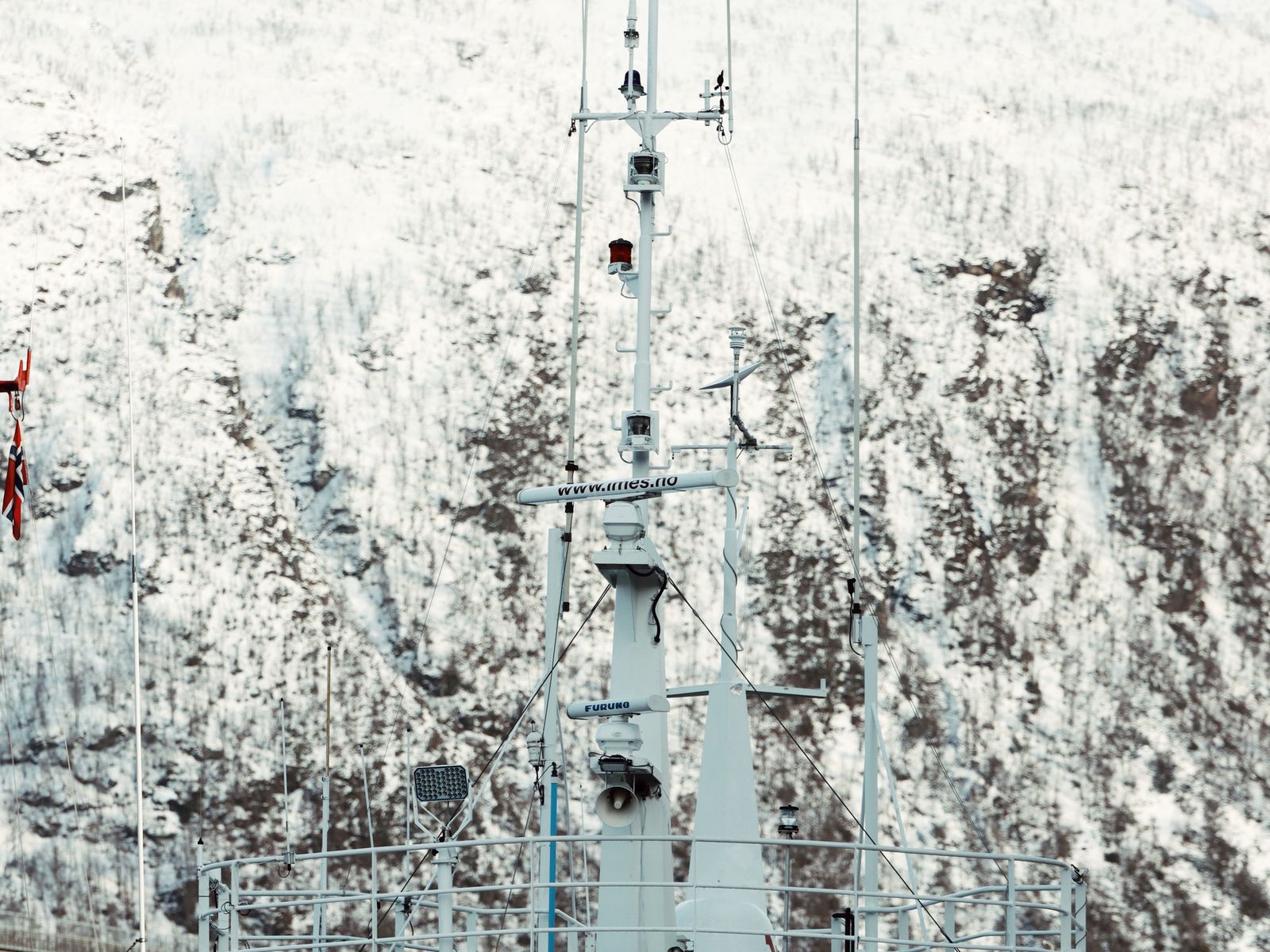
Year-round coastal sailing along the Norwegian coast, with winter departures built around the Northern Lights.
Best for: Aurora travelers who want a ship rather than a lodge.
Length is the honest filter. A round-trip Svalbard voyage does the thing most people came for, and it does it inside two weeks including flights. A circumnavigation buys the eastern islands and a genuinely ice-dependent route, at the price of accepting that the captain may turn back and rework the whole plan on day six.
The Northwest Passage is a different order of commitment: three weeks, remote logistics, few departures, and a real chance that ice reroutes the transit. Travelers who want it usually want it for the history as much as the wildlife. A full comparison lives in the Arctic itinerary guide.
Which Arctic Expedition Ship Is Right for You?
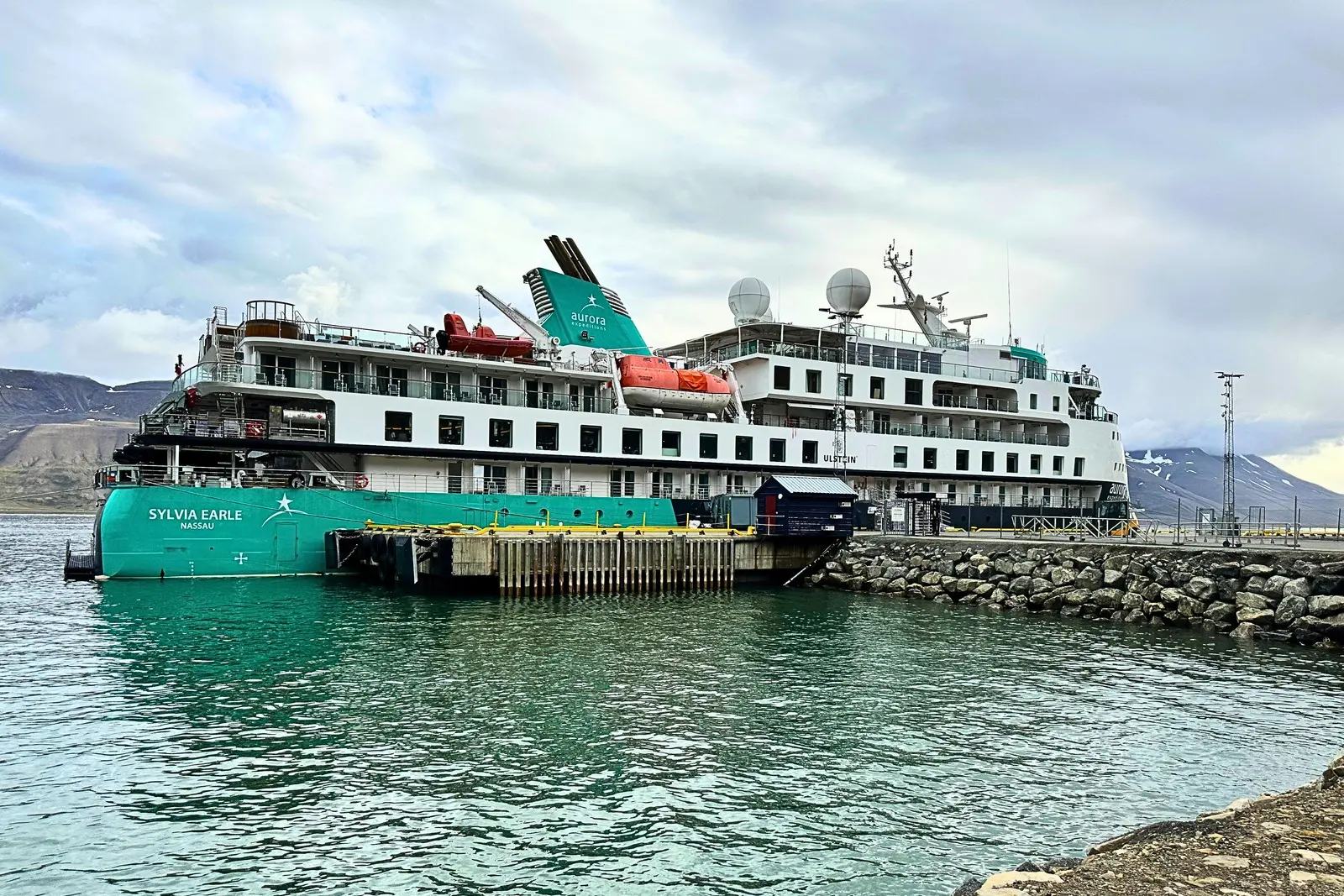
Ship size matters less in the Arctic than in Antarctica because there is no 100-person landing cap, but smaller vessels still reach tighter fjords and land faster. Ice class matters more, particularly for circumnavigations and the Northwest Passage. Look at the strength of the expedition team, the number of Zodiacs, and whether the operator carries qualified polar bear guards.
| Operator | Typical guest count | Arctic strength | Best for |
|---|---|---|---|
| Lindblad-National Geographic | 100-150 | Deep naturalist and photography teams; strong Svalbard and Canadian Arctic programmes | Travelers who want to learn as much as see |
| Quark Expeditions | 130-200 | Polar specialists with North Pole icebreaker voyages alongside Svalbard | Ambitious itineraries and active travelers |
| Aurora Expeditions | ~130 | Small groups with a broad activity list including kayaking and hiking | Active travelers who want off the ship often |
| Oceanwide Expeditions | 100-170 | Long-running Svalbard specialist with basecamp-style voyages | Value-focused travelers who want genuine expedition feel |
| HX | 250-500 | Norwegian heritage, extensive Norway coastal network, and the Northern Lights Promise | Aurora travelers and value-conscious bookers |
| Ponant | 180-260 | Design-led ships including the icebreaker Le Commandant Charcot, which reaches the geographic North Pole | Deep-ice ambition with comfort |
| Silversea | 140-270 | Luxury with a real expedition team across Svalbard and the Arctic | Luxury travelers making a first polar trip |
| Poseidon Expeditions | 110-130 | North Pole heritage and Franz Josef Land access | Repeat polar travelers chasing remoteness |
| Swan Hellenic | 150-190 | Lecture-led, culturally focused itineraries | Readers of polar history |
Guest counts vary by vessel within each fleet and by season; figures are typical ranges for Arctic sailings. Unlike Antarctica, the Arctic has no 100-person landing cap, so ship size affects pace and fjord access rather than shore time directly. Arctic operators follow AECO guidelines. Fleet-by-fleet notes sit in expedition cruise lines and ships we have sailed.
Chris and Erika have sailed on ten ships and toured seven more, which is the basis for how we compare cabins, decks and expedition teams. It is also why we ask what you disliked about your last ship before we ask what you liked.
One thing worth knowing: several of these operators run both poles, and a ship you loved in Antarctica can be a poor fit in Svalbard. The itineraries ask different things of a vessel — Antarctic work rewards a big Zodiac fleet and fast turnarounds at landing sites, while Arctic work rewards ice class, a strong bridge team and the patience to sit at a floe edge for three hours. Full fleet notes are in expedition cruise lines and the ships we have sailed, including our review of Hurtigruten's MS Trollfjord.
What Is a Day on an Arctic Expedition Actually Like?
Two outings a day is typical: a Zodiac cruise along a glacier front or bird cliff, and a tundra walk with armed polar bear guards posted at the perimeter. The schedule bends constantly to ice, weather and wildlife. In midsummer there is no darkness at all, so the ship may wake you at 2 a.m. for a bear on the ice, and you will want to be woken.
The mudroom routine will feel familiar to anyone who has done Antarctica: layers, waterproof boots, a lifejacket, and a Zodiac boarded at sea level. What differs is the walking. Arctic landings involve more hiking over tundra and scree, in groups that stay inside a guarded perimeter, and the guides carry rifles because Svalbard law and common sense both require it. It is handled quietly; after the first landing most guests stop noticing.
Between outings there are lectures — Arctic ecology, whaling and mining history, Indigenous culture — and long stretches on deck as the ship works a coastline. The midnight sun changes the rhythm of everything. With no darkness, the ship operates around the clock, meals stretch, people nap at odd hours, and the best sighting of the voyage may come at a time that would be absurd anywhere else. Blackout blinds in the cabin are not a luxury.
What Can You Do Besides Cruise in the Arctic?
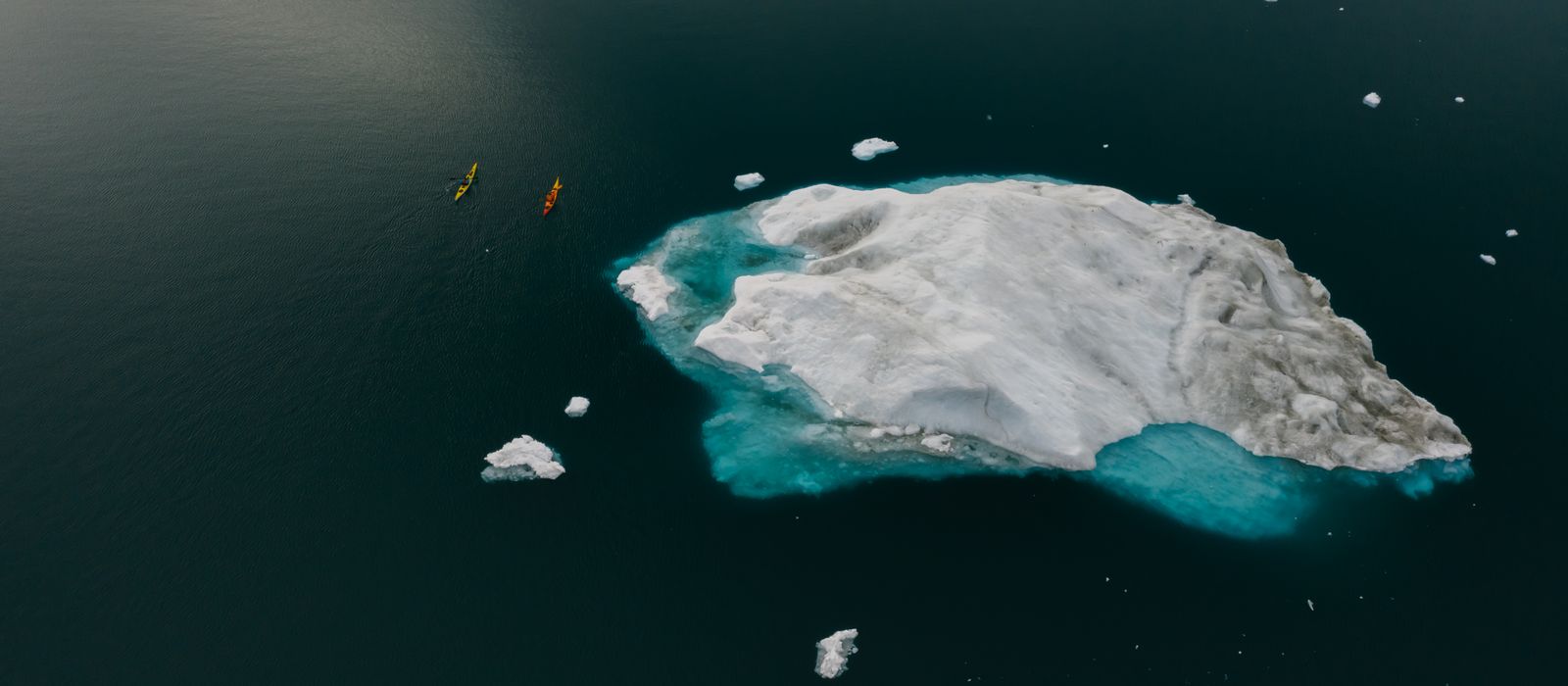
Sea kayaking is the standout, letting you reach quiet water alongside calving glaciers where ships cannot go. Guided tundra hikes, photography programmes and camping are offered on some ships. On winter aurora trips the daytime activities matter as much as the nights: dog sledding, snowmobiling, ice fishing, and visits to Sámi and Inuit communities.
Paddling Svalbard's fjords is an intimate version of the same landscape. A kayak sits inches above the water, moves without engine noise, and reaches shallow bays and ice-choked corners a ship cannot enter. From the water you are likely to see bearded seals resting on floes, beluga pods working the shoreline, and seabirds streaming along the cliffs above you.
Polar bear sightings from a kayak are rare, and the possibility is precisely why you go with a guide who knows ice conditions and wildlife safety rather than renting a boat and setting off. Dress for immersion, not for air temperature: a dry suit and thermal underlayers, not a warm coat. Prime paddling season runs late May to early September, and places are capped, so reserve when you book the cabin.
It is worth knowing the history you are borrowing. Greenland's Inuit invented the kayak, or qajak, thousands of years ago as a sealskin hunting craft built for narrow fjords and icy seas, so paddling here is a continuation rather than an importation. More detail sits in kayaking in Svalbard and across our experiences.
How Is the Arctic Different from Antarctica?
The Arctic is an ocean surrounded by land; Antarctica is land surrounded by ocean. The Arctic has towns, history, Indigenous communities and polar bears, and its season runs May to September. Antarctica has no residents, no land predators, penguins instead of bears, and a November to March season. Antarctica delivers more concentrated wildlife spectacle; the Arctic delivers more variety and culture.
| The Arctic | Antarctica | |
|---|---|---|
| Geography | Ocean surrounded by land | Land surrounded by ocean |
| Season | Late May to early September for expeditions | November to March |
| Headline wildlife | Polar bears, walrus, whales, seabird colonies | Penguins, seals, whales |
| People | Roughly four million residents, about 10% Indigenous | No permanent residents |
| Getting there | Scheduled flights to Longyearbyen or Tromsø | Two-day Drake crossing or a charter flight |
| Landing rules | AECO guidelines; no fixed shore-party cap | IAATO; 100 people ashore at one site |
| Wildlife behaviour | Wary — these animals evolved with land predators | Indifferent — no land predators to fear |
| Northern Lights | Yes, in the dark months | No, the season is 24-hour daylight |
| Best for | Variety, culture, history, polar bears | Concentrated spectacle and genuine remoteness |
Most clients who do one eventually do the other, and the order matters less than the expectation. The single most common disappointment is an Antarctica veteran expecting Arctic wildlife at the same density, or an Arctic traveler expecting Antarctic silence and finding a coal-mining town with a brewery at the end of the runway.
Both are worth doing, for different reasons, and we will happily tell you which one your description actually points at. The Antarctic side of the comparison is covered in full on the Antarctica pillar and in Antarctica versus the Arctic.
Is an Arctic Expedition Right for You?
The Arctic suits travelers who want wildlife alongside history and culture, who can accept that a polar bear sighting is never guaranteed, and who are comfortable hiking on uneven tundra within a guarded group. It suits you less if you need a guaranteed headline animal, want darkness and aurora on a summer trip, or expect Antarctic-scale concentrations of wildlife.
A good fit if you are
- Interested in wildlife and in the human history of the region equally
- Comfortable walking on uneven tundra and scree within a guided perimeter
- Able to accept that bear sightings are likely but never promised
- Drawn to the midnight sun, or separately, to the aurora in the dark months
- Willing to fly to 78° north via Oslo with a buffer night
Probably not if you
- Need a guaranteed sighting of a specific animal
- Expect penguins, or expect Antarctic wildlife density
- Want the Northern Lights on a summer expedition voyage
- Cannot walk unaided over rough ground for 60 to 90 minutes
- Want a fixed itinerary that will not change with ice
We would rather redirect you now than have you spend two weeks at 79° north wanting something the Arctic does not offer. If the second column describes you better, the answer is usually Antarctica for concentrated wildlife, the Galápagos for close encounters in warm weather, or a land-based aurora week for the lights.
How Far in Advance Should You Book an Arctic Trip?
Book 10 to 15 months ahead for July Svalbard departures, the best cabins, and solo accommodation, which sells out first. Northwest Passage transits should be booked 18 months out because there are very few of them. Aurora trips need less lead time but still benefit from six months, particularly for glass igloos and lodges with wake-up call service.
Svalbard's peak weeks are narrower than Antarctica's because the ice window is shorter, so the crunch is concentrated into a handful of July and early-August departures. Northwest Passage voyages are the scarcest inventory in polar travel; there are only so many transits attempted in a season.
Aurora accommodation behaves like ordinary hotel inventory right up until you want something specific — a glass igloo, a lodge with a wake-up call service, a particular week in March — at which point it behaves like polar inventory. Hold a cabin or a room with a refundable deposit while you settle flights, and we will watch the fare in the meantime.
Why Book the Arctic Through Glacial Expeditions?
Glacial Expeditions is an independent Wisconsin-based agency, an affiliate of Oasis Travel Network and a member of Signature Travel Network, serving travelers nationwide. Chris and Erika Commisso have sailed on ten ships and toured seven more and travel the polar regions every season. Our planning costs you nothing extra — pricing matches booking direct, with Signature amenities added where available.
Oasis Travel Network affiliate · Signature Travel Network member · IAATO Associate Member · ECC Elite Cruise Counsellor · ASTA Verified Travel Advisor · Signature Travel Expert
Written by your expedition advisors
Chris Commisso · Expedition Expert
Signature Travel Expert
Erika Commisso · Travel Experience Architect
CLIA Elite Cruise Counselor · ASTA Verified Travel Advisor · Signature Travel Expert
Chris and Erika have sailed ten expedition voyages and toured seven more expedition ships. Favorite explorations so far: Antarctica, Svalbard, Greenland, Iceland, Norway, Alaska, the Galápagos, the Scottish Hebrides, Churchill and French Polynesia.
Last updated . Reviewed against 2026-27 operator schedules and AECO guidance.
More about how we work on about and what clients say on reviews. When you are ready, get in touch.
Arctic Expedition FAQs
Are there penguins in the Arctic?
No. Penguins live only in the Southern Hemisphere — Antarctica, the Galápagos, and parts of southern Africa and South America. The Arctic has seabirds instead: puffins, auks, guillemots, kittiwakes and Arctic terns. If penguins are the reason for your trip, you want Antarctica, not the Arctic.
Are you guaranteed to see a polar bear?
No operator guarantees it, and anyone who does is overselling. Svalbard offers the best odds of any accessible Arctic destination and most summer voyages record at least one sighting, usually at distance on pack ice. Earlier sailings with more ice generally produce better encounters.
What is AECO?
AECO is the Association of Arctic Expedition Cruise Operators, which sets conduct guidelines for Arctic expedition cruising: wildlife distances, polar bear safety, site-specific rules and community visit protocols. It is the Arctic counterpart to IAATO in Antarctica, and the two organisations have different rules.
Can you see the Northern Lights on a summer Arctic cruise?
No. Summer expedition voyages run under the midnight sun, when there is no darkness at all north of the Arctic Circle. Aurora viewing requires dark skies, which means travelling between late September and late March. These are two separate trips.
Do guides really carry rifles in Svalbard?
Yes. Anyone leaving the settlements in Svalbard is required to carry adequate polar bear protection, so every landing party includes armed guards who post a perimeter while guests walk. It is a legal requirement and a practical one, and it is handled quietly and professionally.
How cold is the Arctic in summer?
Svalbard summer temperatures typically sit a little above freezing, often in the 30s and low 40s Fahrenheit. Wind on a Zodiac is what makes it feel cold. Layering and a waterproof shell matter more than heavy clothing, exactly as in Antarctica.
How many nights do I need for a Northern Lights trip?
At least five to seven. The aurora is unpredictable and cloud cover can erase several nights in a row, so a short trip is a gamble. More nights on the ground is the single biggest thing you can do to improve your odds, ahead of any app or forecasting tool.
What is the midnight sun, and how long does it last?
North of the Arctic Circle the sun stays above the horizon continuously around the summer solstice — up to 30 days depending on latitude, and 187 days at the North Pole. Ships operate around the clock, and cabins have blackout blinds for a reason.
Is Longyearbyen worth extra time?
Yes, a night either side is worth building in. It is the northernmost town in the world, with a genuine museum, a brewery, and Svalbard reindeer wandering the streets. The buffer night also protects you against a missed Oslo connection, which would otherwise mean a missed ship.
Should I do the Arctic or Antarctica first?
Either works, but expectations matter more than order. Antarctica delivers more concentrated wildlife spectacle and genuine emptiness; the Arctic delivers variety, history and polar bears. Travelers who want a guaranteed headline animal are usually happier starting with Antarctica.
Arctic Planning Guides
Churchill, Manitoba
The land-based Arctic: polar bears, belugas and the aurora, without a ship.
Svalbard expedition guide
The archipelago, the gateway town, and why almost every summer voyage starts here.
Seeing polar bears in the Arctic
Odds, timing, distances and what a real sighting looks like.
Northern Lights: a first-timer's guide
Darkness, clear skies and geomagnetic activity, and how to stack the odds.
Photographing the aurora
Settings, tripods and the cold-weather practicalities of shooting at night.
When to visit the Arctic
Both seasons month by month, and how to pick between them.
What an Arctic expedition costs
Fares, flights, buffer nights and the extras that move the total.
Arctic itinerary guide
The five voyage shapes and who each one suits.
Arctic expedition ships
Ice class, Zodiac fleets and expedition teams compared.
Arctic wildlife guide
Bears, walrus, reindeer, seabirds and whales, and where each is seen.
10 Arctic facts you probably didn't know
Polar bears, midnight sun, street-wandering reindeer and the Inuit kayak.
Kayaking in Svalbard
Paddling glacier fronts, what to wear, and how places are allocated.
The Northwest Passage
The most committing Arctic voyage, and what the transit actually involves.
Midnight sun and polar night
Why the light dictates which Arctic trip you can take.
Northern lights: a first-timer's guide
Where to go, when to travel, tracking apps, and the camera settings that work.
Longyearbyen travel guide
The northernmost town in the world, and how long to give it.
Arctic packing list
What operators supply, what you buy, and what stays home.
Arctic versus Antarctica
The full side-by-side comparison of the two poles.
New to this style of travel? Start with What is an expedition cruise?