Written by your expedition advisors

Chris Commisso · Expedition Expert
Signature Travel Expert
Erika Commisso · Travel Experience Architect
CLIA Elite Cruise Counselor · ASTA Verified Travel Advisor · Signature Travel Expert
Chris and Erika have sailed ten expedition voyages and toured seven more expedition ships. Favorite explorations so far: Antarctica, Svalbard, Greenland, Iceland, Norway, Alaska, the Galápagos, the Scottish Hebrides, Churchill and French Polynesia.
Last updated . Reviewed against current Galápagos National Park fee and vessel regulations, and against operator itineraries for the 2026-27 seasons.
You pay the same as booking direct. Here’s how we’re paid.
At a glance
- Season
- Year-round. Warm/wet season December to May; cool/dry garúa season June to November
- Typical trip length
- 4-day snapshot itineraries to 8-day comprehensive expeditions
- Getting there
- Fly to Quito or Guayaquil in mainland Ecuador, then a domestic flight to Baltra or San Cristóbal
- Vessel size
- 16-20 passengers on small yachts; up to the National Park maximum of 100
- Governing body
- The Galápagos National Park, which licenses every route and every naturalist guide
- Mandatory fees
- $200 National Park entrance fee per adult, $100 for children under 12, cash on arrival. Plus a $20 Transit Control Card bought before your flight
- Water temperature
- 70-80°F December to May; 65-75°F June to November, when a wetsuit is usually wanted
- Wildlife
- The Big 15, including giant tortoises, marine iguanas, three booby species, the waved albatross and the Galápagos penguin
- Landings
- By panga, wet or dry. No ice, no Zodiac cruising in the polar sense
- Physical demand
- Low to moderate. Uneven lava rock, short walks, and swimming or snorkeling if you choose
What Is a Galápagos Expedition Cruise?
A Galápagos expedition cruise is a small-ship voyage through the Ecuadorian archipelago, typically 4 to 8 days, sailing overnight between islands so you wake at a new landing site each morning. Vessels carry 16 to 100 passengers, the National Park maximum. Every route is licensed in advance and every excursion is led by a park-certified naturalist guide. Days combine shore walks, panga rides and snorkeling.
Sailing is not a convenience here, it is the only practical way to see the archipelago properly. The islands worth visiting are spread across a wide area of ocean, and most landing sites can only be reached by a licensed vessel carrying a certified guide. Because the ship repositions at night while you sleep, a seven-night voyage covers ground that a land-based stay on Santa Cruz simply cannot.
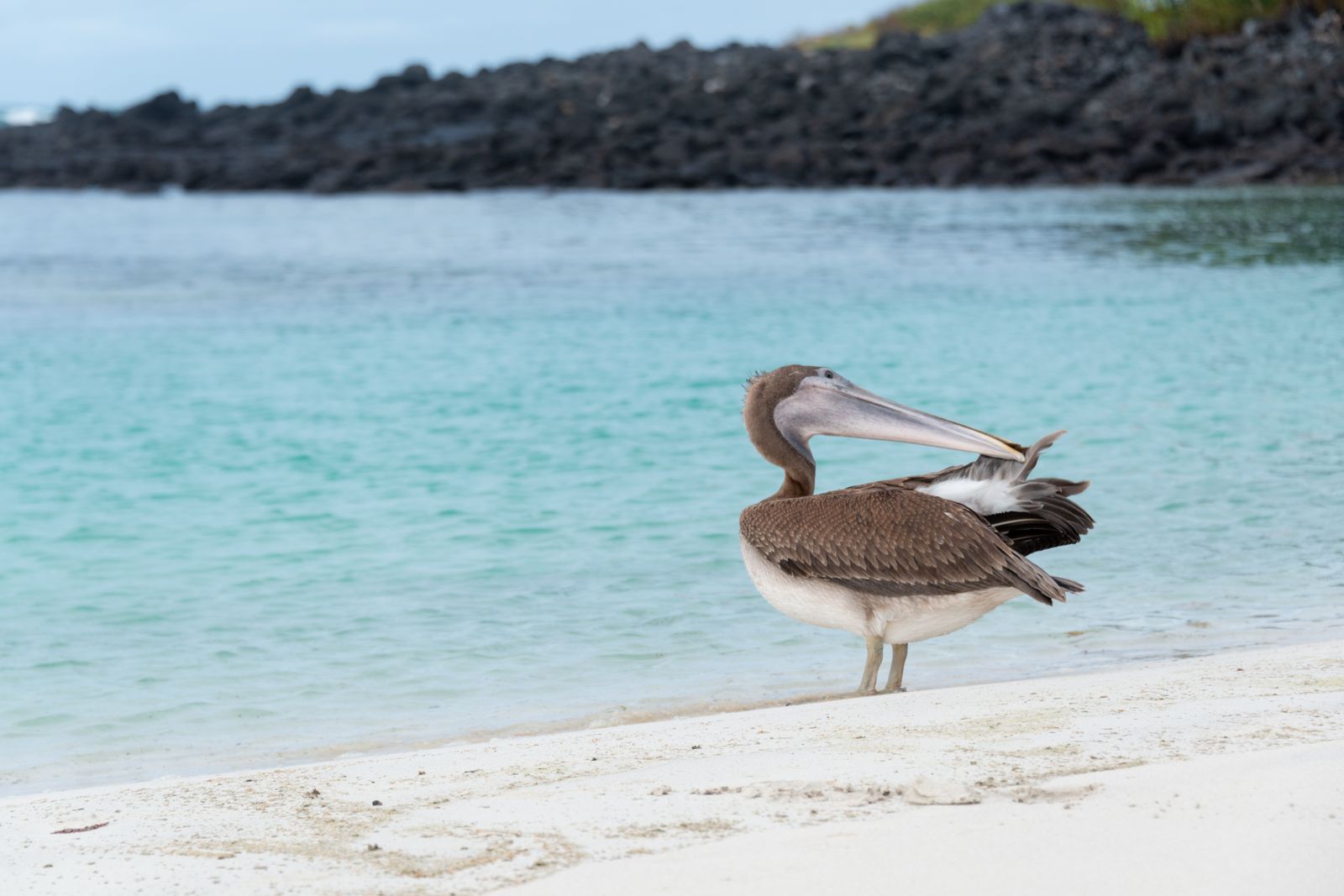
The single fact that defines the experience is that the wildlife has no fear of human presence. These animals evolved without land predators, so they do not flee. A sea lion will roll over as you walk past; a booby will keep incubating an egg a few feet from the trail. Encounters happen at conversational distance rather than through a long lens, and that changes what photography and even simple watching feel like.
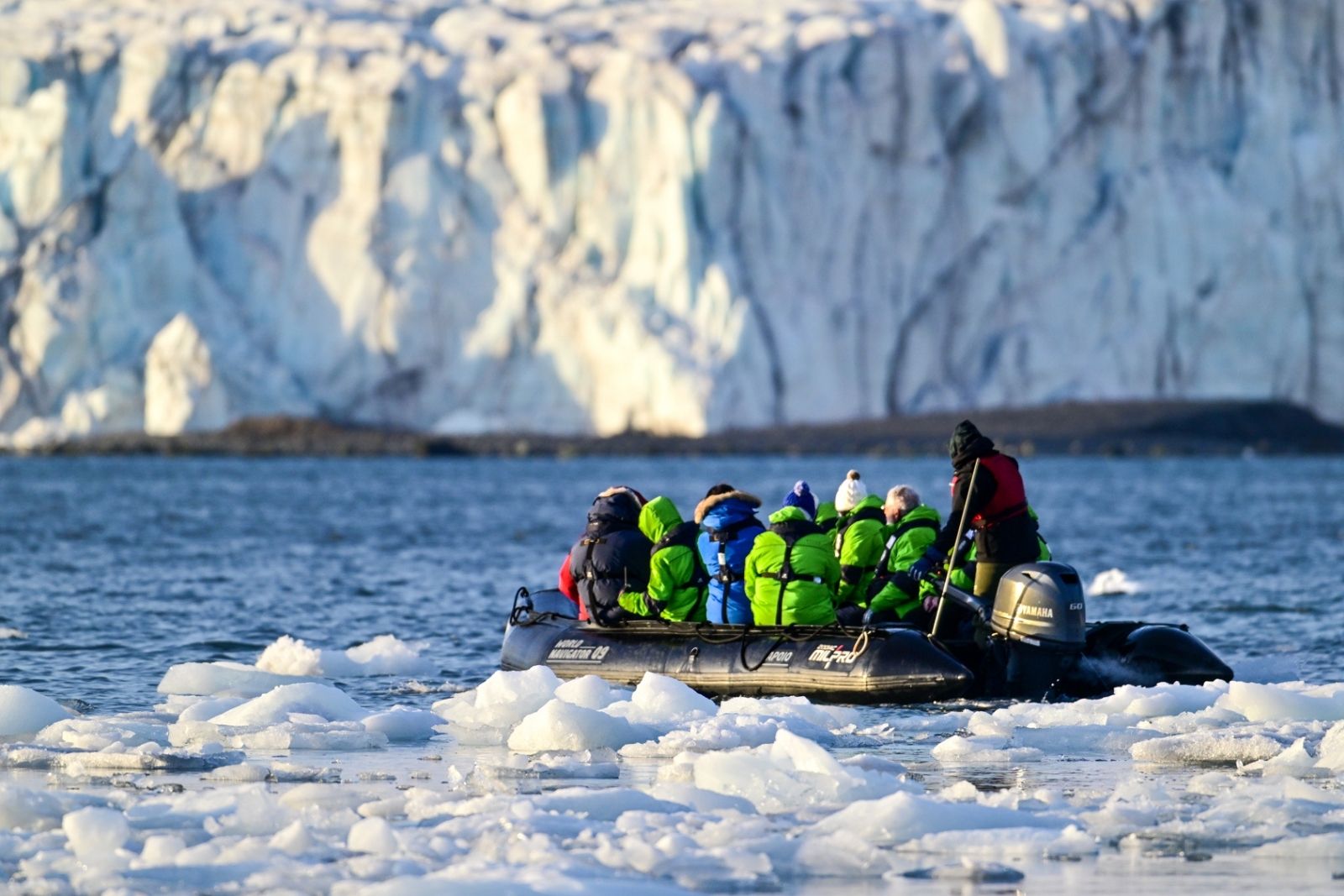
It is worth noting how different this is from the polar regions. In Antarctica and the Arctic the itinerary bends daily to ice and weather, and the captain rewrites the plan over breakfast. In the Galápagos the route was designed and licensed by the National Park before you booked, and it will run as printed. Some travelers love that certainty; others miss the improvisation. Knowing which of those you are is a useful place to start.
When Is the Best Time to Visit the Galápagos?
There is no bad time. The Galápagos has two current-driven seasons and both are excellent. The warm, wet season from December to May brings calm seas, water at 70 to 80°F, lush green islands and peak terrestrial activity — nesting tortoises and mating iguanas. The cool, dry garúa season from June to November brings nutrient-rich water, choppier seas and far more marine life.
Warm and wet: December to May
December-January
The green season begins
Islands take on their first flush of green. Clear skies and sunny days. Giant tortoise eggs hatch and green sea turtles mate. Early December is a sweet spot before the holiday crowds.
February-March
Peak terrestrial activity
Marine iguanas on Española turn vivid green and red for mating. Pacific green sea turtles come ashore to lay. Darwin's finches nest. Waved albatross begin arriving on Española in March.
April-May
New life
Tortoise and sea turtle eggs hatch, land iguana babies emerge on Isabela, and waved albatross court on Española. May brings blue-footed booby mating dances on Seymour and is a genuine shoulder month.
Cool and dry: the garúa season, June to November
June
Birding at its peak
Blue-footed boobies courting, albatross nesting, and the first albatross chicks appear. Milder temperatures and school holidays make it strong for families.
July-August
The marine feast
Cool upwellings bring manta rays, whales and Pacific sunfish. First sea lion pups born in July. Giant tortoises graze the Santa Cruz highlands in August.
September
Peak garúa
Galápagos penguins court on Bartolomé and sea lion mating peaks with competitive male displays. Humpback whales and whale sharks in the water. A quiet month on land, a spectacular one below it.
October-November
Babies everywhere
Blue-footed booby chicks and baby fur seals in October. By November sea lion pups are playful and curious with snorkelers, trade winds drop and the water begins to warm.
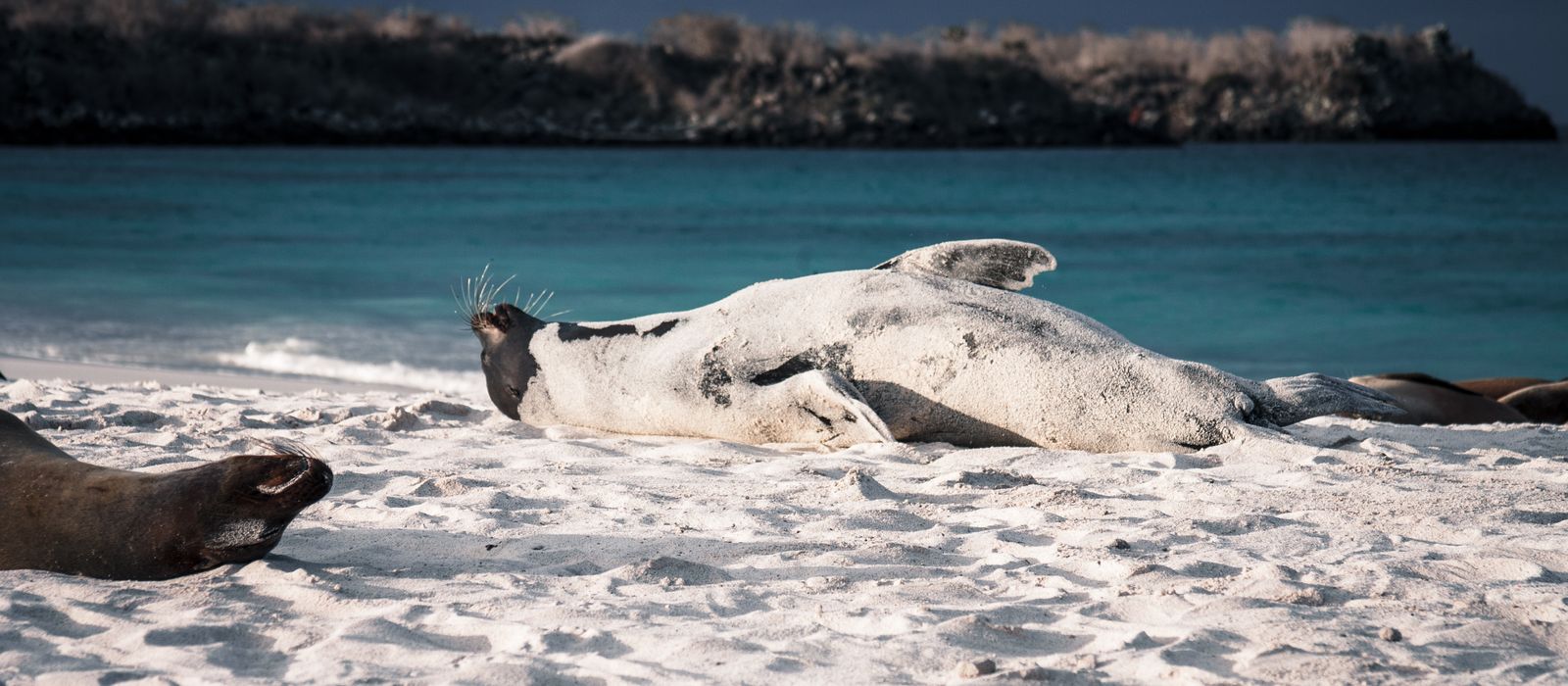
The honest framing is that this is a choice between land and sea, not between good and bad. Terrestrial life cycles peak in the warm season: iguanas colour up, turtles come ashore to lay, finches nest, and the islands turn green. The marine world peaks in the cool one, when upwelling brings food and with it manta rays, whale sharks, sunfish and migrating humpbacks.
The trade-off in the cool garúa season is comfort. Seas are choppier, skies are often grey, and the water drops to 65 to 75°F, which for most people means wearing a wetsuit. Operators supply them, but if snorkeling is your main reason for going it is worth knowing before you choose your month rather than after.
When clients are flexible, we point them at the shoulder months — May, September and early December. Crowds drop noticeably, fares soften, and wildlife activity stays high in both directions. More detail sits in our guide to when to visit the Galápagos.
Which Galápagos Route Should You Choose?
The Western route covers the young volcanic islands of Isabela and Fernandina, with the highest concentration of marine iguanas plus flightless cormorants and Galápagos penguins. The Eastern route explores older, eroded islands like Española and San Cristóbal and is the birder's choice. The Northern route reaches remote Genovesa and Bartolomé. Central and Southern routes blend the two.
Western route
The geologically youngest islands, Isabela and Fernandina, still forming. Punta Espinoza holds vast marine iguana colonies; Punta Vicente Roca is a collapsed volcano with rich marine life. Snorkeling with green turtles, sunfish and fur seals.
Known for
Volcanic landscapes, flightless cormorants, Galápagos penguins, marine iguanas
Eastern route
Older, more eroded islands — Española, San Cristóbal, Santa Fe, South Plaza. Española hosts the waved albatross colony from April to December. Punta Pitt is the only site where all three booby species can be seen together.
Known for
Birdlife, waved albatross, all three boobies
Northern route
The remote islands: Santiago, Rábida, Bartolomé and Genovesa. Bartolomé's Pinnacle Rock is the archipelago's signature view. Genovesa is a seabird haven of red-footed boobies, Nazca boobies, frigatebirds and storm petrels.
Known for
Seabird colonies, red beaches, panoramic landscapes
Central and Southern routes
The most accessible blend, taking in Santa Cruz and Floreana. Includes the Charles Darwin Research Station and its giant tortoise breeding programme, plus Floreana's Post Office Bay, where a mail barrel has been in use since the 18th century.
Known for
Giant tortoises, human history, flamingos
Routes are not marketing labels. The National Park designs and licenses them to spread visitor pressure across the archipelago and to maximise wildlife coverage within each region. That is why no single itinerary sees everything, and why back-to-back and combined voyages exist for travelers who want more than one region in a single trip.
Almost every route includes Santa Cruz and the Charles Darwin Research Station, so the giant tortoise encounter is close to guaranteed whichever you pick. Beyond that, the differences are real: penguins and flightless cormorants are western, the waved albatross is eastern and seasonal, and the great seabird colonies are northern.
On length, we are direct with clients. Four- and five-day itineraries give a regional taste and work well bolted onto a mainland Ecuador trip. Eight days is where the archipelago starts to make narrative sense, because you see young volcanic islands and old eroded ones in the same week and the evolutionary story assembles itself. Route-by-route detail is in our Galápagos itineraries guide.
What Is the Galápagos Big 15, and Can You See Them All?
The Big 15 is the archipelago's list of iconic species: the giant tortoise, three iguana species, two sea lion and fur seal species, three boobies, two frigatebirds, the waved albatross, the flightless cormorant, the Galápagos penguin and the American flamingo. No single itinerary reliably delivers all fifteen. Seeing them all usually means combining a Western and an Eastern route, or two visits.
01
Galápagos giant tortoise
The archipelago's namesake, best seen grazing wild in the highlands.
Where to find it: Santa Cruz highlands and the breeding centres
02
Marine iguana
The world's only sea-going lizard.
Where to find it: Everywhere, densest on Fernandina
03
Land iguana
Yellow and heavy-bodied, often under prickly pear cactus.
Where to find it: South Plaza, North Seymour, Isabela
04
Santa Fe land iguana
A separate endemic species found on one island only.
Where to find it: Santa Fe only
05
Galápagos sea lion
Present at nearly every landing and playful with snorkelers.
Where to find it: Almost every landing site
06
Galápagos fur seal
Smaller, shyer and more nocturnal than the sea lion.
Where to find it: Santiago, Puerto Egas
07
Blue-footed booby
The mating dance is as good as advertised.
Where to find it: North Seymour, Española, Isabela
08
Nazca booby
The largest of the three, nesting on cliff edges.
Where to find it: Española, Genovesa
09
Red-footed booby
The tree-nesting booby, and the hardest of the three to reach.
Where to find it: Genovesa, Punta Pitt
10
Waved albatross
Nests nowhere else on earth, and only for part of the year.
Where to find it: Española, April to December only
11
Great frigatebird
Males inflate a scarlet throat pouch during courtship.
Where to find it: Genovesa, North Seymour
12
Magnificent frigatebird
The coastal frigatebird, often shadowing the ship.
Where to find it: North Seymour, Santa Cruz
13
Flightless cormorant
Evolved away its power of flight; roughly 1,000 birds remain.
Where to find it: Fernandina and western Isabela only
14
Galápagos penguin
The only penguin found north of the equator.
Where to find it: Bartolomé, Isabela, Fernandina
15
American flamingo
Small resident flocks feeding in brackish lagoons.
Where to find it: Floreana, Rábida, Isabela lagoons
We try to be straight with clients about this. The Big 15 is a useful planning tool and a genuinely fun checklist to work through on deck each evening, but it is not a promise. A five-day Northern route will not produce a flightless cormorant, and no route on earth produces a waved albatross in February.
Three of the fifteen are route-locked — the flightless cormorant and the Galápagos penguin to the western islands, the Santa Fe land iguana to one island — and the albatross is season-locked to roughly April through December. That is exactly why we ask, early in a conversation, whether completing the list matters to you. If it does, that single answer drives the route, the length and often the month.
If it does not, you are free to choose on other grounds: snorkeling, landscape, family logistics or price. Either answer is fine; what causes disappointment is discovering the constraint after booking. The full species list with sites and seasons is in our Big 15 guide.
What Wildlife Will You Actually See in the Galápagos?
Sea lions, marine iguanas, Sally Lightfoot crabs, boobies, frigatebirds and Darwin's finches are near-certain on any itinerary. Giant tortoises are close to guaranteed because nearly every route visits Santa Cruz. Green sea turtles, rays and reef sharks are common while snorkeling. The animals here evolved without land predators and do not flee, so encounters happen at a few feet.
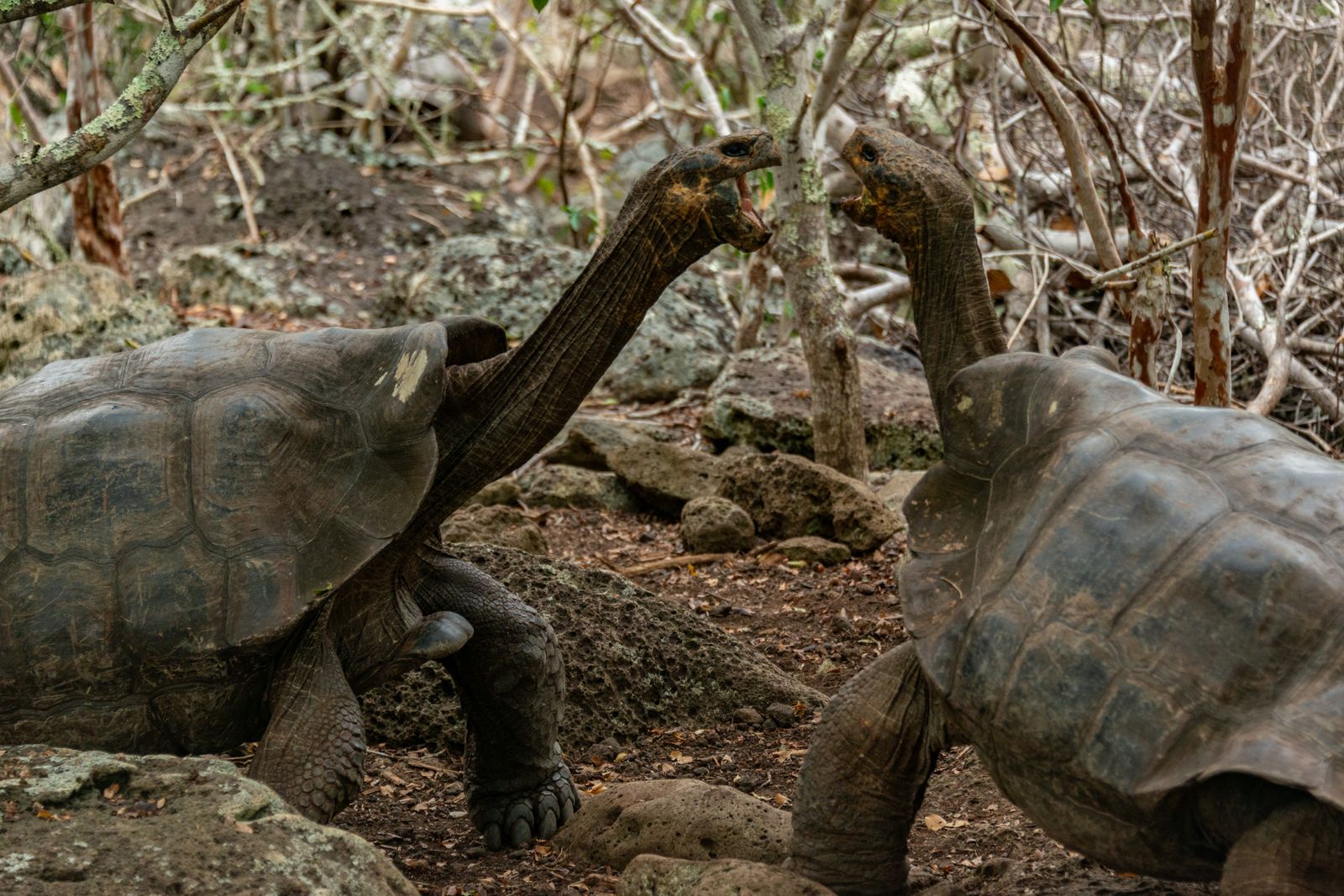
Giant tortoises
Seen at the Charles Darwin Research Station and, better, grazing wild in the humid Santa Cruz highlands.
Marine iguanas
The world's only sea-going lizard. Densest on Fernandina, and vividly coloured on Española during the mating season.
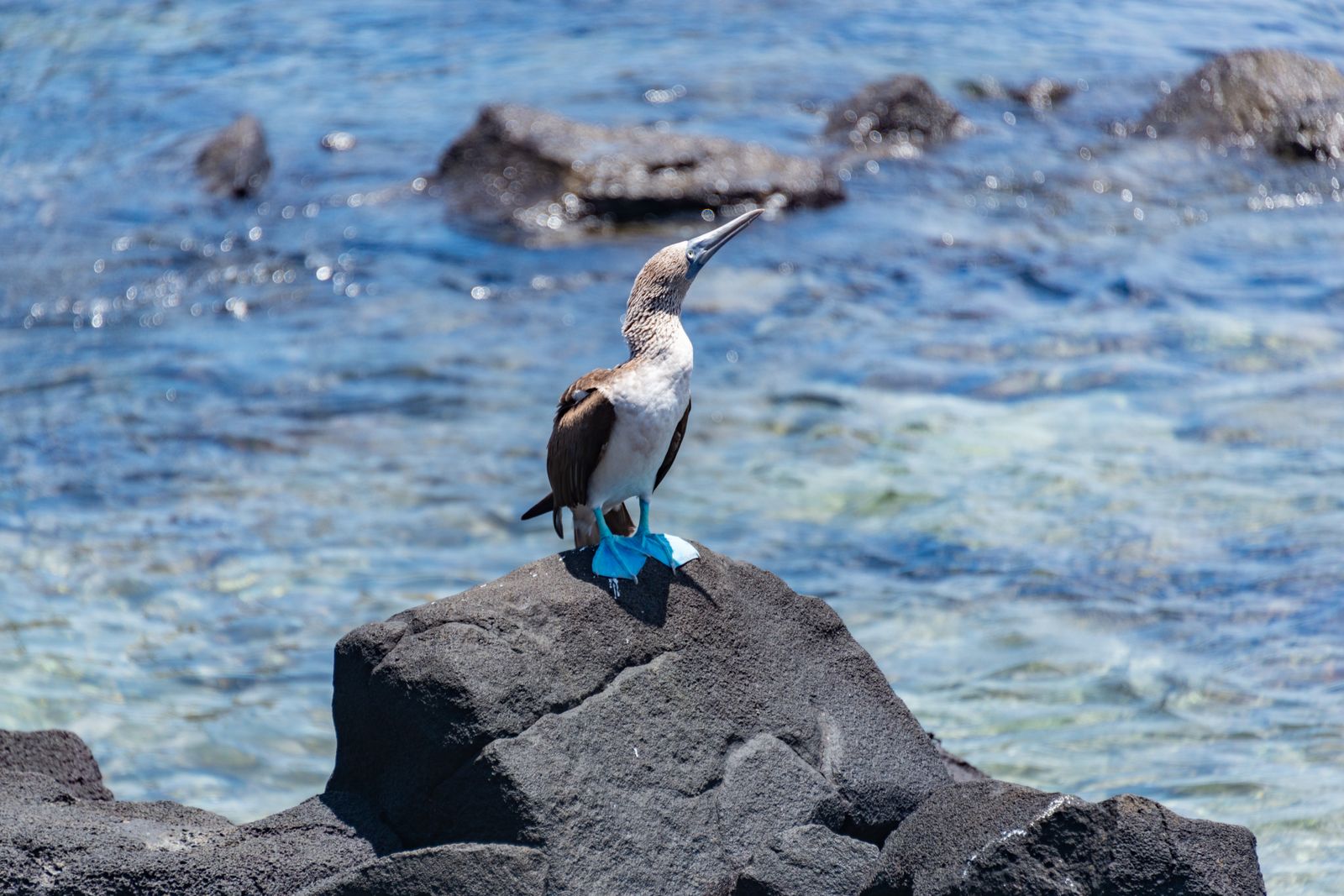
Boobies
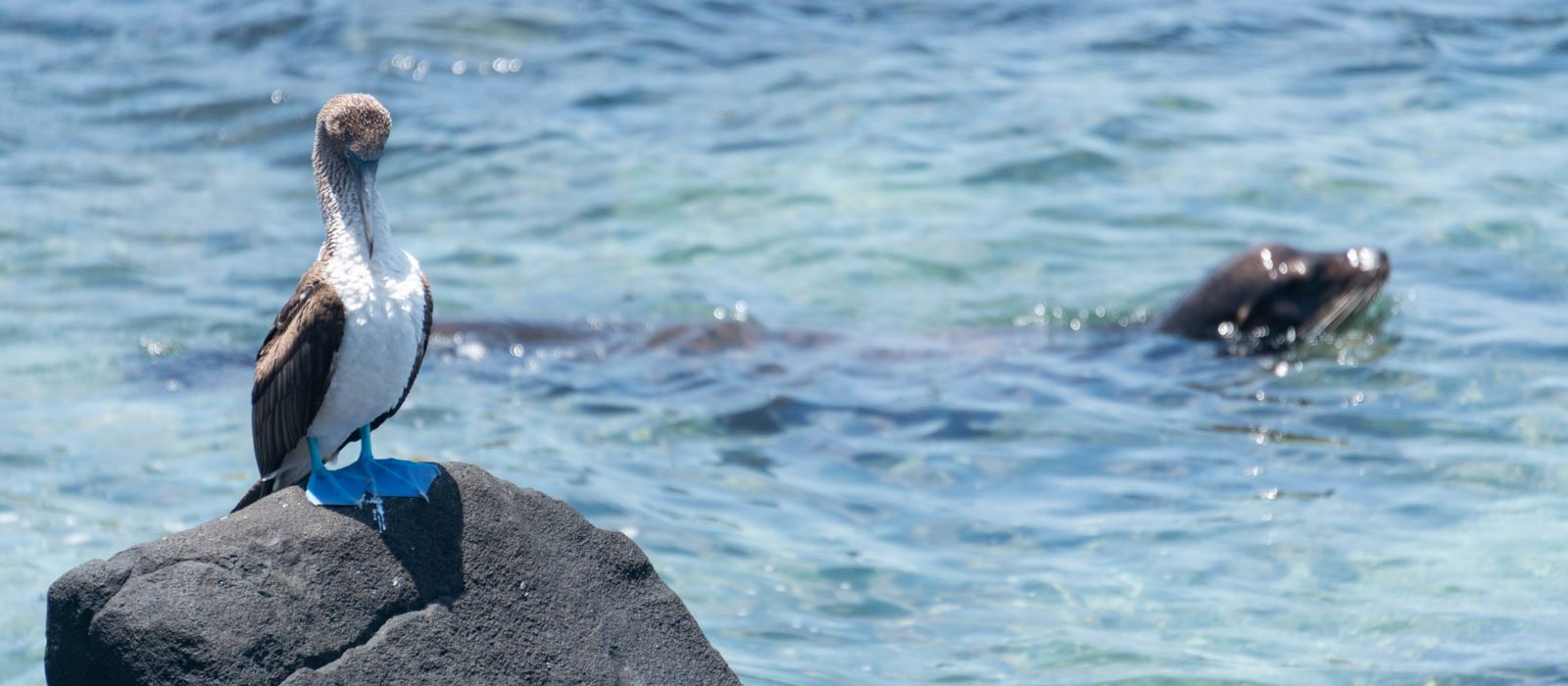
Blue-footed, Nazca and red-footed. Punta Pitt on San Cristóbal is the only site where all three occur together.
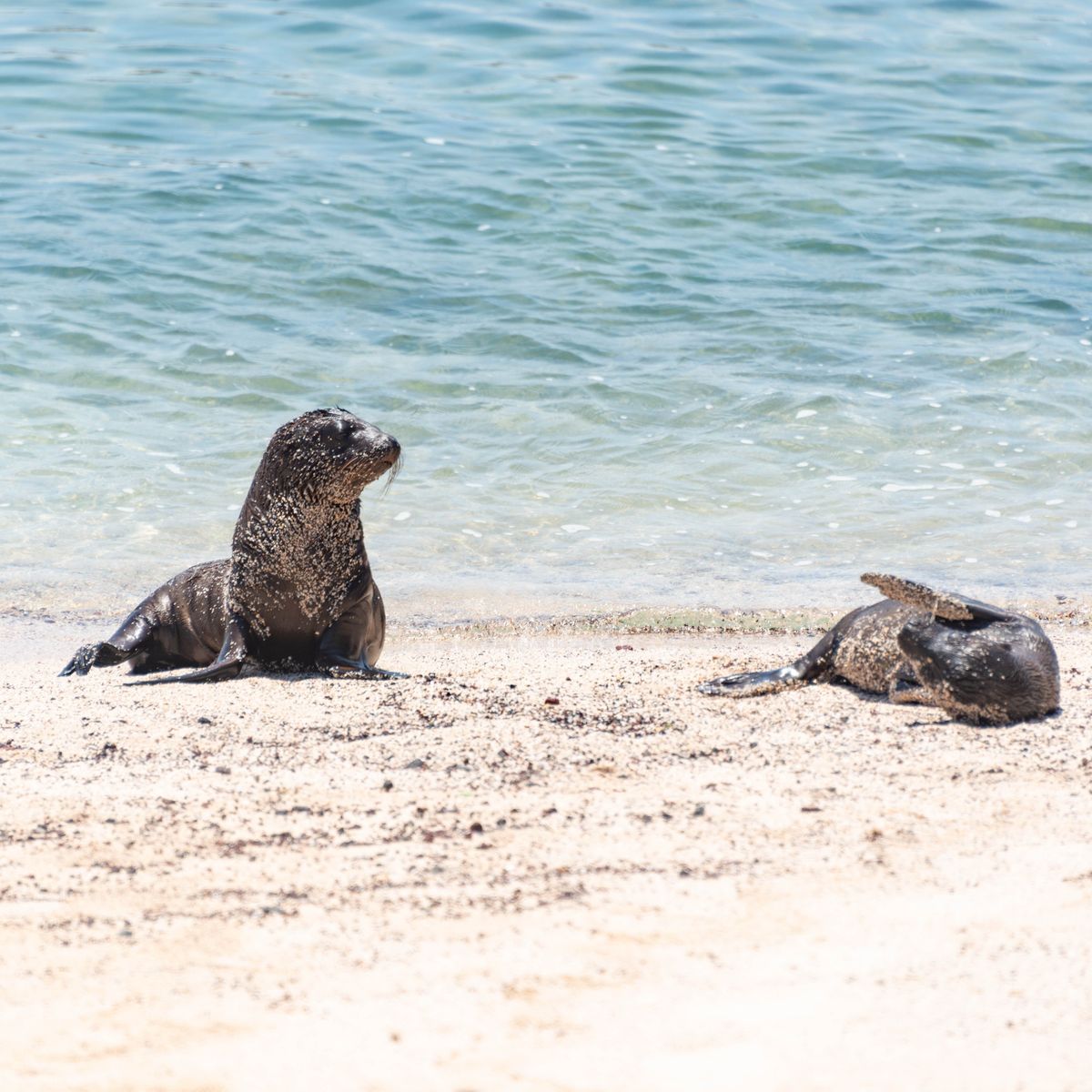
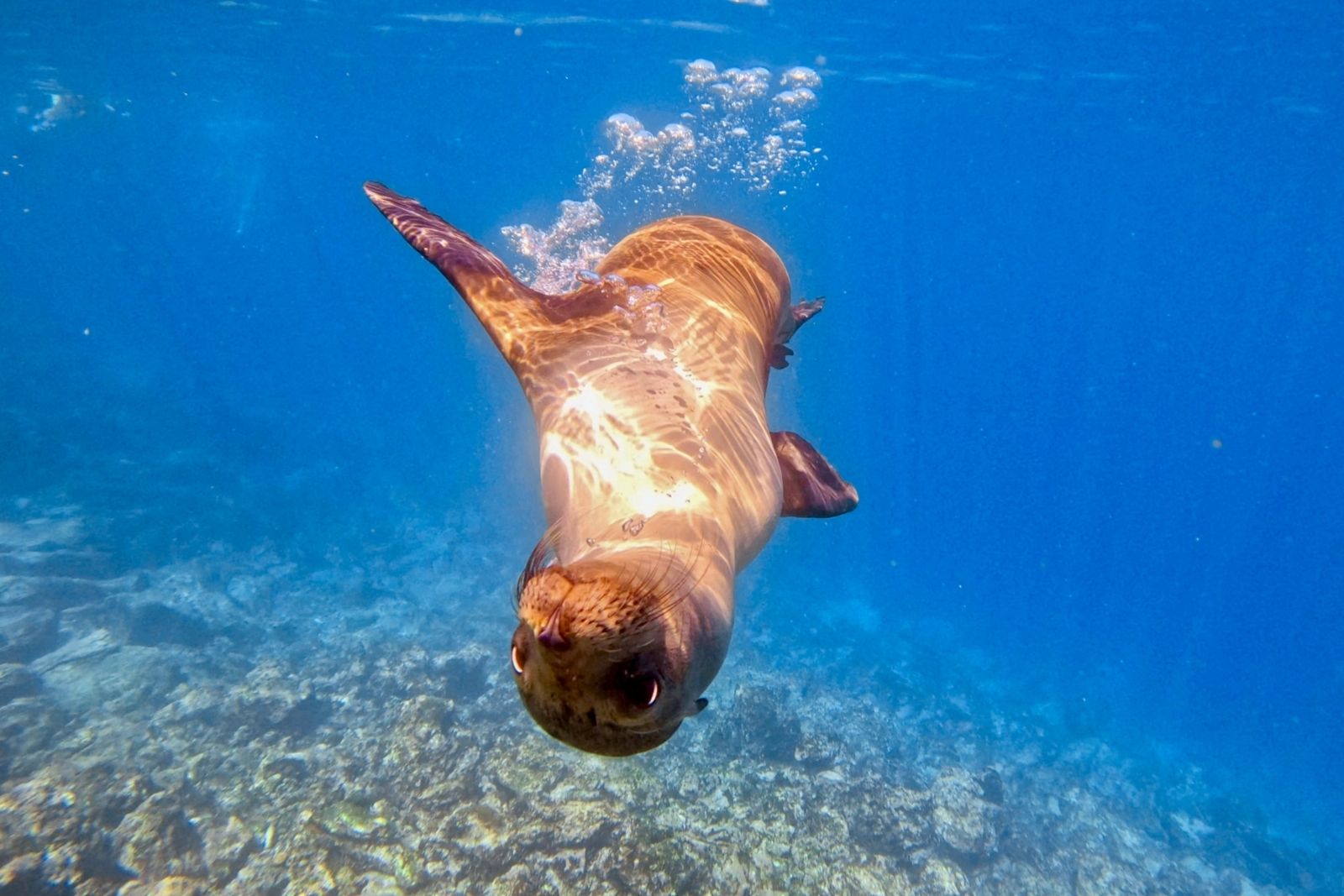
Sea lions
Present at nearly every landing, and genuinely interactive with snorkelers, particularly the pups from October onward.
Underwater
Green sea turtles, rays, reef sharks, and in the cool season manta rays, whale sharks and migrating humpbacks.
Endemic oddities
The flightless cormorant and the Galápagos penguin, the only penguin found north of the equator, both restricted to the western islands.
The no-fear behaviour is the thing people underestimate until they experience it. Park rules require you to keep a set distance from wildlife and to stay on the marked trails, but the animals have not read the rules and will walk past your feet, nest beside the path, or surface next to you in the water.
That is why the guides matter so much. Every excursion is led by a naturalist certified by the National Park, group sizes are capped, and the guide enforces the distance so you are not left guessing where the line is. It is a licensed profession in Ecuador, and the standard is consistently high across operators.
The practical consequence for photography is that a long telephoto is often the wrong lens. A wide or standard zoom, and something that copes with water, will serve you better than the kit you would take to the Arctic. More species detail sits in our Galápagos wildlife guide.
Should You Choose a Small Yacht or a Larger Ship?
Small vessels of 16 to 20 passengers give the most intimate experience: closer relationships with guides and crew, and fewer people in the water at once, which means better encounters with sea lions and penguins. Larger ships up to the 100-passenger National Park maximum ride more smoothly, offer more amenities, and carry multiple guides so you can choose between snorkeling, kayaking or a glass-bottom boat.
| Small yacht, 16-20 guests | Larger ship, 40-100 guests | |
|---|---|---|
| Social feel | Intimate. You will know everyone by day two | More varied, less personal |
| In-water encounters | Fewer people at a site at once, so closer wildlife interaction | Groups rotate; still excellent, just less solitary |
| Stability | More motion, particularly in the choppier cool season | Noticeably smoother, a real factor if you are prone to seasickness |
| Amenities | Basic and destination-focused | Multiple dining options, larger cabins, jacuzzis, lecture spaces |
| Excursion choice | One guide, one activity at a time | Multiple guides, so kayaking, snorkeling and glass-bottom options run simultaneously |
| Disembarkation | Fast — everyone ashore in one panga run | Staged, with some waiting |
| Best suited to | Travelers who want the destination undiluted | Families, groups, and anyone prioritising comfort and stability |
Our clients divide cleanly on this one, and both sides are right. There is no wrong answer here, only a mismatch between expectation and vessel. Every operator in the Galápagos does a genuinely good job — the archipelago is regulated tightly enough that nobody delivers a bad wildlife experience — so this is a question about how you want to spend the hours between landings rather than about what you will see.
If you are prone to seasickness, weight the stability column heavily, particularly if you are travelling in the choppier cool season. If you are travelling with children or with a group of friends, a larger vessel gives everyone somewhere to be. If you want the destination undiluted and do not mind motion, the small yachts are hard to beat.
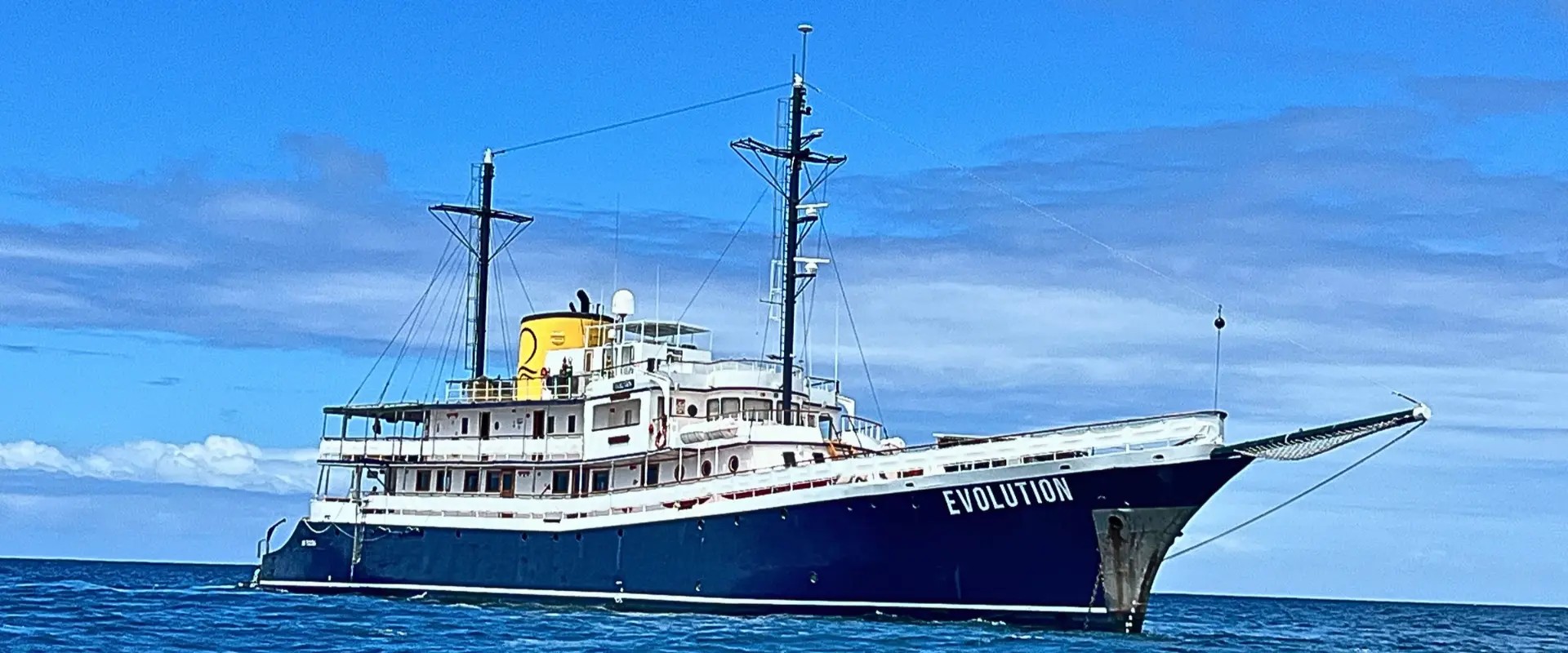
It is worth keeping the scale in perspective: the 100-guest cap means even the largest Galápagos ship is smaller than a mid-size Antarctic vessel. Vessel-by-vessel notes are in our Galápagos ships guide, and across destinations in expedition cruise lines and ships we have sailed, including our reviews of HX's MS Santa Cruz II and Evolution.
How Much Does a Galápagos Cruise Cost?
Most travelers spend $4,000 to $9,000 per person for a 7 or 8 night Galápagos cruise including excursions, guides and meals. Luxury vessels and suites run $10,000 to $18,000 or more. Shorter 4- and 5-day itineraries start lower. Budget separately for flights to Ecuador, the domestic flight to the islands, and roughly $220 per adult in mandatory government fees.
| Factor | What it means | Typical impact |
|---|---|---|
| Itinerary length | 4- or 5-day regional taste versus a full 8-day expedition | Close to doubles the fare |
| Vessel class | Basic small yacht versus a luxury expedition ship or catamaran | 2x to 4x on the same route |
| Cabin category | Lower-deck standard versus a suite with a balcony | Significant even within one vessel |
| Season timing | Holiday weeks and July-August peak; May, September and early December are shoulder | Meaningful swing on the same cabin |
| Getting there | International flights to Quito or Guayaquil, plus the domestic flight to Baltra or San Cristóbal | Often $700-$1,200 on top of the cruise |
| Government fees | $200 park fee per adult, $100 under 12, plus a $20 Transit Control Card | Roughly $220 per adult, cash |
| Mainland add-ons | Quito, the Andes, or an Amazon extension | Priced separately and often worth it |
Note: these ranges are 2026-27 planning estimates and move with season, vessel and availability. We quote live fares on specific departures — see the Galápagos cost guide.
The Galápagos is the most affordable of the expedition destinations we sell, which surprises people who assume it sits alongside Antarctica. A comfortable eight-day voyage costs roughly what a shoulder-season Antarctic cabin costs before you have added the flights south.
It is also the destination where the extras catch people out. The government fees are cash-only, the domestic flight to the islands is usually a separate booking, and a night in Quito or Guayaquil either side is effectively mandatory unless you enjoy risk. Building those in from the start keeps the budget honest.
Our planning costs nothing extra; pricing matches booking direct, with Signature amenities added where available. A fuller breakdown sits in our Galápagos cost guide.
Western route or Eastern? Small yacht or big ship?
Four decisions shape a Galápagos trip, and they are easier to make out loud.
What Fees and Paperwork Do You Need for the Galápagos?
You need two mandatory payments and both are cash. The Transit Control Card costs $20 per person and is bought at the Quito or Guayaquil airport before you check in for your island flight. The Galápagos National Park entrance fee is $200 per adult and $100 for children under 12, paid on arrival at Baltra or San Cristóbal. Luggage is also biosecurity-screened and sealed before departure.
The park fee rose to $200 on 1 August 2024, its first increase in decades. A great many websites still quote the old $100 figure, so check the date on anything you read about Galápagos costs, including ours. Ecuador uses the US dollar, and the counters frequently reject torn or worn bills, so bring crisp notes.
The airport sequence at Quito or Guayaquil runs like this: the Transit Control Card counter first, then biosecurity screening and sealing of all luggage, then airline check-in, then the park fee on arrival in the islands. Allow three hours at the mainland airport. It is not a queue you want to meet in a hurry.
Do not break the biosecurity seal on your bags until you reach your cabin. It is the frontline defence against invasive species — fruit flies, ants, seeds — that could do real damage to the islands' flora, and the crew will notice. Some operators bundle both fees into the cruise fare, and we check whether yours does, because it changes how much cash you need to carry through two airports.
Note: fee amounts and airport procedures are set by Ecuadorian authorities and change without much notice. Figures here are current as of September 2026; the National Park entrance fee rose to $200 per adult on 1 August 2024. Confirm before you travel — details in our entry requirements guide.
What Is a Day on a Galápagos Cruise Actually Like?
The ship sails overnight, so you wake at a new island. A typical day has two guided outings: a morning landing and an afternoon snorkel or panga ride, with a naturalist briefing before each. Landings are wet or dry — wet means stepping into shallow water from the panga. Between outings there are lectures, and most days include time to swim.
The rhythm is more predictable than a polar voyage, because the route is fixed and the weather rarely interferes. You will know the shape of tomorrow at tonight's briefing, and tomorrow will look like that.
Wet landings mean water shoes or sandals you can actually walk in once they are soaked. Dry landings mean stepping onto rock from a moving panga, which is the one moment in the day that asks for a steady foot and a helping hand from the crew. Trails are marked and you stay on them; that is a park rule, not a suggestion.
Snorkeling is offered nearly every day and it is genuinely central rather than an optional extra, because a large share of the wildlife you came for lives underwater. Guides are used to first-timers, flotation is available, and there is no shame in a pool noodle. Kit advice is in our Galápagos packing list and snorkeling guide.
Is the Galápagos Good for Families and First-Time Expedition Travelers?
Yes, on both counts. The Galápagos is the most accessible expedition destination we sell: no ice, no rough ocean crossing, short walks, warm water and a fixed itinerary. Children under 12 pay half the park fee, several operators run family departures with dedicated programming, and June works well for school holidays. It is also the easiest first step for travelers unsure about expedition travel generally.
For a family, the combination that works is a larger vessel for stability and space, a route with strong snorkeling, and the June or July window when school holidays and calm birding season line up. Family departures with dedicated programming sell out early, so this is one to plan a year out.
For a first-time expedition traveler, the Galápagos answers the question "will I actually like this style of travel" for a fraction of the cost and commitment of Antarctica. A good number of our polar clients started here, decided they liked small ships and naturalists, and went south two years later.
The physical demands are genuinely modest: uneven lava rock and short walks rather than tundra hikes or Zodiac transfers in cold water. More on travelling with children is in our guide to the Galápagos with children.
The other South American wildlife trip clients weigh against this one is the Amazon, and the two work in opposite ways: Galápagos animals are unafraid and visible at arm's length, while Amazon wildlife is dispersed and often high in the canopy. Some travelers do both on a single trip through Lima and Quito.
Is a Galápagos Expedition Right for You?
The Galápagos suits travelers who want close, reliable wildlife encounters, who are comfortable snorkeling or willing to learn, and who like the idea of a fixed itinerary run by expert guides. It suits you less if you want dramatic landscapes over animals, need extensive onboard amenities, dislike being in the water, or want the freedom to explore independently.
A good fit if you are
- Drawn to wildlife you can watch at a few feet rather than through a telephoto lens
- Comfortable in the water, or willing to snorkel for the first time
- Travelling with children, or making a first expedition trip
- Happy with a fixed, guided itinerary rather than independent exploration
- Interested in evolution, geology and the story behind what you are seeing
Probably not if you
- Want sweeping landscapes more than animals — the scenery is stark rather than grand
- Dislike being in the water, since much of the wildlife is underwater
- Need extensive ship amenities, spa facilities or a large choice of restaurants
- Want to wander unaccompanied — you must stay on marked trails with a licensed guide
- Are hoping for polar-scale remoteness and solitude
The most common mismatch we see is a traveler who wanted landscape and got biology. The Galápagos scenery is stark, volcanic and often brown; the astonishment is entirely in the animals and in how close they let you get. That is a wonderful trip if it is the trip you wanted.
Clients who want scale, emptiness and weather are usually happier in Antarctica or the Arctic, and we will say so on the phone rather than after you have paid a deposit. Comparing the three side by side is often the fastest way to a decision; our experiences pages set out what each style of trip feels like day to day.
How Far in Advance Should You Book the Galápagos?
Book 8 to 12 months ahead for holiday weeks, July and August, and for the small yachts, which have very few cabins and sell out first. Six months is usually enough for shoulder months. Because vessels are capped at 100 passengers and many carry 16, total capacity across the archipelago is genuinely limited, so popular departures go earlier than the destination's accessibility suggests.
People assume a year-round destination means relaxed availability, and the opposite is true at the small end of the fleet. A 16-passenger yacht has eight cabins. Two families booking together fill half of it, and one repeat client group can take the rest.
Add the constraint that a specific route only operates on specific weeks, and the intersection of "Western route, 8 days, August, family cabin" can come down to a handful of options worldwide. That is a conversation worth having early rather than optimistically.
Our usual advice is to hold with a refundable deposit while you settle the international flights, then confirm once the mainland side is locked. Call Chris on 920-659-2960 and we can check live availability while you are on the phone.
Why Book the Galápagos Through Glacial Expeditions?
Glacial Expeditions is an independent Wisconsin-based agency, an affiliate of Oasis Travel Network and a member of Signature Travel Network, serving travelers nationwide. Chris and Erika Commisso have sailed the Galápagos personally and have sailed on ten ships and toured seven more. Our planning costs you nothing extra — pricing matches booking direct, with Signature amenities added where available.
Oasis Travel Network affiliate · Signature Travel Network member · ECC Elite Cruise Counsellor · ASTA Verified Travel Advisor · Signature Travel Expert
Written by your expedition advisors
Chris Commisso · Expedition Expert
Signature Travel Expert
Erika Commisso · Travel Experience Architect
CLIA Elite Cruise Counselor · ASTA Verified Travel Advisor · Signature Travel Expert
Chris and Erika have sailed ten expedition voyages and toured seven more expedition ships. Favorite explorations so far: Antarctica, Svalbard, Greenland, Iceland, Norway, Alaska, the Galápagos, the Scottish Hebrides, Churchill and French Polynesia.
Last updated . Reviewed against current Galápagos National Park fee and vessel regulations, and against operator itineraries for the 2026-27 seasons.
More about how we work on about and what clients say on reviews. If you want a warm-water wildlife cruise closer to home, compare it with Baja California; for far greater marine biodiversity and a much longer journey, see Raja Ampat. When you are ready, get in touch.
Galápagos Expedition FAQs
How much are the Galápagos entry fees?
$200 per adult for the National Park entrance fee and $100 for children under 12, paid in cash on arrival. Plus a $20 Transit Control Card per person, bought at the mainland airport before your flight. The park fee doubled on 1 August 2024, so older websites quoting $100 are out of date.
Do you need a visa for the Galápagos?
Most visitors, including US passport holders, do not need a visa for Ecuador for short tourist stays, though your passport must be valid well beyond your return. The Galápagos is part of Ecuador, so there is no separate visa, only the Transit Control Card and park fee.
Do you have to snorkel?
No, but you will miss a great deal if you do not. Sea turtles, rays, reef sharks and the famously playful sea lions are mostly encountered in the water. Most operators provide equipment and wetsuits, and guides are used to first-timers. Glass-bottom boats are an alternative on larger vessels.
Is the water cold?
It depends on the season. From December to May the water is 70 to 80°F and most people snorkel comfortably without a wetsuit. From June to November the Humboldt Current cools it to 65 to 75°F and a wetsuit is usually wanted. Operators supply them either way.
Can you visit the Galápagos without a cruise?
You can stay in hotels on Santa Cruz, San Cristóbal or Isabela and take day tours, which costs less. But most of the archipelago's landing sites are only reachable by licensed vessel, so a land-based trip sees a small fraction of what a cruise does.
How big are the ships?
The Galápagos National Park caps vessels at 100 passengers. In practice most fall between 16 and 100, with small yachts of 16 to 20 at one end and larger expedition ships at the other. Even the biggest Galápagos ship is small by ordinary cruise standards.
Will I get seasick?
Less often than in the polar regions, but it happens. Seas are calmest in the warm season from December to May and choppier during the cool garúa season. Larger vessels ride noticeably more smoothly, which is worth paying for if you know you are susceptible.
Are there mosquitoes or a malaria risk?
Mosquitoes are minimal on the islands themselves and malaria is not a concern in the Galápagos. If you are extending to the Ecuadorian Amazon, that is a different picture and worth discussing with a travel clinic well before departure.
Should I add mainland Ecuador?
Most travelers should. You are already flying through Quito or Guayaquil, and Quito's colonial old town, the Andes, and the Amazon basin are all within easy reach. Adding three to five days also buffers you against a flight delay before your cruise.
How does the Galápagos compare to Antarctica?
They are opposite trips. The Galápagos is warm, year-round, fixed-itinerary and wildlife-at-arms-length, at roughly half the cost. Antarctica is cold, seasonal, ice-dependent and defined by scale and emptiness. Many clients do the Galápagos first and use it to decide whether expedition travel suits them.
Galápagos Planning Guides
When to visit the Galápagos
The warm season and the garúa season, month by month.
Western, Eastern and Northern routes
How the licensed route families differ and which suits you.
The Big 15 wildlife checklist
Every species, where it lives and when it is present.
Galápagos wildlife guide
What you will see on land, in the air and underwater.
Small yacht versus larger ship
Stability, amenities and how vessel size shapes the week.
What a Galápagos cruise costs
Fares, flights, fees and the extras people forget.
Fees, forms and biosecurity
The Transit Control Card, the park fee and sealed luggage.
Galápagos packing list
Water shoes, sun protection and what to leave behind.
Snorkeling in the Galápagos
Water temperatures, wetsuits and first-timer advice.
The Galápagos with children
Family departures, age minimums and the best months.
Island-by-island guide
Landing sites across the archipelago and what each offers.
Quito, the Andes and the Amazon
Mainland extensions worth building into the trip.
We have sailed the Galápagos ourselves. Read our firsthand M/Y Evolution review for what a 32-guest yacht week actually looks like.
New to this style of travel? Start with What is an expedition cruise? For this region in particular, see warm-weather expedition cruising.