

Part of our The Galápagos guide →
Family planning at a glance
- Workable from
- Ages 6 to 8 and up on most ships
- Key skill
- Comfort in open water with a mask
- Cruise
- Multi-island, guided, fixed pacing
- Land-based
- One base, pool, flexible days
- Park fee
- $100 per child under 12 rather than $200
- Cabins
- Triples and connecting cabins on modern ships
What Age Works Best?
Six to eight and upward suits most itineraries, because children need to manage panga transfers, walk unaided over uneven volcanic trails and be comfortable snorkeling in open water. Confident swimmers younger than that can do well on land-based trips or ships with dedicated youth programmes.
The limiting factor is almost always water confidence rather than fitness. A child who is happy with a mask and a wetsuit in deep water has an extraordinary trip; a child who is not will spend the best hours in the panga.
Cruise or Land-Based for Families?
A cruise covers far more of the archipelago, moves overnight and includes guided excursions twice daily, which suits children who like structure. Land-based stays give you a pool, a fixed room, restaurant choice and the freedom to skip a day, at the cost of seeing fewer islands.
| Small-ship cruise | Land-based stay | |
|---|---|---|
| Islands seen | Several, with overnight repositioning | One or two, by day boat |
| Pacing | Fixed twice-daily excursions with guides | Flexible; easy to take a day off |
| Children's programming | Youth coordinators and science activities on family sailings | Depends entirely on the hotel |
| Downtime | Ship lounges, decks, sometimes a small pool | Pool, town, restaurants |
| Best for | Ages 8+ and families wanting maximum wildlife | Younger children, mixed interests, longer stays |
Some families combine both: a few nights on land in Puerto Ayora, then a shorter cruise.
For a first family trip with children under ten, a shorter cruise of four or five nights often works better than eight. It keeps the novelty high and the fatigue low.
Route shapes are in Galápagos itineraries and vessel differences in Galápagos ships.
What Do Ships Offer Children?
On family-oriented sailings, expect a youth coordinator or naturalist running science activities, shorter walk options, gear sized for children and briefings pitched at them. Ships with several activity levels running simultaneously suit mixed-age groups, because a strenuous hike and an easier option can happen at once.
Firsthand: there were families aboard both of our Galápagos sailings, and the children's programming was better than we expected — dedicated activities that kept a wide age range engaged without separating them from the rest of the group. The January 2026 voyage aboard the Santa Cruz II is written up in the journal; the 2023 sailing was aboard the Evolution with Quasar Expeditions.
Which Activities Land Best With Children?
Snorkeling near curious sea lion pups, looking for wild giant tortoises in the Santa Cruz highlands, and watching blue-footed boobies nest beside the trail. All three deliver animals close, active and unbothered, which is exactly what children respond to.
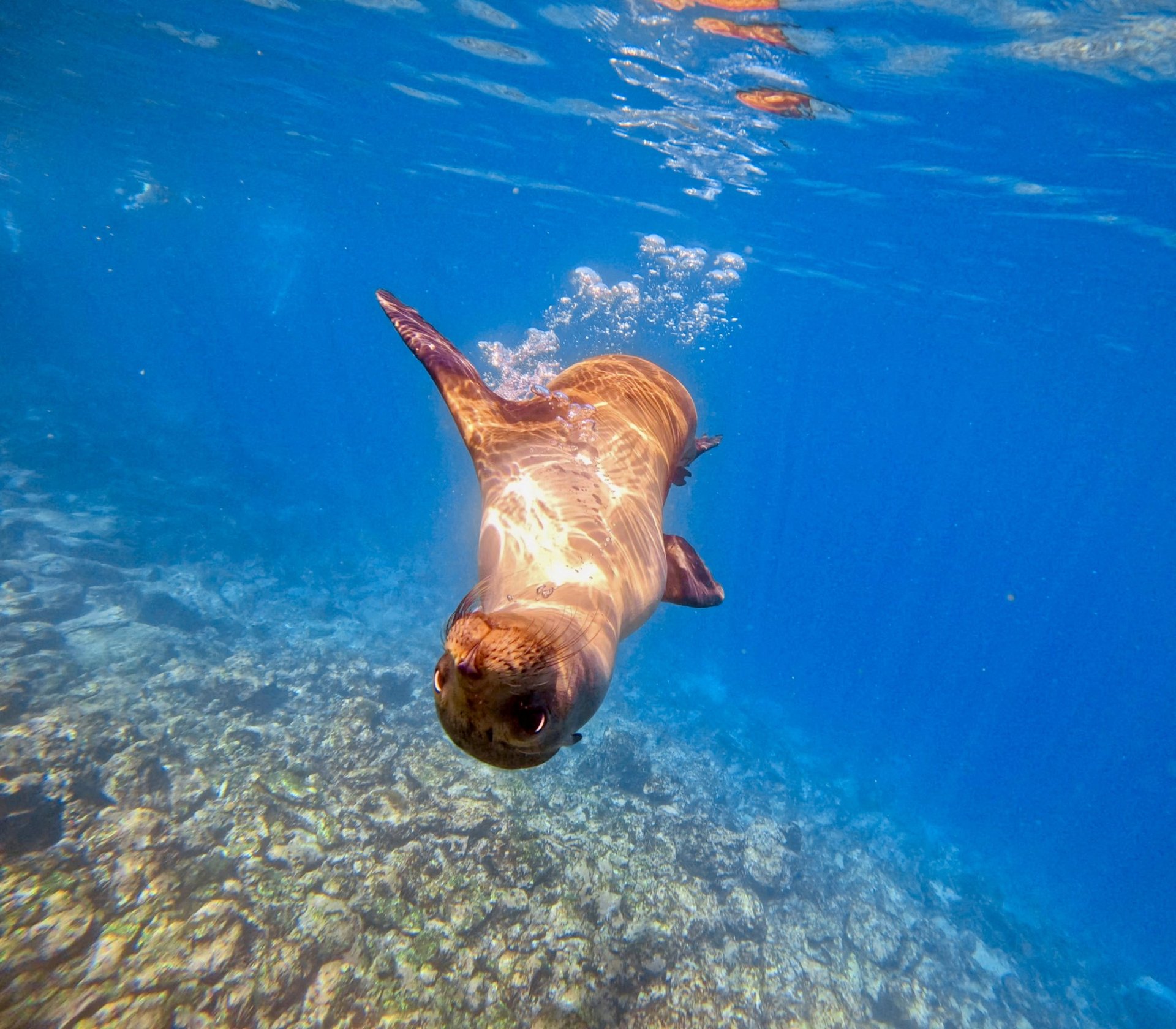
Species and behaviour by season are in the Galápagos wildlife guide and the water side in snorkeling.
What Should Parents Plan For?
Life jackets are provided for every panga ride and guides enforce their use. Book triple or connecting cabins early, because there are few of them. Bring child-sized rash guards and reef-safe sunscreen, plan for motion sickness in the garúa season, and budget $100 rather than $200 for the park fee per child under 12.
The 2-metre wildlife distance rule applies to children too, and guides will say so. It is worth explaining before the first landing rather than on it.
Fees and totals are in what a Galápagos expedition costs.
Galápagos with children: common questions
What is the minimum age for a Galápagos cruise?
Most ships set six or seven as a practical minimum and some family sailings go lower. The real test is whether a child can board a panga and snorkel in open water.
Do children pay less?
The park fee is $100 rather than $200 for under-12s, and many ships discount third berths. Island flights are full fare.
Is the snorkeling safe for children?
Yes with supervision. Guides run shallow options from the beach as well as deep-water drops, and flotation is available on every outing.
When should families travel?
December to May has warmer, calmer water, which is easier for younger swimmers. School holidays fill first, so book well ahead.
Will teenagers be bored?
Rarely. Kayaking, deep-water snorkeling, longer hikes and photography give teenagers plenty, especially on ships running several activity levels at once.