


Part of our The Galápagos guide →
Galápagos wildlife at a glance
- Distance rule
- 2 metres (6 feet) from all wildlife
- Reptiles
- Giant tortoise, marine iguana, land iguana
- Seabirds
- Three booby species, frigatebirds, waved albatross
- Albatross season
- April to December, Española only
- Marine life
- Sea lions, fur seals, Galápagos sharks, rays, turtles
- Endemism
- A high share of species occur nowhere else
Why Does the Wildlife Not Run Away?
The islands are 600 miles from the mainland and had no land predators before humans arrived, so animals never evolved a flight response to something walking past. You do not approach them; you stand still on the trail and they carry on nesting, sleeping or feeding a couple of metres away.
This is also why the rules matter. Tameness is not tolerance, and a colony disturbed at the wrong moment abandons eggs.
Which Reptiles Should You Look For?
The Galápagos giant tortoise, best seen in the Santa Cruz highlands and at breeding centres; the marine iguana, the world's only ocean-swimming lizard, grazing algae on the rocks; and land iguanas, including the pale Santa Fe species. Lava lizards are on almost every trail.
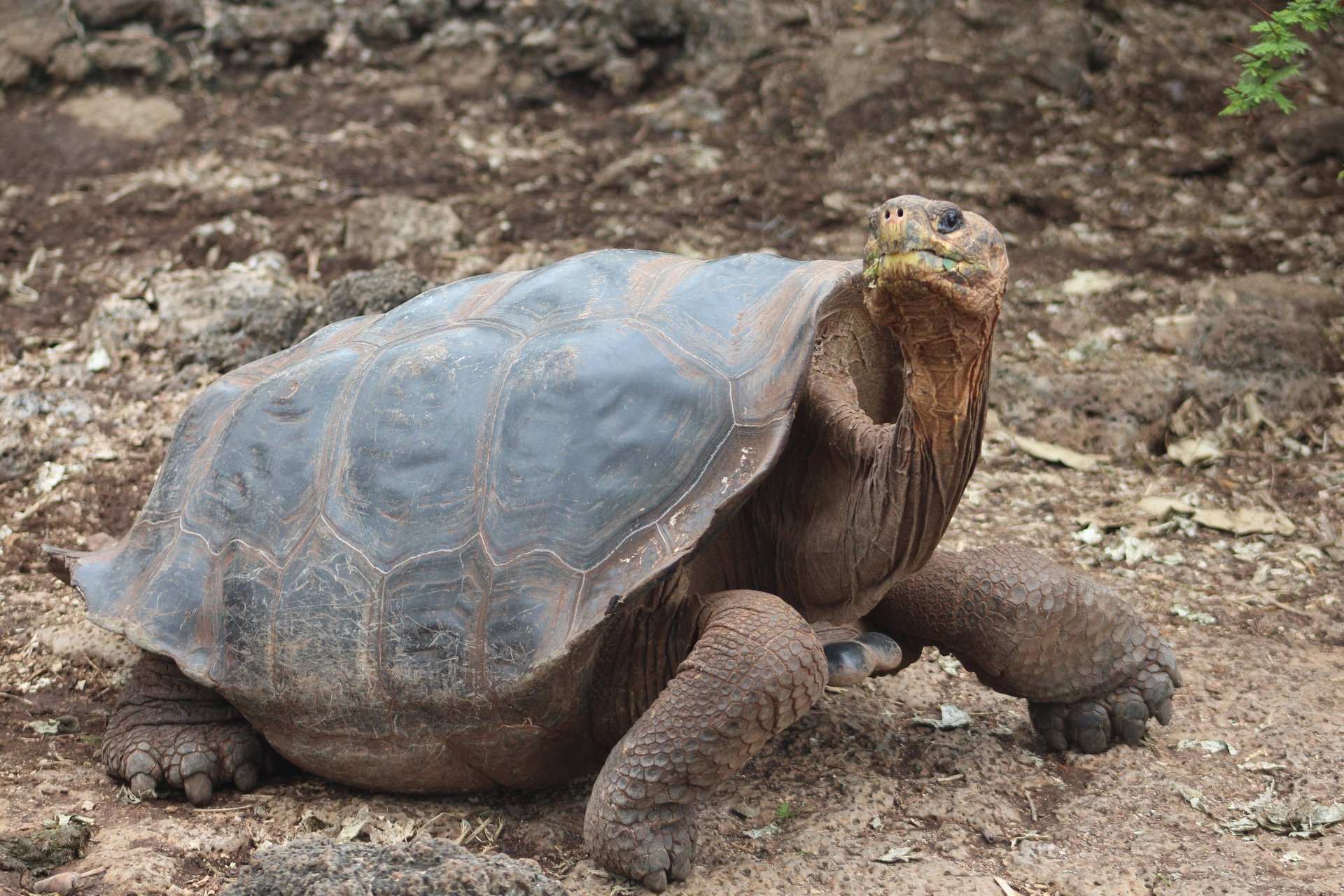
Firsthand: wild giant tortoises in the Santa Cruz highlands were the closest we came to being ignored by an animal the size of a coffee table, on the January 2026 Santa Cruz II route. That day is in the journal entry.
What About the Seabirds?
Blue-footed boobies nest beside the trails and display their feet, red-footed and Nazca boobies dominate Genovesa, frigatebirds inflate scarlet throat pouches, and the waved albatross nests on Española between roughly April and December. Flightless cormorants and Galápagos penguins occur in the cooler west.
| Species | Where | When |
|---|---|---|
| Galápagos giant tortoise | Santa Cruz highlands, Isabela, breeding centres | Year-round; most active in the warm season |
| Marine iguana | Rocky shorelines throughout | Year-round; colourful males in the warm season |
| Blue-footed booby | Central and southern islands | Year-round, courtship display peaks mid-year |
| Red-footed and Nazca boobies | Genovesa, Española, San Cristóbal | Year-round |
| Waved albatross | Española only | Roughly April to December |
| Galápagos penguin | Isabela, Fernandina, Bartolomé | Year-round; most active in cool season |
| Flightless cormorant | Isabela and Fernandina | Year-round |
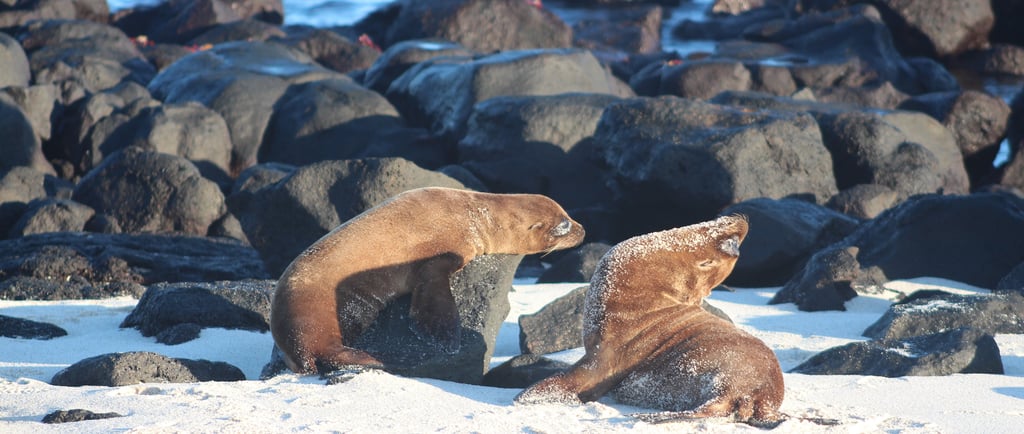
| Galápagos sea lion | Beaches archipelago-wide | Year-round; pups later in the year |
| Greater flamingo | Brackish lagoons, including Las Bachas and Floreana | Year-round, numbers vary |
Sightings depend on your route as much as the season. Confirm the islands on your itinerary before booking around one species.
Darwin's finches are less photogenic and more interesting: a dozen or so species differentiated largely by beak, and the reason the archipelago changed biology.
The marquee species and where to find them are set out in the Big 15.
What Lives in the Water and on the Shoreline?
Galápagos sea lions on almost every beach, fur seals on rockier coasts, Galápagos sharks and white-tip reef sharks, eagle and manta rays, Pacific green sea turtles, Sally Lightfoot crabs on the lava, Galápagos hawks overhead and greater flamingos in the brackish lagoons.
Most of this is best met with a mask on: see Galápagos snorkeling.
What Are the Observation Rules?
Keep at least 2 metres (6 feet) from every animal, stay on marked National Park trails, never touch or feed wildlife, and use no flash photography. Guides enforce this and can end a landing over it. Groups are capped and each site is visited on a permitted schedule.
Drones are prohibited in the National Park without a research permit. If an animal is on the trail, you wait or go around outside the marked edge only if your guide directs it.
Seasonal breeding and behaviour patterns are in when to visit the Galápagos.
Galápagos wildlife: common questions
How close can you get to the animals?
The rule is 2 metres, about 6 feet, from all wildlife. Animals frequently come closer of their own accord, in which case you hold still and let them pass.
Is there a bad month for wildlife?
No. Sea lions, boobies, tortoises and iguanas are present year-round. Only a few events, such as albatross nesting, are seasonal.
Can I use a drone?
No. Drones are prohibited in the National Park without a research permit, and ships will ask you to leave them stowed.
Will I see whale sharks?
Only on far-western liveaboard dive itineraries around Darwin and Wolf, chiefly June to November. Standard snorkeling itineraries do not reach them.
Is flash photography really banned?
Yes, throughout the National Park. It disturbs nesting birds and nocturnal species, and guides will stop you.