
Plan
When to Go.
Every expedition region has a season, and the month matters more than most people expect.
Expedition regions have short, fixed seasons set by ice, weather, and wildlife cycles. Antarctica runs November to March, the Arctic June to August, Alaska May to September, and the Galápagos year-round. Within a season, the month changes what you see — early-season Antarctica means unbroken snow and courting penguins, late season means whales and mud.
Why the month matters more than the ship.
Two travelers on the same ship, on the same route, six weeks apart, have different trips. Wildlife cycles drive it: breeding, hatching, moulting, migration, and ice conditions all shift week by week. Choosing the month first, then the ship, is the order that produces the trip people actually wanted.
Season by destination.
Peak is the heart of the season. Shoulder months still sail, with fewer ships and more variable conditions. Closed months have no scheduled expedition sailings. Every cell is labelled in text, so the tables read the same without colour.
| Destination | Jan | Feb | Mar | Apr | May | Jun | Jul | Aug | Sep | Oct | Nov | Dec |
|---|---|---|---|---|---|---|---|---|---|---|---|---|
| Antarctica | Peak | Peak | Shoulder | Closed | Closed | Closed | Closed | Closed | Closed | Closed | Shoulder | Peak |
| Subantarctic Islands | Peak | Peak | Shoulder | Closed | Closed | Closed | Closed | Closed | Closed | Closed | Shoulder | Peak |
| Arctic and Svalbard | Closed | Closed | Closed | Closed | Shoulder | Peak | Peak | Peak | Shoulder | Closed | Closed | Closed |
| Greenland | Closed | Closed | Closed | Closed | Closed | Shoulder | Peak | Peak | Shoulder | Closed | Closed | Closed |
| Canadian Arctic and Northwest PassageBeing confirmed | Closed | Closed | Closed | Closed | Closed | Closed | Shoulder | Peak | Shoulder | Closed | Closed | Closed |
| Destination | Jan | Feb | Mar | Apr | May | Jun | Jul | Aug | Sep | Oct | Nov | Dec |
|---|---|---|---|---|---|---|---|---|---|---|---|---|
| Alaska | Closed | Closed | Closed | Closed | Shoulder | Peak | Peak | Peak | Shoulder | Closed | Closed | Closed |
| Iceland | Closed | Closed | Closed | Closed | Shoulder | Peak | Peak | Peak | Shoulder | Closed | Closed | Closed |
| Scottish Hebrides | Closed | Closed | Closed | Shoulder | Peak | Peak | Peak | Peak | Shoulder | Closed | Closed | Closed |
| Norway (summer fjords) | Not listed | Not listed | Not listed | Not listed | Shoulder | Peak | Peak | Peak | Shoulder | Not listed | Not listed | Not listed |
| Norway (northern lights) | Peak | Peak | Shoulder | Not listed | Not listed | Not listed | Not listed | Not listed | Not listed | Not listed | Shoulder | Peak |
| PatagoniaBeing confirmed | Peak | Peak | Shoulder | Shoulder | Closed | Closed | Closed | Closed | Shoulder | Shoulder | Peak | Peak |
| Destination | Jan | Feb | Mar | Apr | May | Jun | Jul | Aug | Sep | Oct | Nov | Dec |
|---|---|---|---|---|---|---|---|---|---|---|---|---|
| GalápagosWarm and wet December to May; cool and nutrient-rich June to November. | Year-round | Year-round | Year-round | Year-round | Year-round | Year-round | Year-round | Year-round | Year-round | Year-round | Year-round | Year-round |
| Baja and Sea of Cortez | Peak | Peak | Peak | Shoulder | Closed | Closed | Closed | Closed | Closed | Closed | Closed | Shoulder |
| The Kimberley | Closed | Closed | Closed | Shoulder | Peak | Peak | Peak | Peak | Shoulder | Closed | Closed | Closed |
| Raja AmpatBeing confirmed | Peak | Peak | Peak | Shoulder | Closed | Closed | Closed | Closed | Closed | Shoulder | Peak | Peak |
| The AmazonHigh water December to May; low water June to November. | Year-round | Year-round | Year-round | Year-round | Year-round | Year-round | Year-round | Year-round | Year-round | Year-round | Year-round | Year-round |
Being confirmed: the season detail for Patagonia, Raja Ampat, and the Canadian Arctic and Northwest Passage is under verification with the operators we work with. Treat those three rows as provisional.
What changes within a season.
When should I go to Antarctica?
The season runs November to March. November brings unbroken snow, pristine ice, and penguin courtship. December and January bring the longest days, hatching chicks, and the warmest weather of the year. February and March bring the best whale watching, fledging chicks, and colonies that are muddy and loud. The month decides the trip.
When should I go to Svalbard and the Arctic?
June to August is the season, with May and September as shoulder months. June holds more fast ice, which concentrates polar bears at the ice edge. July and August open the fjords, bring tundra wildflowers, and put the midnight sun overhead around the clock. September darkens enough for a chance at the aurora.
When should I go to Greenland?
July through September is the expedition window, when sea ice loosens enough for ice-strengthened ships to work the eastern fjords. Early season means more ice and fewer other vessels. Late August and September bring warmer settled days ashore, autumn colour on the tundra, and the first realistic chance of northern lights.
When should I go to the Galápagos?
The Galápagos is a year-round destination and the wildlife never leaves. December to May brings warmer water, calmer seas, and tropical showers, which suits snorkelling and families. June to November brings cooler, nutrient-rich water, choppier crossings, and the most active marine life, including feeding activity around the western islands.
When should I go to Alaska?
May to September, and the month changes what you see. May and June bring long light, snow still on the peaks, and fewer people. July and August are the peak for bears, because the salmon are spawning in the coastal streams. September brings autumn colour, quieter anchorages, and more weather.
When should I go to Norway?
Norway has two separate seasons. June to August is the summer fjord season, with midnight sun, hiking, and long days on deck along the coast and up to Lofoten and Tromsø. December to February is the northern lights season, sailed in cold darkness, when the aurora is the reason for the voyage.
When should I go to Iceland?
June to August is the circumnavigation season, with near-continuous daylight, seabird cliffs at their busiest, and the Westfjords accessible. May and September are shoulder months with fewer ships and more changeable weather. September darkens enough for northern lights, but sea conditions around the island become less reliable.
When should I go to the Scottish Hebrides?
May to August is the season. May and June bring the longest days, wildflowers on the machair, and puffins ashore at their colonies. July and August stay mild but busier. April and September are shoulder months, quieter and wetter, with a higher chance of a landing being called off for swell.
Regions we have not sailed.
- Subantarctic Islands: The season mirrors Antarctica's, November to March, and permits limit how many ships land each summer.
- Canadian Arctic and Northwest Passage: August is the short window when sea ice usually loosens enough for a transit attempt.
- Patagonia: The austral summer, November to February, gives the longest days and the most reliable Cape Horn conditions.
- Baja and Sea of Cortez: January to March is the grey whale calving season in the Pacific lagoons.
- The Kimberley: May to August is the dry season, when the tides and waterfalls are workable for Zodiac exploration.
- Raja Ampat: November to March is the calm-water window most liveaboards and expedition ships sail.
- The Amazon: High water from December to May floods the forest for deeper tributary access; low water from June to November exposes beaches and trails.
December versus February in Antarctica.
We have sailed Antarctica in both months, and they are close to different trips. In December we found penguins on eggs and whales feeding actively after their migration. By February the chicks had grown into curious juveniles and the whales were more playful before heading out to open water.
The honest caveat: wildlife encounters can never be guaranteed. That is a comparison of two seasons we sailed, not a promise about the week you book. More month by month in the best time to visit Antarctica.
Booking against the season.
Most travelers book twelve to eighteen months ahead, because the best ships and the solo cabins for a given season are committed early. Late booking rarely gets you a deal — it gets you what's left. If a specific month matters to you, that's a reason to start earlier, not later.
Written by your expedition advisor

Chris Commisso · Expedition Expert
Signature Travel Expert
Chris and Erika have sailed ten expedition voyages and toured seven more expedition ships. Favorite explorations so far: Antarctica, Svalbard, Greenland, Iceland, Norway, Alaska, the Galápagos, the Scottish Hebrides, Churchill and French Polynesia.
Last updated .
From our journal
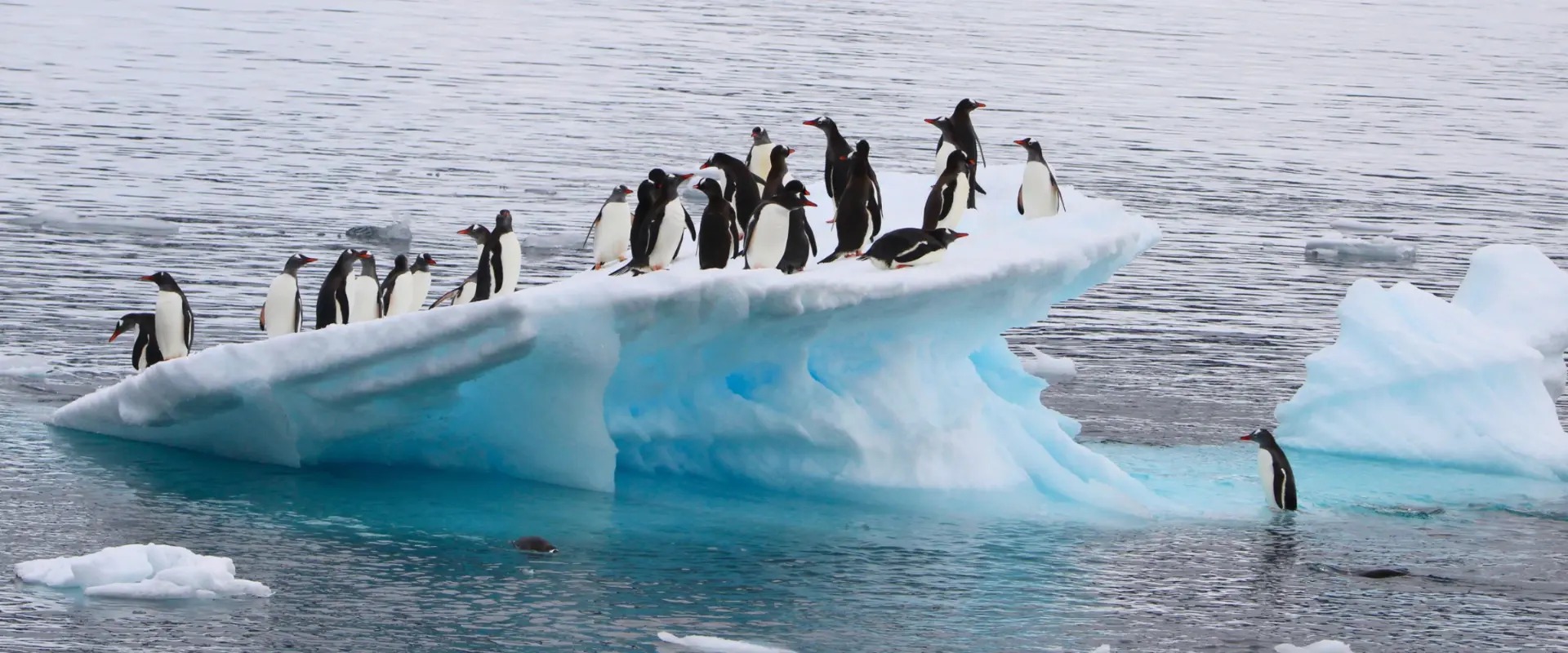
Ten Days to Antarctica Aboard the Greg Mortimer
7–19 December 2024 · Aurora Expeditions
In December 2024 we sailed Aurora Expeditions' Greg Mortimer round trip from Ushuaia to the Antarctic Peninsula. We Zodiac cruised the Melchior Islands and Paradise Harbour, landed at Port Lockroy and among nesting gentoos on Danco Island, watched whales in the bay all day, walked Deception Island, and sent five whale-tail photos to a citizen science project. Three were identified.
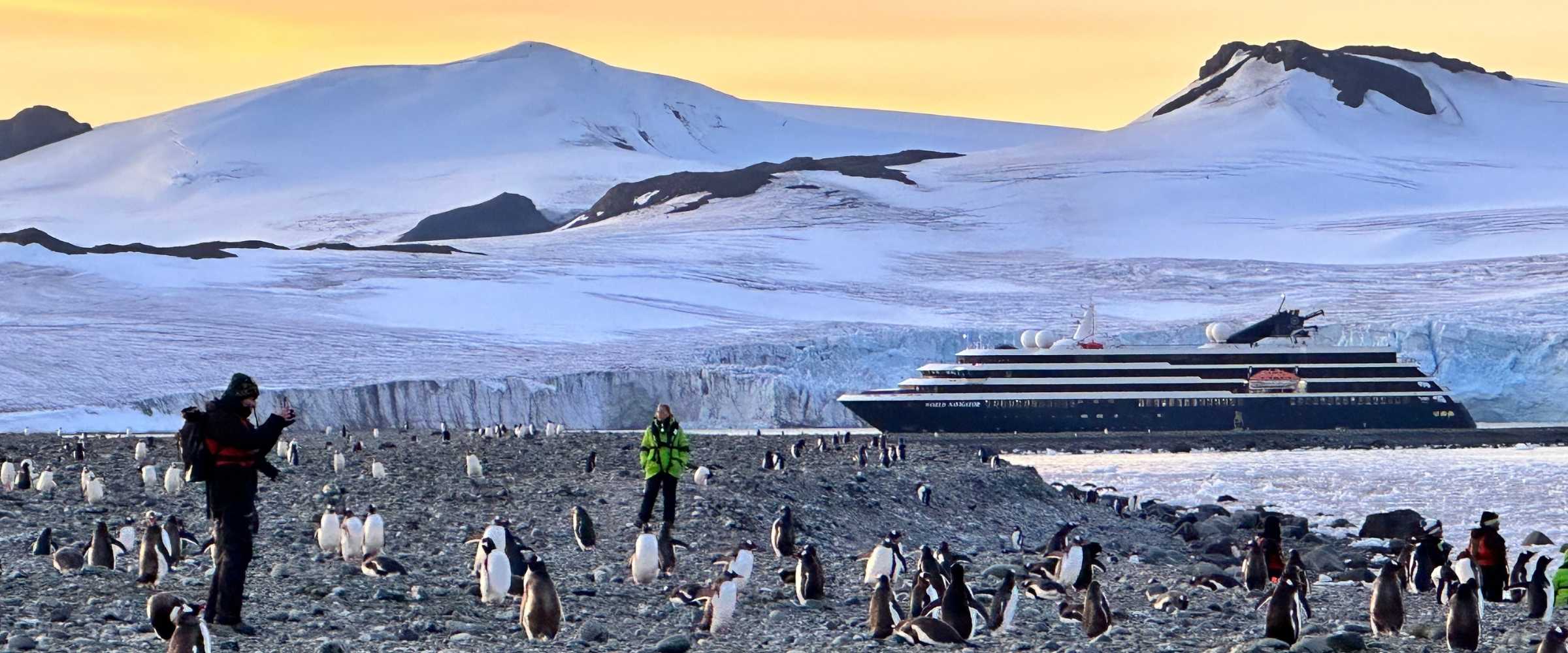
Antarctica Aboard the World Navigator: Our Journey to the White Continent
24 February–6 March 2024 · Atlas Ocean Voyages
Eleven days from Buenos Aires to the Antarctic Peninsula aboard Atlas Ocean Voyages' World Navigator. Humpbacks spyhopping around the Zodiacs in Fournier Bay, leopard seals hunting chinstraps at Duroch Island, and a night camping ashore at Eckener Point — nine hours, twenty-five minutes and forty-seven seconds off the ship, listening to glaciers crack.