I've traveled to some pretty remote places, but Antarctica is different.
You can read about it, watch videos, study photographs and talk to people who have been there. None of that really prepares you for the first time you see the continent for yourself.
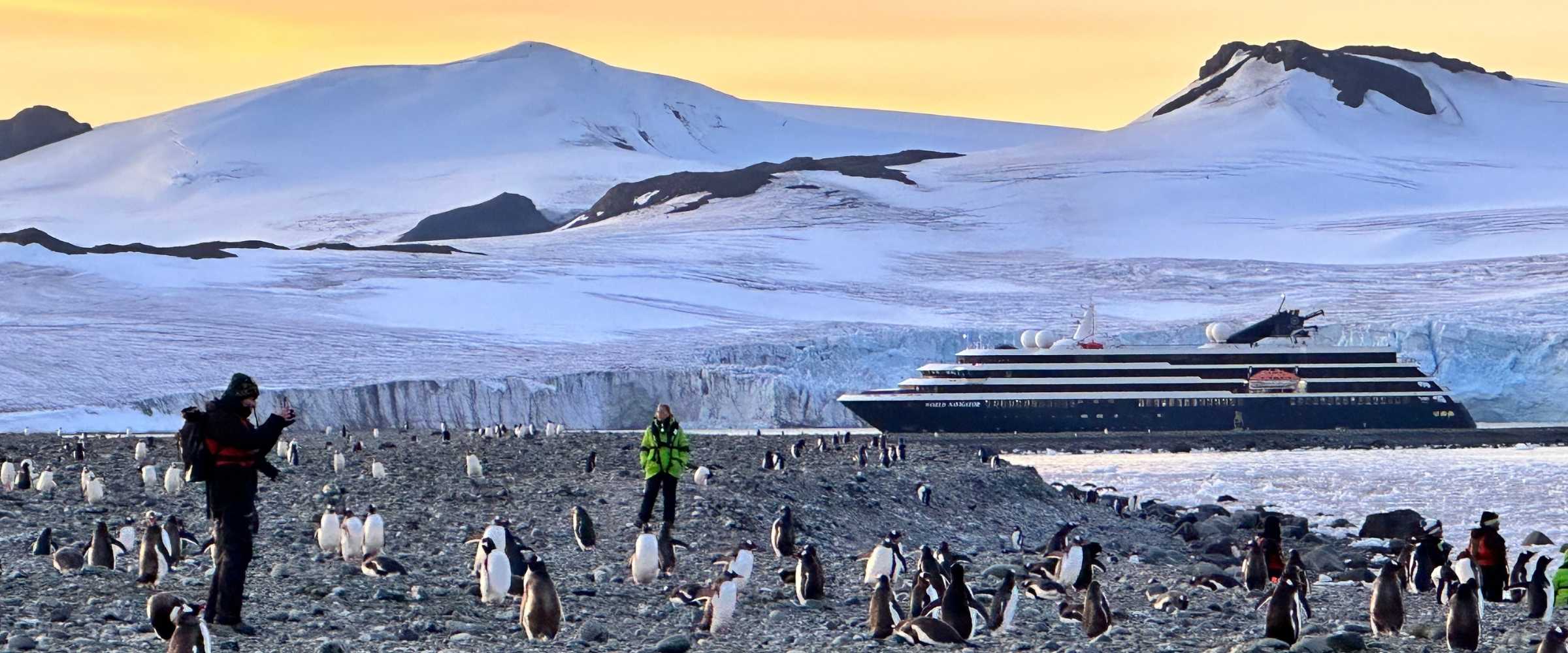
Our February 2024 journey aboard Atlas Ocean Voyages' World Navigator took us from Buenos Aires to Ushuaia, across the Drake Passage and into the Antarctic Peninsula. Along the way, we encountered enormous icebergs, penguin colonies, humpback whales, leopard seals and more than a few moments that I simply wasn't expecting.
We also spent a night camping on the Antarctic continent.
That part deserves its own story.
Before the Ship: Buenos Aires and Ushuaia
Our trip began with a flight from Chicago to Buenos Aires on February 24. After arriving, we checked into the Hilton Buenos Aires and were fortunate enough to get into our room early after upgrading. After the long flight, a little extra sleep turned out to be a very good investment.
The next day we had time to explore Buenos Aires before heading farther south.
After breakfast, we walked around the city and came across what initially looked like a neighborhood street market. It turned out to be the Feria de San Telmo, the enormous Sunday market that stretches along Calle Defensa and around Plaza Dorrego.
Several blocks were closed to traffic and filled with vendors, food, souvenirs and antiques. We ended up buying a fitted leather belt and a couple of Yerba Mate cups.

On the way back to the hotel, we stopped at Negroni for appetizers and, naturally, a couple of their signature Negronis.
That evening we went to El Querandí for dinner and a tango show. There was singing, dancing and plenty of energy in the room, and we met several other travelers who were spending time in Brazil.
It was a fun first taste of South America before the focus of the trip shifted completely north—to the far south.
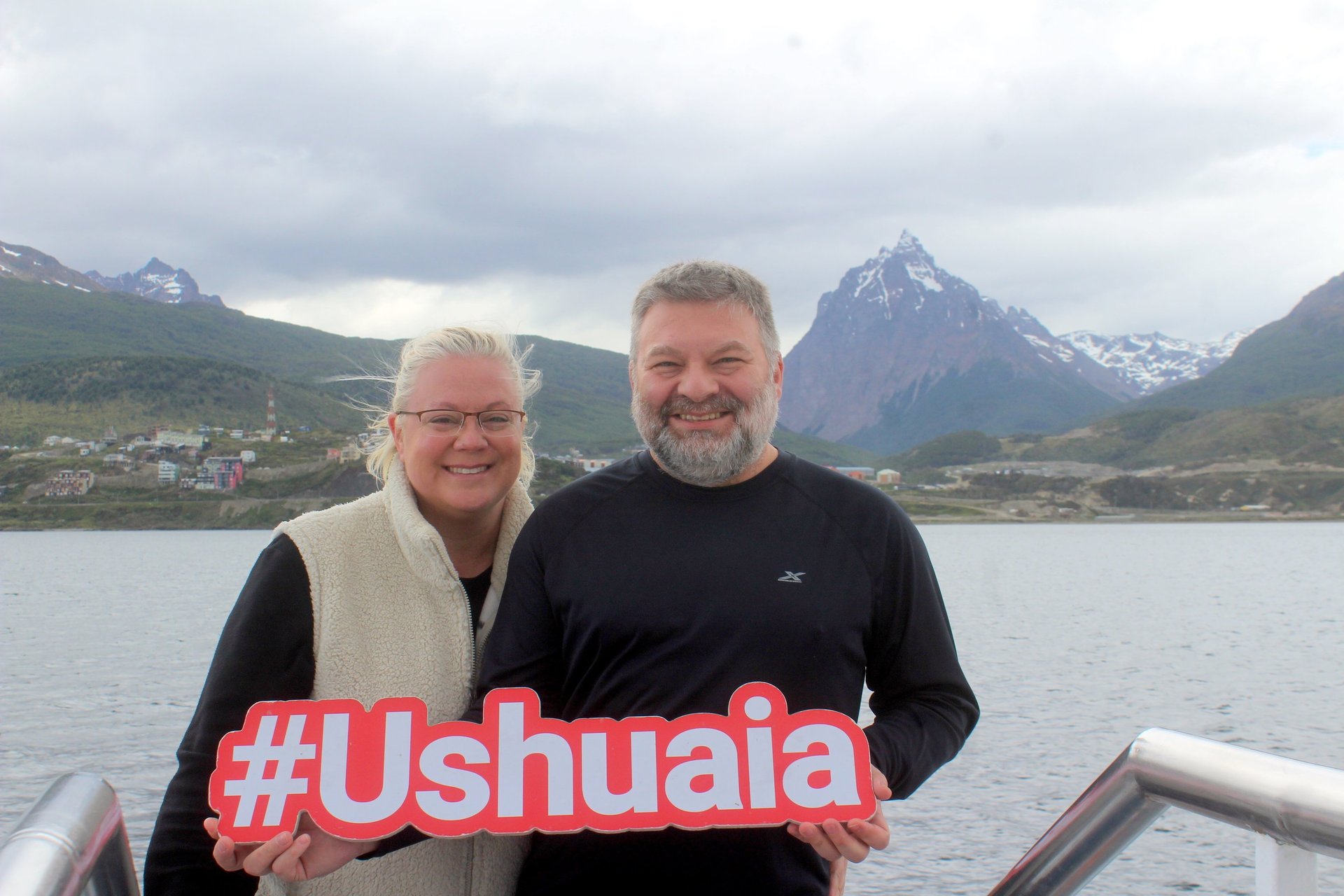
On February 26, we flew to Ushuaia.
Everyone on that flight knew exactly where we were headed, and there was a noticeable sense of excitement. The flight itself was a little cramped, but nobody seemed to care much. We were finally on our way to Antarctica.
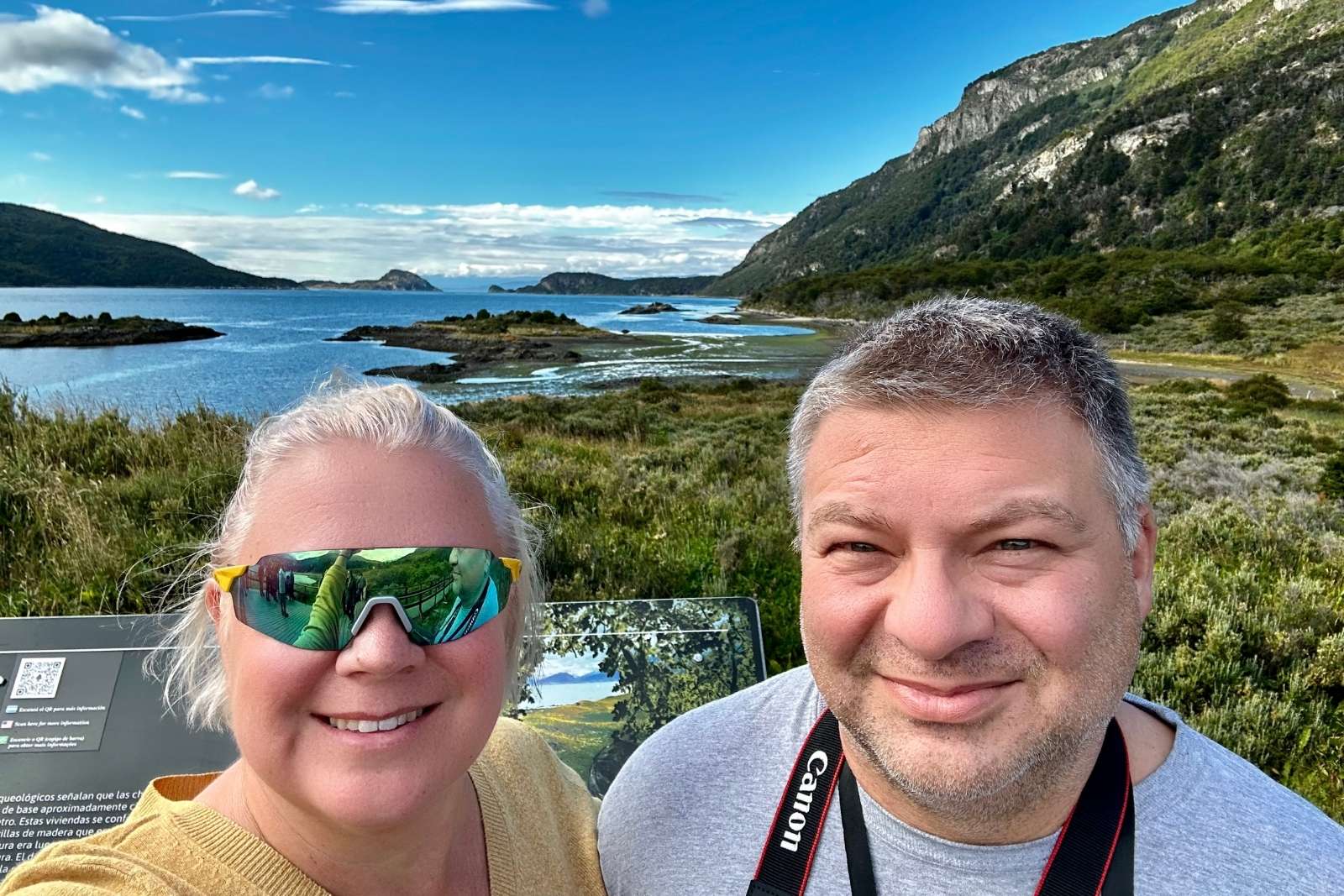
Before boarding the World Navigator, we toured Tierra del Fuego. We walked around taking photographs of birds, flowers, landscapes and mushrooms. It was a great way to spend those final hours on land before stepping aboard the ship.
Embarkation was simple. We settled into our room, completed the mandatory safety briefing and met the Expedition Team, including Expedition Leader Jonathan Zaccaria.
That first dinner was casual, the food was very good, and we quickly started meeting the people we'd be spending the next couple of weeks with.
The expedition had officially begun.
What It's Like to Cross the Drake Passage
The Drake Passage is one of those things that gets talked about constantly when you're planning an Antarctica trip.
Will it be rough?
Will you get seasick?
What will the ship be like?
Our first day was actually quite comfortable. We had waves of around two to three meters, but the World Navigator handled them well. Erika is prone to motion sickness and did surprisingly well, which was a pretty good sign for the rest of us.
The crossing also gave us our first real introduction to expedition life.
There was an IAATO briefing covering Zodiac operations and biosecurity, along with briefings on watersports and camping. We were fitted for our parkas and boots and learned about the precautions passengers need to take when visiting Antarctica.
One of the details that stuck with me was the discussion about birds and light pollution. We were asked to close our curtains at night and turn off balcony lights to reduce the risk of bird strikes.
These aren't the kinds of things that necessarily make it into the glossy brochures, but they're an important part of understanding what an expedition to Antarctica actually involves.
You're not just visiting a remote destination.
You're visiting a place with very specific rules designed to protect it.
And Then We Started Seeing Antarctica
By February 28, the landscape was beginning to change.
We attended lectures on glaciers and sea ice, penguins and the changing Antarctic Peninsula, as well as a photography workshop. Then, sometime during the day, we started seeing icebergs.
And whales.
Our first Zodiac outing was in Fournier Bay that evening, and it turned out to be one of those experiences that immediately reminds you why you came to Antarctica.
We saw several humpback whales, and they were incredibly active. They were spyhopping and moving around the Zodiacs, seemingly just as curious about us as we were about them.
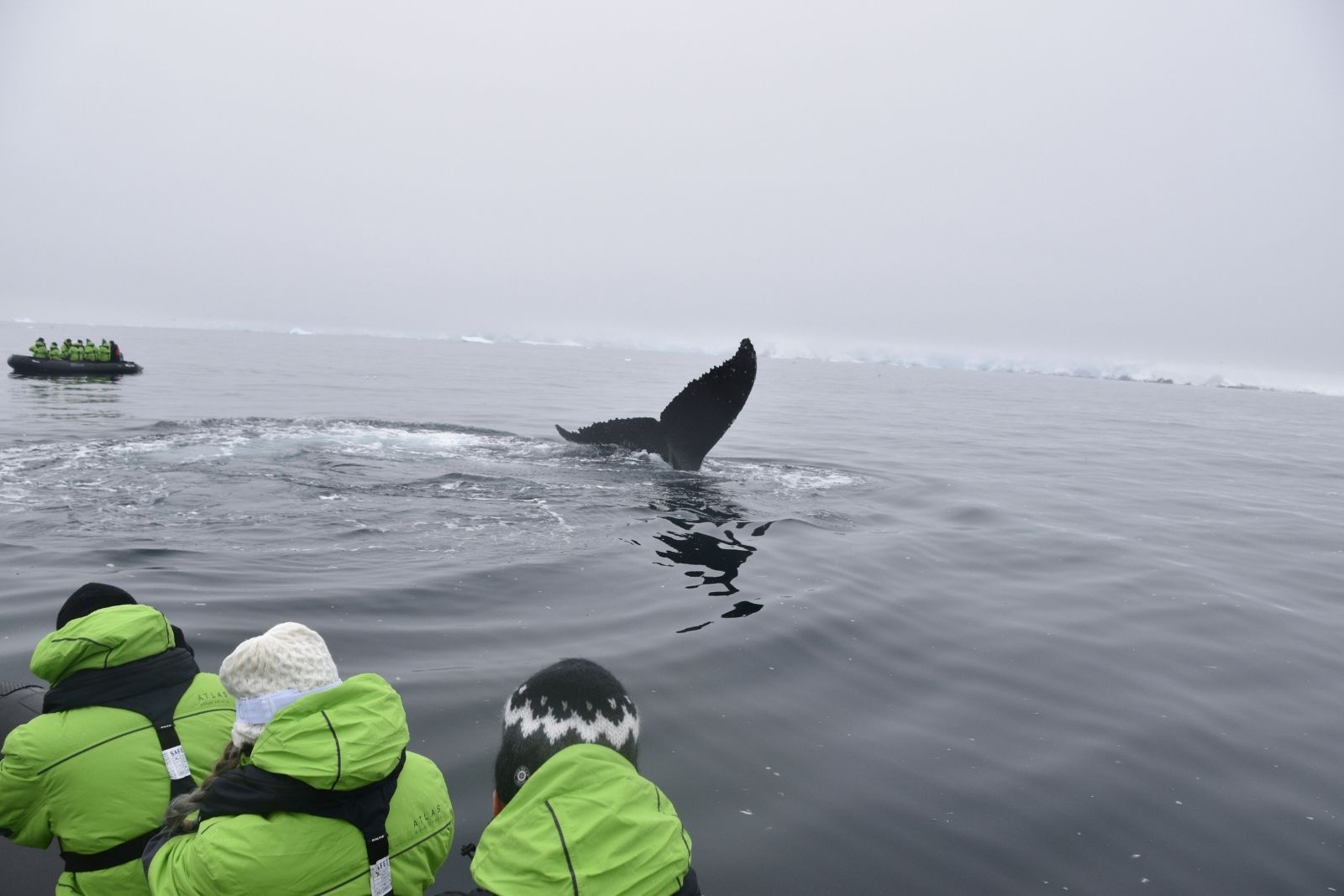
The reaction from everyone was pretty much the same.
Excitement.
What made it even better was watching the expedition guides react. These people spend a tremendous amount of time in places like this, and even they were excited about what we were seeing.
That encounter became the subject of conversation throughout the evening. People compared photographs, talked about how close the whales had come and wondered what the next day would bring.
It was also the first time I really noticed something that happens on expedition ships.
A group of strangers can become a pretty close-knit group very quickly when you've all just experienced something remarkable together.
Our First Landing
The following morning was the moment we'd all been waiting for.
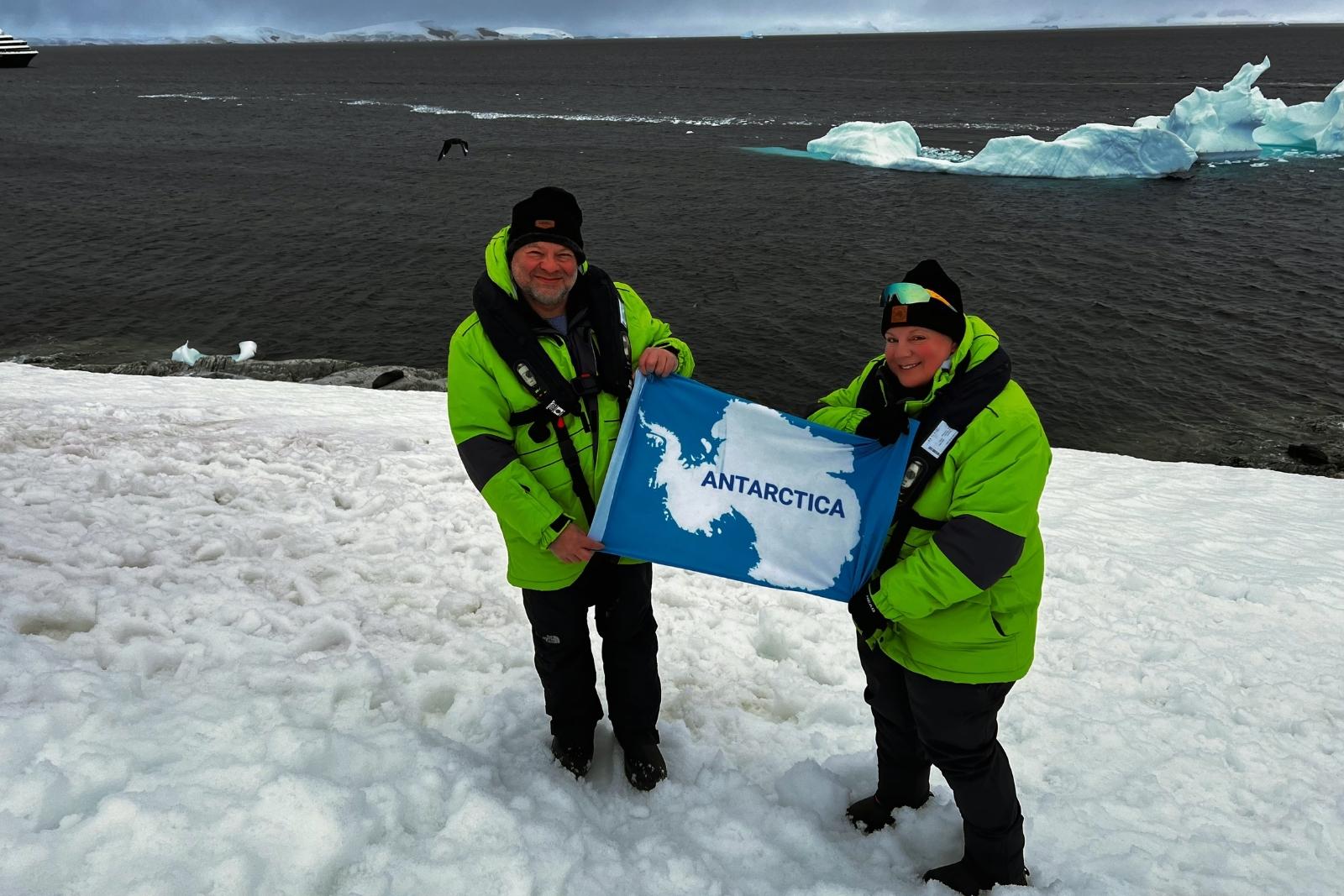
We took a Zodiac to Portal Point and climbed a short snow-covered hill.
It was our first landing on the Antarctic continent.
We took photographs with the Antarctic flag, saw seals and a couple of penguins, and spent some time simply taking in the landscape.
I've seen plenty of photographs of Antarctica over the years, but standing there was completely different. The scale of the landscape is difficult to convey in a photograph. Mountains, snow, ice and water seem to stretch in every direction.
That afternoon we headed back out in the Zodiacs around Charlotte Bay and Eckener Point.
This time the wildlife really took center stage. We saw enormous icebergs, Chinstrap and Gentoo penguins, fur seals, Weddell seals, petrels and skuas.
And then came the announcement that we'd be camping that night.
Spending the Night in Antarctica
Camping in Antarctica sounds like one of those things that sounds fantastic when you're sitting at home planning the trip.
Then you're standing on shore, looking at a pile of snow, and someone tells you where you're going to sleep.
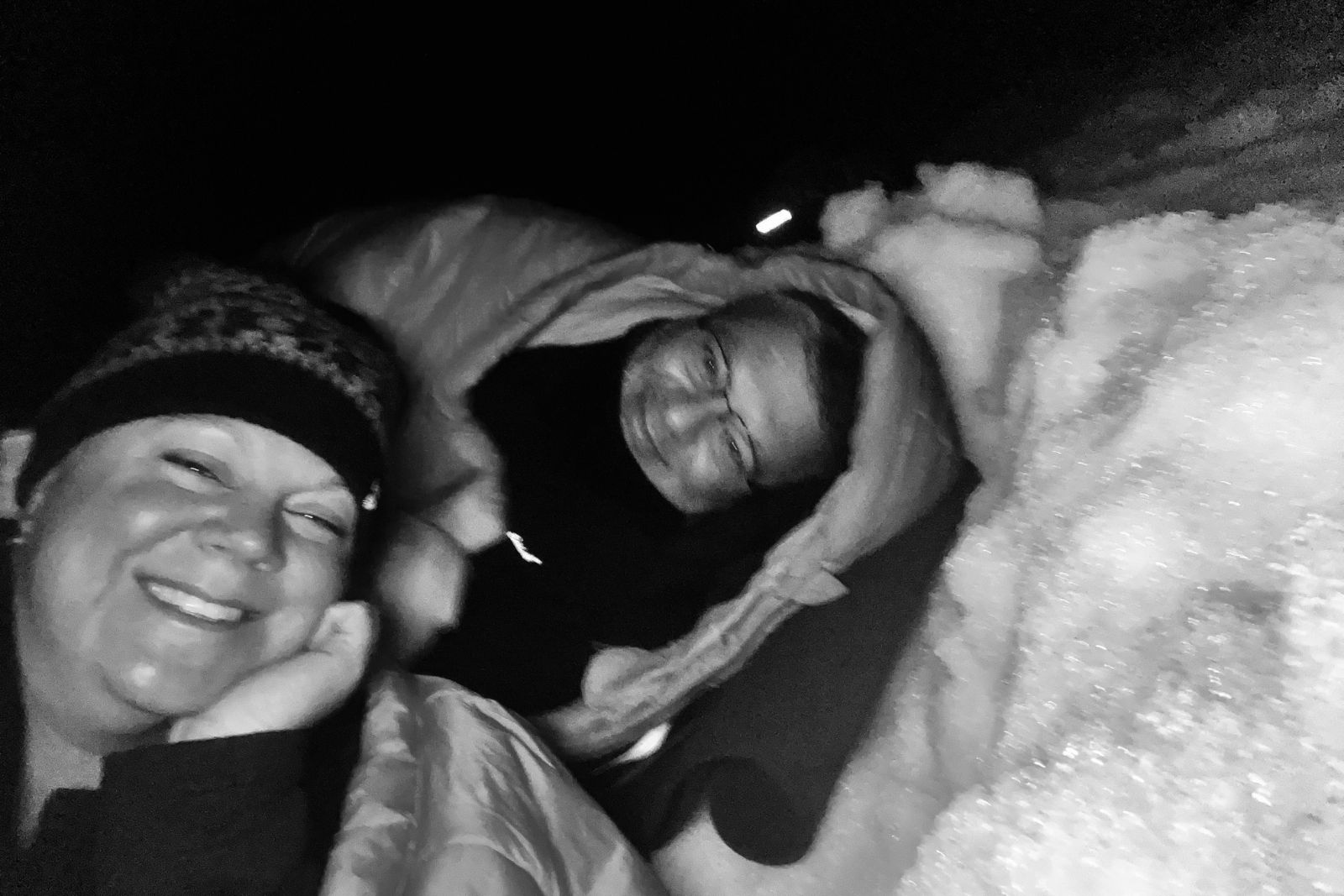
We gathered for dinner and then headed back out by Zodiac to Eckener Point. Once we landed, we picked our spots and started digging.
The sleeping arrangements were about as basic as you can get. We dug holes in the snow and were given bivy bags and sleeping bags.
There wasn't much time to wander around before settling in, but we did get an unexpected visitor. A Weddell seal came by and spent the night nearby.
Then things became very quiet.
There was no ship noise. No restaurant. No lounge. No conversation happening somewhere down the hallway.
Just the sounds of Antarctica.
We could hear whales in the distance and glaciers cracking. The darkness was remarkable, and the night sky was something I'll remember for a long time.
We were eventually able to calculate that we had spent 9 hours, 25 minutes and 47 seconds away from the ship.
It wasn't exactly a five-star night's sleep, but that wasn't really the point.
For one night, we weren't observing Antarctica from a ship.
We were sleeping on it.
The Wildlife Just Kept Coming
The following days brought a steady stream of wildlife encounters.
At Hydrurga Rocks we saw large Chinstrap penguin colonies, along with fur seals, petrels, skuas and albatross. The juvenile Chinstraps were especially entertaining—they were incredibly chubby compared with the adults.
The expedition team was also very attentive about making sure everyone followed IAATO's wildlife-distance rules. That became a consistent theme throughout the trip. The goal wasn't simply to get as close as possible to an animal. It was to observe the animals without disturbing them.
Later that afternoon, we took the Zodiacs around Spert Island.
There were enormous icebergs, dramatic rock formations and sheer cliffs. Some of the icebergs had arches carved through them, and the scale of the formations made it difficult to know where to point the camera.
We also saw more penguins and whales.
The next day at Duroch Island brought another memorable wildlife encounter.
We saw all three of the penguin species we were hoping to find in the area: Chinstraps, Gentoos and Adélies.
But the most fascinating encounter was with leopard seals.
A leopard seal approached the kayakers and one of the Zodiacs, and we were able to watch leopard seals hunting Chinstrap penguins.
It wasn't the cute side of Antarctica.
It was the wild side.
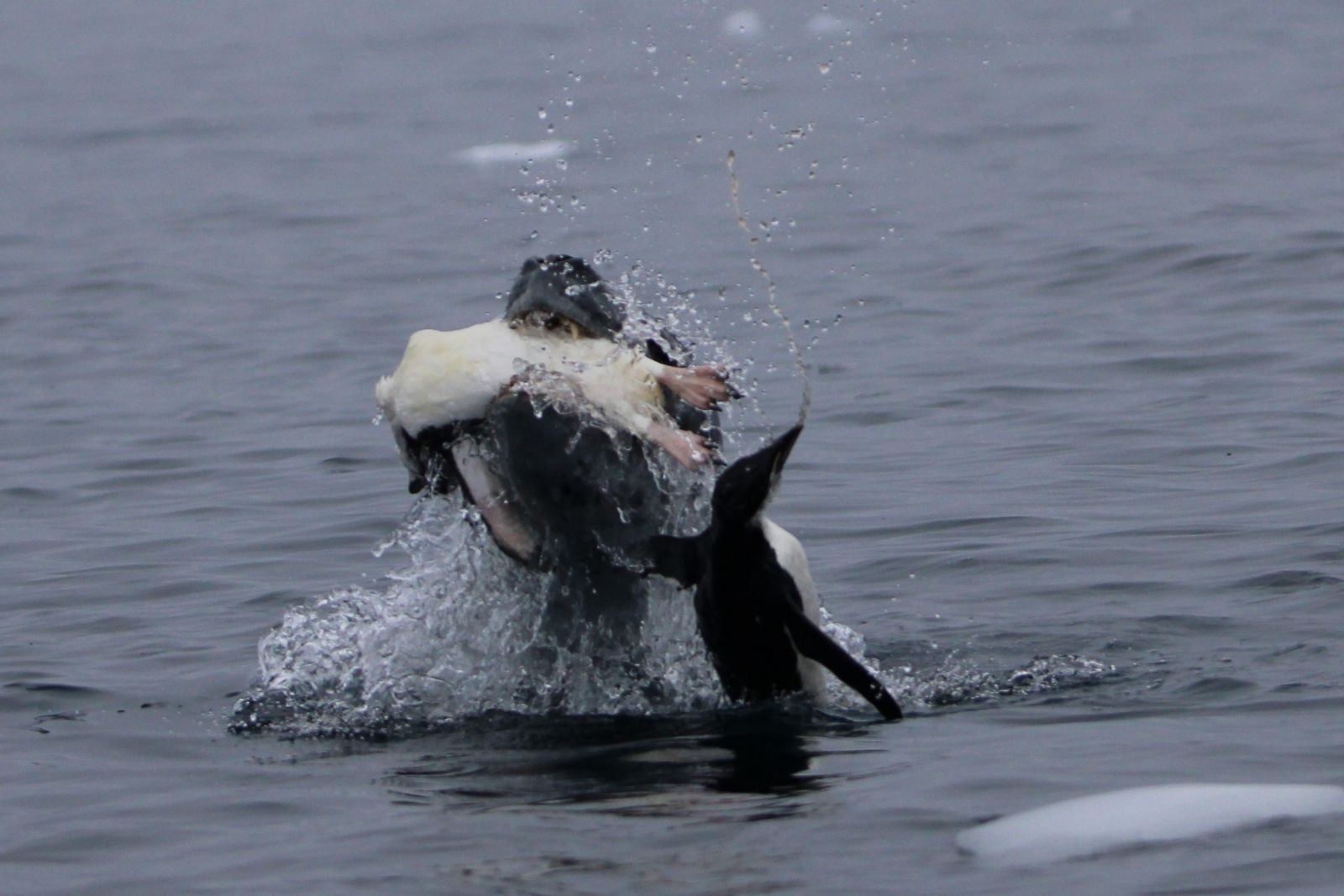
That's something worth understanding before an Antarctica trip. Wildlife encounters aren't staged. The animals are hunting, feeding, raising young and going about their lives. Sometimes that means watching something beautiful; sometimes it means watching the food chain play out right in front of you.
Both are part of the experience.
That afternoon at Gourdin Island was another wildlife-filled outing, with Gentoo, Adélie and Chinstrap penguins, fur seals, Weddell seals, a crabeater seal, petrels, skuas and albatross.
And then the sun started to set.
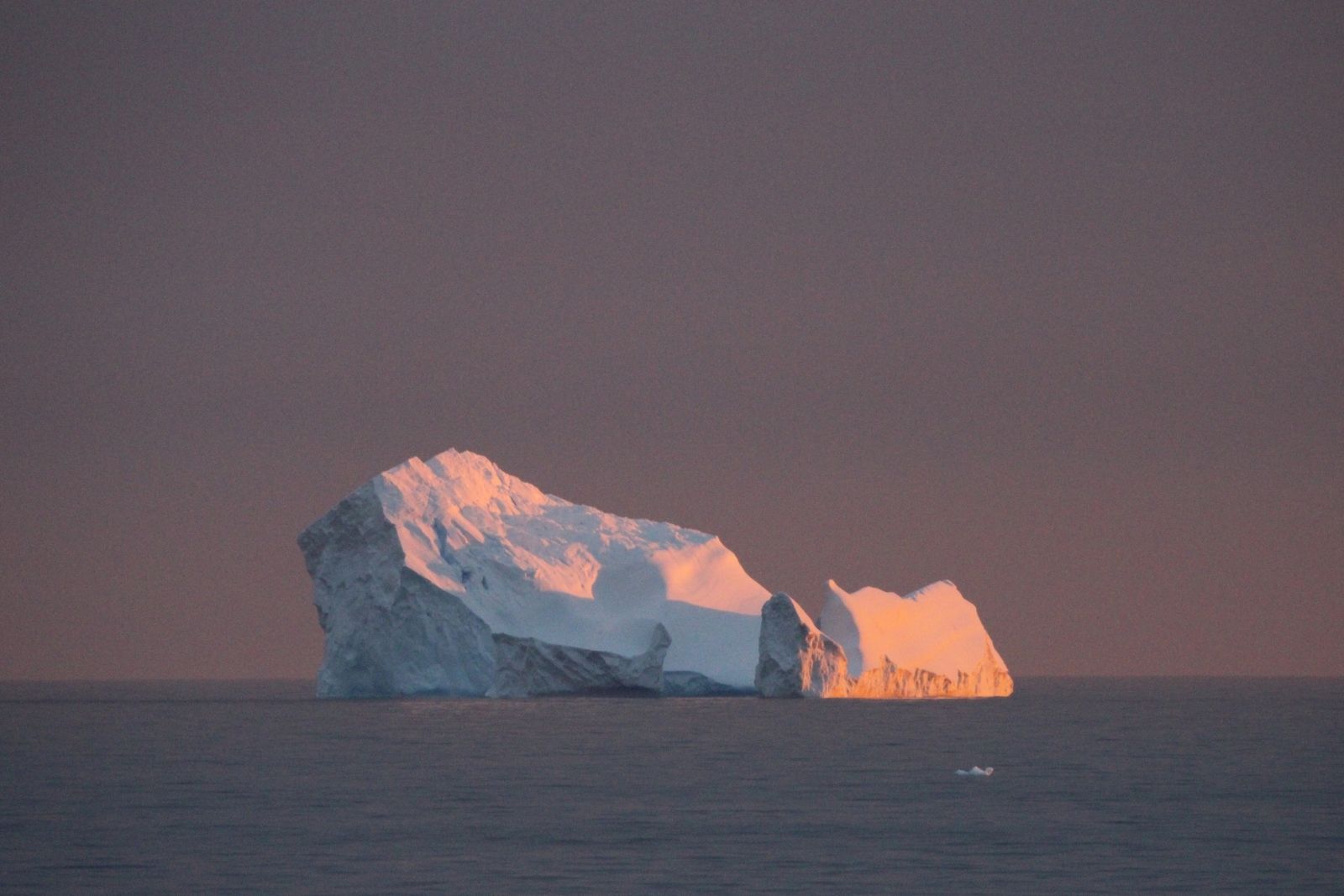
The Antarctic sunsets really are difficult to describe. The light hit the mountains and ice, turning everything orange, red and pink.
After spending the day focused on wildlife, we ended up standing around watching the landscape instead.
It was one of those moments when you stop taking photographs for a minute because you don't want to experience the entire thing through a camera screen.
Deception Island and the Polar Plunge
Deception Island was another completely different experience.
Ships enter the island's inner harbor through Neptune's Bellows, a narrow opening between the rocky cliffs.
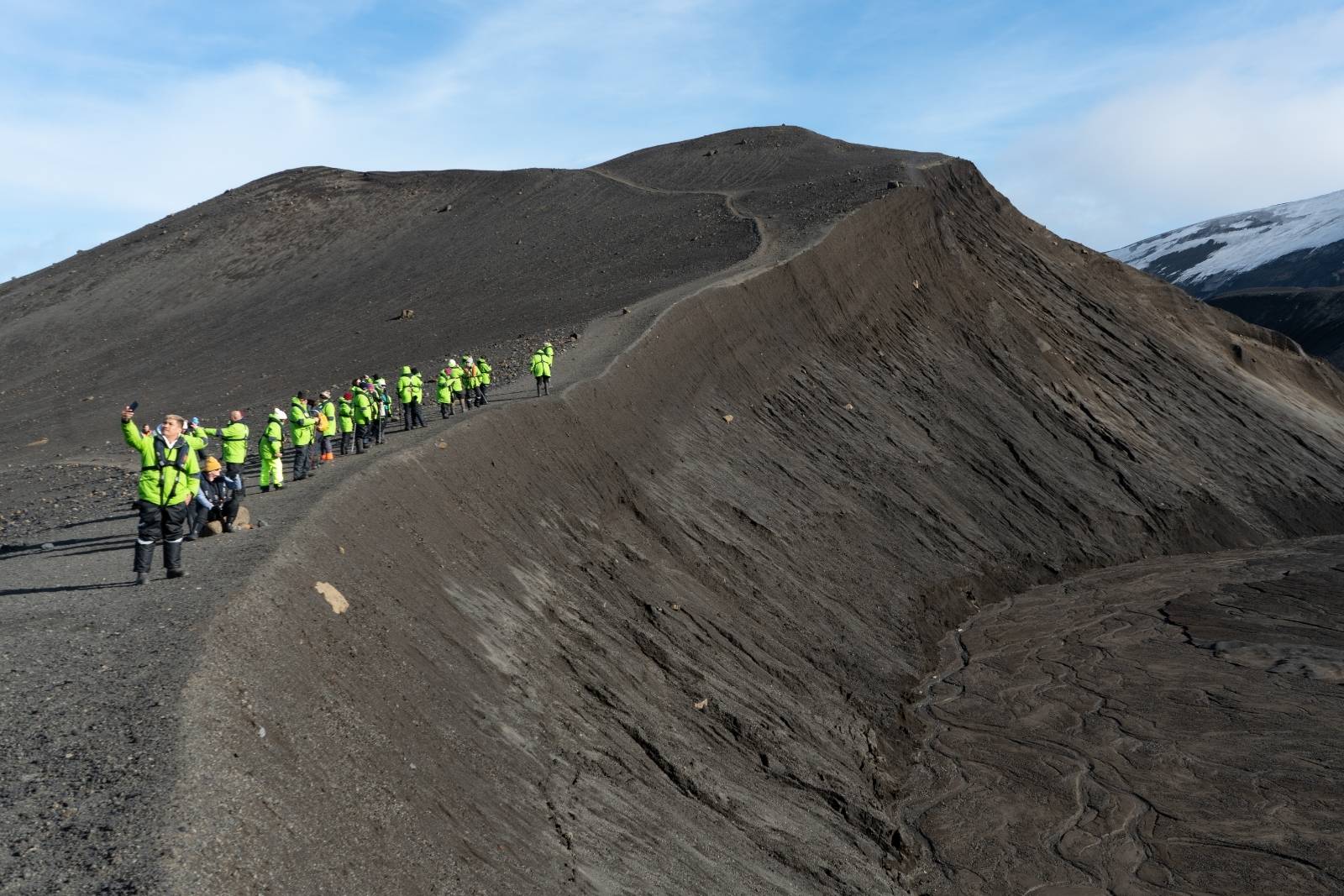
Once inside, you're essentially sailing into the middle of an active volcanic caldera.
I took the more strenuous hike that morning while Erika chose an easier route. The hike gave us some incredible views from higher up around the caldera.
But the real entertainment came later.
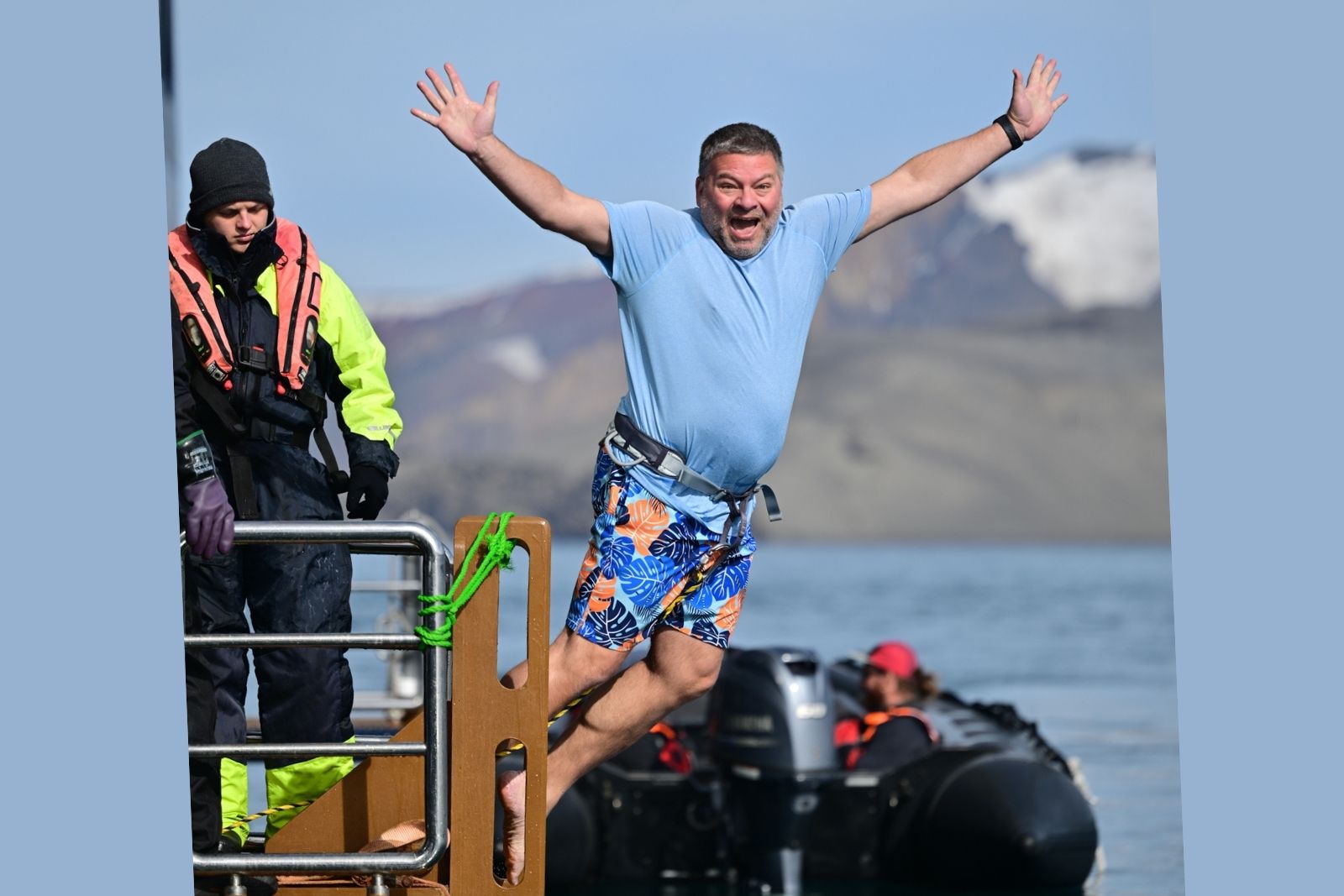
Back onboard, it was time for the polar plunge.
This was one of those activities where the group spirit took over. A large portion of the passengers participated, along with several members of the crew.
Jumping into Antarctic water is not something I can pretend was particularly comfortable, but it was a lot of fun—and definitely one of the moments everyone was talking about afterward.
Our final afternoon in Antarctica was spent at Yankee Harbor, and for me, it became one of the highlights of the entire expedition.
There were Gentoo penguins everywhere, along with some Chinstraps, fur seals, Weddell seals, skuas and our first elephant seal.
The lighting was spectacular.
The sun illuminated the red mountain, and as the afternoon progressed, the sky became increasingly intense—orange, red and pink spreading across the landscape.
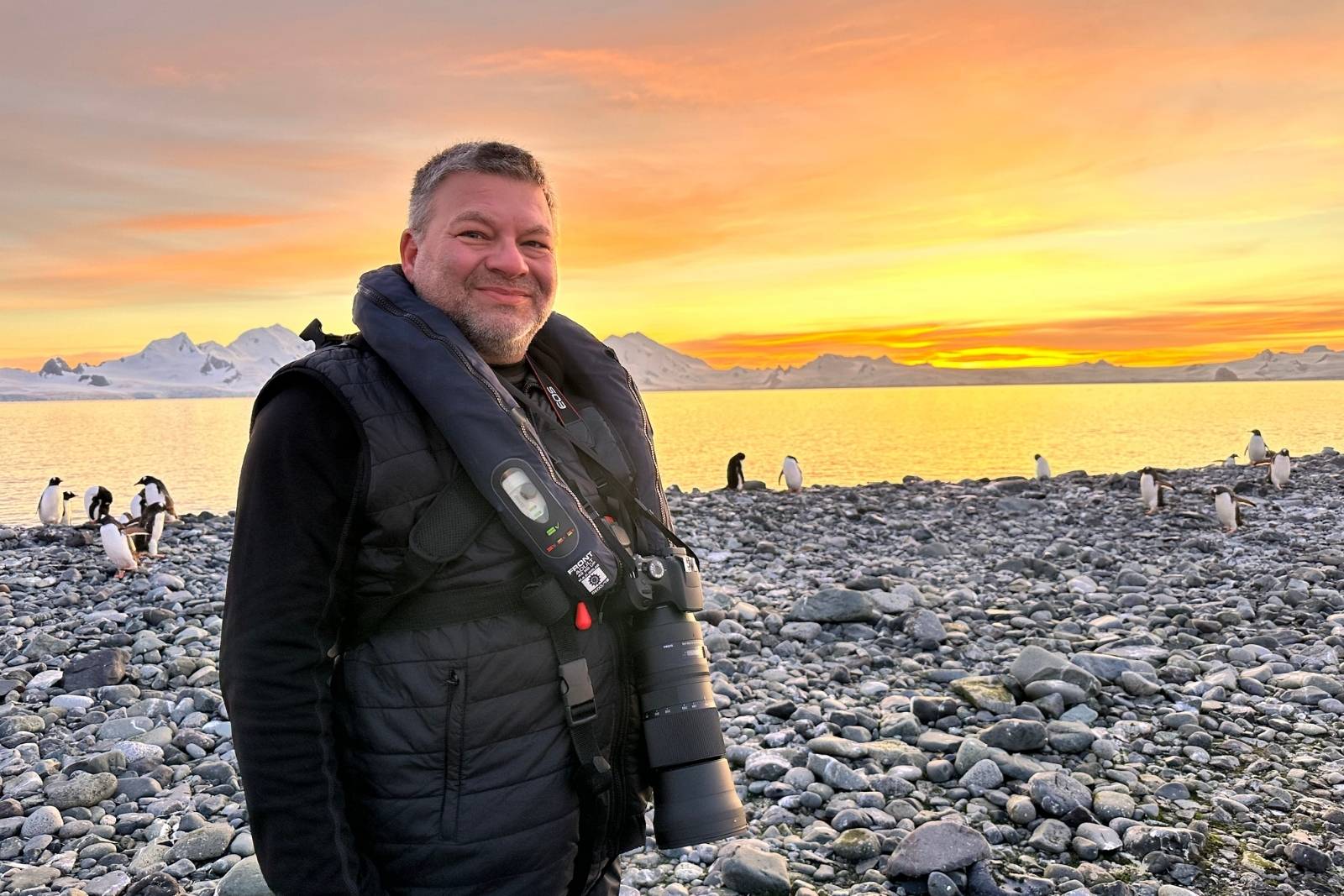
It was the kind of sunset that makes you wish you could somehow stop the clock.
Because we knew what was coming next.
We were heading north.
Leaving Antarctica
The return across the Drake Passage gave us time to process everything we'd just experienced.
There were lectures on whales and dolphins, seals and the Rothera Research Station, followed by an overview of the expedition from Jonathan and the Expedition Team.
We were still seeing wildlife. We spotted humpback whales and a fin whale during the crossing.
The Drake was rougher on the way back, but again, the World Navigator handled it well.
We also filled out postcards to send home to friends and family. After spending so much time in a place that feels completely disconnected from ordinary life, there was something strangely appropriate about sitting down and writing an old-fashioned postcard.
The final day included lectures on Antarctic krill and climate change, followed by the Captain's farewell reception.
And then it was time to leave.
So, What Is an Antarctica Expedition Actually Like?
That's probably the question I get most often, and the honest answer is that there isn't really a typical day.
One day you're sitting in a lecture learning about glaciers. The next you're bouncing across the water in a Zodiac toward a penguin colony. You might spend an afternoon kayaking, hike across a snow-covered landscape, watch whales from the ship or find yourself sitting quietly on deck while an iceberg drifts past.
The itinerary gives you a framework, but Antarctica has the final say.
Weather can change.
Sea conditions can change.
Wildlife doesn't follow a schedule.
Landing sites can change.
The expedition team is constantly making decisions based on conditions and safety.
That's what separates an expedition from a conventional cruise.
You're not simply moving from one scheduled attraction to another. You're responding to the environment.
And that's also why I think it's important to choose an expedition operator and ship based on more than the photographs of the cabins or the restaurant menus.
The ship needs to function well as a base camp.
The expedition team matters.
The Zodiac operation matters.
The ability to get passengers off the ship efficiently matters.
The educational program matters.
And, perhaps most importantly, you need to be comfortable with the idea that the experience won't always go exactly according to plan.
Looking Back
When I think about this trip now, it's difficult to pick a single favorite moment.
The first landing at Portal Point certainly ranks near the top.
So does the night camping at Eckener Point.
The humpback whales in Fournier Bay were incredible. Watching leopard seals hunt was fascinating. Deception Island was unlike anywhere else we'd visited, and the final afternoon at Yankee Harbor was one of the most beautiful scenes I've ever photographed.
But what I remember most is how quickly Antarctica changed from something we were traveling to into something we were completely immersed in.
The ship became our base camp. The expedition team became our guides into a landscape we'd never experienced before. And the people we'd met onboard became part of the story.
That's what I think makes expedition travel different.
You can research the ship.
You can study the itinerary.
You can read about the wildlife.
But you can't schedule the moment when a humpback whale surfaces next to your Zodiac, or predict exactly how the evening light will hit an Antarctic mountain, or know what it will feel like to lie in a sleeping bag beneath an Antarctic sky listening to glaciers crack in the distance.
Those are the moments you go for.
And those are the moments that make you start thinking about when you might go back.