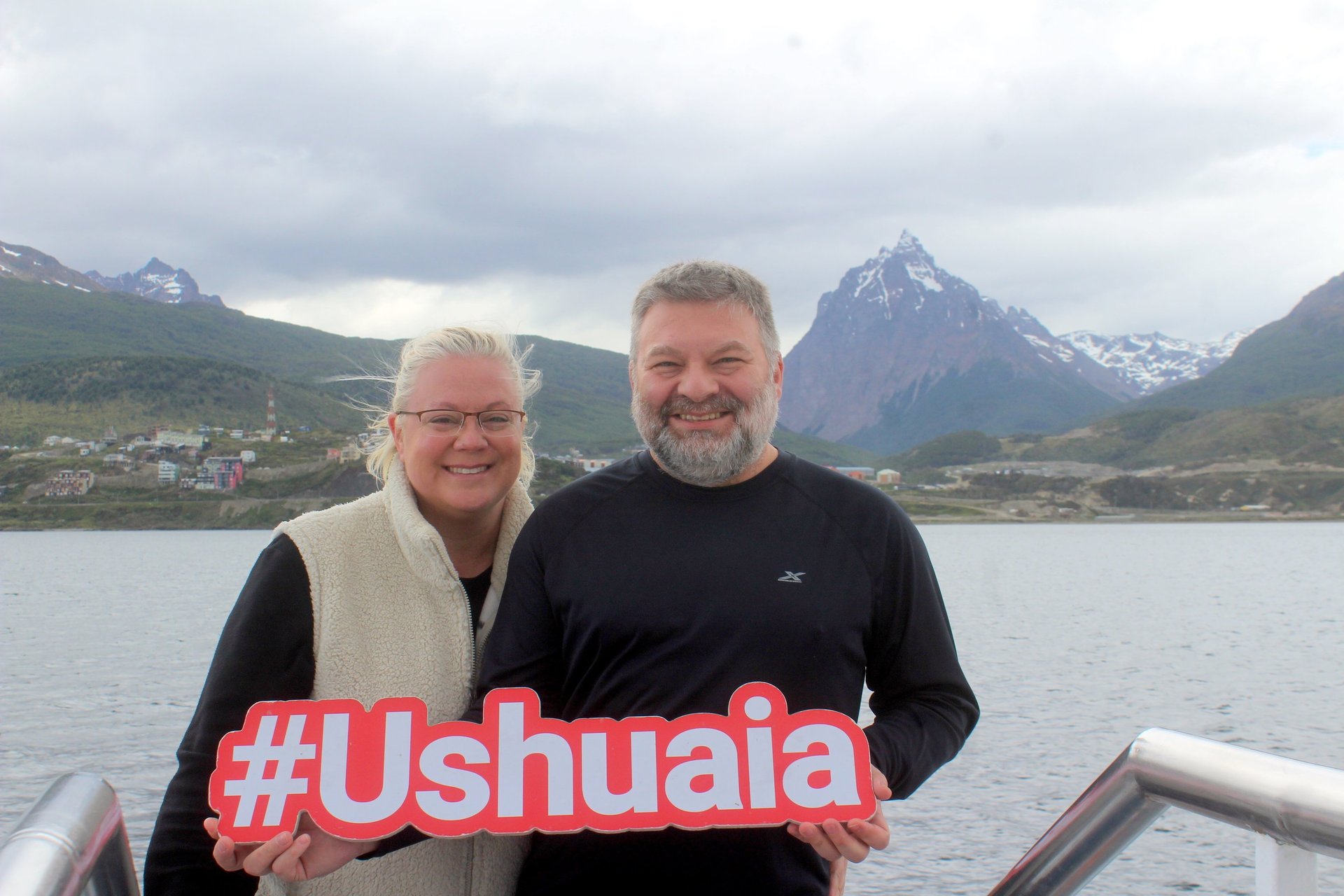
Ushuaia, before the ship
We arrived a day early and stayed overnight, walked the property and did a couple of short hikes looking at the vegetation and the animals.
The next day we took a boat tour of the Beagle Channel and saw a lot of different birds, then walked around Ushuaia before heading to the ship. Out on the marina we ran into one of our favourite guides from a previous Atlas voyage, which was a good way to start. Then we boarded and explored the Greg Mortimer.
The briefing, and what they asked of us
The first full day is briefings, and Aurora's was more thoughtful than most.
The wildlife guidelines are the IAATO standard — five metres minimum, further if there are nests, no flash. But they added something we had not heard put so directly: keep the distances honest in what you post afterwards, and do not share images that make the boundaries look closer than they were. Put the technical details in the caption. If a photograph was taken at 600mm and cropped, say so.
That is a good rule. A cropped telephoto shot of a penguin looks like you were standing next to it, and every one of those posts makes the next visitor think they can get closer.
The citizen science programme
Four projects ran from the ship: Happy Whale for fluke identification, Secchi disk readings for phytoplankton, cloud formation records, and eBird.
This is worth doing if you have any interest in the science. It also gives you a reason to look harder at what you are photographing. By the end of the voyage we had submitted five whale tails. Three were identified and two of them were new to the database.
Photography 101
Adrian Wlodarczyk ran the photography sessions, and these were the settings he gave us as starting points:
Landscape — 1/320, f9, ISO 160. A higher f-stop keeps the whole scene in focus.
Wildlife — 1/1000, f6.5, ISO 160.
Shutter speeds — 1/200 is slow, 1/800 and above is fast.
ISO — 100 to 200 in clear conditions, 1000 and above in low light.
Camping ashore
Camping runs from 9pm to 3.30am using bivvy bags, with forty guests at a time plus six of the expedition team.
Melchior Islands and Paradise Harbour
Zodiac cruising at the Melchior Islands — dress warmer than you think — then Paradise Harbour. Kayakers and hikers go separately from the Zodiac groups. Photography sign-ups happen at the expedition desk thirty minutes before departure.
Chiriguano Bay and Recess Cove
Chiriguano Bay for the EPICA project and million-year-old ice. The polar plunge was announced; we skipped it this time.
Then we pivoted into Charlotte Bay and found pack ice. Barbecue night on deck afterwards, which was a good evening.
Flanders Bay, Port Lockroy and Jougla Point
A Zodiac ride through Flanders Bay with a great deal of ice.
Then the landing at Port Lockroy and Jougla Point — penguins everywhere. We visited the shop and read through the history, which is worth taking time over. Erika was struggling with motion sickness and Wendy, one of the restaurant staff, looked after her properly. Tuscan dinner that night.
Danco Island and Portal Point
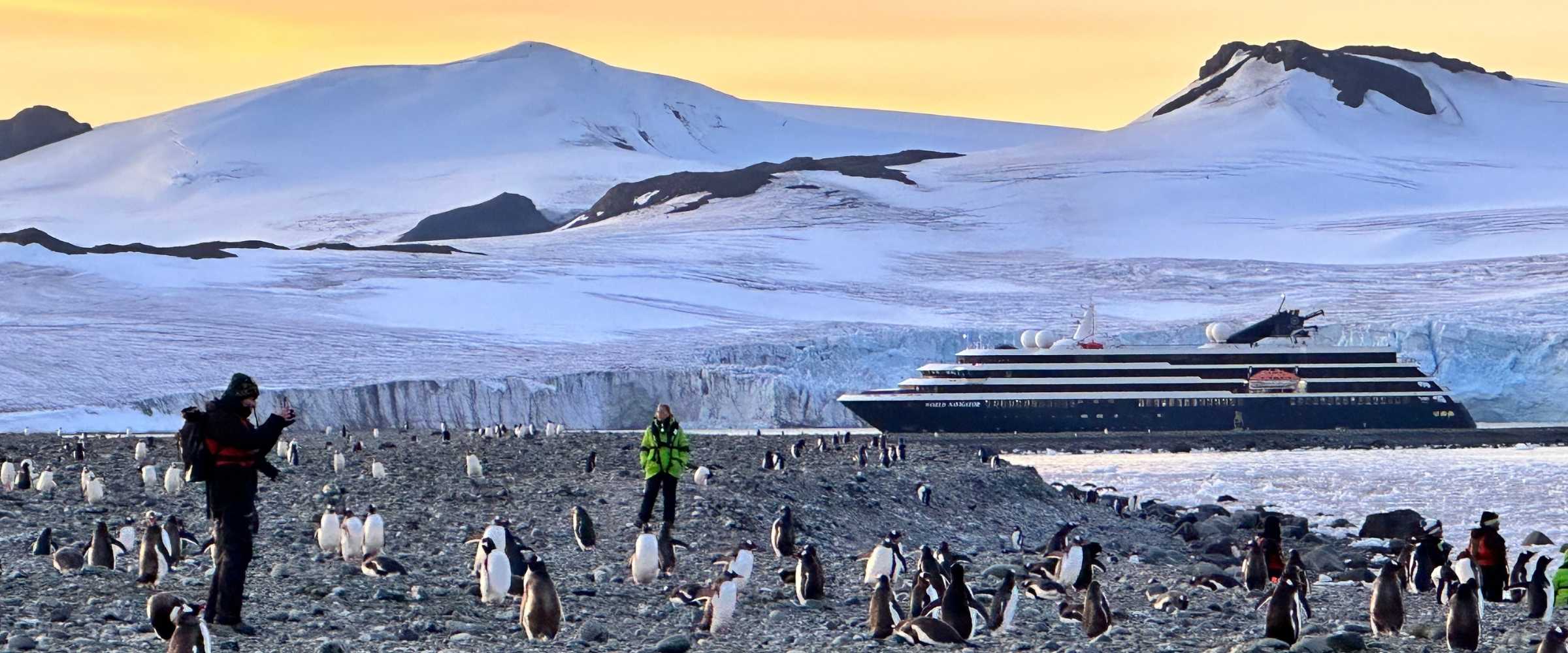
Whales in the bay all day at Danco Island, sunny, with gentoo penguins nesting.
Portal Point was foggy, with a number of commercial fishing boats around. Not a great deal there beyond a good hike — but it was our last landing on the Antarctic mainland, which gives it weight. Erika had a massage. The observation domes on the ship were a good place to sit.
Deception Island
Whalers Bay first, for a walk. Good photographs, and a lot of remnants — asbestos and iron left from the whaling station.
The graffiti was genuinely upsetting. Someone has spray-painted parts of the remains. In a place with the protections Antarctica has, and with everything the briefing asks of visitors, it is hard to see.
We walked around and photographed penguins, then went on to Telefon Bay for a beach walk and a hike — a different route from our last visit but still an excellent way to see the area.
The Drake, going home
The seas were rough on the way back. The ship did not handle the Drake smoothly even though the waves were not especially large, and most of the ship was unwell. I was at dinner with only a couple of other people.
The restaurant staff were outstanding — making sure everyone was getting fluids and something to settle their stomachs, whether or not they came to the dining room.
We arrived back into Ushuaia early, ahead of a storm. On the last day we learned about the history of the Yámana.