
Experiences
Camping Ashore on an Expedition Cruise.
A trench in the snow, a bivy bag, and the ship lit up in the bay while you sleep outside it — one night, weather permitting, almost always in Antarctica.
Overnight camping ashore is a small-group, weather-dependent excursion offered on select Antarctic voyages: guests leave the ship after dinner, dig a flat trench in the snow, and sleep in a bivy bag or a two-person tent under the midnight twilight before returning for breakfast. It's capped at 30-60 guests a departure, usually needs pre-booking, and is almost entirely an Antarctic activity rather than an Arctic one.
What it was like for us.
Firsthand: we camped at Eckener Point in February 2024, on an Antarctic voyage aboard Atlas Ocean Voyages' World Navigator. We went ashore by Zodiac after dinner, picked our spots and dug holes in the snow — bivy bags and sleeping bags, no tents. A Weddell seal came by and stayed nearby for the night.
What stays with us is what was missing. No ship noise, no lounge, no conversation down a hallway — just whales audible in the distance and glaciers cracking. We worked out afterwards that we had been off the ship for nine hours, twenty-five minutes and forty-seven seconds. It was not a five-star night's sleep, and that was not the point: for one night we were not watching Antarctica from a ship.
The full account of that night, and the voyage around it, is in our World Navigator journal entry.
What does camping ashore involve?
After an afternoon safety and environmental briefing, and dinner on board, campers suit up and take the Zodiacs ashore in the evening. Guides establish a safe perimeter, and everyone digs a shallow trench to block the wind before laying out a mattress pad and settling into a sleeping bag inside a waterproof bivy sack, or a small tent where that's offered instead. Wake-up is early, around 5:00-5:30am, and the site is restored to its natural state — trenches filled in, nothing left behind — before the Zodiac ride back to a hot shower and breakfast.
What is provided, and what does it require of you?
The ship supplies the insulated bivy bag, a sub-zero-rated sleeping bag, a liner, and a thermal mattress pad, along with guides who stay ashore all night monitoring conditions and radio contact with the bridge. No food or drink other than water is allowed ashore under IAATO rules, so dinner beforehand is the last meal until you're back on board. You bring dry base layers, a warm hat and gloves — the sleeping system does the rest of the work.
No camping experience. It does ask you to be comfortable being cold, occasionally without a proper bathroom beyond a discreet field toilet, and away from the ship's amenities for one night. It's always weather-dependent: if wind or sea conditions turn, the excursion is rescheduled or refunded rather than run unsafely, and campers can be evacuated back to the ship at any point in the night.
Which regions does this work in?
Overnight camping ashore is concentrated in Antarctica, where IAATO permits it at designated coastal sites along the Peninsula. It is not a standard offering on ship-based Arctic voyages: guides in Svalbard, Greenland and the Canadian Arctic carry rifles ashore specifically because of polar bear risk, and running an unenclosed overnight camp in bear country is a different safety proposition than doing the same on the Antarctic Peninsula, where there's no land predator to guard against. That doesn't mean supervised Arctic camping never happens — some Svalbard voyages have run guarded overnight camps with an armed watch, and separately run land-based wilderness camps exist in Greenland outside the ship-to-shore model — but it's the exception, not something you should expect a standard Arctic itinerary to include.
For the Antarctic-specific version of this, including site selection and IAATO limits, see camping in Antarctica. This page is the cross-region view; that page is the regional detail.
Which lines run overnight camping.
| Operator | What's offered |
|---|---|
| Quark Expeditions | One of the earliest operators to run polar camping. Bivy bags as standard, with tents available on request. |
| Oceanwide Expeditions | Open-air bivouac camping on select voyages aboard Hondius, Plancius and Ortelius. |
| Aurora Expeditions | Overnight camping aboard the X-Bow ships Greg Mortimer, Sylvia Earle and Douglas Mawson, in bivy sacks or two-person tents. |
| Polar Latitudes | Dedicated camping nights with small group sizes and a full safety team ashore. |
| Poseidon Expeditions | Bivouac bags and multi-layer sleeping systems on select Antarctic sailings. |
| HX | Bivy bags or two-person polar tents, with full sub-zero sleeping systems, on select Antarctic sailings. |
| Atlas Ocean Voyages | Small-group overnight camping on the Peninsula, with high-grade cold-weather gear and dedicated safety support ashore — the camping night we did ourselves. |
We could not link G Adventures, since it doesn't yet have a page on this site — it's named here in plain text: G Adventures offers full two-person polar tent setups aboard the M/S Expedition for guests who prefer an enclosed shelter over a bivy bag.
More on the ship, and elsewhere.
Camping ashore pairs naturally with shore landings and wildlife viewing, since the same shoreline you camp on is where the daytime landings happen. Back to all experiences.
Written by your expedition advisor
Chris Commisso · Expedition Expert
Signature Travel Expert
Chris and Erika have sailed ten expedition voyages and toured seven more expedition ships. Favorite explorations so far: Antarctica, Svalbard, Greenland, Iceland, Norway, Alaska, the Galápagos, the Scottish Hebrides, Churchill and French Polynesia.
Last updated .
From our journal
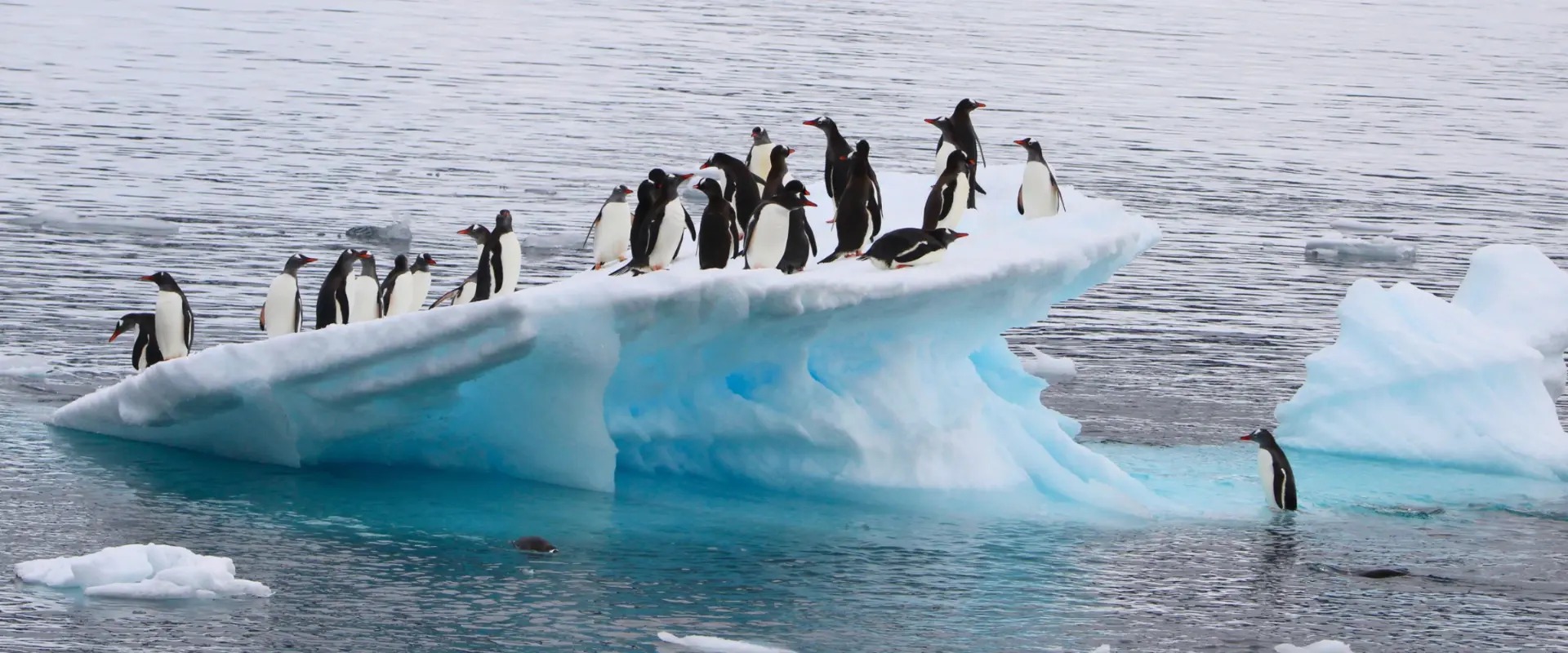
Ten Days to Antarctica Aboard the Greg Mortimer
7–19 December 2024 · Aurora Expeditions
In December 2024 we sailed Aurora Expeditions' Greg Mortimer round trip from Ushuaia to the Antarctic Peninsula. We Zodiac cruised the Melchior Islands and Paradise Harbour, landed at Port Lockroy and among nesting gentoos on Danco Island, watched whales in the bay all day, walked Deception Island, and sent five whale-tail photos to a citizen science project. Three were identified.
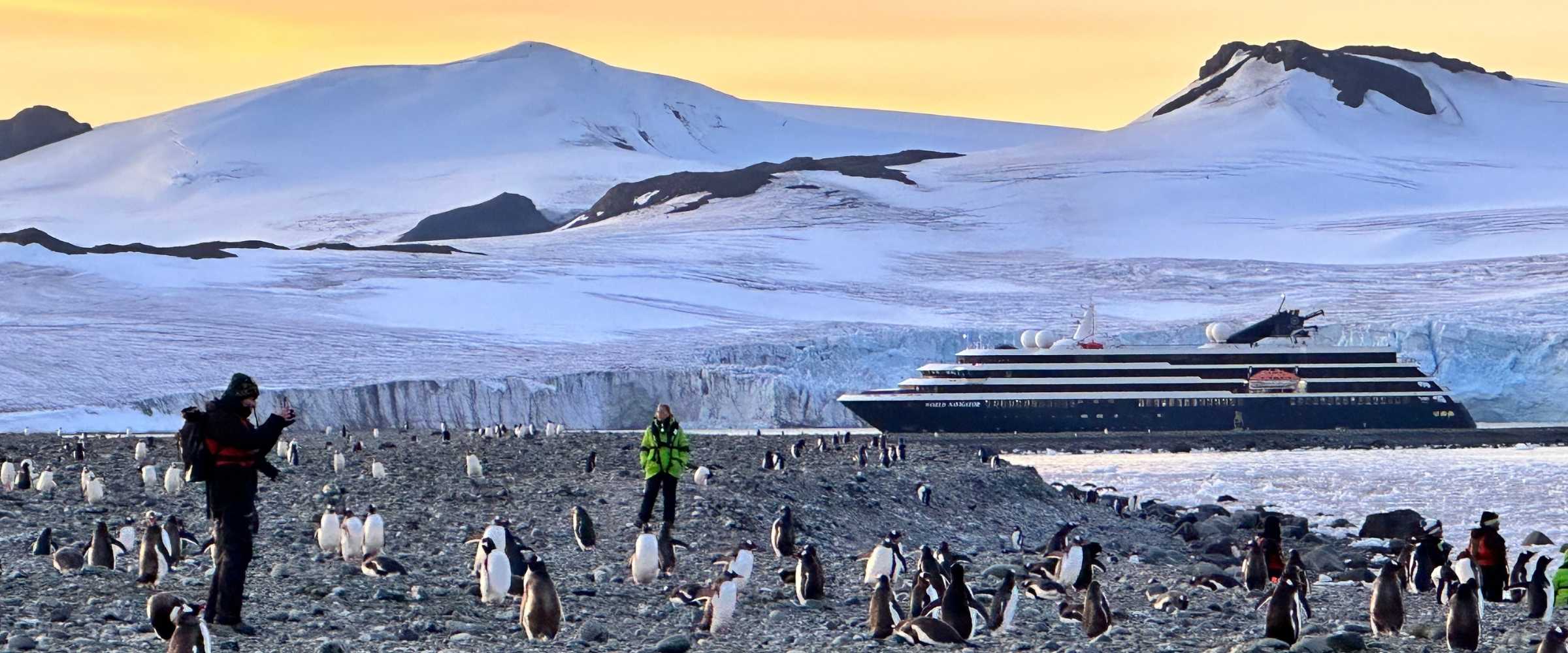
Antarctica Aboard the World Navigator: Our Journey to the White Continent
24 February–6 March 2024 · Atlas Ocean Voyages
Eleven days from Buenos Aires to the Antarctic Peninsula aboard Atlas Ocean Voyages' World Navigator. Humpbacks spyhopping around the Zodiacs in Fournier Bay, leopard seals hunting chinstraps at Duroch Island, and a night camping ashore at Eckener Point — nine hours, twenty-five minutes and forty-seven seconds off the ship, listening to glaciers crack.
Want a voyage with a camping night on the itinerary?
Tell us it matters and we'll point you toward ships and departures that run it.
Request a Quote