

Written by your expedition advisors

Chris Commisso · Expedition Expert
Signature Travel Expert
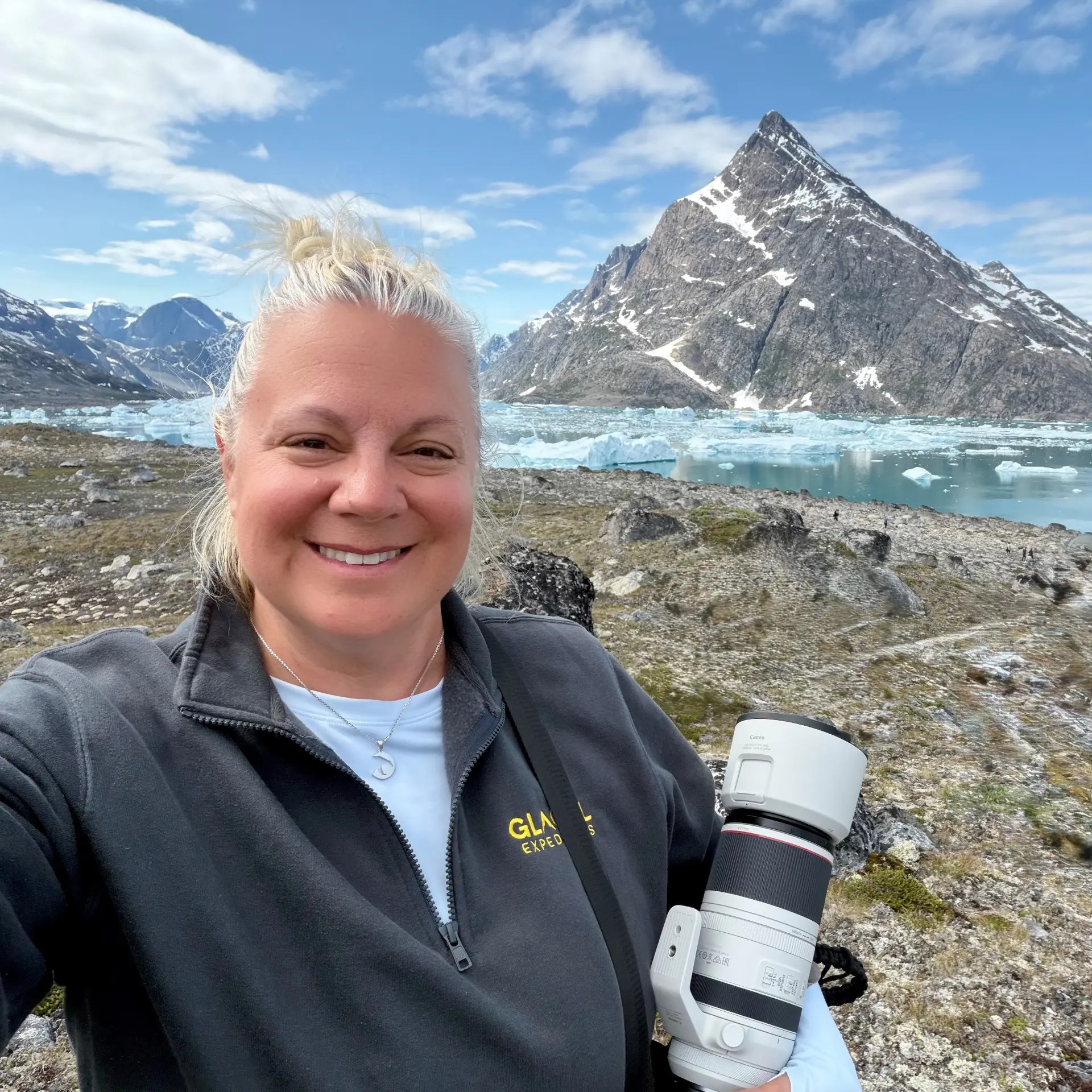
Erika Commisso · Travel Experience Architect
CLIA Elite Cruise Counselor · ASTA Verified Travel Advisor · Signature Travel Expert
Chris and Erika have sailed ten expedition voyages and toured seven more expedition ships. Favorite explorations so far: Antarctica, Svalbard, Greenland, Iceland, Norway, Alaska, the Galápagos, the Scottish Hebrides, Churchill and French Polynesia.
Last updated . Reviewed against current operator itineraries and season dates for the 2026-27 Kimberley season.
You pay the same as booking direct. Here’s how we’re paid.
At a glance
- Season
- The dry season, roughly April to September. There is no wet-season cruising
- Route
- Broome to Darwin or the reverse, along Western Australia's far north coast
- Typical trip length
- 10 or 11 nights, which is close to standard across operators
- Tidal range
- Among the largest in the world, exceeding 10 metres in places, which shapes every itinerary
- Signature sights
- Horizontal Falls, King George Falls, Montgomery Reef, King Cascade, Mitchell Falls by helicopter
- Rock art
- Wandjina and Gwion Gwion — also called Bradshaw — art, some of it many thousands of years old
- Traditional Owners
- The Wunambal Gaambera, Dambimangari and Balanggarra peoples hold country along this coast
- Ships
- 36 to 264 guests. There are no large cruise ships on this coast
- Getting there
- Fly to Broome or Darwin, usually via Perth, Sydney or Melbourne
- Physical demand
- Moderate. Tender and Zodiac transfers, rock scrambles to art sites, and real heat
Why Do the Tides Matter So Much in the Kimberley?
The Kimberley has one of the largest tidal ranges on Earth, exceeding ten metres in places. That volume of water moving through narrow gorges creates the Horizontal Falls and makes Montgomery Reef appear to pour waterfalls off its edges as the sea drops around it. Itineraries are built around tide tables rather than distance, which is why sailing dates matter more here than almost anywhere.

This is the concept that makes everything else on this page make sense. A site that is spectacular at one state of the tide is unremarkable three hours later, so operators plan the whole voyage backwards from the tide table rather than forwards from a map. Montgomery Reef only performs on a falling tide. The Horizontal Falls only run hard when enough water is trying to squeeze through the gorges at once. A river that carries a tender deep inland at one hour is a mudbank at another.
It also explains something travelers find counterintuitive: two ships covering the same route in the same week can have genuinely different experiences, because they arrived at different points in the cycle. That is why local knowledge is worth paying for here in a way it is not everywhere. Coral Expeditions has been refining its Kimberley tide notes for more than thirty years, from an era when the first exploratory voyages relied on hand-drawn charts and the advice of fishermen who worked the coast.
The practical implication is simple: ask what the tides are doing on your specific departure. Spring tides give the biggest Horizontal Falls and the most dramatic Montgomery Reef; neap tides are gentler, and quieter. This is one of very few destinations where we look at tide tables before recommending a date, and it is the first thing we check when a client is choosing between two sailings a fortnight apart. There is more on how the cycle works in our guide to the Kimberley tides.
Should You Choose Coral Expeditions or Seabourn for the Kimberley?
Coral Expeditions is the Australian pioneer, with over thirty years on this coast, smaller ships of 72 to 120 guests, and a purpose-built excursion tender that gets everyone ashore quickly. Seabourn Pursuit is a purpose-built ultra-luxury expedition ship carrying around 264 guests, with all-suite accommodation, two submarines, 24 Zodiacs and a large expedition team. Both are excellent. They suit different travelers.
| Coral Expeditions | Seabourn Pursuit | |
|---|---|---|
| Ships | Coral Adventurer, Coral Geographer, Coral Discoverer | Seabourn Pursuit, Polar Class 6, launched 2023 |
| Guests | 72-120 depending on vessel | Around 264 |
| Style | Australian-owned, unfussy, destination-first | Ultra-luxury, all-suite, all-inclusive |
| Length | 10 nights, Broome to Darwin or reverse | 10 to 11 days, Darwin to Broome or reverse |
| Getting ashore | The Xplorer, a purpose-built excursion tender, plus Zodiacs | 24 Zodiacs, with kayaks and two submarines |
| Expedition team | Experienced Australian guides and guest lecturers | A large team of academics, scientists and naturalists |
| Local heritage | Pioneered Kimberley cruising; decades of proprietary tide and landing notes | Third season on the coast, with Wunambal Gaambera Traditional Owners as the ship's godparents |
| Onboard | Comfortable and straightforward; Australian food and wine | Suites, multiple dining venues, premium spirits included, Starlink Wi-Fi, no tipping |
| Season | Roughly April to September, with many departures | Roughly May to September, with a limited number of departures |
| Best suited to | Travelers who want the destination undiluted, with strong local knowledge | Travelers who want the Kimberley without compromising on the ship |

Coral Expeditions is the operator that opened this coast and still knows it best. The ships are smaller, which means they reach anchorages and river mouths that larger vessels cannot attempt, and the Xplorer — a purpose-built excursion tender that hangs off the stern — means the whole ship's complement goes ashore in one movement rather than in rotations. The entire product is built around the Kimberley rather than adapted to it, from the lecture programme to the timing of breakfast. The ships are comfortable, and they are not luxury vessels, and nobody at Coral pretends otherwise.
Seabourn Pursuit is a different proposition: an ultra-luxury expedition ship that spends part of its year here and part of it in Antarctica and elsewhere. The suites, the food and the service are at a level Coral does not attempt, the expedition team is unusually large and academic, and the two submarines are genuinely unusual on any coast. The trade is scale. Around 264 guests means landing sites are worked in rotations, and the Kimberley's beaches and art sites are small.
There is a third option worth knowing about: a small fleet of Australian boats carrying roughly 18 to 36 guests, including True North and the Kimberley Quest vessels. They offer the most intimate version of this coast, and the closest thing to private access, at the cost of onboard comfort and space. For travelers who prioritise access above all else they are the right answer, and we will say so. We compare all three on Kimberley ships.
What Will You Actually See on a Kimberley Cruise?
The fixed points on almost every itinerary are the Horizontal Falls in Talbot Bay, King George Falls at eighty metres, Montgomery Reef emerging as the tide drops, King Cascade on the Prince Regent River, and rock art galleries at sites like Ngula Jar Island in Vansittart Bay. Most operators offer an optional helicopter flight to Mitchell Falls at additional cost.
01
Horizontal Falls, Talbot Bay
Tidal water forced through two narrow gorges in the McLarty Ranges, creating a waterfall that runs sideways. Experienced by Zodiac.
02
King George Falls
Twin falls dropping around 80 metres, the tallest single-drop waterfall in Western Australia, approached by tender up the King George River.
03
Montgomery Reef
A vast reef that appears to rise from the sea as the tide falls, with water cascading off its edges. Timing is everything.
04
Prince Regent River and King Cascade
A dead-straight river along a geological fault, leading to the tiered hanging garden of King Cascade.
05
Ngula Jar Island, Vansittart Bay
Gwion Gwion rock art galleries, visited with Wunambal Gaambera Traditional Owners.
06
The DC3 wreck
A US Air Force aircraft that crash-landed on the salt flats in the Second World War, reached on foot across the flats.
07
Mitchell Falls
Four tiers of falls on the Mitchell Plateau, reached by optional helicopter flight at additional cost.
08
Hunter River and Naturalist Island
Mangrove systems explored by tender, with saltwater crocodiles and abundant birdlife.
09
Careening Bay
The boab tree carved by the crew of HMS Mermaid in 1820, still legible.
10
Lacepede Islands
Significant seabird rookeries and green turtle nesting grounds near Broome.


Itineraries vary between operators and between departures, and no operator guarantees every site. Weather, tides and — importantly — Traditional Owner access arrangements all affect what a given voyage includes. The best operators say so plainly in their itinerary notes rather than implying a fixed schedule, and we would rather set that expectation before you book than explain it afterwards.
What does not vary is the character of the coast. Between Broome and Darwin there are no towns, no roads reaching the shore and, most days, no other vessels. The sandstone is among the oldest exposed rock on the planet, the rivers run dead straight along geological faults, and the tidal drop leaves whole reefs standing in the air twice a day. It is a landscape destination first, a cultural destination second and a wildlife destination third, and travelers who understand that order tend to come home very happy.
The helicopter add-ons deserve a mention here. Flights to Mitchell Falls and scenic flights over the Horizontal Falls are almost always at additional cost, often several hundred dollars per person, and they are among the most worthwhile extras on this coast. Budget for one rather than deciding onboard, because capacity is limited and the good slots go early.
What Is the Rock Art in the Kimberley?
Two distinct traditions. Wandjina figures are large mouthless ancestral beings with haloed heads, painted and repainted by their custodians as a living practice. Gwion Gwion art, historically called Bradshaw art, shows fine, elongated human figures in ochre and is far older. Both are on the country of Traditional Owners, and access is by their permission, often with their guides.
The Wandjina are ancestral beings associated with rain, cloud and creation. They are painted with large dark eyes, no mouth and a halo-like headdress, and the practice of repainting them is a continuing custodial responsibility held by particular families — not the restoration of an artefact by a conservator. Describing repainting as maintenance of an old picture misses the point entirely: the obligation to care for the image is part of the relationship with the being.
Gwion Gwion figures are a different tradition altogether — fine, elongated human forms in ochre, often shown in motion, with tassels and headdresses rendered in remarkable detail. They are considerably older than the Wandjina paintings. Precise ages are contested, and their relationship to Wandjina art is a matter of Aboriginal knowledge and of ongoing scholarship rather than settled fact, so we resist quoting a number. Any operator or guidebook that gives you a confident single figure is overstating what is known.
The practical point for travelers is that these sites sit on the country of the Wunambal Gaambera, Dambimangari and Balanggarra peoples among others, and visits happen under agreements with those groups — sometimes with their rangers or guides present. Some operators have formal, long-standing relationships; the Wunambal Gaambera Traditional Owners are godparents of Seabourn Pursuit, for instance. Photography rules vary by site and should be followed without argument, and you should always ask before photographing people. More on all of it in our guide to Kimberley rock art.
When Is the Best Time to Cruise the Kimberley?
The season is the dry, roughly April to September, and there is no wet-season cruising. April and May follow the wet, so waterfalls run hardest and the landscape is greenest. June and July bring the most settled weather. August and September are drier and hotter, with humpback whales migrating along the coast. Waterfall volume declines steadily as the season goes on.
April-May
Waterfalls at full force
Straight after the wet season, so King George and Mitchell Falls run hardest and the country is green. Humidity is still noticeable and some departures carry surcharges.
June
The settled month
Comfortable temperatures, low humidity and reliable weather. Waterfalls still strong. One of the most popular windows, and it books early.
July
Peak season
Dry, warm and settled, with the fullest schedule of departures. Waterfall volume beginning to drop. School holidays make it the busiest weeks.
August-September
Whales and heat
Humpbacks migrate along the coast and the light is superb. Waterfalls are at their lowest, and temperatures climb toward the end of the season.
The trade is simple and worth stating plainly: water against whales. If King George Falls in full flood is the image in your head, sail early — April and May, straight after the wet, when the country is still green and the falls are at their loudest. If you want humpbacks, the driest air and the most settled conditions, sail late. You cannot have both at their best in the same week, and any advisor who tells you otherwise has not looked at the season closely.
June is the compromise most travelers land on, which is exactly why it books first. Temperatures are comfortable, humidity is low, the weather is reliable and the waterfalls are still running well. July is peak: the fullest schedule of departures, Australian school holidays, and waterfall volume beginning to drop. By August and September the light is superb and the whales are moving north along the coast, but the falls are thin and the heat is building toward the end of the season.
One thing that surprises travelers used to polar or Alaskan seasons: this one is genuinely closed for half the year. The wet season brings cyclones, torrential rain and impassable conditions, and no operator sails it. That six-month window is the root cause of the booking pressure discussed further down this page. We work through the month-by-month detail in when to cruise the Kimberley.
What Wildlife Will You See in the Kimberley?
Saltwater crocodiles are near-certain in the river systems and mangroves, seen from tenders rather than ashore. Humpback whales migrate along the coast from roughly July to September. Green turtles, reef sharks, rays and abundant fish populate the reefs. Birdlife is prolific, including sea eagles and vast seabird rookeries on the Lacepede Islands.

Saltwater crocodiles
The Kimberley's defining animal, common in river systems and mangroves. Viewed from tenders. Swimming is only ever done where guides say it is safe.

Humpback whales
Migrating north along this coast from roughly July, with the later season strongest. Often seen from the ship.

Green turtles
Nesting on the Lacepede Islands and feeding on the reefs. Frequently seen from tenders.

Seabirds
The Lacepede Islands hold one of Australia's most significant seabird rookeries. White-bellied sea eagles are common along the whole coast.

Reef life
Montgomery Reef and Ashmore Reef support corals, reef sharks, rays and large fish populations.

Rock wallabies and land birds
Short-eared rock wallabies among the sandstone, plus finches, kingfishers and raptors around the gorges.
We set expectations honestly here, because it is the single most common mismatch we see on this coast. The Kimberley is not a big-mammal destination in the way Antarctica or Alaska are. Its spectacle is geological, tidal and cultural, with crocodiles and whales as the wildlife headline rather than the reason to come. Travelers whose priority is concentrated, close-range animal encounters are better served by the Galápagos or the polar regions, and we tell them so before they book.
That said, what is here is memorable. Saltwater crocodiles are common enough that most voyages see several, viewed from tenders as they lie on mudbanks or slide off into the mangroves. The birdlife is prolific along the entire coast, and the Lacepede Islands near Broome hold one of Australia's most significant seabird rookeries alongside green turtle nesting grounds. The reefs support corals, rays, reef sharks and large fish populations, and the water is warm enough that snorkelling is comfortable where guides permit it.
Crocodiles also shape the rules. Swimming happens only where guides confirm it is safe, which in practice means freshwater plunge pools reached by walking inland — never in tidal water on a whim. This is briefed seriously on every ship and is not a formality. More detail in our Kimberley wildlife guide.
How Much Does a Kimberley Cruise Cost?
Coral Expeditions ten-night voyages typically run from around $9,000 to $16,000 per person depending on cabin. Seabourn Pursuit's ten to eleven day expeditions start around $9,500 and rise well beyond that for larger suites. Smaller Australian vessels of 18 to 36 guests often cost more per night, not less. Add flights to Broome or Darwin and a helicopter excursion if you want Mitchell Falls.
| Factor | What it means | Typical impact |
|---|---|---|
| Operator and ship | Coral Expeditions, Seabourn, or a small Australian vessel | The largest variable |
| Cabin category | Lower-deck cabin versus a veranda suite | 2x or more within one sailing |
| Season timing | June and July peak; April and September usually lower, though early-season departures sometimes carry surcharges | Meaningful swing |
| Helicopter excursions | Mitchell Falls and scenic flights are almost always extra | Several hundred dollars per person, and worth budgeting for |
| Getting to Broome or Darwin | Domestic Australian flights on top of the international fare | Significant, and awkward to schedule |
| Pre and post nights | Broome and Darwin both warrant a night either side, and connections often require it | Modest but effectively mandatory |
| What is included | Seabourn includes premium spirits, Wi-Fi and gratuities; others vary | Changes the real comparison more than the headline fare |
Ranges are 2026-27 planning estimates and move with operator, season and cabin. We quote live fares on specific departures. More detail on what a Kimberley cruise costs.
The item travelers underestimate is getting there. The Kimberley is remote even by Australian standards, and reaching Broome or Darwin from North America means a long-haul flight to Sydney, Melbourne or Perth plus a domestic connection, usually with an overnight at one end. Build the trip as a two-week commitment minimum, and treat the pre- and post-cruise nights as effectively mandatory rather than optional.
That arithmetic is also why many of our clients pair the voyage with time in Sydney, the Red Centre or the Great Barrier Reef. The airfare is the same whether you spend eleven nights in Australia or twenty-four, so the longer trip makes the flight work considerably harder. We plan the whole shape of it, not just the ship. Options are set out in combining the Kimberley with wider Australian travel.
Our planning costs you nothing extra. Pricing matches booking direct, with Signature amenities added where available, and we quote live fares on specific departures rather than working from brochure ranges. There is a fuller breakdown on what a Kimberley cruise costs.
The right week matters more here than almost anywhere.
Tides, waterfalls and whales all peak at different points in the season. Let us find the departure that matches what you want to see.
What Is a Day on a Kimberley Cruise Actually Like?
Two excursions a day, timed to the tide rather than the clock. A morning tender run up a river gorge or to a rock art site, and an afternoon Zodiac cruise or beach landing. Between them, lectures on geology, Aboriginal culture and natural history. Expect heat, insect repellent, and sunset drinks on a beach with nobody else on it.
The rhythm is familiar from our polar voyages, but the conditions are the opposite. This is the tropics, and the heat is a real factor on landings that involve scrambling over sandstone to reach an art site or walking inland to a plunge pool. Landings are wet or dry depending on the site, so you want footwear that copes with both. Insect repellent is not optional near the mangroves.
Crocodile safety is briefed seriously and repeatedly, and swimming happens only where guides confirm it is safe. Nothing on the programme is compulsory, and most excursions have an easier alternative — a longer Zodiac cruise instead of a walk, for example — but the heat means you should be honest with the expedition team about what you want to attempt.
There are no towns on this coast between Broome and Darwin, and that is the fact that makes the trip. You will not see another vessel most days. The ships anchor overnight rather than sailing continuously, so nights are still, and evenings tend to end on deck or on a beach with a drink and no other lights anywhere on the horizon. It is a very quiet form of travel for somewhere so dramatic. Our Kimberley packing list covers what the heat and the sandstone actually require.
Is a Kimberley Cruise Right for You?
The Kimberley suits travelers drawn to landscape, geology and living Aboriginal culture, who can handle tropical heat and an itinerary set by tides. It suits you less if you need abundant large wildlife, want cool weather, cannot manage uneven rock scrambles, or are looking for a short trip — reaching this coast from North America is a serious journey.
A good fit if you are
- Drawn to geology, landscape and the oldest continuous culture on Earth
- Comfortable in heat and humidity, and with insects
- Able to manage tender transfers and scrambles over uneven sandstone
- Interested in a coast with no towns, no roads and almost no other vessels
- Already planning wider Australian travel that the long flight can serve
Probably not if you
- Want concentrated large-mammal wildlife — this is not Antarctica or the Galápagos
- Struggle in tropical heat
- Need to swim freely; crocodiles mean swimming happens only where guides allow it
- Cannot commit two weeks or more once flights are accounted for
- Want a fixed itinerary — the tides rewrite the plan
The honest mismatch is a traveler expecting a wildlife cruise. The Kimberley's astonishment is the scale of the tides, the age of the rock and the art, and the total absence of people. Clients who want animals in numbers are better served elsewhere, and we would rather redirect them than sell them the wrong voyage.
The second mismatch is heat. This is a tropical destination in the dry season, which means warm nights, strong sun and humidity that lingers in April and May. Travelers who struggle in heat find the landings hard work, and the landings are the trip. The third is rigidity: if you need a fixed, published schedule you can plan around, understand that the tides will rewrite it, and the operators who rewrite it are the ones doing their job properly.
How Far in Advance Should You Book the Kimberley?
Book 12 to 18 months ahead. The season is only about six months long, the coast supports a small number of ships, and June and July sell first. Seabourn Pursuit runs a limited number of Kimberley departures each season before repositioning, and the smaller Australian vessels have very few cabins. This is one of the tightest-supply destinations we sell.
The arithmetic is stark. A six-month season, a handful of vessels and ships carrying roughly 100 to 264 guests means total annual capacity on this coast is small relative to demand — much smaller than Alaska or Norway, where hundreds of thousands of berths turn over every summer. When a destination has a few thousand berths a year, a single popular month can be effectively sold out eighteen months out.
Australian travelers book early and know the season intimately, which means North American clients are often competing for what is left rather than choosing freely. If a specific ship, a specific direction — Broome first or Darwin first — or a specific month matters to you, treat 18 months as the target rather than the maximum. Deposits are refundable within published windows on most operators, so an early hold costs little and protects the departure you actually want.
Why Book the Kimberley Through Glacial Expeditions?
Glacial Expeditions is an independent Wisconsin-based agency, an affiliate of Oasis Travel Network and a member of Signature Travel Network, serving travelers nationwide. Chris and Erika Commisso have sailed on ten ships and toured seven more and work with both Coral Expeditions and Seabourn across their global programmes. Our planning costs you nothing extra — pricing matches booking direct, with Signature amenities added where available.
Independent Wisconsin-based agency serving travelers nationwide · Affiliate of Oasis Travel Network · Member of Signature Travel Network · Ten ships sailed, seven toured · No planning fee — pricing matches booking direct
Written by your expedition advisors
Chris Commisso · Expedition Expert
Signature Travel Expert
Erika Commisso · Travel Experience Architect
CLIA Elite Cruise Counselor · ASTA Verified Travel Advisor · Signature Travel Expert
Chris and Erika have sailed ten expedition voyages and toured seven more expedition ships. Favorite explorations so far: Antarctica, Svalbard, Greenland, Iceland, Norway, Alaska, the Galápagos, the Scottish Hebrides, Churchill and French Polynesia.
Last updated . Reviewed against current operator itineraries and season dates for the 2026-27 Kimberley season.
We look at tide tables when we recommend Kimberley departure dates, which is not something most agencies do. On a coast where the same route in the same week can produce two different voyages, that is the difference between seeing Montgomery Reef pour and seeing a flat green sea.
More about how we work on about and what clients say on reviews. We book the ships on expedition cruise lines, the vessels we know personally are on ships we've sailed, and the activities on experiences. Seabourn Pursuit repositions between this coast and Antarctica, and some travelers take both across a single season; the closest warm-water comparisons are the Galápagos and Raja Ampat, which Coral Expeditions reaches from Darwin. When you are ready, get in touch.
Kimberley Cruise FAQs
When is the Kimberley cruise season?
Roughly April to September, the dry season. There is no wet-season cruising — cyclones and impassable conditions close the coast for the other half of the year. Waterfalls run hardest in April and May, while August and September bring humpback whales and the driest weather.
What are the Horizontal Falls?
A tidal phenomenon in Talbot Bay where enormous volumes of seawater are forced through two narrow gorges in the McLarty Ranges, faster than they can pass. Water builds on one side and rushes through, creating what looks like a waterfall running sideways. Experienced by Zodiac.
Can you swim in the Kimberley?
Only where guides confirm it is safe. Saltwater crocodiles are present throughout the river systems and mangroves, and the coast is their habitat. Swimming generally happens at freshwater plunge pools reached by walking inland, and never in tidal waters without explicit guidance.
Coral Expeditions or Seabourn — which is better?
Neither, and it depends on what you want. Coral Expeditions offers smaller ships, decades of local knowledge and a destination-first product. Seabourn Pursuit offers ultra-luxury suites, submarines and a large expedition team at around 264 guests. Both see the same coast well.
Do you need to be fit for a Kimberley cruise?
Moderately. You need to manage tender and Zodiac transfers, walk on uneven sandstone, and cope with tropical heat. Rock art sites often involve short scrambles. Most excursions have easier alternatives, and nothing is compulsory, but the heat is a real factor.
What is Wandjina and Gwion Gwion rock art?
Two distinct traditions on this coast. Wandjina figures are large ancestral beings with haloed heads and no mouths, repainted by their custodians as a continuing practice. Gwion Gwion art, formerly called Bradshaw art, depicts fine elongated human figures in ochre and is considerably older.
How do you get to the Kimberley?
Fly to Broome or Darwin, which for North American travelers means an international flight to Sydney, Melbourne or Perth followed by a domestic connection. Plan on a night either side of the cruise. Reaching this coast is a serious journey and the trip should be built as two weeks minimum.
Are helicopter flights included?
Almost never. Scenic flights to Mitchell Falls and elsewhere are optional extras on most itineraries and cost several hundred dollars per person. They are also among the most worthwhile add-ons on this coast, so budget for one rather than deciding onboard.
How big are Kimberley cruise ships?
Small. Vessels range from around 18 guests on the smallest Australian boats to about 264 on Seabourn Pursuit, with Coral Expeditions between 72 and 120. There are no large cruise ships on this coast — the water is too shallow and the sites too remote.
Should I combine the Kimberley with other Australian travel?
Most North American travelers should. The flight is long and expensive whichever way you route it, so adding Sydney, the Red Centre or the Great Barrier Reef makes the airfare work considerably harder. Broome and Darwin both warrant a night or two in their own right.
Kimberley Planning Guides
Kimberley ships
Coral Expeditions, Seabourn and the small boats.
The Kimberley tides
Why the tides shape every itinerary.
Horizontal Falls
The Horizontal Falls explained.
Kimberley rock art
Wandjina and Gwion Gwion rock art.
Best time to visit
When to cruise the Kimberley.
Kimberley cruise cost
What a Kimberley cruise costs.
Kimberley itineraries
Broome to Darwin and reverse.
Kimberley wildlife
Kimberley wildlife guide.
Mitchell Falls
Helicopter excursions and Mitchell Falls.
Broome and Darwin
The gateway towns.
Australia add-ons
Combining with wider Australian travel.
Kimberley packing list
What to bring for heat, tenders and sandstone.
New to this style of travel? Start with What is an expedition cruise?