Written by your expedition advisors

Chris Commisso · Expedition Expert
Signature Travel Expert
Erika Commisso · Travel Experience Architect
CLIA Elite Cruise Counselor · ASTA Verified Travel Advisor · Signature Travel Expert
Chris and Erika have sailed ten expedition voyages and toured seven more expedition ships. Favorite explorations so far: Antarctica, Svalbard, Greenland, Iceland, Norway, Alaska, the Galápagos, the Scottish Hebrides, Churchill and French Polynesia.
Last updated . Reviewed against our own Alaska sailings and port days, and updated for the 2026-27 seasons.
You pay the same as booking direct. Here’s how we’re paid.
At a glance
- Season
- May through September. The season is genuinely over by early October
- Two very different products
- Big-ship cruising, 2,000-4,000 guests, or expedition cruising, 12-150 guests
- Typical trip length
- 7 nights for both; 10-14 days with a land tour to Denali
- Main routes
- Inside Passage round-trip from Seattle or Vancouver; one-way Gulf of Alaska between Vancouver and Whittier or Seward
- Typical cost
- $1,500-$4,000 per person big ship; $6,000-$15,000 per person expedition
- Passport
- Not required for US citizens on round-trip domestic sailings. Required if you cross into Canada or the Yukon
- Glacier Bay
- The National Park Service limits vessel entries, so not every ship goes. Check before you book if it matters to you
- Wildlife
- Humpback and orca whales, brown and black bears, bald eagles, sea otters, Dall sheep, moose, Sitka black-tailed deer
- Main ports
- Juneau, Ketchikan, Skagway, Sitka, Icy Strait Point, Seward, Whittier, Haines
- Physical demand
- Low on a big ship; moderate on an expedition ship with skiff landings and bushwhack hiking
What Is the Difference Between a Big Ship Cruise and an Expedition Cruise in Alaska?
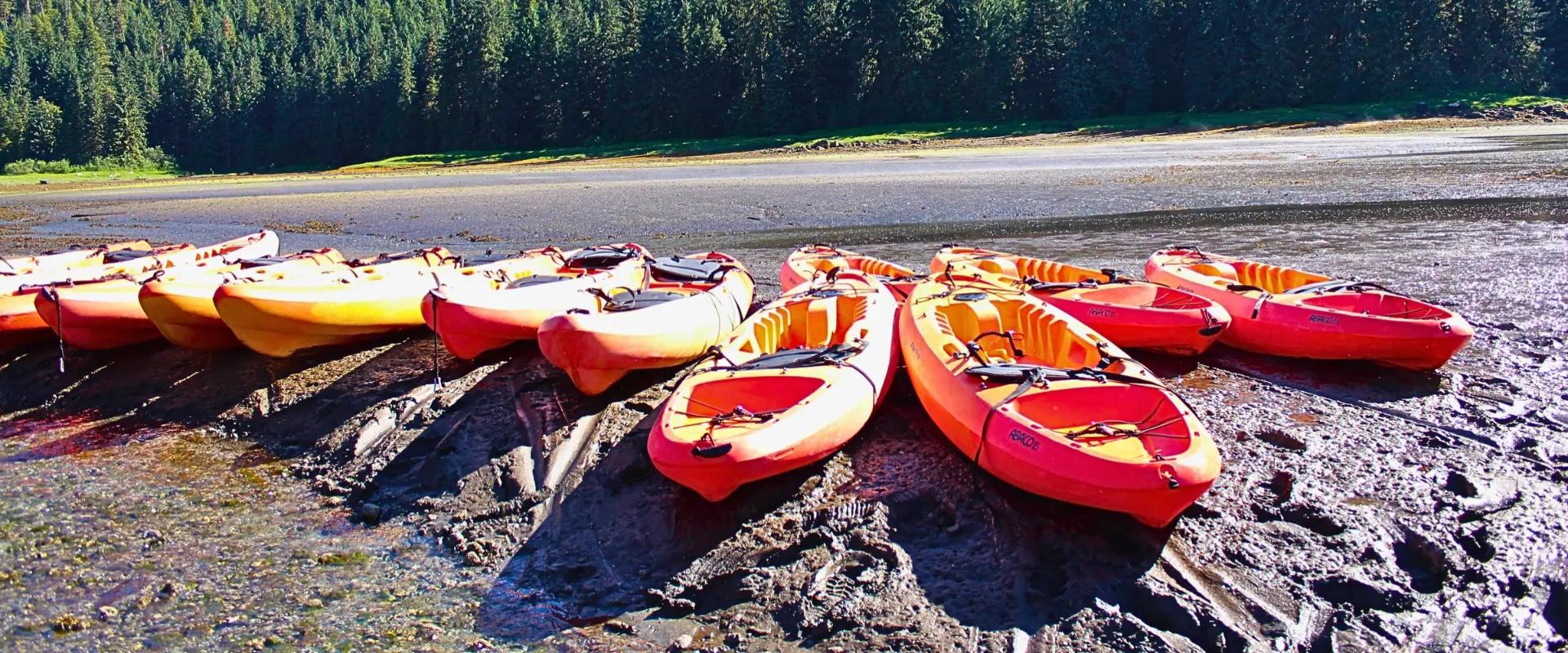
A big-ship Alaska cruise carries 2,000 to 4,000 guests, calls at towns like Juneau, Ketchikan and Skagway, and views glaciers from the deck. An expedition ship carries 12 to 150 guests, spends most of its time in uninhabited wilderness, and puts you ashore by skiff or kayak in coves with no dock and no town. Both are called an Alaska cruise. They are entirely different trips.
| Big ship cruise | Expedition ship | |
|---|---|---|
| Guests | 2,000-4,000 | 12-150 |
| Where you spend the days | In port towns, with excursions booked ashore | In uninhabited bays and inlets, often with no other vessel in sight |
| Getting ashore | Gangway onto a dock, in a town | Skiff or Zodiac onto a beach, often where there is no trail |
| Glacier experience | Viewed from an open deck as the ship holds position | Approached by skiff or kayak, close enough to hear it |
| Wildlife | Spotted from the deck, or on a booked whale-watching excursion | Actively sought daily; the ship changes course for it |
| Guides | Shore excursion operators in each port | A dedicated naturalist team aboard for the whole voyage |
| Activities | Shopping, tramways, flightseeing, town history, booked tours | Kayaking, bushwhack hiking, skiff cruising, paddleboarding, sometimes polar plunge |
| Onboard | Shows, casinos, multiple restaurants, kids clubs, spa | Lectures, a single dining room, a lounge, and the deck |
| Itinerary | Fixed and published, port times known months ahead | Flexible, changed daily for wildlife, weather and tide |
| Typical cost | $1,500-$4,000 per person | $6,000-$15,000 per person |
| Best suited to | Families, first-timers, multi-generational groups, value seekers | Travelers who want wilderness and are willing to pay for access |


We sell both, and we want to be clear at the outset that the big ship is not the lesser product. It is a different one. For the money, a seven-night Inside Passage sailing is the best value in cold-weather cruising anywhere in the world. The ports are genuinely interesting in their own right — Ketchikan's totem collection and Sitka's Russian history would each carry a trip on their own — and Alaska's scenery does not require a small ship to be spectacular. Watching Tracy Arm open up from a top deck with a coffee in your hand is a fine way to spend a morning, and nobody should be talked out of it.
The big ship also solves problems that expedition ships cannot. It absorbs a mixed-age group: teenagers who want a pool and a burger, grandparents who want a lounge chair and a window, and parents who want an hour where nobody needs them. It offers cabins across a wide price range, so a family of nine can travel together with everyone paying what suits them. It publishes port times months ahead, which matters if you are coordinating flights and a land tour around them.
The expedition ship costs three to four times as much and buys you exactly one thing: access. No towns. No other ships. No published schedule. You spend your days in bays with no dock, going ashore by skiff onto a beach where there is often no trail at all, and the naturalist team aboard is looking for wildlife from first light to last. The vessel changes course for a bear on a beach, holds position for a pod of orca, and reworks tomorrow overnight because the tide or the weather says so.
So the honest way to choose is to describe the Alaska you are already picturing. If the picture is a glacier seen from a warm deck with grandchildren nearby and a good dinner afterwards, the big ship is right, and we will book it happily and well. If the picture is a kayak in a quiet inlet with nothing man-made in sight, a big ship will disappoint you no matter how good the ship is — and some of them are very good. That mismatch, not price, is what ruins Alaska trips. We work through the comparison in more detail in our big ship versus expedition guide.
Which Alaska Cruise Route Should You Choose?
The Inside Passage round-trip from Seattle or Vancouver is the classic seven-night route, calling at Juneau, Ketchikan and Skagway with sheltered water throughout. The one-way Gulf of Alaska route between Vancouver and Whittier or Seward adds Hubbard Glacier and College Fjord and connects easily to Denali. Expedition ships usually sail round-trip from Juneau or Sitka into Southeast Alaska's wilderness.
The Inside Passage
The sheltered waterway through Southeast Alaska's islands. Home to Juneau, Ketchikan, Skagway, Sitka and Icy Strait Point, plus Glacier Bay and Tracy Arm. Calm water and the most reliable weather.
Known for
classic ports, totem culture, whale watching
The Gulf of Alaska
The one-way route north to Whittier or Seward, adding Hubbard Glacier and College Fjord. Rougher water for one stretch, and the natural connection to a Denali land tour.
Known for
big tidewater glaciers, Denali access
Southcentral and the Kenai
Seward, Whittier, Homer and Kenai Fjords National Park. The base for day cruises, bear viewing flights and halibut fishing.
Known for
Kenai Fjords, bear viewing, fishing
The Interior
Denali, Fairbanks and the rail corridor. Reached by land tour rather than ship, usually added to a one-way Gulf sailing.
Known for
Denali, aurora in winter, wildlife road tours
The Far North and the Aleutians
Nome, Kodiak, Dutch Harbor and the Bering Sea. Rare on mainstream itineraries and served mainly by expedition vessels.
Known for
remoteness, WWII history, Kodiak bears
The practical difference between the two big-ship routes is what happens at the end. A round-trip returns you to the airport you flew into, which keeps flights simple and cheap and is why it remains the most popular Alaska trip by a wide margin. A one-way sailing drops you at Whittier or Seward, an hour or two from Anchorage, which means two different airports, a more expensive ticket, and the option of continuing inland by rail.
That inland option is the whole reason the one-way exists. If Denali, moose and caribou are on your list, the Gulf of Alaska route is the one that connects to them without a second trip. If they are not, the sheltered water and simpler logistics of the Inside Passage are worth more than Hubbard Glacier is, and you will see plenty of ice either way.
Expedition itineraries ignore both patterns. They sail round-trip from Juneau or Sitka and spend the week inside Southeast Alaska's maze of islands and inlets, often without calling at a town at all. On those voyages the route is a rough intention rather than a schedule. We compare all three shapes in our Alaska itineraries guide.
What Should You Do in Each Alaska Cruise Port?
Juneau is for Mendenhall Glacier, the Mount Roberts Tramway and whale watching. Ketchikan is for Creek Street, the world's largest collection of standing totem poles, and Misty Fjords flightseeing. Skagway is for Klondike Gold Rush history and the White Pass railway. Sitka is for Russian heritage and the Alaska Raptor Center. Icy Strait Point is Tlingit-owned, with outstanding whale watching.
01
Juneau
Mendenhall Glacier and Nugget Falls, the Goldbelt Mount Roberts Tramway 1,800 feet up, and humpback whale watching from Auke Bay
02
Ketchikan
Creek Street's boardwalk on pilings, the world's largest collection of standing totem poles, and floatplane flightseeing over Misty Fjords
03
Skagway
The White Pass & Yukon Route Railway, Klondike Gold Rush National Historical Park, and the Gold Rush Cemetery. Or rent a car and drive to the Yukon — see below
04
Sitka
Sitka National Historical Park's totems, the Alaska Raptor Center, and St. Michael's Russian Orthodox Cathedral
05
Icy Strait Point
Owned by the Huna Tlingit, with excellent whale watching, one of the world's longest zip lines, and the restored Hoonah cannery
06
Seward
Kenai Fjords National Park day cruises, the Alaska SeaLife Center, and Exit Glacier, one of the most accessible glaciers in the state
07
Haines
The Chilkat Bald Eagle Preserve float trip, the Sheldon Museum, and Fort William H. Seward
08
Whittier
Prince William Sound glacier and wildlife cruises, and the single-lane tunnel shared by cars and trains
09
Homer
The Homer Spit, water taxis to Halibut Cove and Seldovia, and bear-viewing flights to Katmai or Lake Clark
10
Kodiak
Kodiak brown bear flightseeing, the Alutiiq Museum, and Fort Abercrombie


Cruise-line excursions are good, and they come with the one guarantee that matters: the ship will not leave without you. That is worth real money on a day when a floatplane is weathered in or a bus is stuck behind a road crew. But they are not the only option. Independent operators are often cheaper, run smaller groups, and in several ports do things the lines do not offer at all.
The rule we give every client is simple: if you book independently, book only with an operator that offers a back-to-ship guarantee in writing. Everything else is negotiable; that is not. And in a handful of ports — Ketchikan, Skagway, Sitka — you can walk off the gangway into the town itself and have an excellent day without a tour of any kind.
Our full port-by-port guide, with the top three things to do in each, is our most-read Alaska piece and covers sixteen ports including Anchorage, Whittier, Homer and Kodiak. It is written for exactly the traveler on a large ship. Read the Alaska cruise ports guide before you book excursions, not after.
What Is the Best Thing to Do in Skagway?
The White Pass railway is the classic answer, but if you have a full day in port, rent a car and drive to Carcross in the Yukon instead. It is about an hour each way past Tormented Valley, Summit Lake, Tutshi Lake and the extraordinary green of Emerald Lake, with the freedom to stop wherever you like. You will still get back with time for Broadway Street.

This is Chris's advice and it comes from doing it. Avis is right by the dock in Skagway and the process is quick — a few signatures, a walkaround, and you are out. The catch is the queue: it builds first thing in the morning while every other ship's passengers have the same idea. Send the designated driver off the ship first with the paperwork ready and the rest of the group can follow at a civilised pace. Any car will do, though a 4Runner or Jeep makes the pull-offs less of a decision.
The border crossing into British Columbia and on into the Yukon is straightforward for most visitors, but it is the one Alaska day where the passport requirement genuinely bites — a round-trip sailing may not need one, this drive does. Check the rental agreement too, since it will spell out the rules for taking the vehicle into Canada.
Then the road does the work. The Klondike Highway climbs past White Pass into the Tormented Valley, an oddly beautiful stretch of twisted trees and bare rock, with Summit Lake sitting in the middle of it. Tutshi Lake runs along the highway in turquoise. Emerald Lake, sometimes called Spirit Lake, gets its colour from white marl deposits on the lakebed rather than from anything in the water, and the Bove Island viewpoint gives you a second angle on the same landscape.
Carcross is about an hour from Skagway before you count the stops, and worth the drive on its own: one of the world's smallest deserts, a dune field left behind by a drained glacial lake; the Carcross Commons artisan shops; the historic Matthew Watson General Store; and a bistro where poutine and a Yukon beer are the correct order after a morning of pull-offs. You will still be back in Skagway with hours to walk Broadway Street before sailaway.
None of this is an argument against the train. The White Pass & Yukon Route is a genuine historical marvel and we book it constantly. It is an argument for the car on the specific day when your ship gives you ten or twelve hours in port, because on that road the scenery demands a stop roughly every fifteen minutes and only one of the two options lets you take it. More detail in our Skagway and Carcross guide.


When Is the Best Time to Cruise Alaska?
The Alaska season runs May through September. May and early June are driest and cheapest with fewer ships. Late June and July bring the longest days and warmest weather at peak prices. August is wettest but best for salmon runs and bear viewing. September brings fall colour, whale activity, the lowest fares and a real chance of the Northern Lights on northern itineraries.
The Alaska season, month by month
May
Dry and quiet
Statistically the driest month, with snow still on the peaks and noticeably fewer ships. Lower fares. Some higher-elevation tours not yet running, and cooler temperatures throughout.
June
Longest days
Near-endless daylight around the solstice and generally settled weather. Wildflowers, calving glaciers and active wildlife. Peak season pricing begins in earnest.
July
Warmest and busiest
The warmest weather of the season and every excursion running. Also the most expensive and the most crowded in port, with multiple ships docked at once.
August-September
Salmon, bears and aurora
August brings the salmon runs and the best bear viewing of the year, along with more rain. September adds fall colour, thinning crowds, the lowest fares, and aurora potential on northern routes.

The honest trade in Alaska is rain against wildlife, and it is not a close call once you know what you want. August is the wettest month of the season. It is also the month when salmon fill the streams and bears become genuinely reliable rather than lucky. If wildlife is the point of your trip, take August and take the rain with it — Southeast Alaska is a temperate rainforest and behaves like one in every month anyway.
If value and dry weather matter more, look at May. It is statistically the driest month, snow is still on the peaks, there are noticeably fewer ships in port, and fares are lower. The cost is that some higher-elevation tours have not started running and the air is cooler throughout. Late September gives you a different kind of bargain: fall colour, thinning crowds, the lowest fares of the year and, on northern routes, an outside chance of aurora as the nights finally get dark enough.
One thing people underestimate is how completely the season ends. This is not a destination that quietly tapers. By early October the ships have repositioned south, most excursion operators have closed for the year, and the towns go back to being towns. If you are considering the first or last sailing of the season, tell us and we will tell you exactly what will and will not be open. More in our when to cruise Alaska guide.
What Wildlife Will You See in Alaska?
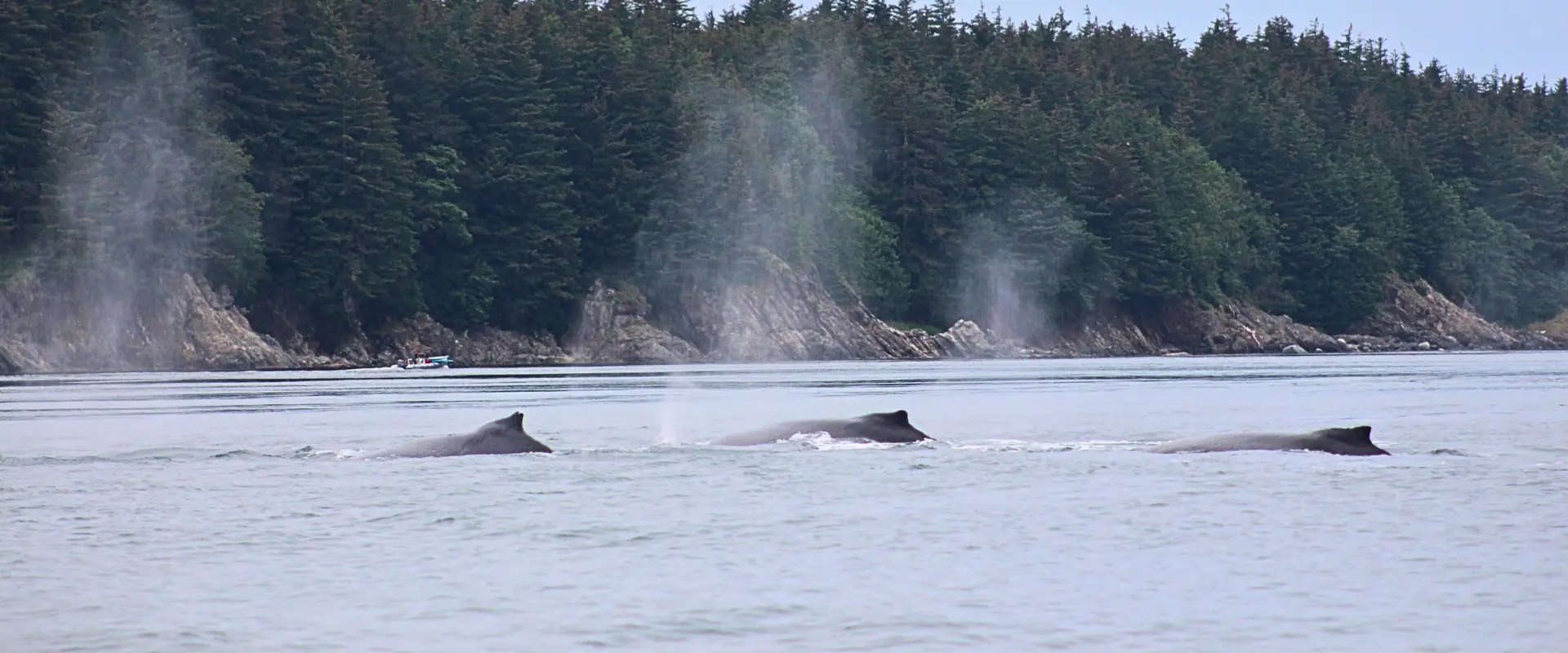
Humpback whales and bald eagles are near-certain on any Alaska cruise. Orca, sea otters, sea lions and harbour seals are common. Brown and black bears are reliable in August at salmon streams, though usually on a dedicated excursion rather than from the ship. Moose, Dall sheep and caribou are land-tour animals, seen around Denali rather than from the water.
Humpback whales
Present throughout the season and often visible from the deck. Bubble-net feeding, largely unique to Southeast Alaska, is the sighting to hope for.
Orca
Both resident and transient pods. Less predictable than humpbacks but seen regularly in the Inside Passage.
Brown and black bears
Best in August at salmon streams. Reliable viewing usually means a flightseeing trip to Katmai, Lake Clark or Pack Creek rather than a deck sighting.
Bald eagles
Genuinely everywhere. The Chilkat Bald Eagle Preserve near Haines concentrates them in extraordinary numbers during the autumn run.
Sea otters and sea lions
Common in Prince William Sound, Kenai Fjords and the Inside Passage, often from a small boat rather than the ship.
Land mammals
Moose, caribou, Dall sheep and grizzlies are Denali animals. If these matter to you, add a land tour — a cruise alone will not deliver them.


Set the expectation correctly and Alaska will exceed it. From a ship, this is one of the best marine-mammal destinations in the world: humpbacks throughout the season, orca often enough to plan around, sea otters and sea lions in the sheltered water, and bald eagles so common that by day three you stop pointing them out. What a ship will not reliably give you is land mammals. Moose, caribou and Dall sheep live inland, and no amount of deck time will produce them.
This is the one area where the expedition ship has an advantage that money can actually buy. A big ship holds a schedule because two thousand people have booked excursions ashore at fixed times. A small ship does not, so when the naturalist spots a brown bear working a beach at seven in the morning, the ship simply stops. Over a week that difference compounds into a completely different wildlife log.
If bears are your priority, plan for them specifically rather than hoping. The reliable version is a flightseeing trip to Katmai, Lake Clark or Pack Creek in August, and those seats sell out months ahead. Details in our Alaska wildlife guide and our bear viewing guide.
Should You Add a Denali or Land Tour?
If you want moose, caribou, grizzlies and Denali itself, yes — a cruise alone will not give you those. A cruisetour pairs a one-way Gulf of Alaska sailing with three to five days inland by rail to Talkeetna, Denali and sometimes Fairbanks. It typically adds $1,500 to $3,500 per person and turns a seven-night trip into ten to fourteen days.
The structure confuses people, so here it is plainly. A cruisetour is sold by the cruise line as a single package: one booking, one set of transfers, one bill. It runs in either direction — cruise first then land, or land first then cruise — and the inland legs use domed rail cars between Anchorage, Talkeetna and Denali, which are genuinely pleasant and part of the appeal. Princess and Holland America have the deepest networks here because they own lodges along the route.
The alternative is booking the land portion independently. It costs less and gives you far more control over where you sleep and how long you linger, but it requires real planning and it puts the connections on you. We are happy either way; we just want the decision made deliberately rather than discovered at the pier.
Two practical points that catch people out. First, Denali's park road is largely closed to private vehicles, so seeing wildlife inside the park means a bus tour regardless of how you arrive — an independent booking does not buy you a scenic drive. Second, a cruisetour requires a one-way sailing, which means flying into one city and out of another, and that usually costs more than a round-trip fare. Build both into the budget from the start. More in our Denali and cruisetours guide.
How Much Does an Alaska Trip Cost?
Big-ship Alaska cruises typically run $1,500 to $4,000 per person for seven nights, which is the best value in cold-weather cruising. Expedition ships run $6,000 to $15,000 per person for a comparable length. Add $1,500 to $3,500 for a Denali cruisetour. Shore excursions are the item that surprises people, easily adding $500 to $1,500 per person.
| Factor | What it means | Typical impact |
|---|---|---|
| Ship type | A 3,000-guest ship versus a 60-guest expedition vessel | The single largest variable, often 3x to 4x |
| Cabin category | Interior versus balcony, which matters more in Alaska than most places | Significant, and worth paying for here |
| Season | May and September are cheapest; July is peak | Meaningful swing on the same cabin |
| Route | Round-trip Inside Passage versus one-way Gulf of Alaska | One-way usually costs more, plus higher airfare |
| Shore excursions | Flightseeing, bear viewing and dog sledding are the expensive ones | $500-$1,500 per person is common |
| Land tour | Adding Denali and the rail corridor | $1,500-$3,500 per person |
| Getting there | Flights to Seattle or Vancouver versus Anchorage | One-way routes mean two airports and higher fares |
Ranges are 2026-27 planning estimates and vary with ship, season and cabin. We quote live fares on specific departures. See our Alaska cost guide for the full breakdown.
The excursion budget is where Alaska trips go over, every time. A helicopter glacier landing with a dog-sled camp on top, or a bear-viewing flight to Katmai, can cost more per person than a night of the cruise itself. Book three or four of those across a week and the real cost of the trip has quietly doubled while the fare on the invoice has not moved.
So we build the excursion plan into the budget up front rather than letting it accumulate port by port. That usually means choosing one or two signature days and doing the rest independently or on foot — which is not a downgrade, since some of the best hours we have had in Alaska cost nothing but a walk out of town. It also means booking the expensive ones the day they open, because capacity is small.
The other line worth paying for is the cabin. A balcony matters more in Alaska than almost anywhere else, because the scenery happens continuously rather than at ports, and often at hours when the public decks are cold and crowded. If the budget forces a choice between a balcony and an extra excursion, we usually argue for the balcony. Full breakdown in our Alaska cost guide.
Our planning costs you nothing extra. Pricing matches booking direct, with Signature amenities added where available.
Big ship or small? It is the only Alaska question that really matters.
Describe the Alaska you are picturing and we will tell you which one delivers it.
Which Alaska Cruise Line Should You Choose?
For big ships, Princess and Holland America have the deepest Alaska history and the strongest land-tour networks, Norwegian and Royal Caribbean suit families, and Celebrity sits slightly upmarket. For expedition ships, UnCruise and Alaskan Dream focus purely on Southeast Alaska wilderness, while Lindblad-National Geographic, HX, Seabourn and Silversea bring polar-style expedition programmes.
| Operator | Type | Typical guest count | Best for |
|---|---|---|---|
| Princess Cruises | Big ship | 2,600-3,600 | Denali cruisetours and rail; the deepest Alaska land network |
| Holland America | Big ship | 2,000-2,700 | Alaska heritage, cruisetours, a slightly older demographic |
| Norwegian Cruise Line | Big ship | 2,400-4,000 | Families and flexible dining |
| Royal Caribbean | Big ship | 3,000-4,000 | Families and multi-generational groups |
| Celebrity Cruises | Big ship | 2,200-3,000 | Couples wanting a more upmarket big ship |
| UnCruise Adventures | Expedition | 22-86 | Pure Southeast Alaska wilderness, no ports |
| Alaskan Dream Cruises | Expedition | 10-76 | Alaska Native owned, small-ship Southeast itineraries |
| Lindblad-National Geographic | Expedition | 62-100 | Naturalist depth and photography |
| HX | Expedition | 250-500 | Science programmes at a mid-size scale |
| Seabourn and Silversea | Luxury expedition | 260-600 | Expedition access without giving up comfort |
Guest counts vary by vessel within each fleet. Alaska has no expedition-cruise governing body equivalent to the polar membership organisations; operators work under US federal and state regulation, and the National Park Service limits the number of vessel entries into Glacier Bay National Park. See expedition cruise lines and ships we've sailed.
The question worth asking that most travelers do not is whether a given itinerary actually enters Glacier Bay. Permits are limited and finite, which makes Glacier Bay one of the few things that genuinely differentiates two otherwise identical seven-night sailings at similar prices. If it matters to you, it needs to be confirmed before deposit rather than assumed from a brochure map.
Beyond that, the fleets sort themselves fairly cleanly. Princess and Holland America are the Alaska specialists by history and by infrastructure, and if a cruisetour is in the plan they are usually the answer. Norwegian and Royal Caribbean bring the newest hardware and the best family programming. Celebrity sits a notch above on food and design. On the small-ship side, UnCruise and Alaskan Dream are the purists — no ports, no schedule, Southeast Alaska wilderness only — while Lindblad brings the deepest naturalist and photography programme and Seabourn and Silversea deliver expedition access without asking you to give up comfort.
Chris and Erika have sailed on ten ships and toured seven more and have travelled Alaska by large ship as well, which is why we can compare the two honestly instead of guessing. See expedition cruise lines and ships we've sailed, or our Alaska cruise lines comparison.
Is Alaska Right for You?
Alaska suits almost everyone, which is why it is the busiest cruise destination in the world outside the Caribbean. It is the easiest cold-weather trip to take: no passport needed for most US citizens, no ocean crossing, and a route for every budget. The real question is not whether to go but which version to book, because the wrong one disappoints.
Book a big ship if you
- Are travelling with children, grandparents, or a mixed-age group
- Want maximum value and a broad range of cabin prices
- Like having restaurants, entertainment and a spa aboard
- Prefer a known schedule with published port times
- Are visiting Alaska for the first time and want the classic ports
Book an expedition ship if you
- Want wilderness rather than towns, and will pay several times more for it
- Want to kayak, hike off-trail, and get ashore where there is no dock
- Care more about a naturalist team than about dining choice
- Are comfortable with an itinerary that changes daily for wildlife and weather
- Have cruised Alaska before on a big ship and wanted something different
The second bullet in each column above is the honest one. Expedition Alaska costs three to four times as much for the same seven nights, and that premium buys access rather than luxury — on several expedition vessels the cabins are plainer than what the same money would get you on a big ship, and there is no spa, no show and no second restaurant. If that trade does not appeal to you, the big ship is genuinely the better buy and we will tell you so rather than upsell you.
It also works the other way. Travelers who have already done a big-ship Alaska week and came home feeling like they had seen it through glass are exactly the people the small ships were built for, and we place a lot of them. Compare it with the other expedition destinations if you are weighing them up: Antarctica, Greenland, the wider Arctic and Iceland.
How Far in Advance Should You Book Alaska?
Book 9 to 12 months ahead for July sailings, balcony cabins and any cruisetour with Denali lodging, which is the constrained piece. Expedition ships need 12 to 18 months because they carry so few guests. Shore excursions like bear viewing and helicopter glacier landings should be booked as soon as they open, since capacity is small.
On a big-ship trip the constrained item is not the ship, it is the land side. Denali lodging is genuinely limited, and cruisetour inventory sells out well before cabins on the same sailing do. If Denali is part of the plan, the booking clock starts there and the cruise fits around it, not the other way round.
On the expedition side the arithmetic is stark. A 60-guest ship running a dozen Alaska departures has fewer berths for the entire season than one large ship carries in a single week. Add the travelers who rebook aboard for next year before they disembark and the good dates go early. Twelve to eighteen months is not caution, it is the market.
Excursions follow their own clock. Bear-viewing flights and helicopter glacier landings have small daily capacity and sell out months before departure regardless of which ship you are on, so we book those the week they open rather than waiting for the final payment date.
Why Book Alaska Through Glacial Expeditions?
Glacial Expeditions is an independent Wisconsin-based agency, an affiliate of Oasis Travel Network and a member of Signature Travel Network, serving travelers nationwide. Chris and Erika Commisso have travelled Alaska by both big ship and expedition vessel and have sailed on ten ships and toured seven more. Our planning costs you nothing extra — pricing matches booking direct, with Signature amenities added where available.
Oasis Travel Network affiliate · Signature Travel Network member · Corporate sponsor of the Expedition Cruise Network · ExplorEarth Approved Partner
Written by your expedition advisors
Chris Commisso · Expedition Expert
Signature Travel Expert
Erika Commisso · Travel Experience Architect
CLIA Elite Cruise Counselor · ASTA Verified Travel Advisor · Signature Travel Expert
Chris and Erika have sailed ten expedition voyages and toured seven more expedition ships. Favorite explorations so far: Antarctica, Svalbard, Greenland, Iceland, Norway, Alaska, the Galápagos, the Scottish Hebrides, Churchill and French Polynesia.
Last updated . Reviewed against our own Alaska sailings and port days, and updated for the 2026-27 seasons.
More about how we work on about and what clients say on reviews. We book the ships on expedition cruise lines, the vessels we know personally are on ships we've sailed — including our firsthand National Geographic Sea Lion review from Alaska — and the activities on experiences. If you are weighing Alaska against the other expedition destinations, compare it with Antarctica, Greenland, the Arctic Iceland and, for a warm-water first expedition, Baja California. When you are ready, get in touch.
Alaska Cruise FAQs
Do you need a passport for an Alaska cruise?
Not for US citizens on a round-trip domestic sailing, where a birth certificate and government photo ID generally suffice. You do need one if your itinerary calls in Canada, if you fly one-way through Vancouver, or if you plan to cross into the Yukon from Skagway. We recommend bringing one regardless.
Is a big ship or a small ship better for Alaska?
Neither is better; they are different trips. Big ships visit towns, offer more amenities and cost far less. Expedition ships spend their days in uninhabited wilderness with kayaks and skiffs, and cost three to four times as much. Choose based on whether you want ports or wilderness.
Which side of the ship is better for Alaska?
On a round-trip Inside Passage sailing you will see both sides over the week, so it matters less than people think. On a one-way sailing, starboard northbound and port southbound generally favour the coastline. A balcony matters more than which side it faces.
Do all Alaska cruises visit Glacier Bay?
No. The National Park Service limits the number of vessel entries into Glacier Bay National Park, so permits are finite and many itineraries substitute Hubbard Glacier, Tracy Arm or Endicott Arm instead. If Glacier Bay matters to you, confirm it before booking rather than assuming.
When can you see bears in Alaska?
August is the reliable month, when salmon runs concentrate brown and black bears at streams. Seeing them usually means a dedicated excursion — a flightseeing trip to Katmai, Lake Clark or Pack Creek — rather than a sighting from the ship. Book those as early as possible.
Can you see the Northern Lights in Alaska?
Not on a summer cruise, when there is too much daylight. Fairbanks sits directly under the aurora oval and is one of the best places in the world for it, but that means travelling between late September and March, outside the cruise season entirely.
Is Alaska cold in summer?
Milder than most people expect. Southeast Alaska in summer generally sits in the 50s and 60s Fahrenheit, with rain more likely than cold. Layers and a waterproof shell matter far more than heavy clothing. It is a rainforest, and it behaves like one.
Should I book shore excursions through the cruise line?
The cruise line guarantees you will not be left behind, which is worth something. Independent operators are often cheaper and less crowded, but only book one that offers a back-to-ship guarantee. In several ports you can simply walk into town and skip the tour entirely.
Is Alaska worth it if I have already done a polar expedition?
Yes, but book an expedition ship rather than a big one. Alaska's Southeast wilderness rewards the same instincts as Svalbard or Antarctica — kayaking, skiff cruising, bushwhack hiking — and the forest, bears and salmon make it genuinely different from the poles.
How does Alaska compare to Norway or Greenland?
Alaska is far easier to reach for Americans and much cheaper, with forests and bears rather than tundra and Arctic wildlife. Norway is comparable in accessibility with more culture; Greenland is a genuine expedition with far more remoteness. Alaska is the softest entry point of the three.
Alaska Planning Guides
Big ship versus expedition cruise
The page's central question, worked through in full with both cases made.
Alaska cruise ports guide
The top three things to do in each major port, from Juneau to Kodiak.
Skagway and the drive to Carcross
Renting a car, crossing into the Yukon, and the stops that make the day.
When to cruise Alaska
May to September, month by month, and what each one trades away.
What an Alaska trip costs
Fares, cabins, excursions and land tours, with 2026-27 ranges.
Inside Passage versus Gulf of Alaska
Round-trip or one-way, and how each shapes the rest of the trip.
Alaska cruise lines compared
Big-ship fleets and expedition operators, and who each one suits.
Denali and cruisetours
How the rail corridor works, and whether to book it as a package.
Alaska wildlife guide
What you will see from the water, and what needs a land tour.
Bear viewing in Alaska
Katmai, Lake Clark and Pack Creek, and when to book them.
Glacier Bay and the glaciers
Why permits are limited, and the alternatives when a ship cannot go.
Choosing shore excursions
Cruise line or independent, back-to-ship guarantees, and what to skip.
Alaska packing list
Layers, rain gear and binoculars, for a rainforest that behaves like one.
New to this style of travel? Start with What is an expedition cruise?