Some trips ease you into the adventure. Alaska apparently had other plans.
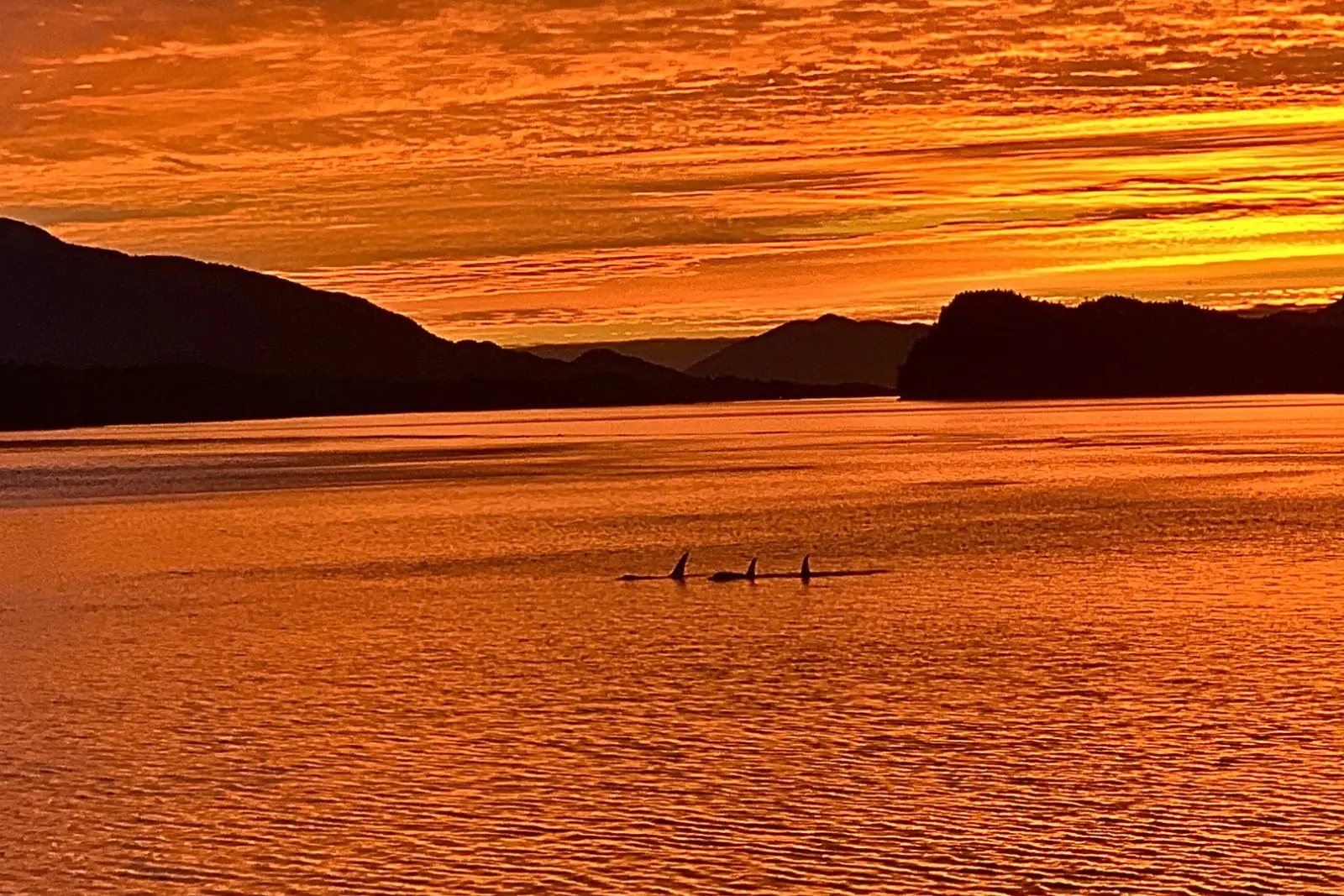
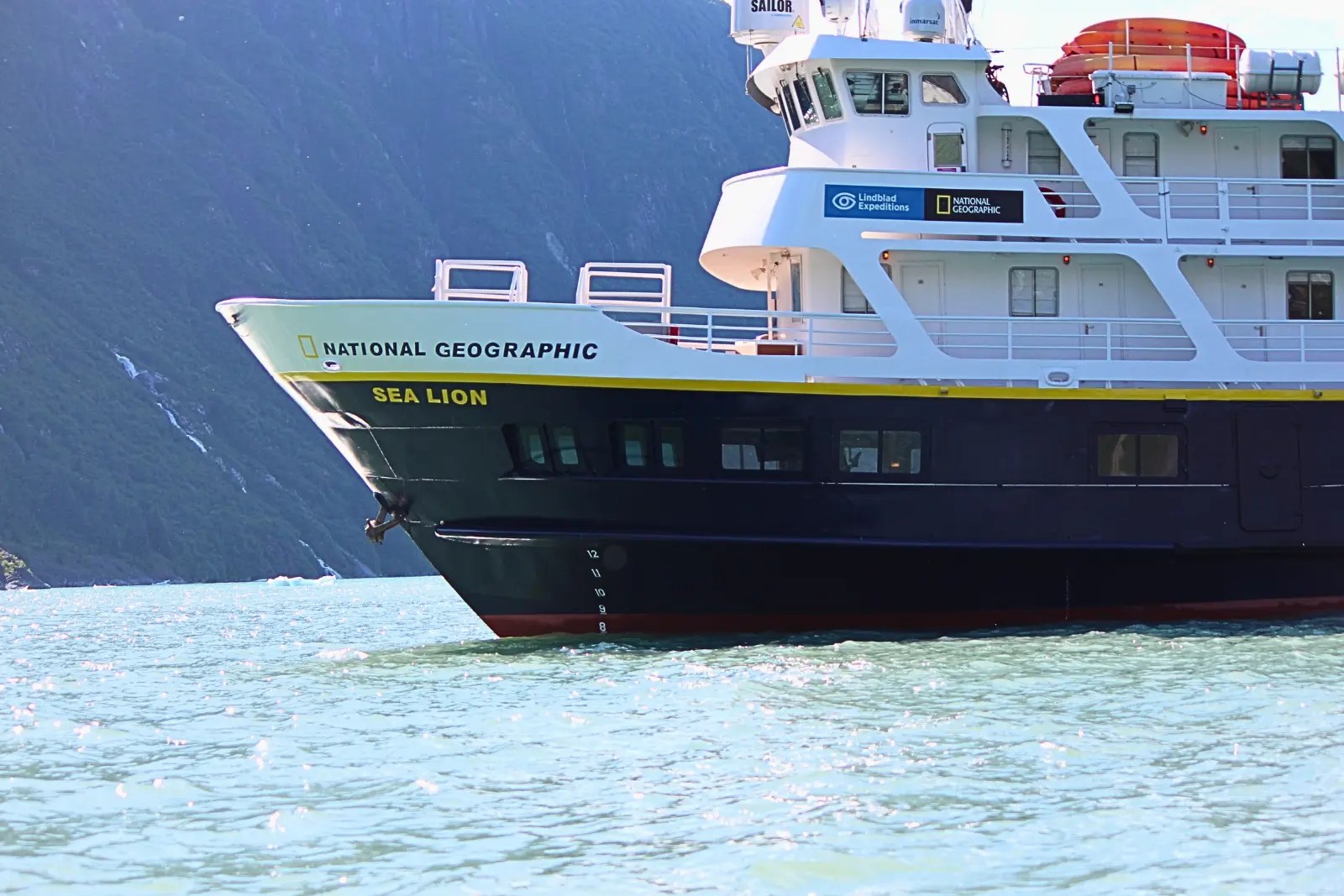
We had barely left Ketchikan's harbor when our first pod of orcas appeared. Above us, the sky glowed orange with a spectacular sunset. Beside us, dorsal fins slipped through the water. And there we stood on the bow of National Geographic Sea Lion, unwilling to go inside for fear of missing even a moment.
We had only just boarded, and already Alaska was giving us a reason to stay out on deck.
June 25: A send-off with orcas
On June 25, we boarded National Geographic Sea Lion in Ketchikan, settled in, and met the people who would help bring this wild corner of Alaska to life: our expedition team, naturalists, photographer, and videographer.
There were the usual safety briefings and introductions, but the evening's departure quickly became anything but ordinary.
That glowing orange sunset would have been a memorable send-off all on its own. Add a pod of orcas swimming alongside us before we were even properly out of the harbor, and suddenly nobody wanted to leave the bow.
It was a wonderful introduction to expedition travel. We could have a plan for the day, but when wildlife appeared, it deserved our full attention.
That would become a familiar theme.
June 26: Misty fjords and an Alaska baptism
We woke as the ship made its way into Misty Fjords, which was doing an excellent job of living up to its name.
Mist hung low over the water, hiding the upper reaches of the mountains. As we crept farther into the fjords, each turn revealed another piece of the landscape: a steep mountainside meeting the sea, a stretch of shoreline, another corner disappearing into the gray.
We never quite knew what was coming next.
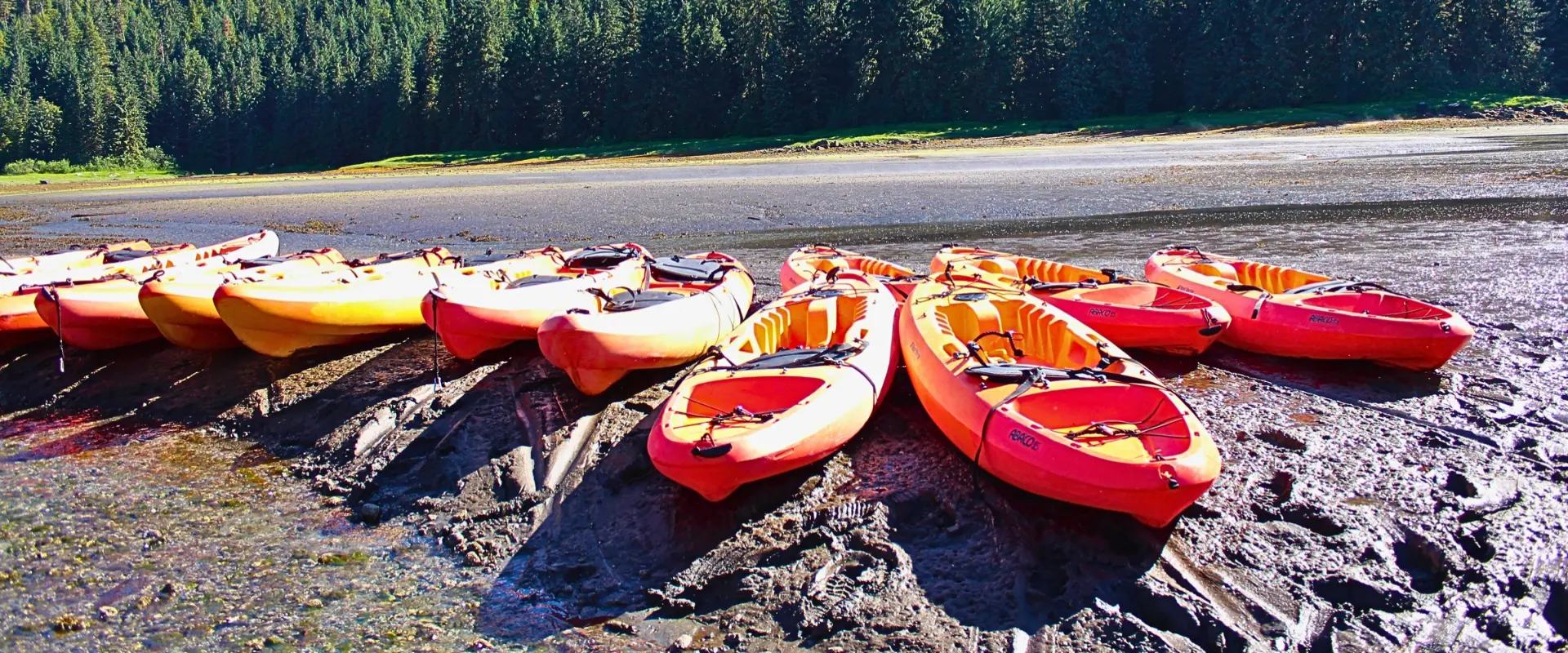
One of the joys of being aboard such a small ship was seeing just how far into these quiet places we could go. Sea Lion tucked into a sheltered cove, and soon we were heading out in kayaks to explore.
The water was calm and clear, with lingering patches of snow along the surrounding slopes. We paddled at our own pace, taking in the scenery and enjoying the chance to experience it from water level. Looking back at our ship, framed by the mountains, made its small size, and the scale of Alaska, even more apparent.
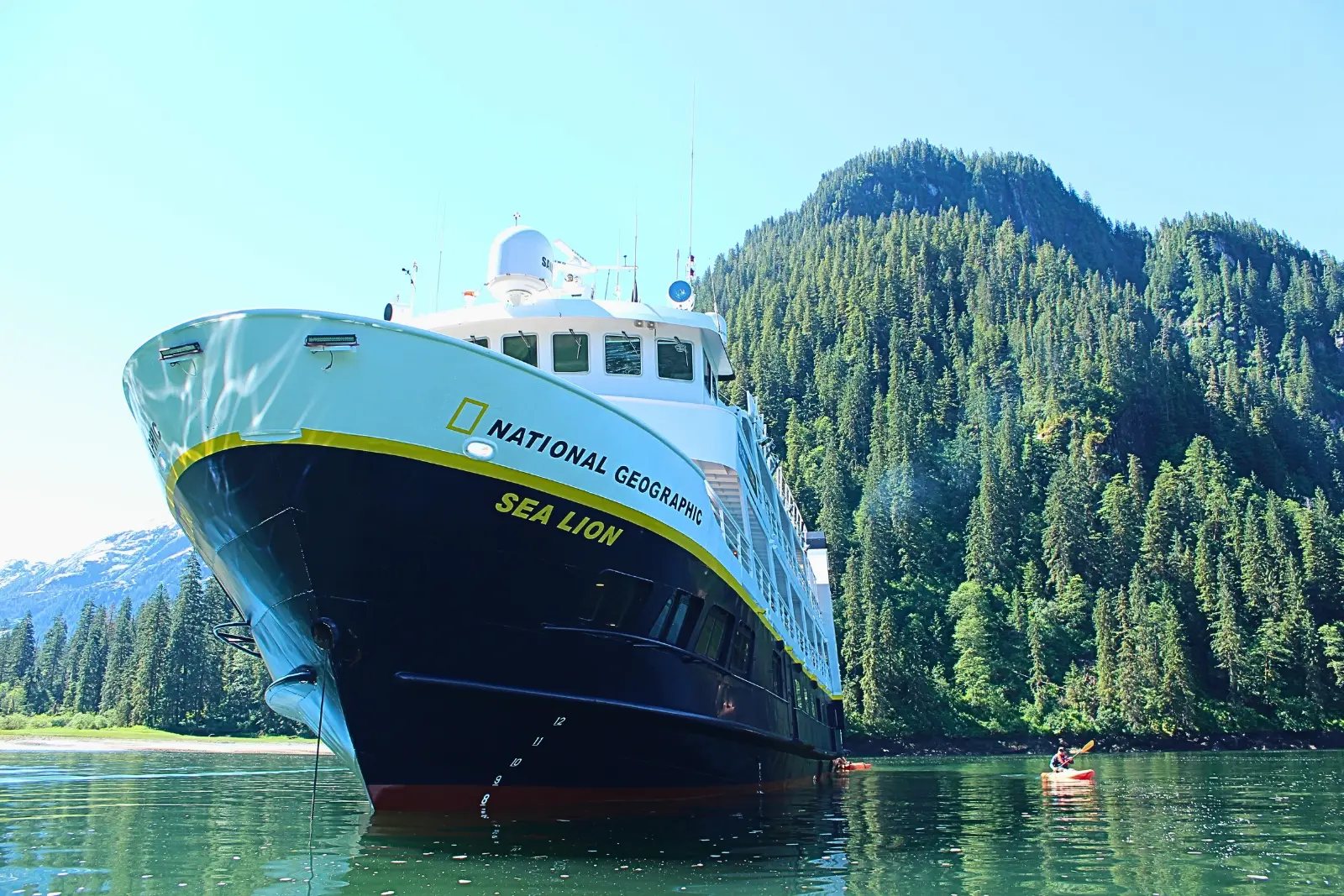
After kayaking, we traded our paddles for a Zodiac ride to explore nearby waterfalls. That was where we received what we came to call our first “Alaska baptism.”
One by one, we leaned our heads over the front of the Zodiac and into the waterfall.
The water was very, very cold.
There was plenty of laughter, and we even talked our videographer into taking a turn. It was a wonderfully silly moment in the middle of all that magnificent scenery.
By then, the misty morning had given way to blue skies and sunshine. We took plenty of photographs of the ship, the mountains, and the water before returning aboard for lunch as we made our way toward Walker Cove.
Our afternoon there brought another first: a brown bear in the wild.
Initially, the bear was so far away that it was barely more than a speck in our photographs. Everyone gathered quietly on the bow while our captain eased the ship forward, slowly and carefully.
The bear carried on with its day.
It nibbled grass. It rolled around. It stood on a log. It yawned.
We were completely captivated by an animal that seemed thoroughly uninterested in us.
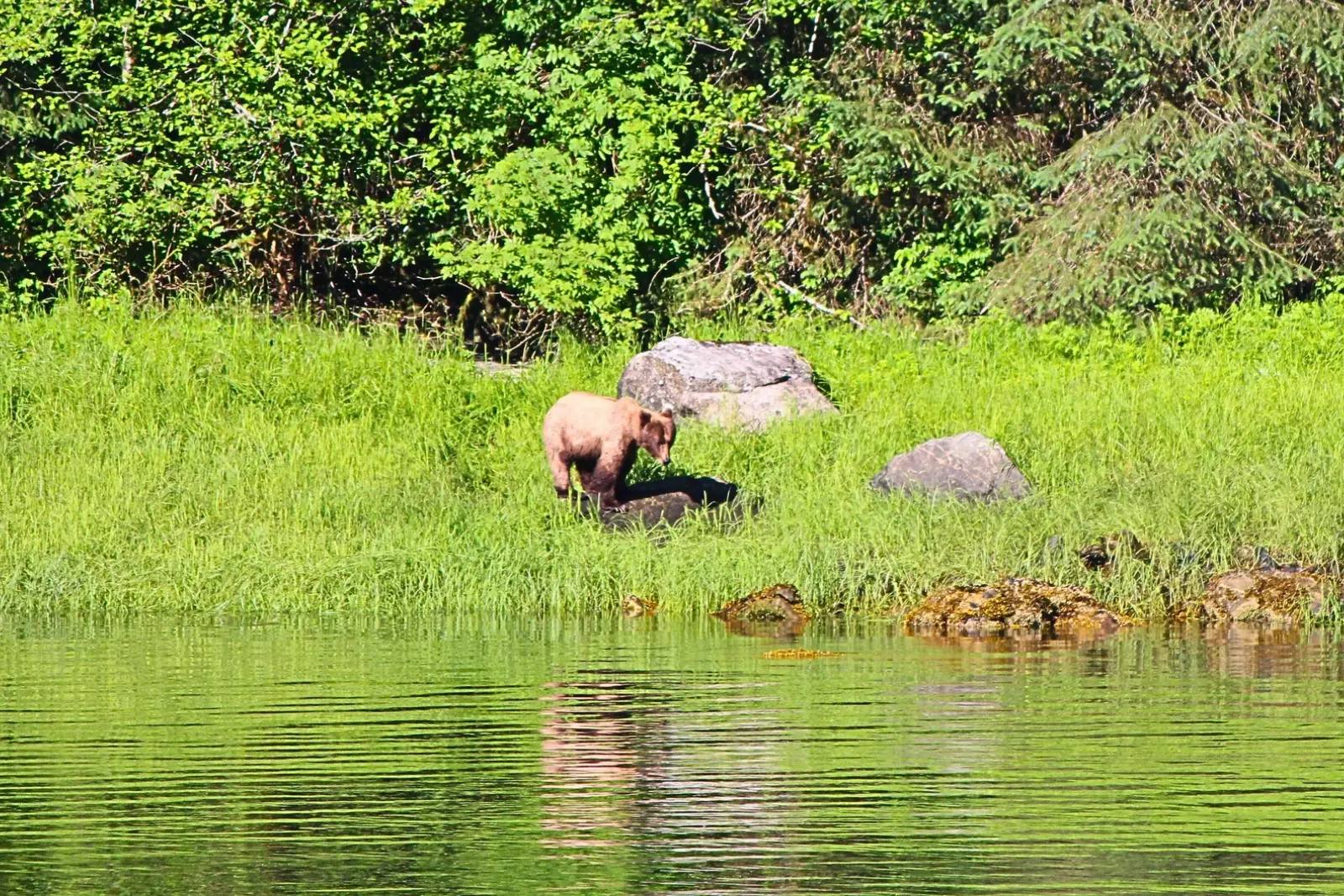
The photographs still make us laugh. At the beginning, you practically need someone to point out where the bear is. As the sequence continues, the bear gets bigger and bigger in the frame, until those distant glimpses become wonderful views of its very relaxed afternoon.
June 27: The evening we abandoned dessert
Another beautiful bay greeted us the next morning, along with another opportunity to kayak.
The water had a little more chop this time, giving our paddle a different feel from the previous day's calm cove. We explored, enjoyed the views, and then headed ashore for a forest hike.
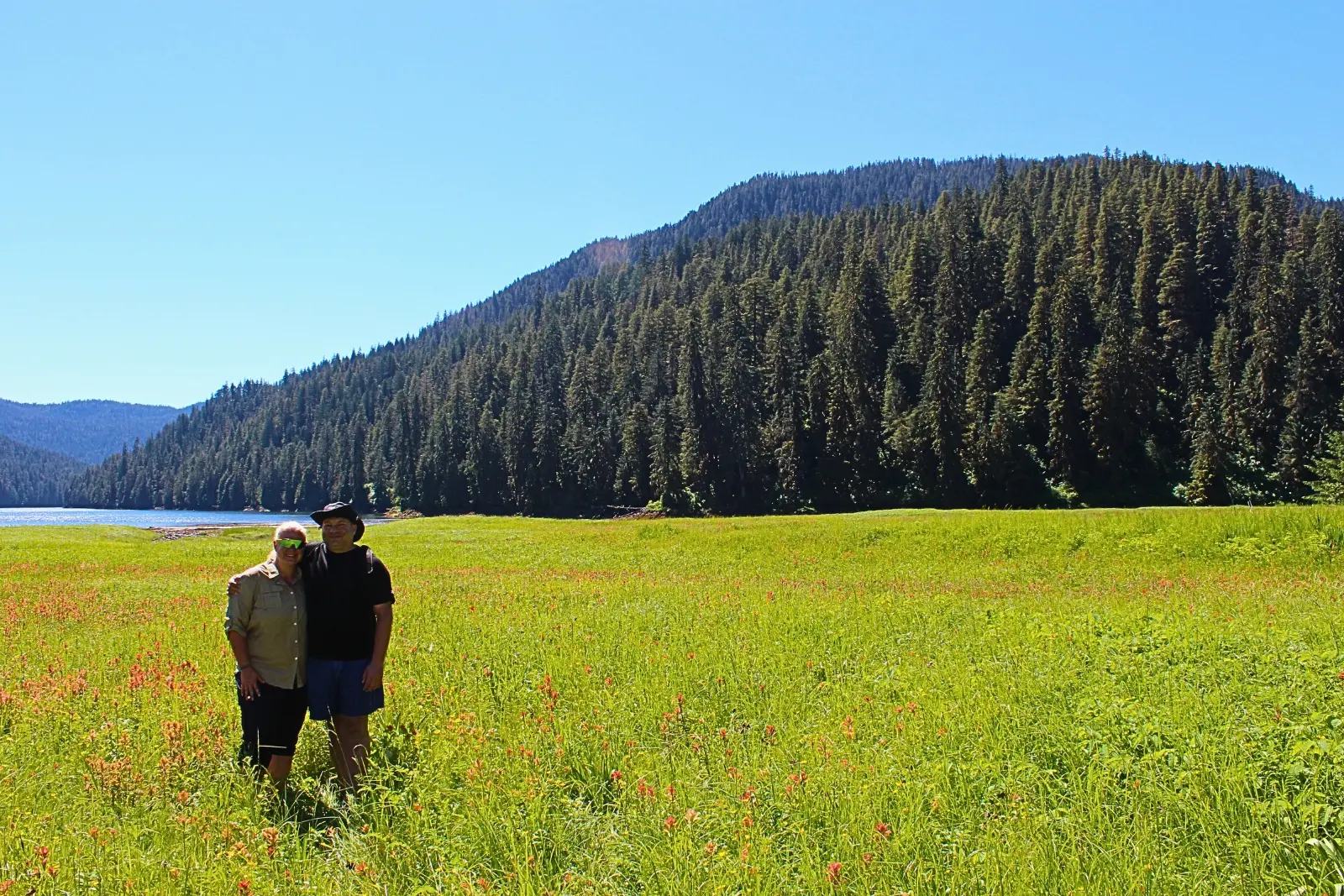
There were wildflowers to admire, a rushing river, and plenty of mushrooms to keep Chris busy. The weather was surprisingly warm, and we kept marveling at how fortunate we were to be exploring Alaska in such lovely conditions.
Back aboard, we sat down to another fantastic meal.
We almost made it to dessert.
With the dining room windows so close to the water, an orca's appearance outside was impossible to ignore. Dinner ended rather abruptly as we all hurried out on deck.
Dessert could wait.
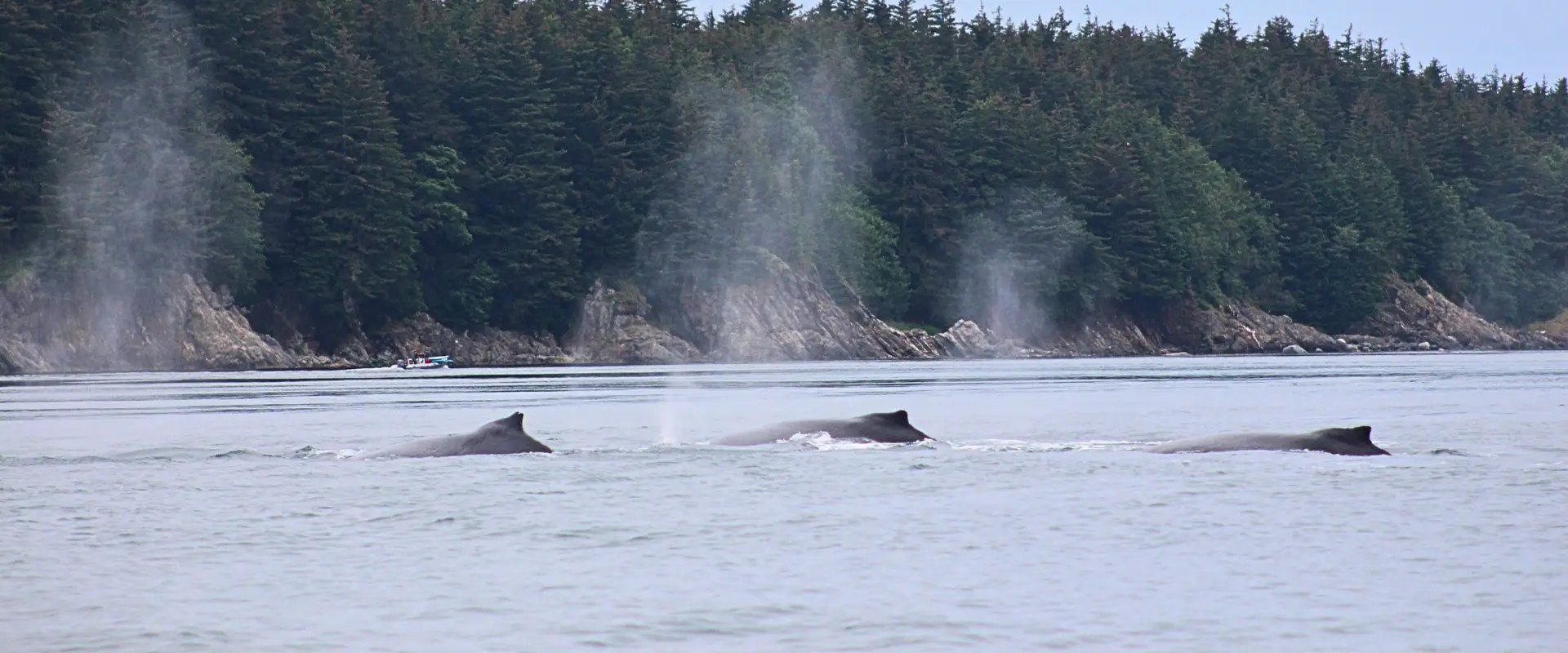
What followed was about an hour and a half of extraordinary orca watching. The pod swam alongside us, passed beneath the ship, and breached. We moved from one side of the deck to the other, trying to keep up as they disappeared below the surface and appeared somewhere new.
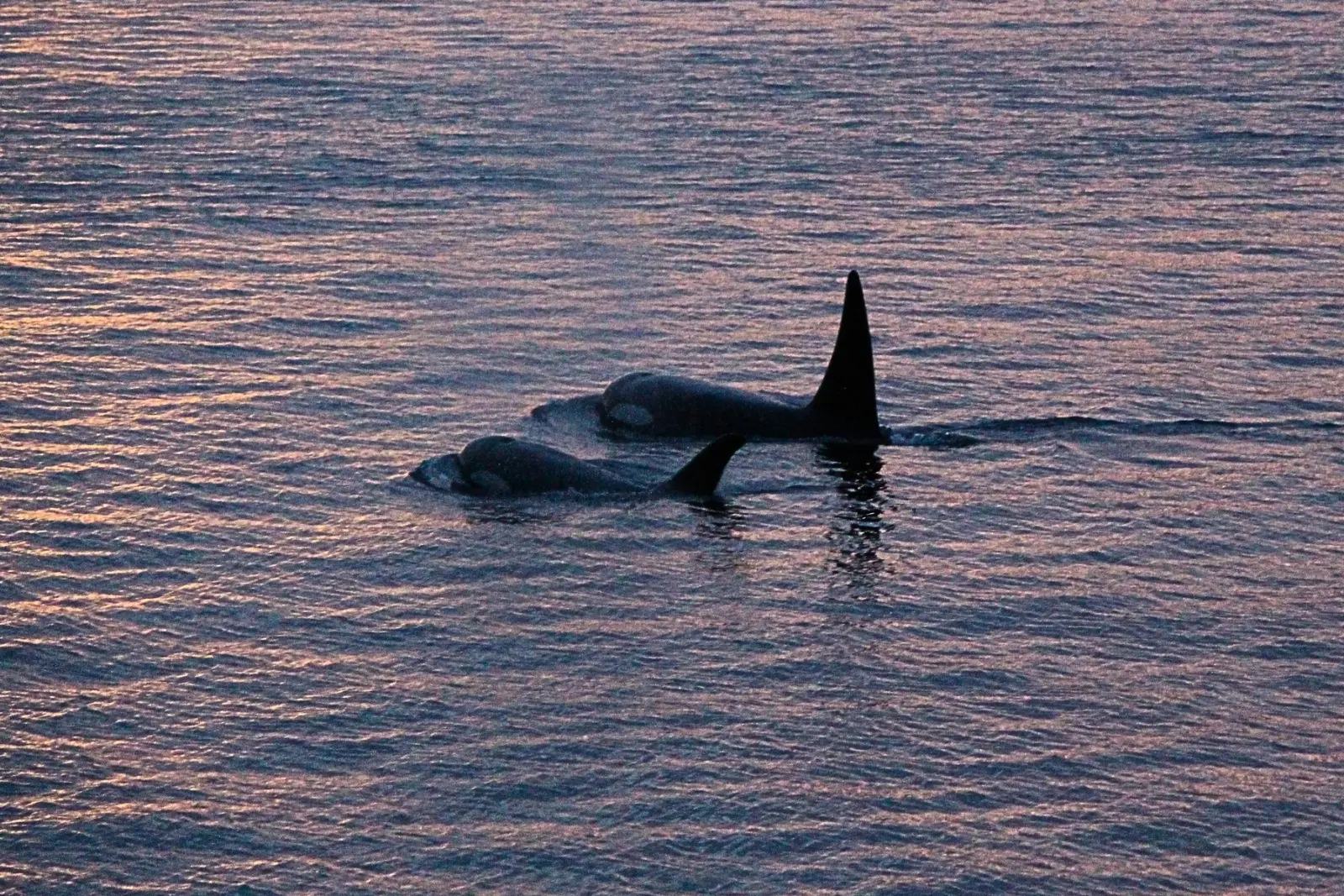
Just when we thought we knew where to look, another fin would surface on the opposite side.
It felt as though they were playing around the ship, while we did our best to follow the action. Being so close, and having so much time to watch them, was incredible.
Eventually, they swam off, leaving us with a remarkable shared memory, and very little concern about the dessert we had missed.
June 28: Icebergs, muddy boots, and a moment to listen
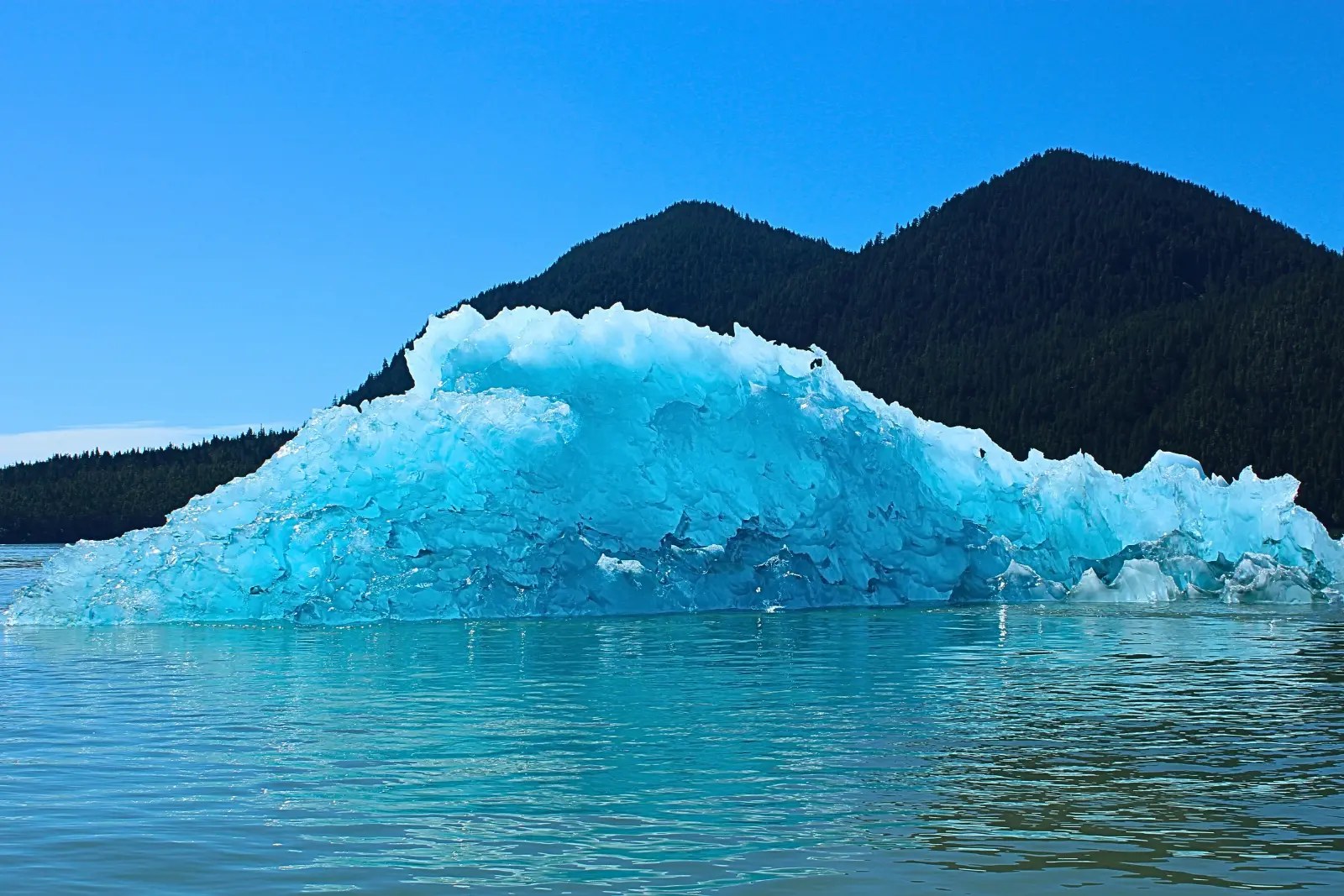
Our explorations on June 28 took us into Iceberg Bay, where floating ice gave us an entirely new landscape to photograph.
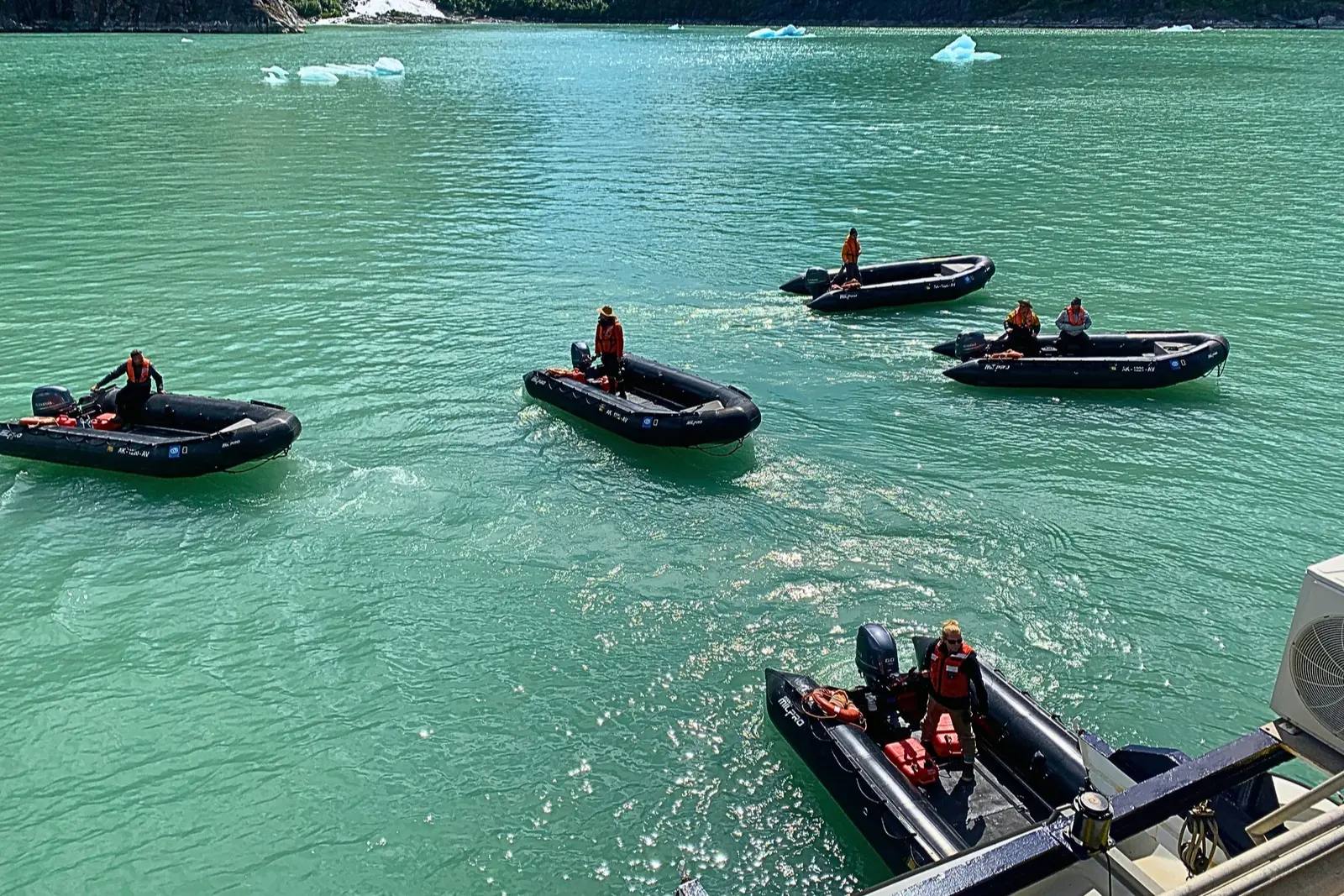
Out in the Zodiacs, we took our time studying the shapes and textures, practicing photographs of the ice and of other boats moving through the scene. We even picked up a piece for a closer look.
Eagles perched in the trees, and humpback whales added to the day's excitement. We managed a few tail photographs to submit to Happywhale, giving those sightings another purpose beyond filling our camera cards.
Our shore landing that day came with some unexpected entertainment.
As the Zodiacs pulled in, the mud proved very reluctant to let go of people's big expedition boots. Getting ashore became a rather comical exercise in trying to move forward while leaving your footwear firmly attached to your feet.
Chris and I had chosen water shoes that day, so we were able to hop out and make our way ashore with considerably less fuss.
For once, we seemed to have made the winning footwear decision.
The hike led us into the forest and to a river, where our guide asked us to do something simple: put down our cameras, stand in the water, close our eyes, and listen.
After days of reaching for a camera whenever something wonderful appeared, it was lovely to pause.
There was no photograph to compose and nothing to hurry toward. We stood quietly and listened to the river, taking in the place through its sounds.
That peaceful moment has stayed with us just as clearly as many of the sights.
June 29: A rainforest morning and a glacier finale
Our final full day began with another forest hike, this time through surroundings so lush and green that it felt like walking into a rainforest.
We came across a beautiful lake with interesting aquatic plants, and there was time for another little kayak outing as we took turns between activities. By then, getting out on the water had become one of our favorite parts of each day.
That afternoon brought the grand finale.
We approached a glacier through water so thick with floating ice that Sea Lion could not make its way all the way in. The Zodiacs could safely navigate farther, so we climbed aboard for a closer look.
And then we began to notice the seals.
There were hundreds of mothers and pups resting on the ice floes. Visiting in June meant we had arrived during pupping season, and the sight was extraordinary. As we moved carefully through the ice, we had time to watch them resting together against the backdrop of the glacier.
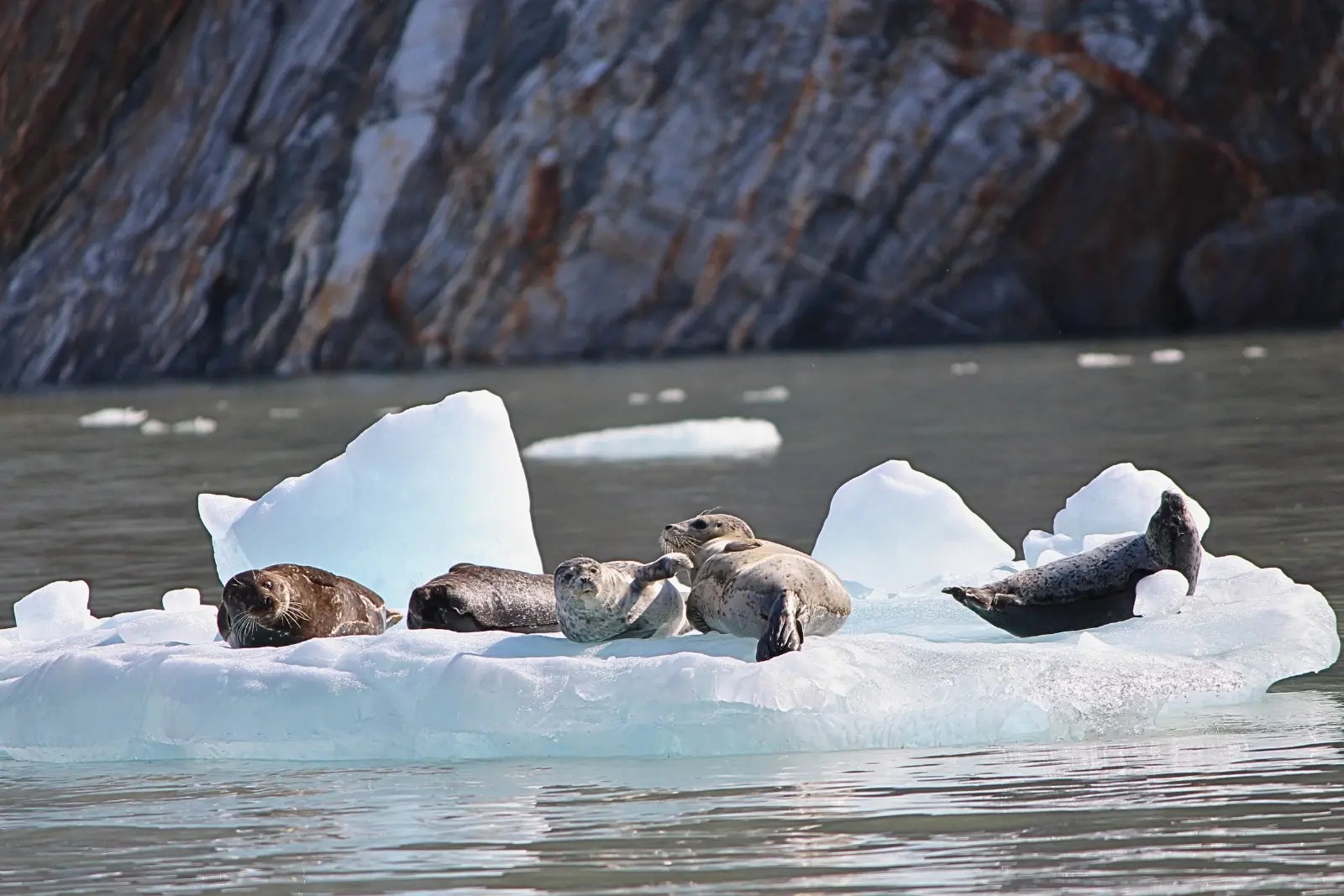
With only about six of us in each Zodiac, there was plenty of space to spread out, get comfortable, and take it all in.
Near the glacier front, we settled in to watch.
We stayed for what felt like forever, in the best possible way. Several times, pieces of the glacier calved into the water, sending waves outward. Between those bursts of activity, we watched the seals and studied the immense wall of ice in front of us.
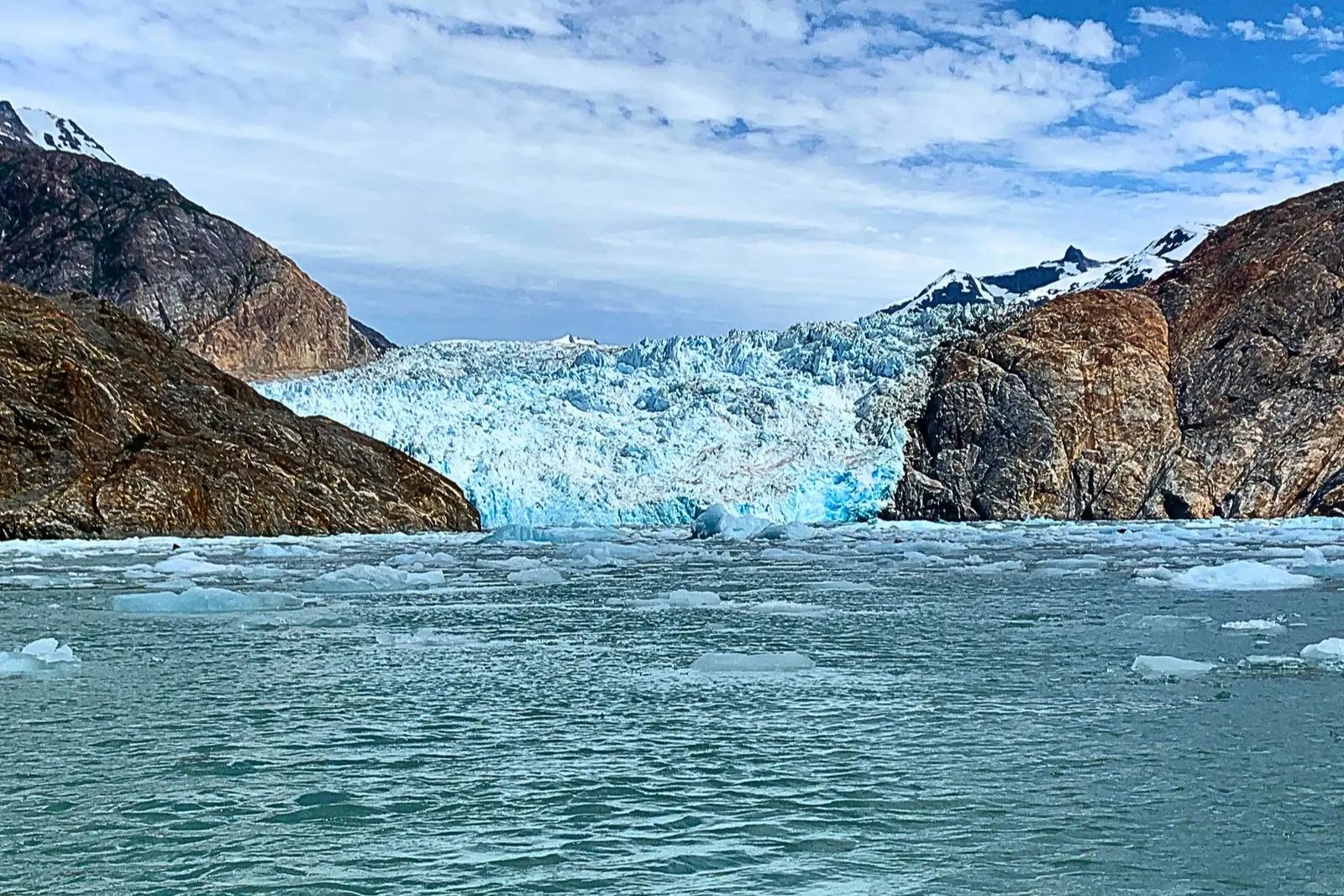
Then an eagle soared directly overhead carrying a bright red rockfish in its talons.
It was almost too much to take in at once: the glacier, the floating ice, the mothers and pups, and that flash of red passing above us.
We could hardly have asked for a more memorable final afternoon.
June 30: Heading home
On June 30, we disembarked and began our journey home.
In just a few days, we had watched orcas beneath an orange sunset, paddled quiet coves, laughed under freezing waterfalls, and observed a brown bear going about its afternoon. We had walked through lush forests, listened to a rushing river with our eyes closed, and sat in a Zodiac watching a glacier calve while seals rested nearby.
Lindblad's expedition team helped make those experiences possible, and National Geographic Sea Lion gave us access to places that felt wonderfully intimate despite the enormous landscape around us.
Looking back, some of our favorite memories are the unplanned ones: the orcas that interrupted dinner, the bear that held everyone's attention simply by yawning, and the waterfall we somehow convinced one another to stick our heads into.
Alaska gave us plenty to photograph. It also gave us plenty of reasons to put the camera down and simply enjoy being there.
This was the trip that started Glacial Expeditions. Here's how that happened.