
Written by your expedition advisors

Chris Commisso · Expedition Expert
Signature Travel Expert

Erika Commisso · Travel Experience Architect
CLIA Elite Cruise Counselor · ASTA Verified Travel Advisor · Signature Travel Expert
Chris and Erika have sailed ten expedition voyages and toured seven more expedition ships. Favorite explorations so far: Antarctica, Svalbard, Greenland, Iceland, Norway, Alaska, the Galápagos, the Scottish Hebrides, Churchill and French Polynesia.
Last updated . Reviewed against our own Ring Road and Iceland cruise trips, and updated for the 2026-27 seasons.
You pay the same as booking direct. Here’s how we’re paid.
At a glance
- Season
- Year-round. Summer for the highlands and midnight sun; winter for the Northern Lights and ice caves
- Two ways to travel
- Self-drive the Ring Road, Route 1, or sail an Iceland circumnavigation
- Ring Road length
- Roughly 1,322 km, about 821 miles, circling the island
- Time needed
- 7-10 days minimum for the Ring Road; 8-12 days for a circumnavigation cruise
- Gateway
- Keflavík International Airport, about 45 minutes from Reykjavík
- Northern Lights
- Late September to late March, when nights are dark enough
- Midnight sun
- Around the June solstice, with near-continuous daylight
- Highland F-roads
- Open roughly late June to September, 4x4 required by law
- Governing body
- None. Iceland is a sovereign country with ordinary tourism infrastructure
- Also the gateway to
- East Greenland expeditions, which usually sail from Reykjavík or Akureyri
Should You Drive Iceland's Ring Road or Take a Cruise?
Drive if you want flexibility, the interior, and the freedom to stop when the light is right. The Ring Road reaches waterfalls, glacier lagoons and highland roads no ship can access, and it is our own favourite way to see Iceland. Cruise if you want to unpack once, avoid winter driving, reach remote fjords and the Westfjords easily, or combine Iceland with East Greenland.
| Self-drive the Ring Road | Iceland circumnavigation cruise | |
|---|---|---|
| Time needed | 7-10 days minimum to do it without rushing | 8-12 days, fixed |
| Flexibility | Total. Stop where you like, stay longer where it is working | Fixed schedule and fixed port times |
| Interior access | Full, including highland F-roads in summer with a 4x4 | None. Ships reach the coast only |
| Photography | The decisive advantage. You control the hour and the weather window | Constrained by port calls and daylight |
| Remote fjords and Westfjords | Reachable but a serious detour by road | Straightforward by ship |
| Winter travel | Demanding. Short daylight, ice, closures, real risk | Comfortable, and a strong winter option |
| Unpacking | A new place most nights | Once |
| Cost control | You choose lodging and meals, so you set the level | Largely fixed once booked |
| Combining with Greenland | Not possible | Straightforward. Many voyages continue to East Greenland |
| Best suited to | Independent travelers, photographers, anyone wanting the interior | First-timers, winter visitors, travelers who want zero logistics |

We have done both, several times, and we will give you our position rather than hedge it: the Ring Road is our preferred way to see Iceland. The reason is not scenery, because both travel styles deliver that. It is timing. Iceland's best moments happen on the country's schedule rather than yours — a squall clears over Reynisfjara at seven in the evening, the light on Kirkjufell lasts twenty minutes, a stretch of the east fjords is empty and you want an extra hour there. Only a car lets you answer any of that. On our own Ring Road trips the days we remember are almost always the unplanned ones.
The counter-case is real, though, and we make it to clients often. Winter driving in Iceland is genuinely demanding: daylight is short, wind is the thing that catches people out rather than snow, and roads close with little warning. The Westfjords are a substantial detour by road and an easy overnight by ship. A cruise is also the only way to pair Iceland with East Greenland inside one trip, which for a certain traveler settles the question on its own.
And there is the plainer argument that a ship means unpacking once. No nightly check-ins, no route planning over breakfast, no watching the fuel gauge in the east. For some travelers that is worth more than any amount of flexibility, and there is nothing lesser about choosing it. We work through the trade-off in more detail in our Ring Road versus cruise guide.
What Is Iceland's Ring Road, and How Long Do You Need?
The Ring Road, Route 1, is the paved highway that circles Iceland, roughly 1,322 kilometres. You could drive it in three days, but you should not. Seven to ten days is the realistic minimum to see the main regions without spending the trip behind the wheel. Add days for the Westfjords, the Snæfellsnes peninsula or the highlands.
Most people travel counterclockwise from Keflavík, which front-loads the famous sights: the Golden Circle, then the south coast waterfalls, then the glacier lagoons, with the quieter east and north in the middle of the trip. Our own day-by-day itinerary runs that way and finishes with Reykjavík and Snæfellsnes, so the loop ends on something new rather than on a long drive back.
Driving distances between stops are modest, but the map lies to you. Weather, wind, single-lane bridges, gravel spurs and the constant temptation to stop all slow you down. A leg the map calls two hours is comfortably three by the time you have pulled over twice. The mistake first-timers make is booking too few nights and turning a landscape trip into a driving trip — a car with a schedule that tight is just a slower bus.
Our day-by-day Ring Road itinerary balances the icons with places most visitors miss: the Reykjanes peninsula on day one instead of a rushed transfer, Reykjadalur's hot river, the Yoda Cave at Gígjagjá, Stokksnes and Vestrahorn beyond Höfn, Hvítserkur on the way west. Those are the stops people write to us about afterwards.
01
Golden Circle
Þingvellir, Geysir and Gullfoss — the classic first day out of Reykjavík.
02
South coast waterfalls
Seljalandsfoss, which you can walk behind, and Skógafoss.
03
Reynisfjara
The black sand beach near Vík, with basalt columns and dangerous sneaker waves.
04
Jökulsárlón
The glacier lagoon, and Diamond Beach where the bergs wash ashore.
05
Vatnajökull
Europe's largest glacier, with ice cave access in winter.
06
East fjords
The quietest stretch of the Ring Road, and the better for it.
07
Lake Mývatn
Geothermal fields, pseudocraters and the nature baths.
08
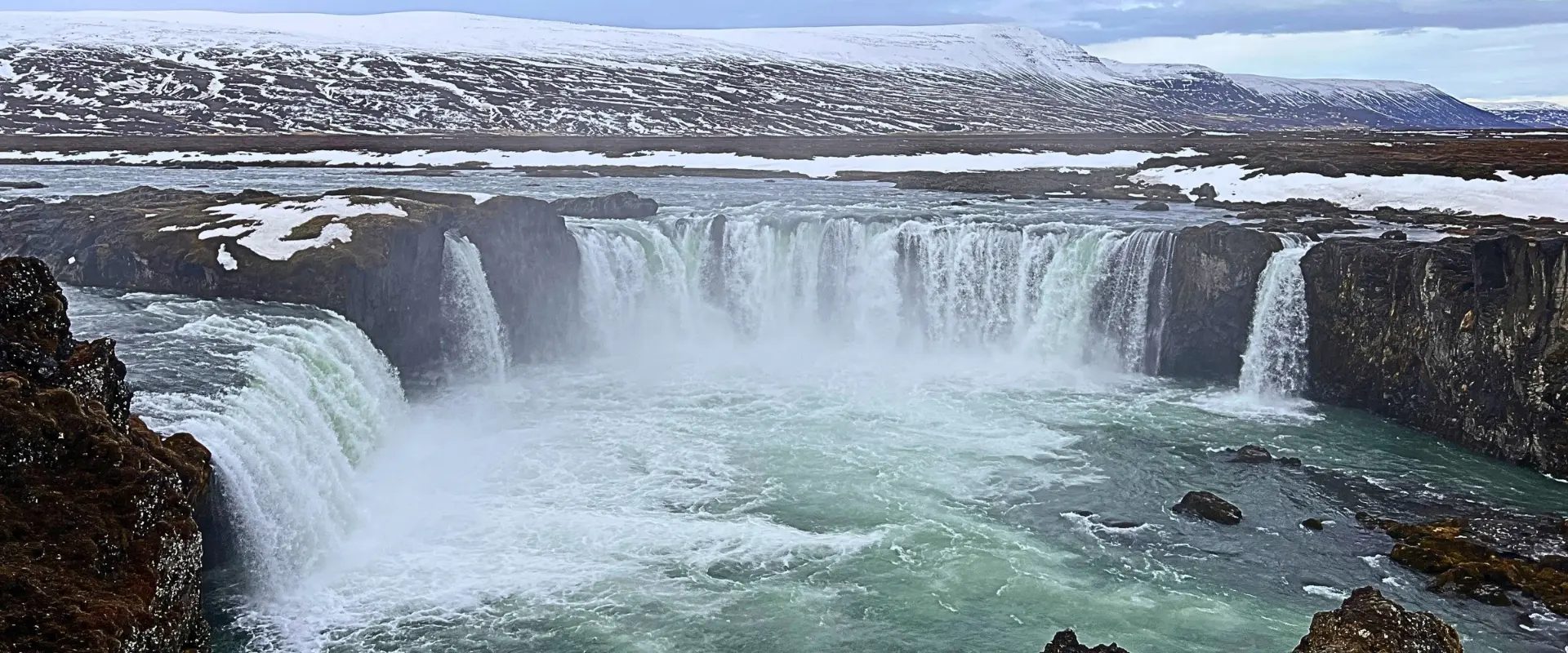
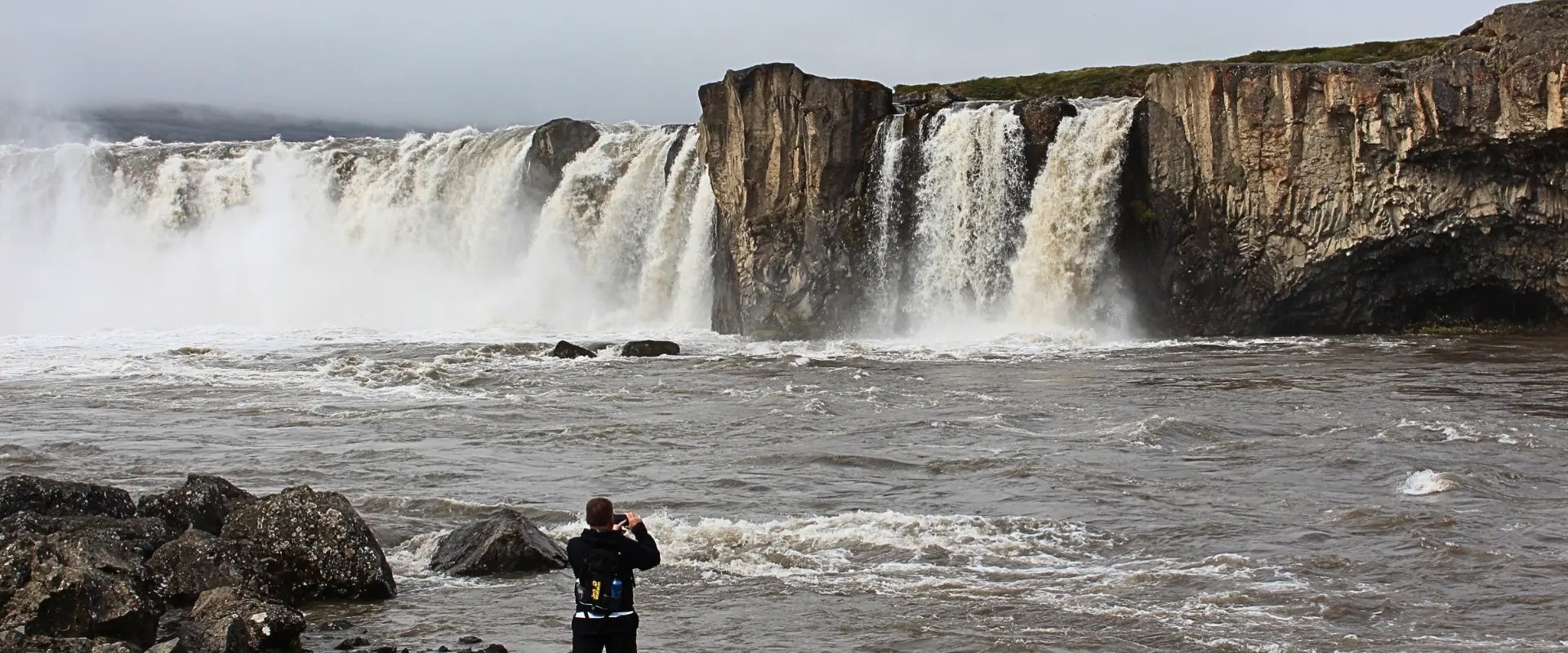
Goðafoss and Dettifoss
Two of the north's great waterfalls, very different in character.
09
Akureyri
The north's main town, and the base for Húsavík whale watching.
10
Snæfellsnes
A peninsula often called Iceland in miniature, including Kirkjufell.
When Is the Best Time to Visit Iceland?
Summer, June to August, gives near-continuous daylight, open highland roads, puffins and the easiest driving, at the cost of crowds and higher prices. Winter, late September to March, gives the Northern Lights and ice caves but short daylight and demanding road conditions. May and September are the shoulder months we most often recommend: fewer people, decent access, and in September the aurora returns.
The bright half: May to August
May
Shoulder, and underrated
Roads open, waterfalls at full flow from snowmelt, puffins arriving, and noticeably fewer visitors than June. Highland roads still closed.
June
Midnight sun
Near-continuous daylight and the longest usable days of the year. Highland F-roads begin opening late in the month. Peak prices begin.
July
Peak everything
Warmest weather, full highland access, puffins on the cliffs. The busiest and most expensive month, and the one to book earliest.
August
Still open, slightly quieter
Full access with the crowds beginning to thin. Darkness returns late in the month, bringing the first possible aurora.
The dark half: September to April
September
The best of both
Autumn colour, thinning crowds, most roads still open, and the aurora returning. Our most frequent recommendation for a first visit.
October-November
Winter arriving
Aurora season proper. Shorter days and deteriorating road conditions. Ice caves begin opening as glaciers stabilise.
December-February
Deep winter
Ice caves at their best and long dark nights for the aurora. Very short daylight, and self-driving becomes genuinely demanding.
March-April
Winter easing
Long dark nights persist while daylight lengthens for daytime activities. Often the best balance of the winter season.

The honest summary is that Iceland has no bad season, only seasons that are wrong for particular goals. Anyone whose priority is the aurora should not come in June, when there is effectively no darkness at all. Anyone who wants the highlands should not come in February, when the F-roads are closed and will stay closed. Set the goal first and the month picks itself.
The two shoulders are where most of our flexible clients end up. May gives you full waterfalls from snowmelt, arriving puffins, open coastal roads and noticeably fewer people than June. September gives you autumn colour, most roads still open, thinning crowds and the return of dark enough nights for the aurora — it is our most frequent recommendation for a first visit, and it is also when the East Greenland sailings run.
For the aurora specifically — forecasting, how many nights to allow, what the apps are actually good for — we keep that guidance in one place on our Northern Lights guide rather than repeating it here.
Where Should You Go in Iceland?
The south coast holds the highest concentration of famous sights and is where most first-timers spend their time. The north around Akureyri and Mývatn is quieter and strong for whale watching. The Westfjords are the most remote and least visited. The Snæfellsnes peninsula is often called Iceland in miniature and works as a two-day trip from Reykjavík.
Reykjavík and the southwest
The gateway, with the Golden Circle on its doorstep and the Blue Lagoon near the airport. Worth two days at the start or end, not more.
Known for
Golden Circle, geothermal lagoons, museums, food
The south coast
The highest density of icons: Seljalandsfoss, Skógafoss, Reynisfjara, Vík, and on to Jökulsárlón and Diamond Beach.
Known for
waterfalls, black sand, glacier lagoon, ice caves
The east fjords
The quietest stretch of the Ring Road, with small fishing villages and long empty roads. Most people drive through; slowing down here pays.
Known for
solitude, fjord scenery, reindeer
The north
Akureyri, Lake Mývatn, Goðafoss and Dettifoss, plus Húsavík, one of Europe's best whale-watching towns.
Known for
whales, geothermal fields, waterfalls
The Westfjords
The most remote and least visited region, reached by a serious detour by road or easily by ship. Dramatic cliffs, Dynjandi waterfall, and vast puffin colonies.
Known for
remoteness, seabird cliffs, Dynjandi
Snæfellsnes peninsula
Iceland in miniature, with a glacier-topped volcano, black beaches, lava fields and Kirkjufell. Two days from Reykjavík.
Known for
variety, photography, accessibility
A useful way to think about the regions is how much time each one repays. Reykjavík and the southwest repay two days and then start to repeat themselves. The south coast repays three, and could take five. The east fjords repay however long you give them, which is why we build a slower day in there rather than treating them as the drive between north and south.
If you have ten days, the classic loop covers everything above except the Westfjords. If you have a week, we would rather you did the south, the glacier lagoons and turned back than raced the full circle. And if the Westfjords are what you came for, that is the clearest single argument on this page for a ship: two or three days of driving each way, or an overnight passage.
What Does an Iceland Trip Cost?
Iceland is expensive by European standards. A 7 to 10-day self-drive runs roughly $1,100 per person at the budget end to $5,500 and above at the luxury end, before international flights, with the vehicle and lodging the biggest variables. An Iceland circumnavigation cruise typically runs $5,000 to $10,000 per person, with luxury expedition vessels above that.
| Factor | What it means | Typical impact |
|---|---|---|
| Travel style | Self-drive with guesthouses versus a cruise or a hotel-led tour | The largest single variable |
| Season | July and August peak; May, September and midwinter are lower | Meaningful swing on lodging and vehicles |
| Vehicle class | Two-wheel drive for the Ring Road versus a 4x4 required for F-roads | 4x4 costs substantially more, and is mandatory for the highlands |
| Accommodation | Guesthouses and farm stays versus design hotels | Wide range, and the easiest place to control spend |
| Food | Restaurant meals are costly; groceries and a cooler are not | A real saving on a self-drive |
| Activities | Glacier hikes, ice caves, whale watching, lagoons | Each priced separately and worth booking ahead |
| Combining with Greenland | Adding an East Greenland expedition to an Iceland trip | Adds substantially, and is the reason many travelers cruise |
Ranges are 2026-27 planning estimates and vary widely with travel style, season and lodging. We quote live pricing for specific dates. Full detail on the Iceland cost guide.
The honest note is that Iceland rewards spending decisions rather than a single budget. Two travelers on the same route in the same week can differ by a factor of three depending on whether they are in guesthouses cooking their own breakfasts or in design hotels dining out. Vehicles alone run from around $60 a day to well over $320 depending on class and season, and lodging from roughly $35 a night in a hostel to $260 and up in a mid-range hotel.
Fuel and food are where first-timers overspend without noticing. Restaurant meals in rural Iceland are costly and not always better than a stocked cooler and a good bakery. Activities — ice caves, glacier walks, whale watching, the lagoons — are each priced separately, and they add up faster than the driving does.
Our planning costs you nothing extra. Pricing matches booking direct, with Signature amenities added where they are available. Full detail sits on our Iceland cost guide.
Ring Road or ship? We have done both, several times.
Fifteen minutes on the phone will tell you which one fits how you actually like to travel.
What Is an Iceland Cruise Actually Like?
An Iceland circumnavigation runs 8 to 12 days, usually from Reykjavík, calling at Akureyri, Ísafjörður, Seyðisfjörður and Heimaey among others. Expedition vessels reach fjords and seabird cliffs that road travelers rarely see, particularly in the Westfjords. Many itineraries continue to East Greenland, which is the strongest single argument for choosing a ship.
Two very different products both get called an Iceland cruise, and the difference matters more than the brochure suggests. Large conventional ships call at a handful of ports and send you ashore by coach, sometimes on a long bus ride to an inland sight you could have driven to yourself. Small expedition vessels of roughly 100 to 200 guests use Zodiacs and RIBs, land on uninhabited coastline, and carry a naturalist team. That is the version we generally recommend, and the one that behaves like our polar voyages.
The Westfjords are where a ship earns its keep. Reaching them by road costs two or three days; a ship arrives overnight and puts you under Látrabjarg's cliffs in the morning. Grímsey and the Arctic Circle, Heimaey in the Westman Islands, and the empty stretches of the north coast are all easier from the water than from Route 1.
And the Greenland point deserves stating plainly: if you want Iceland and East Greenland in one trip, a ship is the only practical way to do it. Those sailings leave from Reykjavík or Akureyri, they are few, and they sell out early. More on vessels and itineraries in our Iceland cruise guide.
What Can You Do in Iceland Besides Sightseeing?
Glacier hiking and ice caves on Vatnajökull, whale watching from Húsavík or Reykjavík, snorkelling or diving the Silfra fissure between tectonic plates, horse riding on Icelandic horses, and geothermal bathing at the Blue Lagoon, Sky Lagoon or Mývatn Nature Baths. Winter adds ice caving and snowmobiling; summer adds highland hiking and puffin colonies.
Ice caves
Naturally formed in Vatnajökull and accessible roughly November to March, when the glacier is stable enough. Genuinely spectacular and strictly guided.
Glacier hiking
Crampon walks on outlet glaciers like Sólheimajökull, available year-round and suitable for most fitness levels.
Whale watching
Húsavík in the north is among Europe's best, with humpback and minke common in summer. Reykjavík sailings are more convenient but less reliable.
Silfra
Snorkelling or diving a fissure between the North American and Eurasian plates, in glacial meltwater with extraordinary visibility. Dry suit provided.
Geothermal bathing
The Blue Lagoon is the famous one; Sky Lagoon is closer to Reykjavík and Mývatn Nature Baths are quieter than both.
Puffins
Roughly May to August on cliffs including the Westfjords, Dyrhólaey and the Westman Islands. Gone by early September.

Two or three of these are worth building the route around rather than slotting in. An ice cave is one — the Katla cave under the volcano of the same name is the one we have done, reached by super jeep from Vík, and it is not a photograph you can take anywhere else. Húsavík whale watching is another, and it is the reason we would give the north two nights rather than one.
The rest slot in easily. Silfra sits inside Þingvellir on the Golden Circle, so it costs you a morning rather than a day. Snowmobiling on Langjökull pairs with Gullfoss. The lagoons are best used as bookends: the Blue Lagoon on the way in or out of Keflavík, Sky Lagoon on a Reykjavík day, Mývatn Nature Baths in the north when you want the same thing without the queue.
Everything here is guided, licensed and priced separately, and the good operators fill first in summer and over the holidays. If your trip depends on one specific activity, book that before you book the room.
Is Iceland a Good First Trip for Expedition Travelers?
Yes, and it is the reason we recommend it often. Iceland gives you glaciers, volcanic landscape, seabird colonies and the Northern Lights without a long ocean crossing, an expedition budget or a two-week commitment. It is also the gateway to East Greenland, so travelers who enjoy it have a natural next step already in view.
Iceland is the softest entry point in everything we sell. There is real infrastructure, the flight from the US east coast is shorter than most domestic legs, and no part of the itinerary depends on ice conditions. A traveler who wants to know whether polar landscape genuinely moves them, before committing to a crossing or an expedition fare, can find that out here in a week.
What we notice is where people go next. Clients who love Iceland tend to look at Greenland first, partly because the ships sail from Icelandic ports and the trip reads as an extension rather than a leap, and then at the wider Arctic — Svalbard for polar bears, Arctic Norway for winter aurora sailings. Antarctica usually comes later, and by then they know exactly what they are buying.

Is an Iceland Trip Right for You?
Iceland suits travelers who want dramatic landscape with easy logistics, and who are happy that the scenery, not the wildlife, is the main event. It suits you less if you are expecting abundant large animals, want warm weather, need predictable conditions, or dislike either driving on unfamiliar roads or a fixed cruise schedule.
A good fit if you are
- Drawn to landscape, geology and light rather than to wildlife
- Comfortable driving unfamiliar roads, or happy to let a ship handle logistics
- Flexible about weather, which changes hour to hour and dictates plans
- Interested in a shorter, less committing introduction to polar-adjacent travel
- Travelling in a shoulder month and willing to trade some access for fewer people
Probably not if you
- Expect abundant large wildlife — Iceland has whales and birds, not big mammals
- Want warm weather and reliable sunshine
- Need a guaranteed Northern Lights sighting, which nobody can promise
- Are uncomfortable driving in wind, rain or winter conditions and do not want a cruise
- Are looking for the remoteness of Greenland or Svalbard — Iceland is well populated
The mismatch worth naming is wildlife. Travelers who picture Iceland as an Arctic wildlife destination are usually picturing Svalbard or Greenland. Iceland has whales offshore, puffins and other seabirds on the cliffs in summer, Arctic fox if you are patient in the Westfjords, and horses and sheep everywhere. It does not have polar bears, walrus or musk oxen. Its spectacle is geological, and on its own terms it is extraordinary.
So if what you actually want is animals at close range on a coastline nobody lives on, we will point you at Greenland or the Arctic and say so early, rather than sell you the wrong week. Weather is the other honest caveat: it changes hour to hour, it dictates plans in every season, and travelers who need a fixed schedule to hold tend not to enjoy it.
How Far in Advance Should You Book Iceland?
Book 6 to 12 months ahead for July and August, when vehicles and well-located lodging sell out first, and for any winter ice cave or Northern Lights trip over the holidays. Shoulder months usually work at 3 to 6 months. Cruises combining Iceland with East Greenland need 12 to 18 months, because those sailings are few.
The constrained item on a self-drive is not the flight. It is the vehicle and the rural room. There are only so many guesthouses along the eastern Ring Road, and in July they fill; a late booker ends up driving an extra hour at each end of the day to sleep somewhere with space, which is exactly the tax the trip was meant to avoid. Camper vans and 4x4s go first, in that order.
In winter the constraint is guides. Ice cave slots are capped by guide availability and by how the glacier is behaving that season, and the Christmas and New Year weeks go early. Iceland-Greenland combined voyages are the scarcest thing on this page and behave like polar inventory: few departures, small ships, and the best cabins gone a year out.
Why Book Iceland Through Glacial Expeditions?
Glacial Expeditions is an independent Wisconsin-based agency, an affiliate of Oasis Travel Network and a member of Signature Travel Network, serving travelers nationwide. Chris and Erika Commisso have travelled Iceland both by Ring Road and by ship, several times, and will tell you plainly which one suits you. Our planning costs you nothing extra — pricing matches booking direct.
Oasis Travel Network affiliate · Signature Travel Network member · Corporate sponsor of the Expedition Cruise Network · ExplorEarth Approved Partner
Written by your expedition advisors
Chris Commisso · Expedition Expert
Signature Travel Expert
Erika Commisso · Travel Experience Architect
CLIA Elite Cruise Counselor · ASTA Verified Travel Advisor · Signature Travel Expert
Chris and Erika have sailed ten expedition voyages and toured seven more expedition ships. Favorite explorations so far: Antarctica, Svalbard, Greenland, Iceland, Norway, Alaska, the Galápagos, the Scottish Hebrides, Churchill and French Polynesia.
Last updated . Reviewed against our own Ring Road and Iceland cruise trips, and updated for the 2026-27 seasons.
More about how we work on about and what clients say on reviews. We book the ships on expedition cruise lines, and the activities on experiences. Iceland leads naturally to Greenland, the wider Arctic and eventually Antarctica. When you are ready, get in touch.
Iceland Travel FAQs
How many days do you need for Iceland's Ring Road?
Seven to ten days is the realistic minimum to circle the island without spending the trip driving. Three or four days is technically possible and consistently regretted. Add two or three days for the Westfjords, the Snæfellsnes peninsula or the highlands.
Do you need a 4x4 in Iceland?
Not for the Ring Road itself, which is paved the whole way. You do need a 4x4 by law for the highland F-roads, which open roughly late June to September. In winter, a 4x4 with proper tyres is strongly advisable regardless of where you are driving.
When can you see the Northern Lights in Iceland?
Late September to late March, when nights are dark enough. You need darkness, clear skies and geomagnetic activity together, so plan at least five to seven nights. Summer visits see nothing at all, because there is effectively no darkness around the solstice.
Is Iceland expensive?
Yes, by European standards, particularly food, fuel and alcohol. A self-drive gives you the most control: guesthouses over hotels and groceries over restaurants can halve a trip's cost. Activities like ice caves and glacier hikes are priced separately and add up quickly.
Is the Blue Lagoon worth it?
It is genuinely enjoyable and very close to Keflavík airport, which makes it a natural first or last stop. It is also the most expensive and most crowded of the geothermal baths. Sky Lagoon and Mývatn Nature Baths are quieter alternatives worth considering.
Can you drive Iceland in winter?
Yes, but it is demanding. Daylight is short, conditions change fast, and roads close without much warning. Check road.is and safetravel.is daily, build slack into every day, and consider a guided tour or a cruise if the idea makes you uneasy.
Can you see puffins in Iceland?
Roughly May to August, on cliffs including Dyrhólaey, the Westman Islands and the Westfjords. They leave for the open ocean by early September, so a late-season trip will miss them entirely regardless of where you go.
Is Iceland good for a Northern Lights trip specifically?
It is accessible and dramatic, with volcanic and glacial backdrops that photograph beautifully. The weather is fickle, though, so cloud can erase several nights. Give yourself five to seven nights minimum, and consider Tromsø or Fairbanks if the aurora is your only goal.
Can you combine Iceland with Greenland?
Yes, and it is one of the best reasons to cruise rather than drive. Most East Greenland expeditions sail or fly from Reykjavík or Akureyri, so pairing the two in one trip is straightforward. These voyages are limited and should be booked 12 to 18 months ahead.
Is Iceland or Greenland the better trip?
They answer different questions. Iceland is accessible, drivable and infrastructure rich, with the landscape as the draw. Greenland is a genuine expedition reached mainly by ship, with far more remoteness and Inuit culture. Many of our clients do Iceland first and Greenland later.
Iceland Planning Guides
Driving Iceland's Ring Road
Our day-by-day loop, counterclockwise from Keflavík, icons and quiet corners.
Ring Road versus cruise
The full trade-off, with our own position stated plainly.
Iceland cruise guide
Expedition vessels versus large ships, ports, and Greenland combinations.
When to visit Iceland
Month by month, from midnight sun to ice caves and the returning aurora.
What an Iceland trip costs
Vehicles, lodging, food, activities and cruise fares, with ranges.
Iceland itineraries, 7 to 14 days
Routes for a week, ten days and two weeks, driving or sailing.
Northern Lights in Iceland
Where to base yourself, how many nights, and what the weather does to plans.
The south coast guide
Seljalandsfoss to Jökulsárlón, and how long each stretch really takes.
The Westfjords
Iceland's least visited region, by road or by ship.
Ice caves and glacier hiking
Season, safety, operators, and which glacier to walk on.
Geothermal pools and lagoons
Blue Lagoon, Sky Lagoon, Mývatn and the local pools nobody photographs.
Iceland packing list
Layers, waterproofs and the things people forget in every season.
Iceland versus Greenland
Two very different trips, and which one to do first.
New to this style of travel? Start with What is an expedition cruise?