


Greenland and Iceland at a glance
- Getting around Greenland
- No roads between towns — ship, plane or dog sled
- Getting around Iceland
- Paved Ring Road, self-drive, hotels throughout
- Ice
- Greenland: roughly 80% ice sheet. Iceland: about 11% glaciated
- Culture
- Greenland: Indigenous Kalaallit majority. Iceland: Nordic, Norse-settled
- Geothermal
- Iceland's speciality; Greenland has only a few remote hot springs
- Combining both
- Common: many East Greenland voyages start and end in Reykjavík
What Is the Real Difference Between Greenland and Iceland?
Access. Iceland has a paved ring road, hotels, restaurants and day tours, so you can plan it yourself and drive it. Greenland has no roads between towns; movement is by ship, plane or sled, which makes almost every visit an organised expedition rather than an independent trip.
Everything else follows from that. Iceland lets you change your mind at a junction. Greenland's itinerary is set by ice, weather and a captain, and the compensation is a scale and emptiness Iceland cannot offer.
Both are Arctic in the popular imagination; only parts of Greenland are Arctic in fact. Iceland sits just below the Arctic Circle, warmed by the North Atlantic Drift.
How Do Greenland and Iceland Compare Point by Point?
Greenland wins on ice volume, iceberg size, wilderness and Indigenous culture. Iceland wins on accessibility, geothermal landscapes, cost, independence and the sheer density of sights within a few hours' drive. Neither substitutes for the other, and travellers who expect Greenland to be an easier Iceland are usually surprised.
| Feature | Greenland | Iceland |
|---|---|---|
| Infrastructure & roads | No roads connecting towns. Movement is by ship, plane or dog sled | Paved Ring Road network; highly accessible for self-drive trips |
| Ice coverage & glaciers | Roughly 80% covered by a continental ice sheet; icebergs on an enormous scale | About 11% glaciated; accessible glaciers, ice caves and volcanic landscapes |
| Culture & history | Predominantly Indigenous Inuit (Kalaallit), with deep polar living traditions | Nordic culture descended from Norse settlers, with a strong saga literary tradition |
| Geothermal features | A few remote hot springs, such as Uunartoq; limited volcanic activity | Abundant geothermal springs, geysers and active volcanoes |
| Travel style & feel | Deep wilderness expedition travel; quiet, remote and uncrowded | Developed tourism infrastructure; city life, day tours and high visitor numbers |
| Typical cost | Expedition fares commonly $7,500–$14,000 per person, plus flights | A self-planned week of flights, car and guesthouses costs a fraction of that |
Cost figures are 2026-27 planning estimates, reviewed September 2026.
One practical asymmetry: Iceland can be done well in a week for a fraction of the cost of a Greenland voyage, because the infrastructure already exists and you are not paying for a ship, a Zodiac fleet and an expedition team.
Which Is Better for Icebergs and Glaciers?
Greenland, decisively, for iceberg size and volume — the Ilulissat Icefjord and Disko Bay produce bergs on a scale nothing in Iceland approaches. Iceland is better for accessible glacier experiences: Jökulsárlón's lagoon, ice cave tours and glacier walks you can reach by car in a morning.
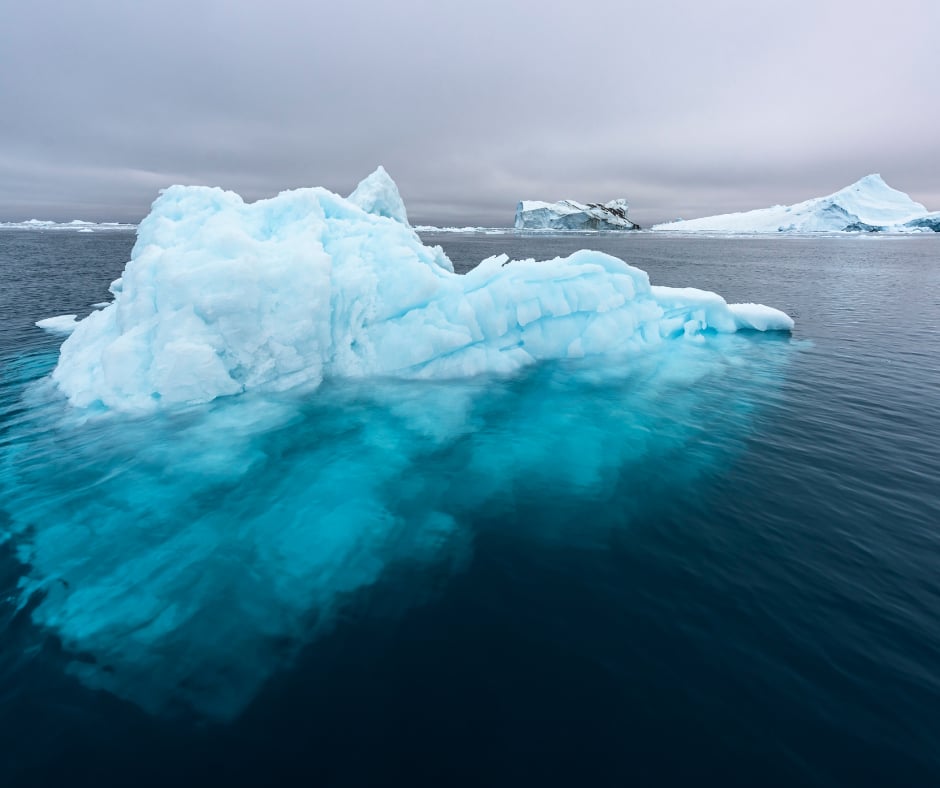
Sermeq Kujalleq, the glacier feeding the Ilulissat Icefjord, is the most productive in the Northern Hemisphere and moves up to 40 metres a day. Standing beside stranded bergs at the fjord mouth is not a bigger version of Jökulsárlón; it is a different category, described in our Ilulissat guide.
Iceland's advantage is repeatability. You can see a glacier tongue, an ice cave and a berg lagoon in one day without a ship, a charter flight or a weather contingency.
How Do the Cultures Differ?
Greenland is an Inuit country — around 89% of its people are Kalaallit, and Greenlandic is the official language, with a living tradition of hunting, drum dance and kaffemik hospitality. Iceland is Nordic, descended from Norse settlement, with a literary saga culture, Reykjavík city life and a European frame of reference.
This is the difference travellers most often underestimate. In Greenland you are a guest in small Indigenous communities where a ship's arrival is an event; the etiquette that matters there is set out in our culture guide. In Iceland you are a visitor in a well-established European tourism economy.
Which Costs More, and Which Style Suits You?
Iceland is far cheaper: flights, a car, guesthouses and food, planned yourself. Greenland means an expedition fare — commonly $7,500 to $14,000 per person on a small ship, plus flights. Choose Iceland for independence, hot springs and hotels; choose Greenland for deep wilderness, icebergs and remote settlements.
Greenland suits you if…
- You want icebergs and fjords at a scale nothing else matches
- Remote Inuit settlements matter more to you than restaurants
- You accept an itinerary written by ice and weather
- An expedition-level budget is workable
Iceland suits you if…
- You want to drive, stop and change plans as you go
- Hot springs, waterfalls and geothermal landscapes are the draw
- You would rather book hotels than a cabin
- Cost and simplicity are deciding factors
Iceland is also the natural first Arctic trip. If you have never travelled in the north, a Ring Road drive tells you a great deal about whether the expedition version appeals — we compare that against sailing in Iceland Ring Road versus cruise.
Greenland budgets, inclusions and the extras that move them are broken down in the Greenland cost guide.
Can You Combine Greenland and Iceland in One Trip?
Yes, and it is the answer we give most often. Many East and South Greenland voyages embark in Reykjavík, cross the Denmark Strait and return there, so a few land days in Iceland either side add waterfalls, hot springs and city time to an expedition without a second long-haul flight.

We can compare these two from both sides. Our East Greenland voyage aboard the National Geographic Resolution in July 2026 sailed roundtrip from Reykjavík — the account is in our journal — and we have travelled Iceland both by expedition ship and on a ten-day land trip in April 2023, driving and staying ashore.
Practical note on ordering: put the Iceland land days before the voyage if you want a weather buffer against Arctic flight delays, and after it if you would rather decompress than acclimatise. Full route options are in the Greenland itineraries guide and on our Iceland pillar.
Greenland versus Iceland questions
Is Greenland or Iceland better for seeing icebergs?
Greenland, clearly — particularly the Ilulissat Icefjord and Disko Bay, where Sermeq Kujalleq calves bergs on a scale Iceland has nothing comparable to. Iceland's Jökulsárlón lagoon is beautiful but much smaller.
Can I visit Greenland from Iceland?
Yes. Many East and South Greenland expedition voyages sail roundtrip from Reykjavík across the Denmark Strait, and there are seasonal flights between Iceland and Greenland. It is the most common way North Americans and Europeans reach the east coast.
Is Greenland more expensive than Iceland?
Considerably. Iceland can be done independently for the cost of flights, a car and guesthouses. Greenland generally requires an expedition cruise, commonly $7,500 to $14,000 per person plus flights, because the ship is the infrastructure.
Which should I visit first?
Iceland, if you are new to the north — it is easier, cheaper and tells you whether polar landscapes hold you. Greenland if you have already done an accessible cold-weather trip and want genuine remoteness.
Have you been to both?
Yes. We sailed East Greenland aboard the National Geographic Resolution in July 2026, and we have travelled Iceland by expedition ship and on a ten-day land trip in April 2023.
More on both countries
Greenland expedition cruises
Regions, seasons, ships and costs.
Iceland
Ring Road, expedition sailings and how to combine the two.
Iceland: Ring Road or cruise?
Driving it yourself against seeing it from the water.
Greenland itineraries
Which routes sail from Reykjavík, and which need a charter.
Our East Greenland journal
Reykjavík to the east coast and back, ten days in July 2026.