
Greenlandic culture at a glance
- Indigenous population
- Around 89% of Greenlanders are Kalaallit (Inuit)
- Languages
- Greenlandic (Kalaallisut) is official; Danish is widely spoken, English in tourist towns and aboard ship
- Two Inuit cultures
- Kalaallit on the west coast, Tunumiit on the east — different dialects and histories
- Social tradition
- Kaffemik: an open house with coffee and homemade cake
- Carvings
- Tupilaks in antler, bone or soapstone; marine mammal material carries import restrictions
- Population
- Roughly 57,000 people across a coastline with no connecting roads
Who Are the Kalaallit People of Greenland?
The Kalaallit are the Inuit people of Greenland and make up roughly 89% of the population. The country's own name, Kalaallit Nunaat, means the land of the Kalaallit. The national language, Greenlandic or Kalaallisut, is polysynthetic and unrelated to the Scandinavian languages spoken across the Danish Realm.
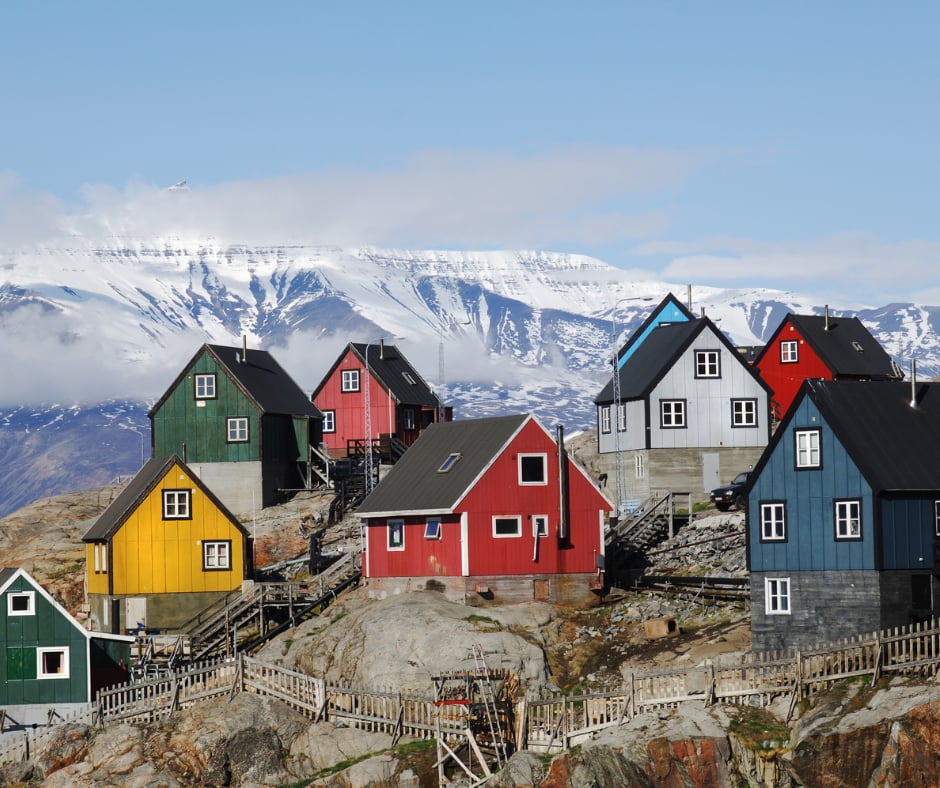
Kalaallit — the west coast
The majority population, from Nanortalik in the south through Nuuk, Sisimiut and Ilulissat to Upernavik. Kalaallisut is the standard written language of the country.
Tunumiit — the east coast
A few thousand people in Tasiilaq, Ittoqqortoormiit and outlying settlements, speaking Tunumiisut. Contacted late, isolated by pack ice for much of the year.
Inughuit — the far north
The Thule district around Qaanaaq, the northernmost community in the country, with their own dialect and a hunting culture built on sea ice.
Greenlandic culture is the product of thousands of years of Inuit adaptation to a polar coast, layered with several centuries of Danish and wider Nordic contact. Both are visible in the same street: a hunter's skiff at the pontoon, a Danish-style church on the rock above it, a supermarket, a drying rack of fish.
The east coast is a distinct story. The Tunumiit of Tunu, centred today on Ittoqqortoormiit and Tasiilaq, were contacted far later than the west, speak their own dialect, and live in the smallest and most isolated communities in the country. Our East versus West Greenland guide sets out how differently the two coasts read from a ship.
What Is a Kaffemik?
A kaffemik is a Greenlandic open house. To mark a birthday, a confirmation, a naming or a first catch, a family opens its door and serves coffee, cake and conversation to whoever comes, arriving and leaving as they please rather than sitting to a fixed meal.
It is the single most Greenlandic thing a visitor can be invited into, and the etiquette is simple: bring nothing elaborate, do not stay long if the room is full, eat something, and accept that the host is doing the work. Where an expedition operator arranges a kaffemik ashore, the money goes directly to the household.
What Are Greenlandic Drum Dancing and Storytelling?
Drum dance, qilaatersorneq, is performed with a hoop drum struck on its rim and paired with sung and spoken narrative. Historically it carried entertainment, oral history and dispute resolution at once: two people could settle a quarrel by song rather than violence. It was suppressed under missionary pressure and has been actively revived.
Mask dance and choral singing sit alongside it, and in the east the traditions survived longer in daily use because contact came later. What you see in a community hall today is a living revival, not a museum reconstruction — which is also why performers deserve the same courtesy as any other artist.
What Do Greenlanders Eat?
Coastal food is what the coast produces: muskox, reindeer (tuttu), Arctic char, halibut, snow crab, seal and, in season, whale, often finished with wild tundra herbs and crowberries. Hunting and fishing are livelihoods and legal rights here, not sport, and the catch feeds the settlement before it feeds a restaurant.
Aboard ship you will meet a polished version of this — muskox, char and crab on the menu, and a galley that buys locally where it can. Ashore in Nuuk the same ingredients turn up in genuinely serious kitchens.
Travellers occasionally arrive with strong feelings about seal and whale. The useful thing to know before you comment is that subsistence hunting is regulated, quota-managed and central to food security in communities with no road, no farm and freight prices to match.
How Should Visitors Behave in Greenlandic Communities?
Behave as a guest in someone's town. Ask before photographing people, boats, dogs or the inside of a home; do not photograph through windows; keep well clear of working sled dogs, which are not pets. English is spoken in Nuuk, Ilulissat and aboard ship; a greeting in Greenlandic is still welcome.
The scale is the thing visitors underestimate. When a ship of 130 guests lands at a settlement of 350 people, the ship is briefly a third of the population. Small courtesies — spreading out, buying something, keeping voices down, not filming children — decide whether the next ship is welcome.
In Ittoqqortoormiit, the east-coast settlement of a few hundred people at the mouth of Scoresby Sund, what stayed with us was how much of the town is working equipment: sledges tipped on their sides for summer, dog teams staked out on the rock, skins stretched to dry. Our day there is in the East Greenland journal.
Can You Buy and Bring Home Greenlandic Carvings?
Yes for antler, soapstone, wood and musk ox horn, bought directly from carvers or the local craft market with cash. Be far more careful with anything made from marine mammal — seal, walrus ivory, whale bone or baleen, including some tupilaks. These may be barred from entry to the United States and other countries regardless of any certificate.
The United States Marine Mammal Protection Act is stricter than CITES on this point: a CITES permit does not make a walrus ivory or whale bone carving importable, and customs can and does seize pieces at the border. Ask what the material is, ask before you pay, and if the answer is marine mammal, admire it and leave it.
A tupilak carved in reindeer antler or soapstone travels home without drama and is no less authentic — the figures were spirit objects made from whatever the carver had, and antler was always among it. Carry small amounts of Danish kroner or US dollars in cash; card readers are not universal at craft tables.
Greenlandic culture questions
What percentage of Greenland's population is Inuit?
Around 89% of Greenland's roughly 57,000 people are Indigenous Kalaallit (Inuit); most of the remainder are Danish. It is one of the few countries in the world with an Indigenous majority and an Indigenous official language.
Is English spoken in Greenland?
In Nuuk, Ilulissat and other tourist centres, and universally aboard expedition ships, yes. Greenlandic is the everyday and official language, and most Greenlanders also speak Danish. In small settlements, English is less common.
Can I take photographs in Greenlandic settlements?
Landscapes and townscapes, freely. People, homes, boats and dog teams, only after asking. A settlement visit is a walk through somebody's neighbourhood, and a camera at close range without a word is the fastest way to sour it.
Can I bring a tupilak carving back to the United States?
If it is carved from reindeer antler, soapstone or wood, generally yes. If it contains marine mammal material — walrus ivory, seal, whale bone or baleen — it may be refused entry under the Marine Mammal Protection Act even with certification. Confirm before purchasing.
What is traditional Greenlandic food?
Muskox, reindeer, Arctic char, halibut, snow crab, seal and seasonal whale, plus tundra herbs and berries. Hunting and fishing are regulated livelihoods here, and the same ingredients appear on expedition ship menus and in Nuuk's restaurants.
More on Greenland
Greenland expedition cruises
The full picture: regions, seasons, ships and costs.
East versus West Greenland
Tunumiit fjords or Kalaallit towns — two very different voyages.
Ilulissat & Disko Bay
The UNESCO ice fjord and the busiest cultural gateway on the west coast.
Greenland packing list
What to bring, including what to wear ashore in a settlement.
Our East Greenland journal
Ittoqqortoormiit, Scoresby Sund and ten days along the east coast.