
Greenland packing at a glance
- Summer temperatures
- Roughly 5°C to 15°C (41°F to 59°F) on the coast in July and August
- Base layers
- 2-3 sets of merino or synthetic. No cotton
- Boots
- Tall rubber muck boots, 14-16 inches, for wet landings
- Usually lent by the ship
- Parka and rubber boots on most polar lines — confirm before you buy
- Insects
- Head net and repellent for still, warm July days ashore
- Daypack
- 20-30L waterproof dry bag
What Should You Pack for Greenland?
Three working layers — merino base, fleece or down mid, fully waterproof shell — plus tall rubber muck boots for wet landings, broken-in hiking boots for trails, polarized sunglasses, sun protection, waterproof gloves, a warm hat and an insect head net. A 20 to 30 litre dry bag carries it all ashore.
Base layer — moisture control
Two to three sets of merino wool or high-performance synthetic tops and bottoms. Avoid cotton, which holds sweat and chills you.
Mid layer — insulation
Polar fleece jacket, down vest or lofted synthetic sweater to trap core heat, easy to pull off when a valley turns warm.
Outer shell — weather shield
Fully waterproof and windproof jacket and rain pants with taped seams. Pants should fit comfortably over tall boots.
Footwear
Tall rubber muck boots (14-16 inches) for wet landings, plus broken-in hiking boots and plenty of wool socks.
Warm-weather kit
Hiking shorts and a light long-sleeved shirt. July on the east coast is often warmer than the brochure photographs suggest.
Polar accessories
Polarized UV sunglasses, high-SPF sunscreen and lip balm, waterproof gloves, windproof fleece beanie.
Insect protection
Fine-mesh head net and DEET or picaridin repellent for still, warm days on the tundra in July and August.
Daypack
20-30L waterproof dry bag for camera gear, spare socks, shed layers and water on every landing.
The mistake is packing for cold. Greenland in July is not cold in the Antarctic sense; it is variable. A single day can run from a windless valley at 18°C to a Zodiac ride in sleet, and the answer to both is layers you can strip and stow rather than one very warm coat.
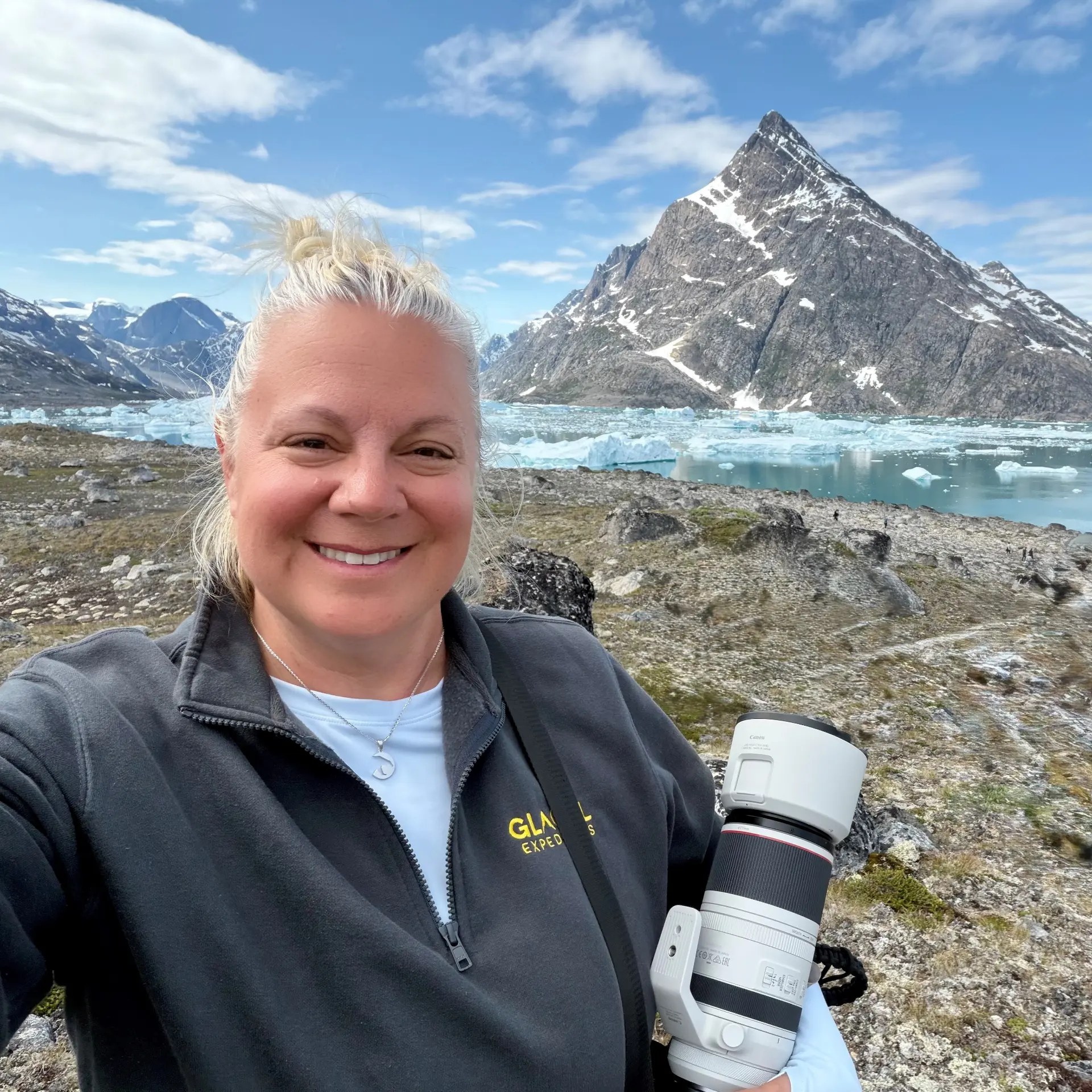
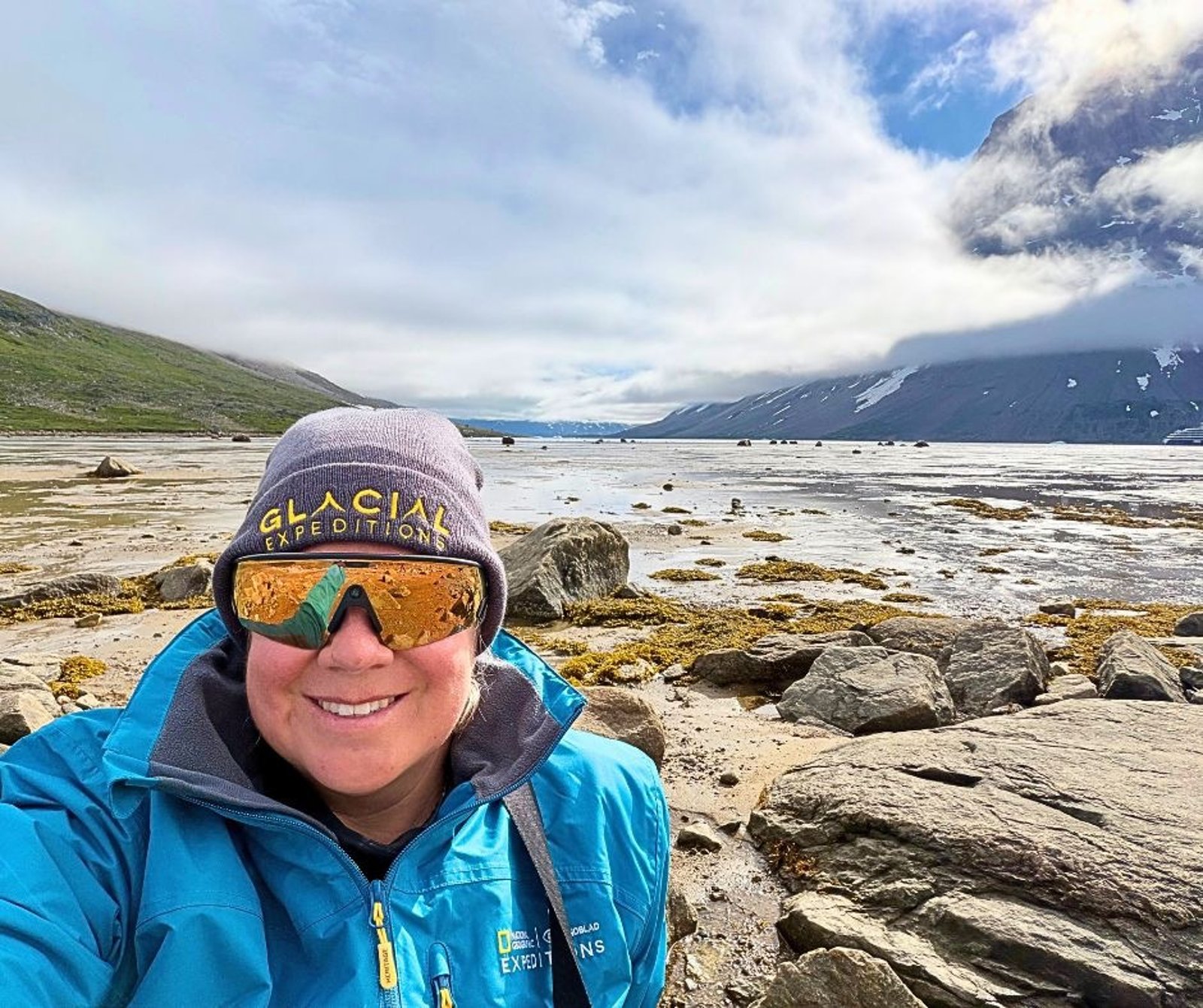
On my own East Greenland voyage aboard the National Geographic Resolution in early July, shorts and a long-sleeved shirt were what I hiked in most days. I still carried the shell and a fleece in the dry bag every single time, because the walk back to the landing beach was not always the same weather as the walk up. The full ten days are in the journal.
How Should You Layer for a Greenland Expedition?
Base layer for moisture: two or three sets of merino wool or performance synthetic, tops and bottoms, never cotton. Mid layer for warmth: fleece, a down vest or a lofted synthetic sweater. Outer shell for weather: a fully waterproof, windproof jacket and rain pants with taped seams, cut loose enough to go over boots.
Hiking shorts and a light long-sleeved shirt earn their place in a July bag on the east coast — add them rather than replace anything. Trekking trousers that zip off, or a light pair of shorts under the shell, cover the warm valley walks without leaving you short in a squall.
Rain pants matter more than people expect. Zodiac benches are wet, tundra is often wet, and dry legs are the difference between enjoying the afternoon landing and enduring it.
What Boots Do You Need in Greenland?
Tall rubber muck boots, 14 to 16 inches, for wet Zodiac landings into shin-deep water, and sturdy broken-in hiking boots for longer tundra walks. Many muck boots are comfortable enough to hike in, which lets you leave the hiking boots aboard and avoid carrying a second pair ashore in your daypack.
If your line lends rubber boots, try them on the first sea day and walk the deck in them. If they suit you, that is your landing footwear settled. If they do not, that is exactly when you want to know.
Wool socks, more pairs than you think, and a spare set in the dry bag. Wet feet at the start of a four-hour landing is the one discomfort nothing else in the bag fixes.
Do You Need Insect Protection in Greenland?
Yes, in July and August. Tundra mosquitoes and black flies appear the moment the wind drops, especially in sheltered inland valleys and around Kangerlussuaq. A fine-mesh head net weighs almost nothing and a DEET or picaridin repellent covers the rest. Coastal and Zodiac days are usually breezy enough to be free of them.
Keep the head net in the daypack for every summer land walk rather than deciding in the morning whether you will need it. Wind is not a forecast you can trust valley by valley.
Do Ships Provide Parkas and Boots in Greenland?
Most polar and luxury expedition lines provide an insulated waterproof parka — to keep on some ships, on loan on others — and lend rubber boots for the voyage. What is almost never provided: waterproof trousers, gloves, base layers, sunglasses and hiking boots. Confirm the list for your specific ship before buying anything.
This one question can save several hundred dollars of gear, and it varies by line and sometimes by season. We check it on every Greenland booking we handle and tell clients what they genuinely need to buy.
What Should You Carry Ashore Each Day?
A 20 to 30 litre waterproof dry bag holding camera gear, a spare pair of wool socks, a fleece or shell you are not currently wearing, water, sun protection and the head net. It doubles as somewhere to put the layers you shed when a sheltered valley turns out to be warmer than the deck was.
Binoculars belong in your hand rather than the bag. Muskox on a far slope, a distant bear, seabird cliffs — most of Greenland's wildlife is first a shape at distance, as our wildlife guide sets out.
Camera protection is not optional in a Zodiac. Spray comes over the bow, and a dry bag rolled shut is worth more than any rain cover.
Greenland packing questions
How cold is Greenland in summer?
Coastal daytime temperatures in July and August generally run 5°C to 15°C (41°F to 59°F), warmer in sheltered inland valleys and colder on deck in wind or near glacier ice. Hiking in shorts is common on the east coast in July.
Do I need a parka for Greenland?
Usually the ship provides one, either to keep or on loan. What you must bring yourself is a waterproof and windproof shell layer, waterproof trousers and gloves, which are rarely included.
Can I hike in the rubber boots the ship lends me?
Often, yes. Many of the tall rubber muck boots used for wet landings are comfortable enough for tundra walking, which saves carrying a second pair of boots ashore. Test them on a sea day before you rely on it.
Are mosquitoes bad in Greenland?
They can be, in July and August, on warm windless days inland. A head net and repellent handle it. Zodiac cruising and breezy coastal landings are usually insect-free.
What should I wear ashore in a Greenlandic settlement?
Ordinary layers are fine; the shift is in behaviour rather than clothing. Leave hiking poles and drybags off doorsteps, and ask before photographing people or homes. Our [culture guide](/destinations/greenland/culture) covers settlement etiquette.
More on planning Greenland
Greenland expedition cruises
Regions, seasons, ships and costs in one place.
Best time to visit Greenland
What the weather actually does, month by month.
Greenland expedition ships
Which vessels can reach which fjords, and what they lend you.
National Geographic Resolution
The ship we sailed in East Greenland, reviewed firsthand.
Our East Greenland journal
Ten days on the east coast in July 2026, hiking in shorts included.