

Greenland vessel classes at a glance
- Micro vessels
- 12-20 guests, chartered whole, closest work to the sea ice edge
- Small expedition ships
- 50-140 guests, shallow fjords, maximum shore time
- Luxury expedition ships
- 140-200 guests, balcony suites, PC5/PC6 hulls
- Helicopter-equipped
- 100-200 guests, ice sheet landings and heli-hiking
- Ice class to look for
- Polar Code PC5 or PC6 for dense pack ice in Scoresby Sund
- Landing rule of thumb
- Under 200 guests generally means no shift rotations ashore
What Types of Ships Sail in Greenland?
Four broad categories: micro vessels of 12 to 20 guests taken as private charters, small expedition ships of 50 to 140 guests, luxury expedition ships of 140 to 200 guests with balcony suites and PC5 or PC6 hulls, and helicopter-equipped ships that add ice sheet landings and aerial flightseeing.
| Vessel Class | Guest Capacity | Structural & Operational Features | Ideal Traveller |
|---|---|---|---|
| Micro expedition vessels | 12–20 guests | Reinforced steel hulls, Zodiac-equipped, private ensuite cabins, high manoeuvrability along sea ice edges | Private charters: families, friends and corporate groups taking a whole vessel, and anyone who wants to work close to the sea ice edge on a fully customisable route |
| Small expedition vessels | 50–140 guests | High manoeuvrability in shallow fjords, maximum shore time, flexible itinerary adjustments | Active adventurers, wildlife photographers and expedition purists |
| Luxury expedition ships | 140–200 guests | Balcony suites, fine dining, spa facilities, Polar Code PC5/PC6 hulls, high stability | Travellers seeking maximum polar comfort without giving up daily landings |
| Helicopter-equipped ships | 100–200 guests | Onboard twin-engine helicopters for ice sheet landings, flightseeing and heli-hiking | Explorers wanting inland glacier access beyond coastal walking range |
Capacities are typical rather than absolute; individual ships vary. Guest numbers above roughly 200 usually mean rotating shifts ashore.
The categories are not a quality ladder. They are different tools. A micro vessel can nose into a lead in the sea ice that no 200-guest ship would attempt; a luxury expedition ship crosses the Denmark Strait in far more comfort and carries a bigger field team.
What separates a Greenland ship from a general cruise ship is the operating model: a Zodiac fleet, an expedition team of naturalists and often geologists, and an itinerary written in pencil. Compare the operators themselves on expedition cruise lines.
What Ice Class Does a Greenland Ship Need?
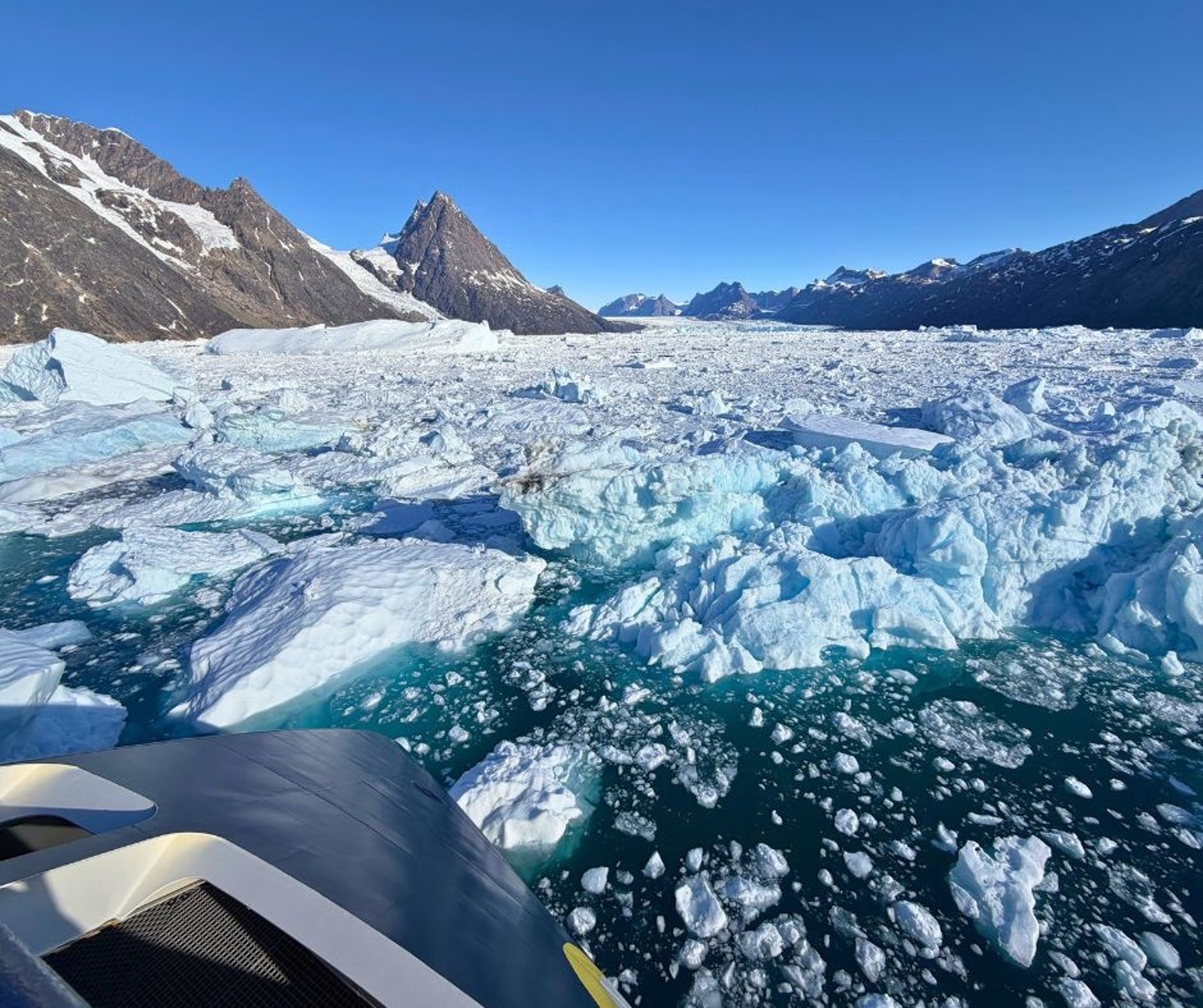
Polar Code PC6 handles summer and autumn medium first-year ice, which covers most West Greenland and Disko Bay sailings. PC5 is stronger and matters where dense pack ice is likely — deep Scoresby Sund, the Northeast Greenland coast, the Northwest Passage. Below that, an itinerary is weather-dependent in a way that shows on the map.
Polar Code ice class (PC5 / PC6)
Reinforced hulls rated to work in first-year and medium pack ice — what deep Scoresby Sund, the Northeast coast and the Northwest Passage ask for.
Zodiac fleet and platforms
Zodiac count relative to guest numbers, plus how fast the embarkation platforms load. Both decide how much of the day is spent ashore rather than queuing.
Stabilisation
Active fin stabilisers make a real difference on open crossings of the Denmark Strait or Baffin Bay, before and after the sheltered fjord days.
Expedition team depth
In Greenland, ask whether the team includes geologists and cultural specialists, not naturalists alone. The landscape is the主 story on the east coast.
Ice class is the single most useful specification to ask about because it is not marketing. It constrains where the master can legally and safely take the ship, which in turn constrains how much of an east-coast fjord system you actually see. Our Scoresby Sund guide explains what that means in practice.
The east coast is where this bites. A voyage advertised into Scoresby Sund on a lightly strengthened hull may spend more of the week outside it than in it.
How Does Ship Size Affect Your Time Ashore?
Guest numbers decide rotations. Under roughly 200 guests, everyone can usually land at the same time; above that, you go ashore in shifts and your day shortens. Smaller ships also reach shallow fjord heads and small settlements that larger vessels cannot enter at all, and can change plan the same morning.
Ask two numbers together: guests and Zodiacs. Twelve Zodiacs for 130 guests is a different day from six Zodiacs for 130. Ask also how quickly the embarkation platforms load, because that is where shore time is quietly lost.
Settlement calls are the other size limit. Ittoqqortoormiit has a few hundred residents; a 500-guest ship is not a good fit for that shoreline whatever its hull can do.
Which Greenland Ships Carry Helicopters or Submersibles?
A small number of expedition vessels in the 100 to 200 guest range carry twin-engine helicopters, used for ice sheet landings, heli-hiking and aerial flightseeing over fjords. A handful carry submersibles. Both are weather-dependent, capacity-limited and usually charged separately, at roughly $1,500 to $3,500 per day tour.
Helicopter operations are genuinely transformative when they fly — standing on the inland ice, or seeing a fjord system from 2,000 feet, is a different order of experience. They are also the first thing cancelled by cloud, and no operator can promise them.
Kayaking is the inverse: modest fee, high reliability, and the excursion clients talk about most afterwards. Costs for all of these are set out in the Greenland cost guide.
Which Greenland Ships Have We Sailed?
One: the National Geographic Resolution, on the east coast in July 2026 — a PC5 ice-class vessel of 126 guests. Every other ship and category described on this page is assessed from operator specifications, industry knowledge and client feedback rather than from having been aboard in Greenland ourselves.
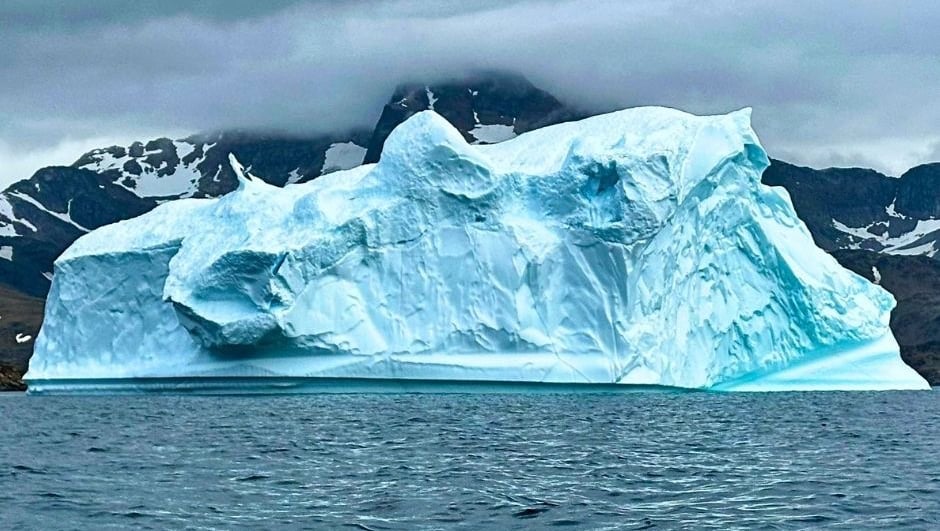
What the Resolution's ice class bought us was access: the ship worked in and out of the fjords and pushed through loose pack where a lighter hull would have turned. It carries a bow that lifts into ice rather than punching flat at it, and the difference is visible from the deck. Our full account is in the East Greenland journal, and the ship itself is reviewed on its own page.
We would rather say that plainly than imply broader firsthand knowledge. Where a client is choosing between two Greenland ships we have not sailed, we say so, and we base the recommendation on specifications, deployment history and what our travellers report back.
Greenland ship questions
What ice class do I need for a Greenland cruise?
PC6 is adequate for most West Greenland and Disko Bay summer itineraries. For deep east coast fjords such as Scoresby Sund, Northeast Greenland or the Northwest Passage, look for PC5 or better.
How big should a Greenland expedition ship be?
Under about 200 guests, so everyone can land simultaneously and the ship can enter shallow fjords and small settlements. Below 140 guests you gain flexibility again; below 20, you are effectively chartering.
Do Greenland ships carry helicopters?
A few do, in the 100 to 200 guest range, for ice sheet landings and flightseeing. Flights are weather-dependent and charged separately, roughly $1,500 to $3,500 per day tour. No operator can guarantee them.
Which Greenland ship have you sailed yourselves?
The National Geographic Resolution, in East Greenland in July 2026. We have not sailed the other vessels described here in Greenland, and we say so when recommending between them.
Are Greenland ships suitable for travellers with limited mobility?
It varies widely by ship and by landing. Zodiac transfers involve stepping down into a moving boat and often a wet landing on rock or sand. We check specific ships and itineraries against a traveller's mobility before recommending anything.
More on Greenland
Greenland expedition cruises
Regions, seasons, itineraries and costs.
Scoresby Sund
The fjord system that makes ice class matter.
Greenland expedition costs
Fares by vessel category, plus flights and add-ons.
National Geographic Resolution
The PC5 ship we sailed on the east coast, reviewed firsthand.
Expedition cruise lines
Who operates in Greenland, and how the fleets differ.