
Scoresby Sund in brief
- What it is
- The largest fjord system on the planet — about 38,000 square kilometers, roughly the size of Denmark
- Local name
- Kangertittivaq
- Main channel
- 110 kilometers (68 miles) into the mainland
- Branching arms
- A network reaching 300–350 kilometers (216 miles) inland toward the Greenland Ice Sheet
- Geology
- Basalt cliffs rising around 2,000 meters (6,500 feet) from the sea; rock up to three billion years old
- Nearest settlement
- Ittoqqortoormiit, 300–400 residents, founded 1924
- Ships
- Small, ice-strengthened expedition vessels with Zodiacs
- Sweet spot
- Late August through September — open water and the returning northern lights
What is Scoresby Sund?
Scoresby Sund — Kangertittivaq in the local Tunumiit language — is the largest fjord system on the planet, spanning about 38,000 square kilometers, roughly the size of Denmark. Its main channel cuts 110 kilometers (68 miles) into East Greenland's mainland, branching into a tree-like network of fjords that reach 300–350 kilometers inland toward the Greenland Ice Sheet. It is the heart of the least visited part of the island.
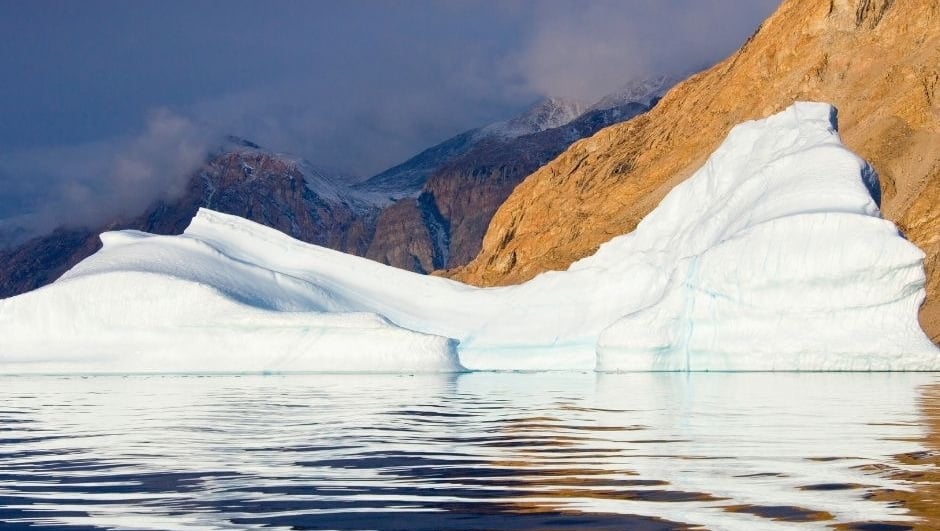
The scale is difficult to convey from a map. From the mouth, the sound opens into a series of arms — Røde Fjord, Øfjord, Nordvestfjord and others — each walled by mountains and littered with icebergs that have drifted in and grounded. A ship can spend a week inside the system and still leave whole branches unexplored.
This is the quintessence of an Arctic expedition: a place where nature reigns supreme and the human footprint is almost imperceptible. Our East versus West Greenland guide sets it against the more accessible, culturally rich west coast.
Why does the landscape look the way it does?
Towering basalt cliffs — in places rising around 2,000 meters (6,500 feet) straight from the sea — resist glacial erosion, creating a landscape of breathtaking complexity. Some of the rock formations here are up to three billion years old, and the region's geological history is laid bare in a way that few other places on Earth can match.
Layers of dark basalt stack in horizontal bands, cut through by red sandstone and pale intrusions — nowhere more striking than Røde Fjord, named for its hematite-rich red sandstone cliffs. Where the ice has retreated, the record is exposed rather than buried: an open cross-section of deep time that guides reference constantly during Zodiac cruises and shore landings.
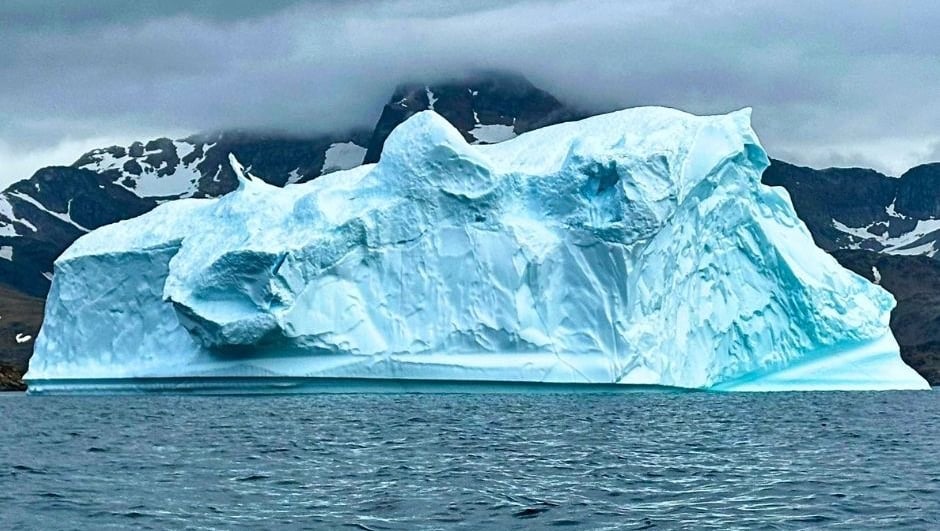
The fjord averages 400–600 meters in depth, so many of the colossal tabular icebergs calving from the inland glaciers ground on the fjord floor and stay put. Navigating between these stationary sapphire-blue giants by Zodiac — a kind of iceberg graveyard — is the hallmark of any voyage here.
What wildlife can you see in Scoresby Sund?
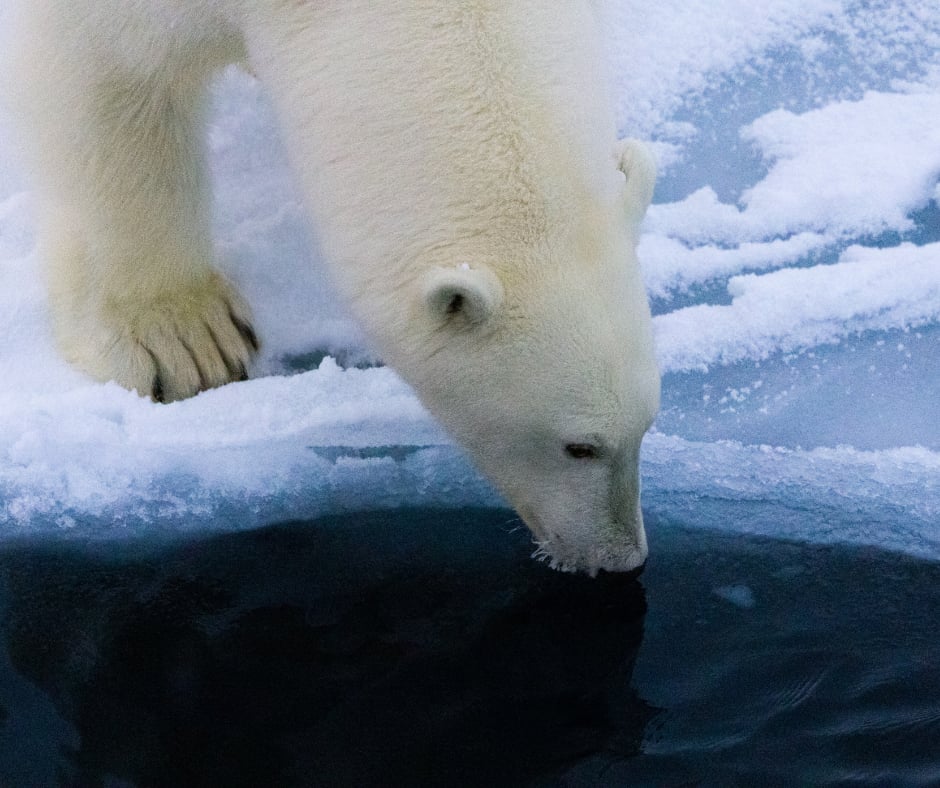
Musk oxen are the highlight on land, supported by the rich grassy plains around the fjord system. Polar bears are a genuine possibility on the drifting sea ice, and the marine environment is unusually rich thanks to polynyas — areas of open water that do not freeze even in winter.
Alongside musk oxen you may see Arctic foxes, Arctic hares, stoats and lemmings. The low human population and minimal hunting pressure mean animals here are more abundant and less shy than on the west coast.
In the water: ringed, hooded, harbor, bearded and harp seals; narwhals and belugas; and a higher-than-usual possibility of the rare bowhead whale. The basalt cliffs hold vast seabird colonies of little auks, puffins and fulmars. Our Greenland wildlife guide covers each species and when to look for it.
What is Ittoqqortoormiit like?
Ittoqqortoormiit, founded in 1924, sits on the northern shores of Scoresby Sund and is one of the most isolated inhabited places on Earth. Its 300–400 residents rely heavily on subsistence hunting and fishing, and the brightly colored houses — painted in vibrant reds, yellows and blues — stand in stark contrast to the monochrome Arctic landscape around them.
The Tunumiit people here have preserved a distinct culture, including their own language, Tunumiit oraasiat, which differs significantly from West Greenlandic. Seals, musk oxen, narwhals and even polar bears provide food, clothing and fuel — practices that are not staged for visitors but essential to survival where modern supply chains rarely reach. The small museum, housed in the town's original church, tells the 100-year story of the settlement.
Sled dogs are ever-present, serving as both companions and vital winter transport. Bone and soapstone carving traditions, particularly the tupilak figures once used as spiritual talismans, remain a powerful expression of that heritage. There is more in our Greenland culture guide.
How do expedition ships visit Scoresby Sund?
Small, ice-strengthened vessels carrying Zodiacs are the practical way in. Heavy pack ice means itineraries are guided by day-to-day weather and ice conditions, so the plan is a living document rather than a fixed schedule — and that unpredictability is part of what makes the experience authentic.
Days typically mix Zodiac cruising among glaciers and icebergs, tundra hiking with panoramic fjord views, and kayaking for a water-level perspective that no ship deck can offer. Onboard lectures fill in the geology, wildlife and Tunumiit history between landings.
September voyages carry a bonus: long enough nights, and almost no light pollution, for the aurora borealis. See our northern lights guide for what to expect. For how these voyages are structured overall, read our Greenland itineraries guide.
When is the best time to visit Scoresby Sund?
Late August through September is the sweet spot. The winter sea ice has retreated far enough for expedition ships to penetrate deep into the inner fjords like Røde Fjord, and as the midnight sun fades, the returning darkness brings the first northern lights of the season.
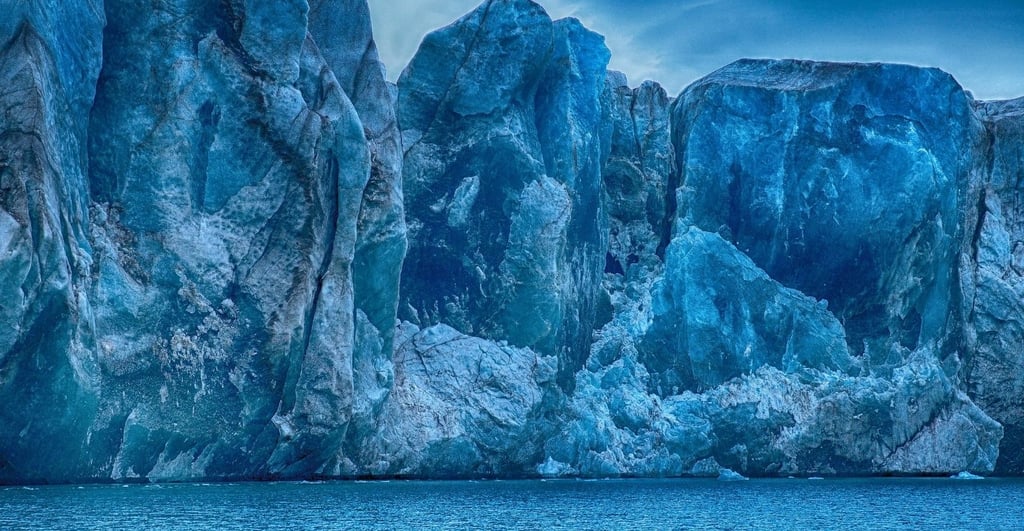
This window offers a rare dual experience: full navigational access to the inner system and, far from any light pollution, some of the finest aurora viewing in the Arctic. Watching the northern lights reflect off the glass-calm water of a fjord filled with icebergs is an experience that winter-only travelers miss entirely.
Demand for the 2027 season is already strong — Scoresby Sund has emerged as the East Greenland voyage that discerning travelers ask for by name. If it is on your list, it pays to plan early; the short season means a limited number of departures on a small number of ships. Our when to visit Greenland guide compares the months in detail.
Scoresby Sund questions
Is Scoresby Sund really the largest fjord system in the world?
By area, yes — it is the largest fjord system on the planet. The main channel runs 110 kilometers (68 miles) into the mainland, and its branching arms reach 350 kilometers (216 miles) inland, which is what gives it that scale.
Can I see polar bears in Scoresby Sund?
There is a good possibility, though never a guarantee. Bears here depend on the drifting sea ice carried south by the cold East Greenland Current from the Arctic Ocean, so sightings track ice conditions rather than a fixed schedule.
Will my itinerary change?
Expect it to. Heavy pack ice means expedition leaders make routing decisions day by day based on weather and ice. Travelers who love East Greenland are the ones who came for the unknown rather than a printed schedule.
Do ships call at Ittoqqortoormiit?
Many East Greenland voyages include a visit, conditions permitting. It is one of the most isolated inhabited places on Earth, and the call is usually short — a walk through the settlement, a look at local carvings, and the sled dogs.
Should I choose Scoresby Sund or West Greenland?
Scoresby Sund is for raw wilderness, geology, terrestrial wildlife and solitude. West Greenland is for culture, accessibility and whales. Our East versus West Greenland guide walks through the trade-offs, and some longer voyages combine both.
More on East Greenland
East versus West Greenland
Two very different expeditions, and how to choose between them.
Northeast Greenland National Park
The world's largest national park, immediately north of Scoresby Sund.
Greenland wildlife guide
Musk oxen, polar bears, narwhal, beluga and the seabird cliffs.
When to visit Greenland
How the short season shapes ice, light and wildlife.
Greenland expedition ships
Why vessel size and ice class matter more here than almost anywhere.