


The Greenland checklist
- Muskoxen
- High concentrations around Kangerlussuaq and in Northeast Greenland
- Polar bears
- Sea ice of North, East and South Greenland, following the seals
- Whales
- Humpback, minke and fin in summer fjords; narwhal and beluga in northern waters
- Walrus & seals
- Pack-ice edges of East and High Arctic Greenland
- Birdlife
- White-tailed eagles, gyrfalcons, murres, puffins and fulmars on the sea cliffs
Where Do You See Muskoxen in Greenland?
Muskoxen — heavy-coated, prehistoric-looking grazers — are found in high concentrations around Kangerlussuaq in the west and throughout Northeast Greenland, including the national park. They are Greenland's signature land animal, visible year-round, on summer hikes or winter drives.
On the east coast the muskoxen's advantage is the near-total absence of people: minimal hunting pressure means animals that are more numerous and less wary than on the populated side of the island.
Give them distance regardless. A muskox that lowers its head is not posing, and the expedition guides will move you back before it comes to that.
Where Do You See Polar Bears in Greenland?
Polar bears primarily inhabit the sea ice of North, East and South Greenland, where seal hunting is abundant. Expedition sailings through Scoresby Sund and along the east coast from July through September offer the best encounter rates; bears are rare on the settled west coast.
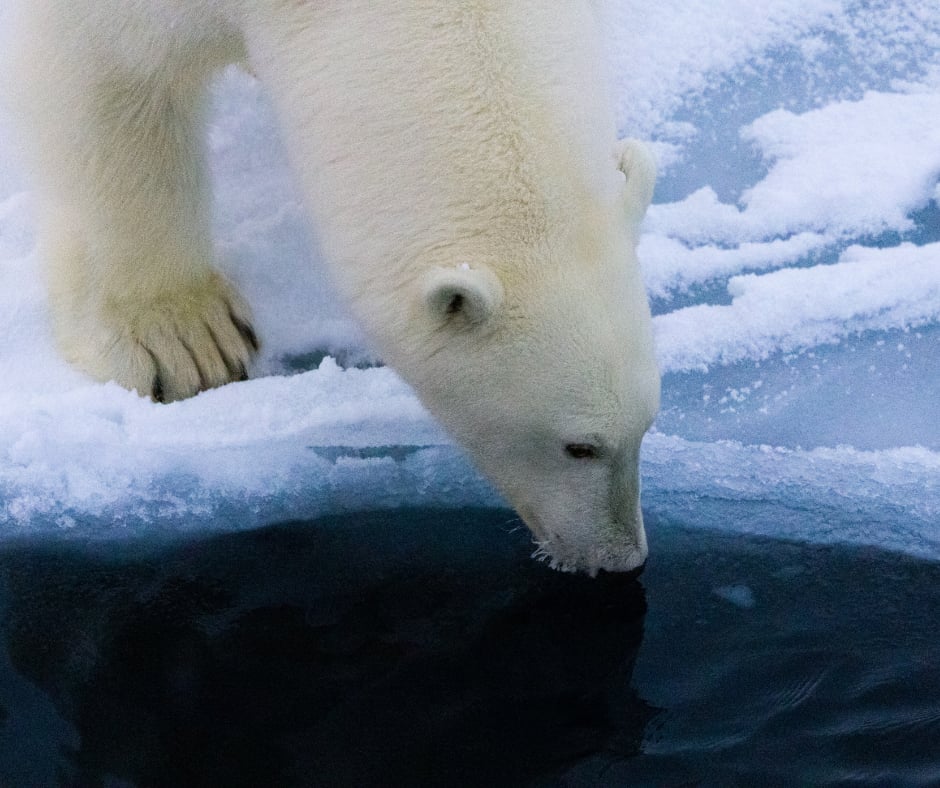
On our July 2026 East Greenland voyage aboard the National Geographic Resolution we saw three polar bears over ten days — each one found by the expedition team scanning the ice from the bridge, each one watched from a respectful distance. The encounters are logged in our journal.
Bears follow the ice, and the ice moves. Nobody can promise a sighting, and any operator who does is selling rather than guiding. What a good east-coast voyage offers is genuine probability, and a team that knows how to look.
What Whales and Seals Live in Greenlandic Waters?
Humpback, minke and fin whales feed in coastal fjords through summer — Disko Bay, Nuuk Fjord and South Greenland are reliable from July to September — while elusive narwhals and belugas inhabit the northern Arctic waters. Walrus and several seal species haul out along the pack-ice edges of East and High Arctic Greenland.
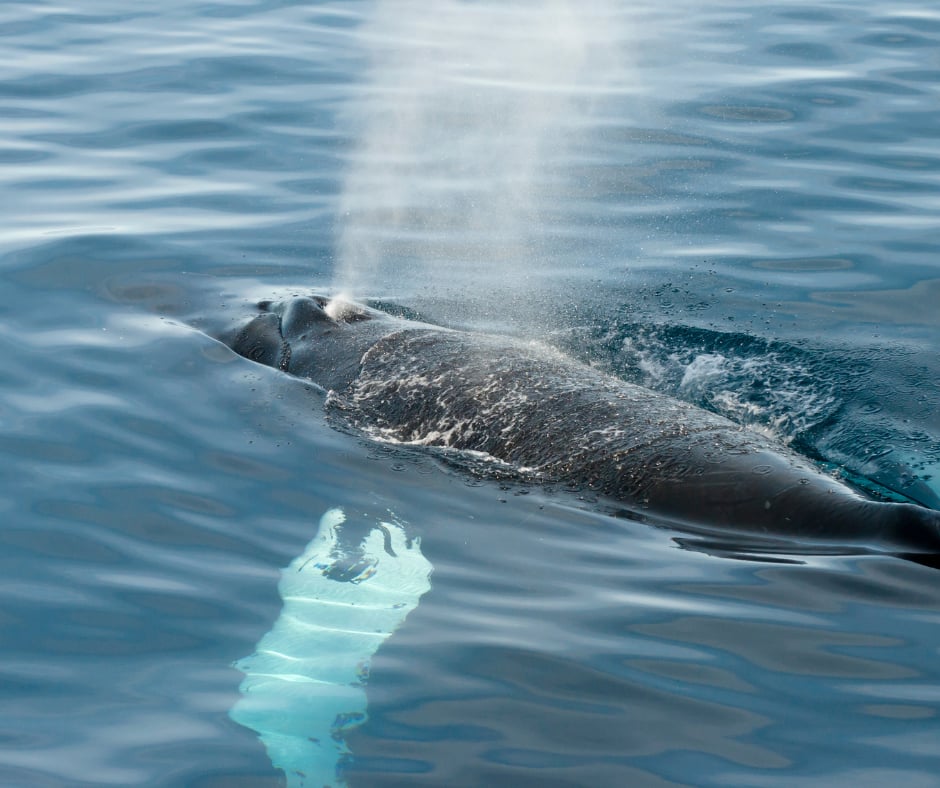
The cetaceans surprised us most. Alongside the bears, our east-coast sailing logged four sperm whales and a pod of around thirty pilot whales — none of it promised, all of it from the ship's deck or a Zodiac, which is where Greenland's wildlife watching actually happens.
The rare bowhead whale, a species that can live two centuries, still patrols the East Greenland Current. Seeing one is a matter of luck layered on the right water.
What Birdlife Will You See?
Greenland's sea cliffs hold white-tailed eagles, gyrfalcons, thick-billed murres, puffins and northern fulmars, with vast little auk colonies on the east coast's basalt walls. Summer brings migrants from three continents; the cliffs are loudest in June and July.
Arctic foxes patrol the seabird cliffs for fallen chicks, and where the birds are dense, the foxes are too — the food web is visible if you watch a single cliff face for an hour.
For photographers, the bird cliffs pair beautifully with the region's ice. Our Arctic photography guide covers lenses, light and shooting from a moving Zodiac.
Which Region Is Best for Wildlife?
For wildlife above all, choose East Greenland or the High Arctic: polar bears, muskoxen, walrus and the great seabird colonies, with minimal human presence. Choose the west for whales against icebergs and a gentler trip. The south offers eagles, seals and the greenest landscape.
| Species | Prime Viewing Locations | Best Season |
|---|---|---|
| Muskoxen | Kangerlussuaq tundra, Northeast Greenland | Year-round (summer hiking, winter drives) |
| Humpback & minke whales | Disko Bay, Nuuk Fjord, South Greenland | July – September |
| Polar bears | Scoresby Sund, East Greenland, Melville Bay | July – September (expedition sailings) |
| Walrus & seals | Pack-ice edges of East & High Arctic Greenland | July – August |
Season matters as much as coast. July and August concentrate whales and birdlife; September adds muskoxen in the rut and the first aurora over the fjords.
Our itineraries guide maps each route to its wildlife strengths, and the best time to visit guide sets the seasons side by side.
Greenland wildlife questions
What is Greenland's most iconic animal?
The muskox on land and the polar bear on the ice. Muskoxen are the more reliable sighting; polar bears are the great hope, and they follow the sea ice and the seals.
Can you see polar bears in Greenland in summer?
Yes — July through September expedition sailings in East Greenland and the High Arctic offer real chances, as bears hunt along the remaining sea ice. Sightings are never guaranteed.
Are there narwhal in Greenland?
Yes, in the northern Arctic waters, along with beluga. They are among the most elusive whales in the world and a realistic hope only on High Arctic and northern east-coast voyages.
Is Greenland wildlife viewing safe?
With an expedition team, yes. Polar landings are managed by trained staff who scan before anyone goes ashore, and viewing happens from Zodiacs or at controlled distances. Follow the guides' instructions without exception.
More on Greenland
Greenland itineraries
Which route puts you in front of which animals.
Scoresby Sund expedition guide
The east-coast fjord system where we saw three bears.
Northeast Greenland National Park
The world's largest national park and its muskox herds.
Best time to visit Greenland
Matching the season to the species.
Our East Greenland journal
Bears, sperm whales and thirty pilot whales, July 2026.