

The park in brief
- Size
- 972,000 square kilometers (375,300 square miles)
- Status
- The world's largest national park
- Where
- North of Scoresby Sund on Greenland's remote east coast
- Population
- No permanent civilian residents
- Wildlife
- Musk oxen, polar bears, Arctic fox and hare, seals, whales, seabird colonies
- Access
- Small ice-strengthened expedition ships, ice conditions permitting
What is Northeast Greenland National Park?
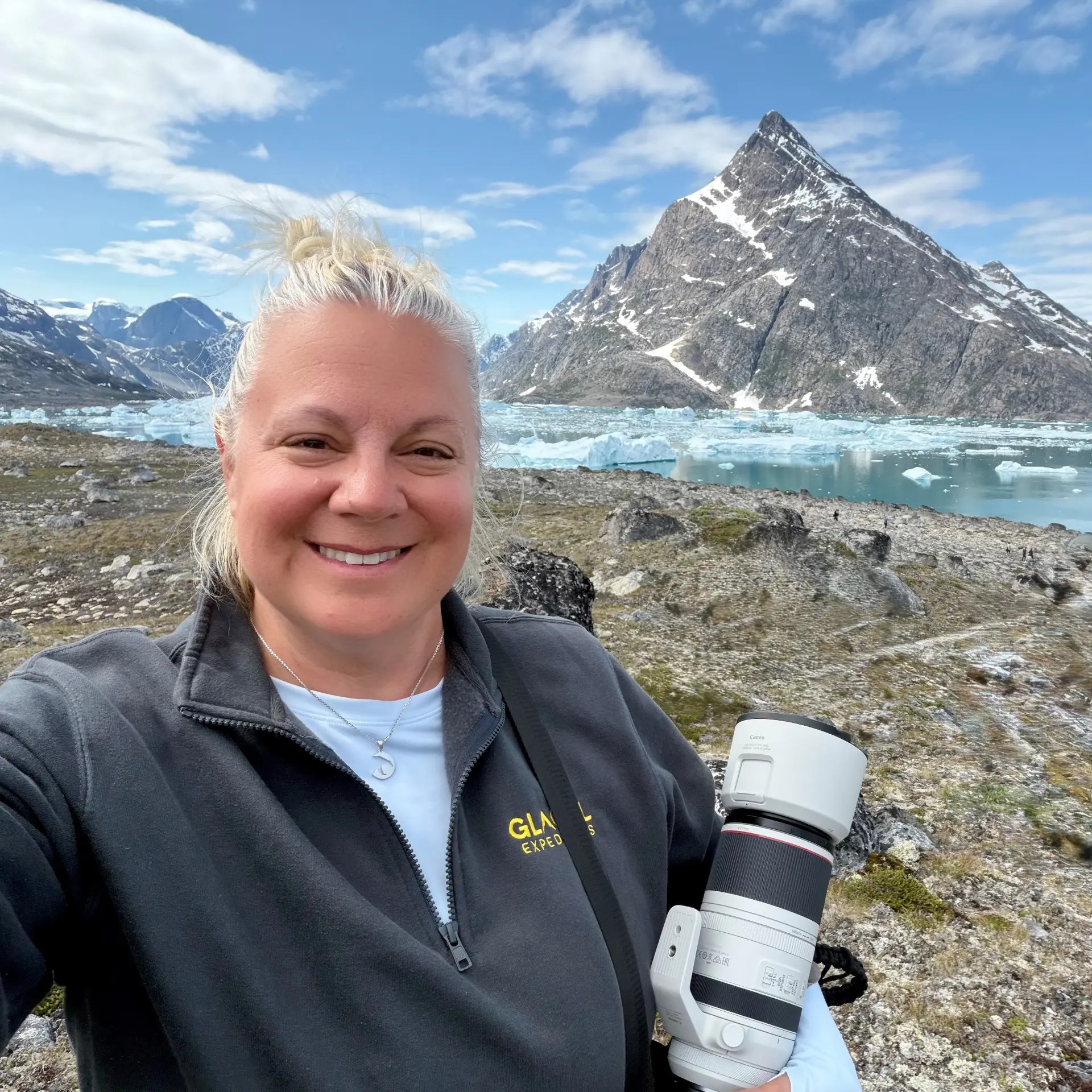
Northeast Greenland National Park is a geological and ecological marvel and the world's largest national park, covering 972,000 square kilometers (375,300 square miles). It occupies the entire northeastern quadrant of the island, north of the Scoresby Sund fjord system.
There is no comparable protected area anywhere. The park is larger than most countries, has no permanent civilian population, and its coastline is guarded for much of the year by the pack ice carried south on the East Greenland Current.
Together with Scoresby Sund to the south, it defines what East Greenland expedition travel means: raw wilderness, exposed geology and near-total solitude.
What does the landscape look like?
Deeply cut fjords, sheer-faced mountains and basalt cliffs that resist glacial erosion, backed by the Greenland Ice Sheet and fringed by tundra plains. Glaciers reach the sea directly in many places, and immense icebergs drift along the coast.
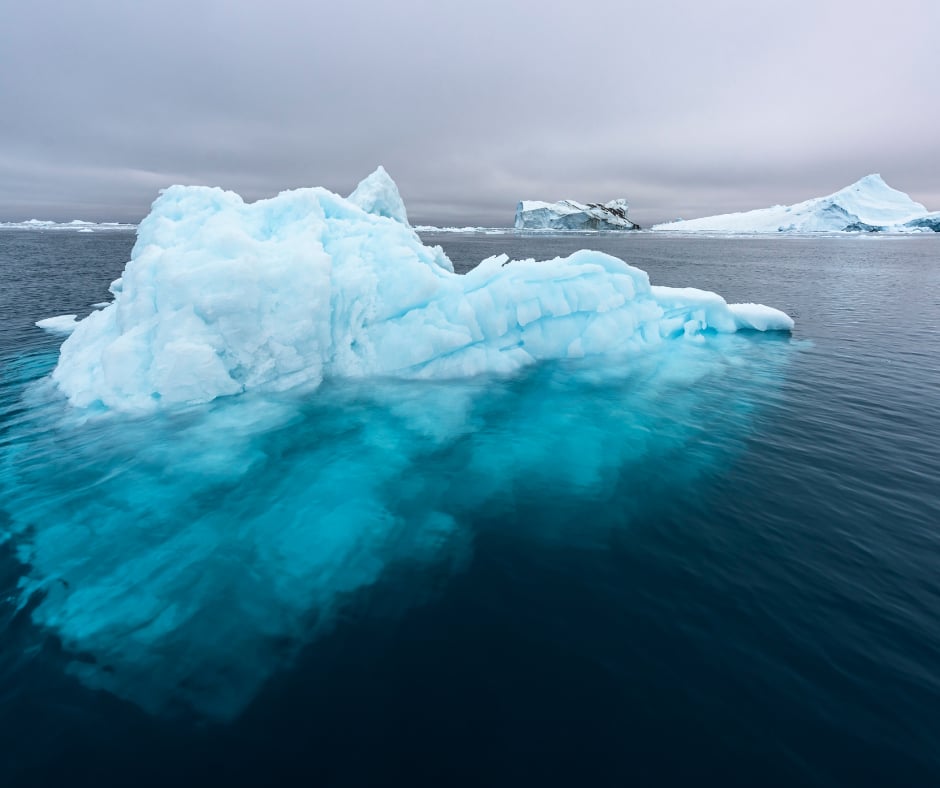
The rock record here is extraordinarily old — East Greenland exposes formations up to three billion years in age — and because so little vegetation covers it, the geological history is visible rather than inferred.
In summer the tundra greens briefly and unexpectedly, with flowering plants across the coastal plains supporting the grazing animals that make the region's wildlife viewing so strong.
What wildlife lives in the park?
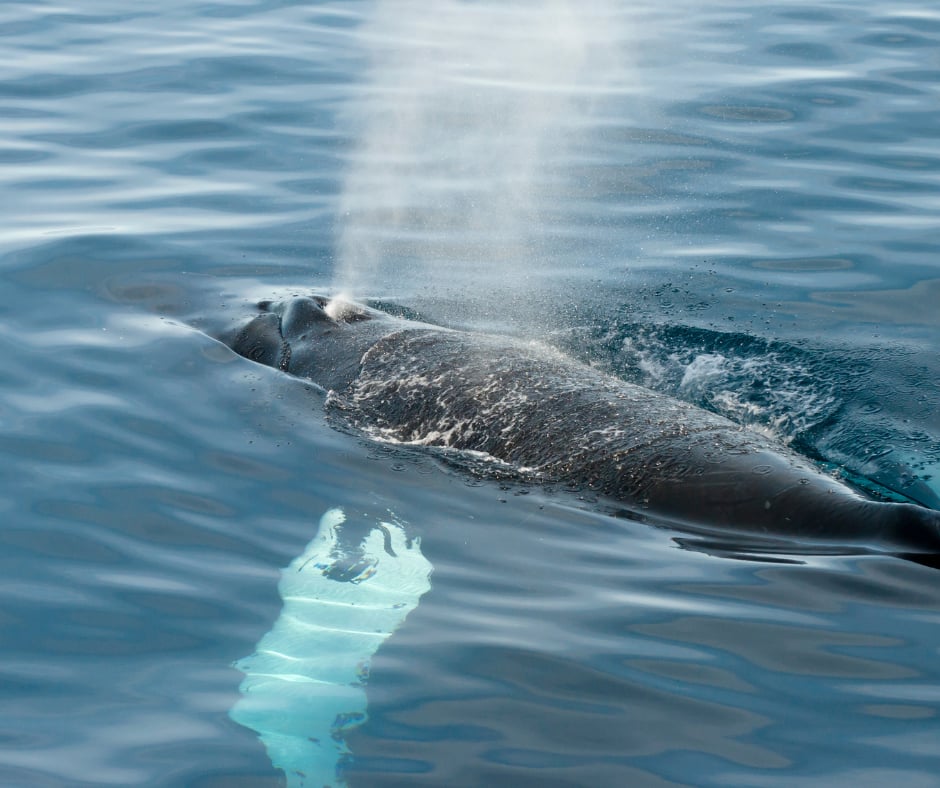
Musk oxen are the signature animal, with a large population distributed throughout North and Northeast Greenland. Polar bears hunt along the drifting sea ice, and Arctic foxes, hares, stoats and lemmings are all present. The coastal waters hold five seal species, narwhal, beluga and the rare bowhead whale.
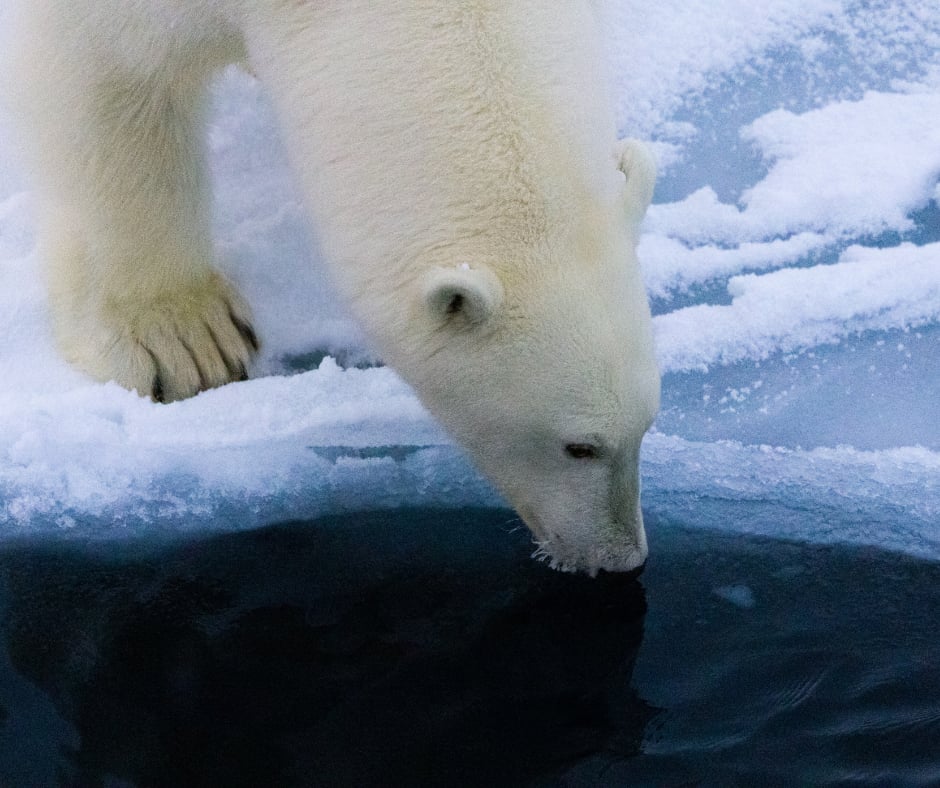
The reason for this abundance is simple: almost nobody lives here. Minimal human population and low hunting pressure mean terrestrial animals are more numerous and less wary than on the populated west coast.
The basalt cliffs support vast seabird colonies of little auks, puffins and fulmars, and the polynyas — patches of open water that never freeze — keep the marine food web productive year-round. See our Greenland wildlife guide for the full picture.
How do you visit Northeast Greenland National Park?
Only by small, ice-strengthened expedition ship, and only when ice allows. There are no towns, no roads and no infrastructure. Landings are made by Zodiac, and the itinerary is decided day by day around weather and pack-ice conditions.
Voyages that reach this far north are typically longer East Greenland expeditions that also include Scoresby Sund, often sailing from or to Iceland. Because the park lies at the outer edge of what is navigable, reaching a specific point within it is never promised — expedition leaders work with the ice they find.
Onshore, activities are simple and superb: tundra hiking, glacier and iceberg cruising by Zodiac, kayaking in sheltered water, and wildlife watching led by naturalists. September departures add a real chance of the aurora, covered in our northern lights guide.
Is a Northeast Greenland voyage right for you?
It suits travelers who want wilderness above all — geology, wildlife and solitude, with a flexible itinerary and no towns, shops or certainty. If you want culture, museums and reliable whale watching, West Greenland is the better fit.
Our East versus West Greenland guide lays out both coasts side by side. Some longer voyages combine them, which is the most complete way to see the island.
Northeast Greenland National Park questions
How big is Northeast Greenland National Park?
972,000 square kilometers (375,300 square miles), which makes it the largest national park in the world. It covers the entire northeastern quadrant of Greenland.
Does anyone live in the park?
There is no permanent civilian population. The nearest inhabited place on the east coast is Ittoqqortoormiit, on the northern shores of Scoresby Sund, with roughly 350 residents.
Can I be sure my ship will reach the park?
No. Access depends entirely on pack ice, and the East Greenland Current delivers a great deal of it. Expedition leaders plan day by day, and voyages are sold on the strength of the region rather than a guaranteed set of landings.
What is the best wildlife sighting here?
Musk oxen are the most reliable and the most memorable — large populations range throughout North and Northeast Greenland. Polar bears are the great hope, and their presence follows the drifting sea ice.
When do ships sail to Northeast Greenland?
In the short northern summer, when ice retreats enough to allow a coastal approach. Late-season departures trade some daylight for aurora nights. Our when to visit Greenland guide explains the trade-offs month by month.
More on East Greenland
Scoresby Sund expedition guide
The largest fjord system on Earth, immediately south of the park.
East versus West Greenland
Two very different expeditions, and how to choose between them.
Greenland wildlife guide
Musk oxen, polar bears, narwhal, beluga and the seabird cliffs.
Greenland expedition ships
Why vessel size and ice class matter more here than almost anywhere.
Greenland itineraries
How east, west and combined routes are actually put together.