
Part of our The Arctic guide →
Northern lights at a glance
- Season
- Late September to late March — the months with enough darkness
- Top locations
- Churchill, Fairbanks, Iceland, Tromsø, and Finnish/Swedish Lapland
- Trip length
- 5–7 nights minimum, to ride out cloudy nights and low solar activity
- Two ingredients
- Solar activity (the Kp index) plus dark, clear skies — you need both
- Simplest tool
- Your hotel's Aurora wake-up call — a local expert watches the sky for you
Maximizing your chances of an elusive wonder
Growing up in Northern Ontario, the Northern Lights were common to see on those cold dark nights — but for many, witnessing the Aurora is a profound, once-in-a-lifetime experience. Maximizing your chances comes down to three decisions: where you go, when you go, and how long you stay.
At Glacial Expeditions, we specialize in journeys to the world's most breathtaking cold-weather destinations. We've helped countless travelers chase the magic, and this guide equips you with everything a first-timer needs.
Where to go: your Aurora hunting grounds
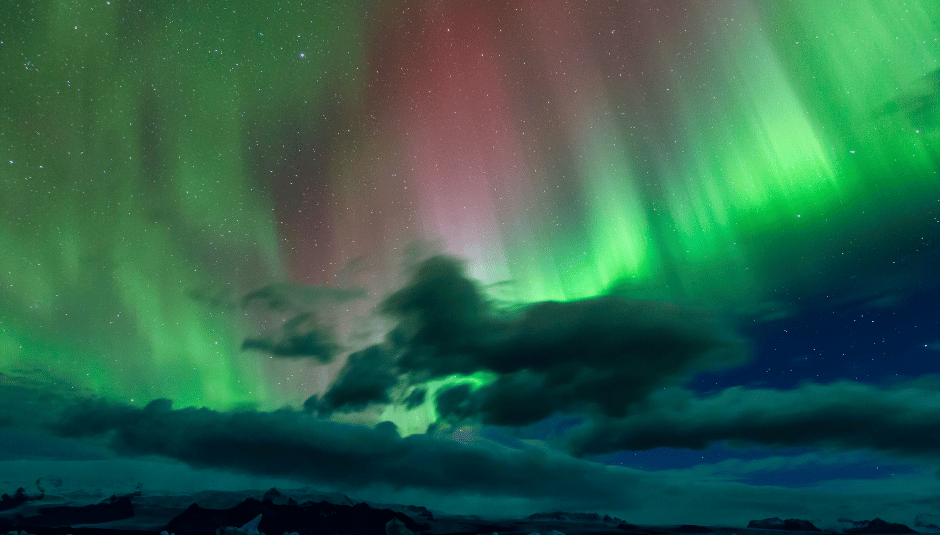
The Aurora can technically be seen anywhere within the Aurora Oval — the band around the magnetic poles — but certain locations offer clearer skies, darker nights and better infrastructure for viewing. Our five favorites: Churchill, Fairbanks, Iceland, Tromsø and Lapland.
Churchill, Manitoba, Canada — Known as the Polar Bear Capital of the World, Churchill is also a prime Aurora viewing destination. Its remote location, flat landscape and minimal light pollution make it ideal. Plus, you might spot polar bears or beluga whales depending on the season.
Fairbanks, Alaska, USA — Situated directly under the Aurora Oval, Fairbanks boasts high aurora activity and a longer viewing season. Combine your aurora hunt with dog sledding, ice sculpting, or exploring the vast Alaskan wilderness.
Iceland — Highly accessible and incredibly popular, Iceland offers stunning volcanic landscapes as a backdrop to the lights. Weather can be fickle, but tours are abundant, and you can combine your trip with hot springs, glaciers and waterfalls.
Tromsø, Norway — Often called the Gateway to the Arctic, Tromsø offers excellent chances to see the lights along with a vibrant city experience. Fjord cruises, Sámi cultural experiences and whale watching are popular daytime activities — see our Norway guide for the wider picture.
Lapland, Finland and Sweden — Picture a cozy glass igloo or a cabin in the snowy wilderness, with the Aurora dancing above. Lapland delivers the fairytale experience, often combined with reindeer sleigh rides or visits to Santa Claus Villages.
Tracking the Aurora: technology is your best friend
The Aurora is a notoriously fickle phenomenon — sometimes brilliant, often elusive. A high Kp-index (the measure of geomagnetic activity) is a good start, but you also need clear, dark skies, and you need to know when a surge in solar wind is about to hit. Your smartphone can do all three.
For a simple forecast, My Aurora Forecast & Alerts is a favorite — a clear percentage chance of seeing the lights at your specific location, with push notifications when activity is high. For real-time, ground-level information, Hello Aurora is invaluable: a map powered by community sightings, where other users post photos and locations immediately after spotting the lights.
For the serious tracker, apps like Aurora Alerts and SpaceWeatherLive offer much more detail, letting you track specific solar wind parameters and customize alerts for the exact Kp index you are waiting for. Combine the geomagnetic data with a reliable cloud cover forecast and you have the best possible chance of catching the display.
The pro tip: seeing the lights requires two factors. Strong auroral activity — shown via the Kp index and solar wind data — and clear skies, because even the strongest aurora is invisible behind thick cloud. Use the app to know when to look, and a weather forecast or cloud map to know where to look.
Ignore the apps: simplify your hunt
The single best piece of advice for any first-time Aurora hunter is to avoid frantic tracking. The most effective tool in your arsenal is often the simplest: your hotel's front desk or concierge.
If you're staying at an Arctic lodge or a hotel that regularly hosts Aurora guests, ask if they offer an Aurora wake-up call service. You put your name on a list and get a call directly to your room — even in the middle of the night — the moment a staff member spots a strong display. You don't have to monitor the Kp index or cloud cover yourself; you can relax, knowing a local expert has the watch, and you'll only leave your warm bed when the celestial show is truly on.
When to go: timing your trip for success
The Aurora requires two main ingredients: solar activity and dark, clear skies. Your prime viewing window is late September to late March, when the Arctic experiences long periods of darkness. The darkest months — December and January — offer the longest viewing opportunities each night.
Avoid the full moon if you can: while not a deal-breaker, a bright moon can wash out fainter auroras. Check moon phase calendars when planning if you want the absolute darkest conditions.
Stay longer. The Aurora is unpredictable, so we recommend a trip of at least 5–7 nights to increase your chances — that allows for cloudy nights or periods of low solar activity. For how the dark season relates to the Arctic's other season, see our midnight sun and polar night guide.
Gear up: camera or iPhone?
For the serious photographer, a DSLR or mirrorless camera remains the champion — full manual control over shutter speed, aperture and ISO, resulting in crisp, high-resolution images. For the casual traveler, a recent iPhone is a surprisingly capable alternative.
iPhone Pro models (11 and newer) have a dedicated Night Mode that automatically uses long exposures — up to 30 seconds when mounted on a tripod — to capture faint light. Third-party manual camera apps can push the phone's camera further.
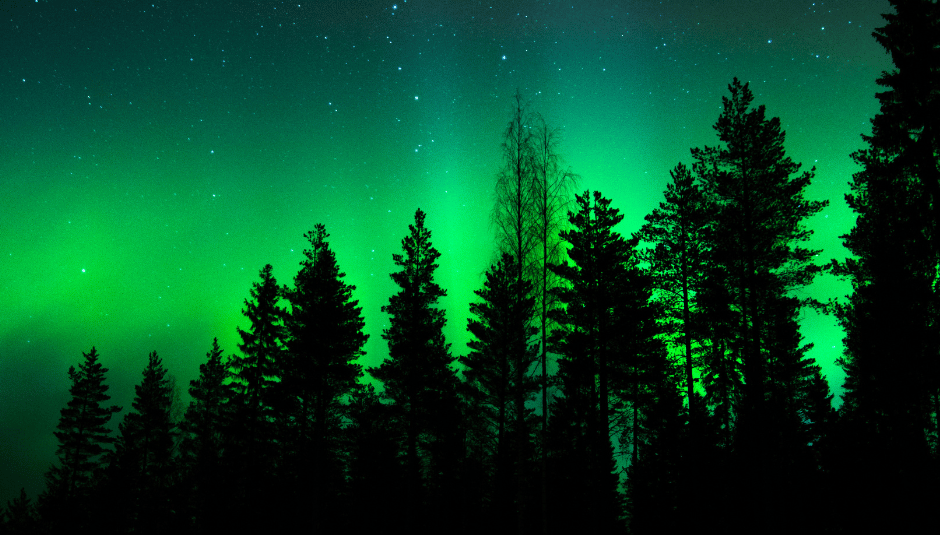
Whichever you choose, a sturdy tripod is non-negotiable. Any movement during a long exposure will blur the lights completely. The lights you see on your phone screen might look faint, but a long exposure dramatically reveals the vibrant greens and purples. In short: use the DSLR for stunning, professional results, and the iPhone for quick, easy and shareable memories that are also stunning.
DSLR set-up
With the right gear and settings, even a beginner can achieve stunning results: a DSLR or mirrorless camera with manual settings, a fast wide-angle lens, a sturdy tripod, a remote shutter release, spare batteries kept warm, and a headlamp with a red-light mode.
The gear: a DSLR or mirrorless camera with manual mode; a fast wide-angle lens (f/2.8 or wider, 14–24mm) to let in more light and capture more sky; a sturdy tripod — non-negotiable; a remote shutter release to prevent camera shake; extra batteries, because cold drains them incredibly fast (keep spares in an inside pocket); and a headlamp with red-light mode so you can see without ruining your night vision or disturbing others.
Basic settings: Manual mode for full control. Manual focus to infinity — set it during the day or on a distant light source, then lock it. ISO around 800–3200, adjusted for conditions and camera noise. Aperture as wide open as your lens allows (f/2.8, f/4). Shutter speed 15–30 seconds to start — shorter for brighter, faster-moving auroras, longer for fainter ones. White balance on auto, or a cooler setting like 3200K (Tungsten) for vibrant colors.
Pro tip: take a few test shots without the Aurora to check your focus and exposure before the show begins.
iPhone set-up
On an iPhone 11 or newer, the native Night Mode can capture the Northern Lights without complicated manual settings. The key is keeping the phone completely still — a tripod is an absolute necessity.
The non-negotiable setup: get a tripod — you cannot hold the phone still enough for a 3-to-30-second exposure, so a small portable phone tripod or flexible Gorillapod is essential. Turn the flash completely off, and use the standard 1x (Wide) lens, which is superior to the ultra-wide in low light.
Step by step: open the Camera app and point it toward the Aurora. Night Mode activates automatically — you'll see a small crescent moon icon turn yellow, usually in the top-left corner. Tap the small arrow at the top of the screen to open the settings menu, tap the Night Mode icon, and slide the exposure timer all the way to Max — 30 seconds on a completely stable surface.
Focus and shoot: tap and hold on a very bright distant object — the moon, a distant star, a far streetlight — until AE/AF Lock appears, so the phone doesn't try to refocus during the exposure. Then press the shutter using the 3- or 10-second timer (or a remote shutter) so touching the phone doesn't blur the shot, and do not touch it until the countdown completes.
The final image will often look dramatically brighter and greener than what you saw on the screen, revealing the true colors of the Aurora.
What if the lights don't show up?
This is the golden question. The Aurora is a natural phenomenon, and there are no guarantees — so build a trip you'd love even without them, and know your fallback options.
Embrace the other Arctic wonders: dog sledding, snowmobiling, ice fishing, visiting Indigenous communities, exploring glaciers or whale watching are incredible experiences in their own right. Many destinations offer cultural insights and landscapes that will more than make up for a quiet sky.
Check flexibility before you book. Many guided Aurora tours offer a no-show policy, sometimes allowing you to join another tour on a different night if space permits, or offering a partial refund for that specific tour — always check the terms. And Hurtigruten's Northern Lights Promise offers a free voyage if the aurora is not sighted on an 11-day or longer coastal voyage during the season (September 20 to March 31).
Above all, stay positive. The magic of the Arctic extends far beyond the lights — the crisp air, the vast silent landscapes, the unique activities. Sometimes the unexpected moments are the most memorable.
Northern lights: common first-timer questions
When is the best time to see the Northern Lights?
Late September to late March, when the Arctic has long periods of darkness. December and January offer the longest nightly viewing windows. Avoid the full moon for the darkest skies, and plan a trip of at least 5–7 nights to ride out cloudy weather and low solar activity.
Where is the best place to see the Northern Lights?
Anywhere within the Aurora Oval can work, but the best odds combine high aurora activity, dark skies and low light pollution. Our favorites are Churchill (Manitoba), Fairbanks (Alaska), Iceland, Tromsø (Norway) and Finnish/Swedish Lapland — each with strong viewing infrastructure and plenty to do by day.
Can I photograph the Northern Lights with an iPhone?
Yes — iPhone 11 and newer models have a Night Mode that captures the Aurora well. You need a tripod, the flash off, the 1x lens, and Night Mode's exposure timer slid to its 30-second maximum. Use the shutter timer so touching the phone doesn't blur the shot.
What Kp index do I need to see the Aurora?
A higher Kp index means stronger geomagnetic activity and a better chance of a visible display, but you also need dark, clear skies — even the strongest aurora is invisible behind cloud. Use an app like My Aurora Forecast & Alerts for activity, plus a cloud cover forecast for where to look.
What happens if I don't see the Northern Lights?
There are no guarantees with a natural phenomenon. Build the trip around other Arctic experiences — dog sledding, snowmobiling, whale watching, hot springs — and check tour terms before booking: many operators offer a re-try on another night or a partial refund, and Hurtigruten's Northern Lights Promise offers a free voyage if no aurora is sighted on qualifying 11-day-plus coastal sailings between September 20 and March 31.
Keep planning your Arctic trip
Midnight sun and polar night
Why the light dictates which Arctic trip you can take.
When to visit the Arctic
Both seasons month by month, and how to pick between them.
Norway
Tromsø, the northern fjords, and Norway's two non-overlapping seasons.
Alaska
Fairbanks sits directly under the Aurora Oval — pair the lights with the wilderness.
10 fascinating facts about the Arctic
Midnight sun, polar bears, street-wandering reindeer and more.