

Written by your expedition advisors

Chris Commisso · Expedition Expert
Signature Travel Expert
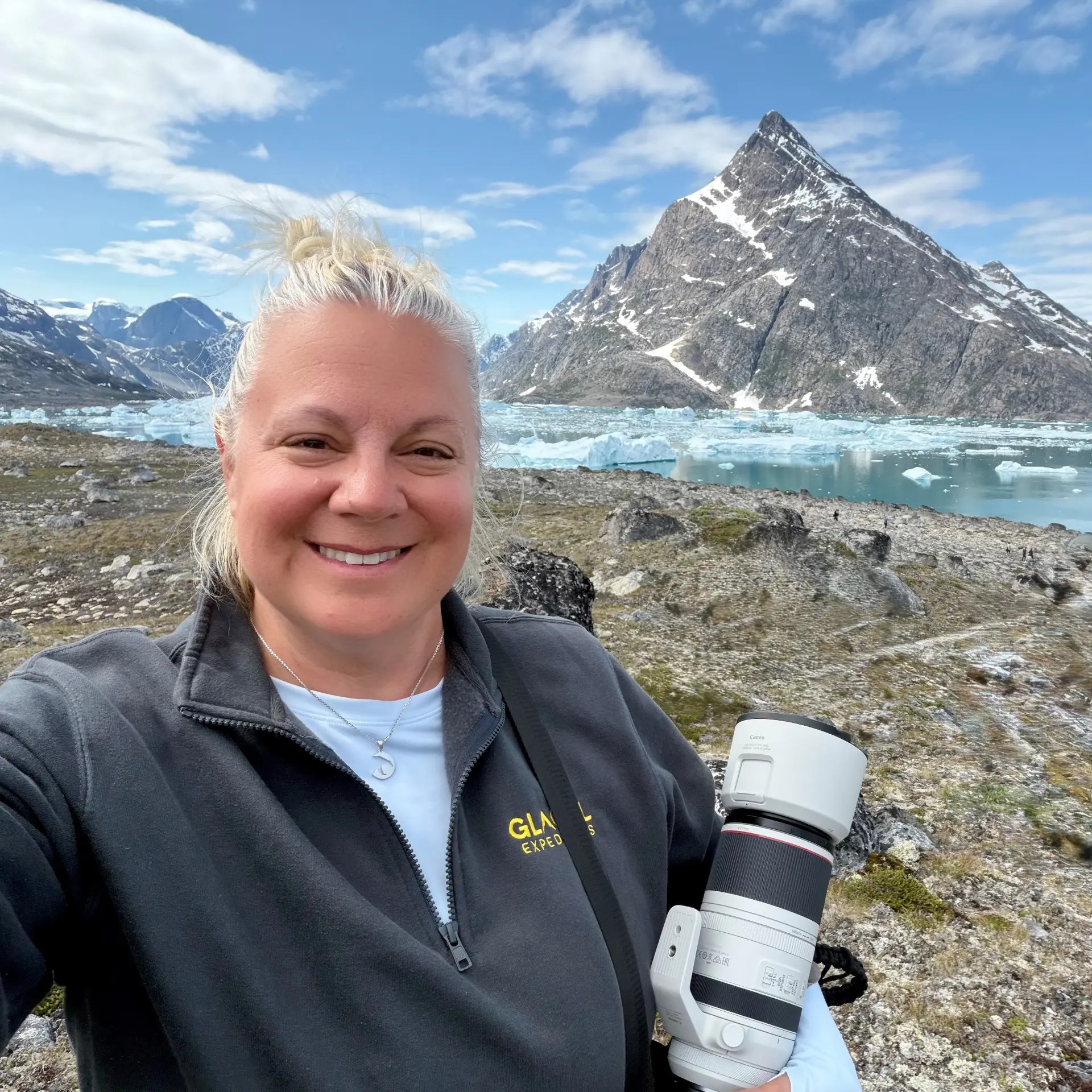
Erika Commisso · Travel Experience Architect
CLIA Elite Cruise Counselor · ASTA Verified Travel Advisor · Signature Travel Expert
Chris and Erika have sailed ten expedition voyages and toured seven more expedition ships. Favorite explorations so far: Antarctica, Svalbard, Greenland, Iceland, Norway, Alaska, the Galápagos, the Scottish Hebrides, Churchill and French Polynesia.
Last updated . Reviewed for the 2026-27 Amazon season.
You pay the same as booking direct. Here’s how we’re paid.
At a glance
- Where
- The Peruvian Amazon, in the Loreto region, centred on the Pacaya-Samiria National Reserve
- Season
- Year-round. High water runs roughly December to May; low water roughly June to November
- Typical trip length
- 3, 4 or 7 nights aboard, often extended to 10 days with Machu Picchu
- Ships
- 8 to 42 guests. These are riverboats, not ocean vessels
- Gateway
- Iquitos, the largest city in the world with no road connection, reached by air from Lima. Ships board at Nauta
- Pacaya-Samiria
- Around two million hectares of seasonally flooded forest, the largest protected flooded forest in the Amazon basin
- Birthplace of the Amazon
- The confluence of the Marañón and Ucayali rivers, near Nauta
- Wildlife
- Pink and grey river dolphins, sloths, monk saki and squirrel monkeys, macaws, hoatzin, caiman, piranha
- Excursions
- By skiff and kayak, twice daily, plus night outings
- Physical demand
- Low. Skiff transfers and optional jungle walks. Heat and humidity are the real factor
What Is the Difference Between High Water and Low Water on the Amazon?
The Amazon rises and falls dramatically each year, and the two states are almost different destinations. In high water, roughly December to May, the forest floods and skiffs navigate among the canopy, reaching creeks and lakes that do not exist in other months. In low water, roughly June to November, beaches emerge, jungle walking becomes possible and wildlife concentrates along shrinking waterways.

This is the concept that makes the rest of the page make sense, and it is the first question we ask a client. Neither season is better than the other — they suit different travelers, and the honest job of an advisor here is to work out which one you are.
High water is the classic Amazon image: gliding silently between treetops, giant lily pads on black water, birds at eye level because you are floating twenty feet above the forest floor. It gives the widest navigable area of the year and the best skiff and kayak exploration, since channels that are dry ground in other months become routes.
Low water exposes riverbanks and beaches, opens up jungle walking on solid ground, and concentrates wildlife along narrower channels, which many guides consider the better viewing. Fishing is better, and photographers often prefer it because animals are pressed closer to the water. The trade is that some creeks become unnavigable and the ship works a smaller area.
The practical implication is simple. If the flooded-forest image is what drew you to the Amazon, sail in high water. If you want to walk in the rainforest and maximise wildlife density, sail in low water. Some operators run different itineraries in each season for exactly this reason, so the season and the routing are one decision rather than two. More on this in our guide to high water versus low water.
Which Amazon Cruise Operator Should You Choose?
Aqua Expeditions runs the design-led Aria Amazon and Aqua Nera, all-inclusive with suites, satellite internet and 3, 4 or 7-night itineraries. Delfin Amazon Cruises is the Peruvian family-owned operator behind Delfin I, II and III, all Relais and Châteaux. Lindblad-National Geographic charters Delfin II and III, adding certified photo instructors, naturalists and a Machu Picchu extension.
| Aqua Expeditions | Delfin Amazon Cruises | Lindblad-National Geographic | |
|---|---|---|---|
| Ships | Aria Amazon and Aqua Nera | Delfin I, Delfin II, Delfin III | Delfin II and Delfin III under charter |
| Guests | Around 32 to 40 | 8 to 12 on Delfin I; 28 on Delfin II; 42 on Delfin III | The same vessels, so 28 or 42 |
| Ownership | Singapore-based operator, purpose-built vessels | Peruvian family-owned | US operator chartering Peruvian ships |
| Character | Contemporary design, architect-designed suites | Relais and Châteaux, deeply local craftsmanship and cuisine | Naturalist-led expedition programme layered onto the Delfin ships |
| Distinctive strength | Design, cuisine and all-inclusive polish | Delfin III was the first ship in the world to join Relais and Châteaux; Delfin I is a private-charter scale vessel | Certified photo instructors, daily recaps, and a strong Machu Picchu combination |
| Itinerary lengths | 3, 4 or 7 nights | Varies by vessel, including longer Pacaya-Samiria programmes | 6-day Upper Amazon, or 10-day paired with Machu Picchu and Cusco |
| Kayaks | Available | Delfin II and III carry their own kayak fleets | The same kayak fleets |
| Best suited to | Travelers who want design and comfort front and centre | Travelers who want the most Peruvian product, or a small private charter | Travelers who want interpretation, photography and a wider Peru itinerary |

The charter relationship confuses almost everyone, so it is worth setting out plainly. The Delfin ships are Peruvian-owned and Peruvian-built. Delfin Amazon Cruises operates its own programmes on them, and separately charters Delfin II — which Lindblad has run since 2010 — and now Delfin III to Lindblad-National Geographic. The hardware is identical; what changes is the expedition programme, the guiding, the cabin category names and the price.
Which one to book depends on what you value. Book direct with Delfin for the most Peruvian version of the trip and often better value. Book the Lindblad charter if you want the naturalist and photography programme and the seamless Machu Picchu pairing. Book Aqua if you want the newest design-led vessels and a slightly more resort-like polish.
Delfin I is worth noting separately. It carries only eight to twelve guests across four suites, two of them with private plunge pools, and functions best as a family or small-group charter. It is the most exclusive way to see this river, and it books like a villa rather than a cabin. Ship by ship detail is in our guide to Amazon riverboats.
What Is the Pacaya-Samiria National Reserve?
Pacaya-Samiria is a Peruvian reserve of roughly two million hectares, the largest protected area of seasonally flooded forest in the Amazon basin. It sits between the Marañón and Ucayali rivers upstream of their confluence, and it is where essentially every Peruvian Amazon cruise spends its time. The entrance fee is normally included in the cruise fare.
The reserve is the reason the Peruvian Amazon is the cruising heartland rather than Brazil or Ecuador. It is protected, it sits close to the river's headwaters so the water is cleaner and clearer than downstream, and it is genuinely uninhabited apart from a small number of permitted communities. Locals call it the mirrored forest, because in high water the still black water reflects the canopy so completely that the horizon disappears.
There is a geographic point travelers tend to enjoy. The Amazon proper begins near Nauta, where the Marañón and Ucayali meet, and most itineraries visit the confluence, so you can stand at the river's official beginning. Tributaries such as the Yanayacu-Pucate and the Samiria carry ships and skiffs well inside the reserve, and Nauta Caño is a common first afternoon's exploring. More in our guide to Pacaya-Samiria.
What Wildlife Will You See on an Amazon Cruise?
Pink and grey river dolphins are near-certain and often surface beside the skiff. Sloths, monk saki and squirrel monkeys, macaws, toucans, hoatzin and caiman are common. Piranha fishing is standard on most itineraries. This is a birding destination above all, with several hundred species possible. Jaguars and giant otters exist but sightings are rare and never promised.

Pink river dolphins
The boto, unique to Amazon river systems and genuinely pink in adulthood. Seen most days, often within metres of the skiff.

Monkeys
Monk saki, squirrel, capuchin and howler monkeys are all regular. Howlers are heard far more often than seen, and the sound carries for miles.

Sloths
Three-toed sloths in the canopy, spotted by guides with an eye trained for a shape most guests walk past.

Birds
The headline draw for many guests. Macaws, toucans, hoatzin, horned screamers, kingfishers, herons and hundreds more. Bring binoculars.

Caiman
Spotted on night skiff outings by eyeshine, from small caiman to occasional large black caiman.

Fish and lilies
Piranha fishing is a standard activity, and giant Victoria amazonica lily pads grow large enough to bear a small child's weight.
Set your expectations carefully, because Amazon wildlife works differently from Africa or the Galápagos. The rainforest is dense and animals are dispersed and often high in the canopy, so this is a destination of many species seen briefly rather than large mammals seen at length.
Guides matter enormously here. The difference between a good and a poor naturalist is the difference between a river with sloths in it and a river where you saw sloths — the animals are there either way, and someone has to find them. It is one of the strongest arguments for paying attention to the operator rather than only the ship.
Jaguar and giant otter sightings do happen, and they are genuinely rare. Any operator implying otherwise is overselling. What you can count on is dolphins, several monkey species, sloths, caiman after dark and a great many birds. Our Amazon wildlife guide and the birding guide go further.
What Is a Day on an Amazon Cruise Like?
Two skiff excursions daily, timed around the heat and the wildlife: an early morning start soon after dawn, and a late afternoon outing that often runs into a night cruise looking for caiman. Midday is for lectures, lunch and rest as the heat peaks. Kayaking, jungle walks, piranha fishing and village visits fill out the programme.

The rhythm is dictated by heat and by animal activity, both of which peak early and late. Expect a 5.30 or 6 a.m. start for the best birding, a substantial break through the middle of the day, and a second outing from around 4 p.m. Night skiff cruises are a highlight, and something the polar regions have no equivalent of — the forest is a completely different place after dark.
Skiffs carry around ten guests with a naturalist, and ships typically run several so groups stay small. Delfin II and Delfin III carry their own kayak fleets, which is unusual on this river and a real advantage if you want to move under your own power for an hour.
Village visits with ribereños, the river communities of the Peruvian Amazon, are part of most itineraries. Approached properly these are genuine exchanges rather than performances, and the better operators have long-standing relationships with specific communities rather than dropping in wherever the ship happens to moor.
Practical notes: it is hot and humid year round, insect repellent matters, and the ships are air-conditioned throughout, which makes the middle of the day genuinely comfortable. What to bring is covered in our Amazon packing list.
Should You Combine the Amazon with Machu Picchu?
Most travelers should. You are already flying to Lima, and the Amazon leg is short at three to seven nights, so adding Cusco, the Sacred Valley and Machu Picchu turns a river cruise into a complete Peru itinerary. Lindblad sells this as a single ten-day package; other operators pair with land arrangements. Allow time to acclimatise to Cusco's altitude.

The case is much like Patagonia and Antarctica. The long-haul flight is the expensive and tiring part, and most travelers make this trip once. A three or four-night Amazon cruise on its own is a short use of that airfare.
There is a sequencing point worth stating. Cusco sits at high altitude and the Amazon at near sea level, so most itineraries do the river first and the highlands second, or build in acclimatisation days. Going straight from a flight to Cusco is where people get altitude sick, and we sequence around that as a matter of routine.
This pairing works particularly well for travelers who found the Galápagos appealing. Both are South American wildlife-and-culture trips, and some clients do the Galápagos and the Amazon on a single trip through Lima and Quito. Our guide to Peru combinations sets out the routings, and Patagonia is the third South American destination we plan most often.
When Is the Best Time to Cruise the Amazon?
There is no closed season. The choice is between high water, roughly December to May, when the flooded forest opens up for skiff and kayak navigation, and low water, roughly June to November, when beaches emerge, jungle walking is possible and wildlife concentrates. Temperature and humidity stay high year round. Rain falls in every month.
December-February
Rising water
The forest begins to flood and waterways open up. Greenest conditions and fewest other boats. Rain is frequent but usually brief.
March-May
Peak high water
The classic flooded-forest experience, navigating among the canopy by skiff and kayak. Widest navigable area of the year. Giant lily pads at their best.
June-August
Falling water
Beaches and riverbanks emerge, jungle walking becomes possible, and wildlife starts to concentrate. A good balance, and the most popular window.
September-November
Peak low water
Maximum exposed beach, the best jungle walking and fishing, and wildlife concentrated along narrow channels. Some creeks become unnavigable.
The honest framing is that this is a preference, not a quality difference, and anyone who tells you one season is simply better is guessing at what you want.
Rain falls year round and should not drive the decision. This is a rainforest; a downpour is usually short, often welcome, and part of the experience. Heat and humidity are constant rather than seasonal, so there is no cooler month to aim for. Month by month detail is in our guide to when to cruise the Amazon.
How Much Does an Amazon Cruise Cost?
Most travelers spend $4,000 to $9,000 per person for a three or four-night Peruvian Amazon cruise, and $7,000 to $15,000 for seven nights, generally all-inclusive of excursions, meals and reserve fees. Lindblad's ten-day Amazon and Machu Picchu package sits at the upper end. Add international flights to Lima and the domestic connection to Iquitos.
| Factor | What it means | Typical impact |
|---|---|---|
| Length aboard | 3 or 4 nights versus 7 nights | Roughly proportional, and the longer trips reach further into the reserve |
| Operator and brand | Delfin direct, Aqua Expeditions, or the Lindblad charter | The same ship costs differently under charter than under its owner |
| Suite category | Standard suite versus a top-deck or plunge-pool suite | Significant within one vessel |
| Ship | The 8-guest Delfin I versus the 42-guest Delfin III | Smaller is generally dearer per night, not cheaper |
| Adding Machu Picchu | Cusco, the Sacred Valley and Machu Picchu either side | Adds several thousand per person, and is usually worth it |
| Getting there | International flights to Lima plus the Lima-Iquitos domestic leg | Domestic flights are often bundled by the operator, so check |
| What is included | Most Peruvian Amazon fares include all excursions, meals, the reserve fee and often drinks and laundry | Changes the real comparison more than the headline fare |
Ranges are 2026-27 planning estimates and move with operator, season and suite. We quote live fares on specific departures.
The Amazon is one of the better-value expedition products we sell on a per-night basis, particularly given how genuinely inclusive the Peruvian operators are — reserve entrance, all excursions, and frequently drinks and laundry are in the fare.
The item to check is whether the Lima to Iquitos flights are bundled, since operators differ and it changes the comparison materially. Our planning costs nothing extra; pricing matches booking direct, with Signature amenities added where available. Full detail is in our guide to what an Amazon cruise costs.
Flooded forest or exposed beaches? Two different rivers.
Tell us which Amazon you are picturing and we will point you at the right months and the right ship.
Where Else Can You Cruise the Amazon?
Peru dominates luxury small-ship cruising because Pacaya-Samiria is protected, accessible and close to clean headwaters. Brazil offers larger-scale river journeys around Manaus and the Rio Negro, generally on bigger or more basic vessels. Ecuador offers a small number of riverboats on the Napo. For most travelers seeking a luxury Amazon cruise, Peru is the answer.
The Peruvian Amazon
The Loreto region around Iquitos and Nauta, centred on Pacaya-Samiria. Where the purpose-built luxury riverboats operate, and the closest of the three to the river's Andean source.
Known for
Pacaya-Samiria, pink dolphins, luxury riverboats
The Brazilian Amazon
The vastly larger downstream basin around Manaus, the Rio Negro and the Meeting of the Waters. Bigger river, bigger vessels, and a different scale of trip.
Known for
Manaus, Rio Negro, scale
The Ecuadorian Amazon
The Napo River in Ecuador's Oriente, with a small number of riverboats and a strong tradition of jungle lodges. Pairs naturally with the Galápagos.
Known for
Napo River, lodges, Galápagos pairing
We are straightforward about why we recommend Peru for cruising. It is not that Brazil and Ecuador lack Amazon — Brazil holds most of it — but that the combination of a protected two-million-hectare reserve, clear headwater tributaries and a mature fleet of small luxury riverboats exists in Peru and not really elsewhere.
Travelers whose priority is the scale of the lower Amazon, or who would rather stay in a lodge than on a boat, are better served in Brazil or Ecuador, and we will say so rather than sell you the wrong river.
Is an Amazon Cruise Right for You?
The Amazon suits travelers interested in birds, biodiversity and river culture, who are comfortable in heat and humidity and happy with wildlife seen briefly and at distance. It suits you less if you want large mammals in the open, need cool weather, are troubled by insects, or expect the guaranteed close encounters of the Galápagos.
A good fit if you are
- A birder, or interested in biodiversity for its own sake
- Comfortable in constant heat and humidity, and untroubled by insects
- Happy with a short cruise as part of a wider Peru itinerary
- Interested in river communities and in a working, inhabited landscape
- Looking for a genuinely comfortable expedition — these ships are air-conditioned and well appointed
Probably not if you
- Want large mammals seen at length; the rainforest does not work that way
- Struggle with heat, humidity or insects
- Expect Galápagos-style close encounters with unafraid animals
- Want a long voyage; most Amazon cruises are three to seven nights
- Are unwilling to add a land component to justify the flights
The honest mismatch is a traveler expecting the Galápagos. Both are South American wildlife trips and clients often consider them together, but Galápagos animals are indifferent to people and visible at arm's length, while Amazon wildlife is dispersed, camouflaged and frequently high in a canopy.
Put simply, the Amazon rewards patience and good guiding; the Galápagos rewards simply showing up. Both are worth doing, and a fair number of our clients eventually do both.
How Far in Advance Should You Book an Amazon Cruise?
Book 6 to 12 months ahead for peak high water in March to May and for the popular June to August window, and longer for top-deck suites, which are few on ships this size. Delfin I is effectively a private charter and should be booked 12 months out. Amazon and Machu Picchu combinations need more lead time because the land arrangements are the constraint.
The ships are small, so a handful of bookings fills a departure. A 28-guest vessel has fourteen suites, and the best two or three go first — on this river the suite you want is a scarcer commodity than the sailing date.
The land side is usually the real constraint on a combined Peru trip. Machu Picchu entry is capped and timed, and the better Sacred Valley hotels book well ahead in the June to August window. Sequencing the river, the altitude and the citadel together is exactly the kind of thing we handle.
Why Book the Amazon Through Glacial Expeditions?
Glacial Expeditions is an independent Wisconsin-based agency, an affiliate of Oasis Travel Network and a member of Signature Travel Network, serving travelers nationwide. Chris and Erika Commisso have sailed on ten ships and toured seven more and work with Aqua Expeditions, Delfin and Lindblad across their global programmes. Our planning costs you nothing extra — pricing matches booking direct, with Signature amenities added where available.
Independent Wisconsin-based agency · Affiliate of Oasis Travel Network · Member of Signature Travel Network · Ten ships sailed, seven toured · No planning fees
Written by your expedition advisors
Chris Commisso · Expedition Expert
Signature Travel Expert
Erika Commisso · Travel Experience Architect
CLIA Elite Cruise Counselor · ASTA Verified Travel Advisor · Signature Travel Expert
Chris and Erika have sailed ten expedition voyages and toured seven more expedition ships. Favorite explorations so far: Antarctica, Svalbard, Greenland, Iceland, Norway, Alaska, the Galápagos, the Scottish Hebrides, Churchill and French Polynesia.
Last updated . Reviewed for the 2026-27 Amazon season.
One specific thing we can do that is hard to do alone: compare the same Delfin vessels across their owner-operated and Lindblad-chartered programmes. The ship is the same; the programme, the inclusions and the price are not, and putting those side by side is not a comparison most travelers can make from a brochure.
More about how we work on about and what clients say on reviews. We book the ships listed on expedition cruise lines, the vessels we know personally are on ships we've sailed, and the activities on experiences. The other South American trips we plan most often are the Galápagos, Patagonia and Antarctica; travelers who want tropical water rather than river water look at Raja Ampat. When you are ready, get in touch.
Amazon Cruise FAQs
Is high water or low water better on the Amazon?
Neither. High water, roughly December to May, floods the forest so skiffs navigate among the canopy. Low water, roughly June to November, exposes beaches, allows jungle walking and concentrates wildlife along narrower channels. Choose based on whether you want the flooded-forest experience or the best terrestrial access.
Does Lindblad own its Amazon ships?
No. Lindblad-National Geographic charters Delfin II, which it has run since 2010, and Delfin III from Delfin Amazon Cruises, a Peruvian family-owned company. The vessels are identical under either brand; what differs is the expedition programme, the guiding, the itinerary lengths and the price.
How long is an Amazon cruise?
Most are three, four or seven nights aboard. Lindblad's Upper Amazon expedition runs six days, and its Machu Picchu combination ten. Because the cruise itself is short, most travelers pair it with Cusco and Machu Picchu to justify the flights to Peru.
Will I see jaguars or giant otters?
Rarely. Both live in the region and sightings happen, but they are genuinely uncommon and no operator should promise them. What you will reliably see is pink river dolphins, several monkey species, sloths, caiman and a great many birds.
Are there mosquitoes?
Yes, though fewer than most people expect on the blackwater tributaries, which are more acidic and support fewer mosquitoes than whitewater rivers. Repellent, long sleeves at dawn and dusk, and a conversation with a travel clinic about yellow fever and malaria prophylaxis well before departure are all sensible.
How hot is the Amazon?
Consistently hot and humid year round, typically in the 80s and low 90s Fahrenheit with high humidity. There is no cool season. Ships are fully air-conditioned and excursions are timed early and late to avoid the worst of the midday heat.
Can you swim in the Amazon?
Yes, where guides say it is safe, and most itineraries include swimming from the skiffs or the ship. Piranhas are not the danger their reputation suggests. Guides choose locations carefully and the swimming is a genuine highlight for many guests.
How do you get to the Peruvian Amazon?
Fly to Lima, then take a domestic flight to Iquitos, the largest city in the world with no road connection. From Iquitos it is a road transfer to the river port at Nauta, where most ships board. Some operators bundle the domestic flights into the fare.
Should I do the Amazon or the Galápagos?
They are different trips. The Galápagos offers close, reliable encounters with animals that have no fear of people. The Amazon offers far greater biodiversity but wildlife that is dispersed, camouflaged and often high in the canopy. Birders usually prefer the Amazon; first-timers often prefer the Galápagos.
Is an Amazon cruise suitable for children?
Generally yes, and several operators welcome families, though Lindblad's Delfin voyages set a minimum age of seven. Delfin I, carrying eight to twelve guests, works particularly well as a family charter. The heat and the early starts are the main considerations for younger children.
Amazon Planning Guides
High water versus low water
The flood cycle, month by month, and which version of the river suits you.
Aqua, Delfin and the Lindblad charters
Ship by ship, including which vessels sail under two different brands.
The Pacaya-Samiria National Reserve
Two million hectares of flooded forest and what a week inside it looks like.
Amazon wildlife guide
Dolphins, monkeys, sloths and caiman, and what is realistic to expect.
Birding the Peruvian Amazon
Why this is a birding destination first, and what to bring for it.
When to cruise the Amazon
Season by season, with rain, heat and water levels in plain terms.
What an Amazon cruise costs
Fare ranges, what is genuinely included, and the flights to watch.
Amazon, Cusco and Machu Picchu
How to sequence the river and the highlands without altitude trouble.
Iquitos and Nauta
The gateway city with no road in, and the port where ships board.
The Amazon with children
Minimum ages, charter options and how the heat affects younger travelers.
Amazon versus Galápagos
Two South American wildlife trips that work in completely different ways.
Amazon packing list
Repellent, binoculars, quick-dry layers and what the ships already provide.
New to this style of travel? Start with What is an expedition cruise? For this region in particular, see warm-weather expedition cruising.