


The core difference
- Amazon viewing
- Spotting through foliage, usually with binoculars
- Galápagos viewing
- Animals at close range, unbothered, on foot
- Amazon water
- Flat river; motion sickness effectively absent
- Galápagos water
- Open ocean swell between islands
- Amazon lengths
- 3, 4 or 7 nights
- Galápagos lengths
- Usually 4 to 10 nights
How Much of This Comparison Is Firsthand?
Half of it, precisely. We have sailed the Galápagos twice — Evolution with Quasar in November 2023 and Santa Cruz II with HX in January 2026 — so that side is written from our own days ashore. We have not been to the Amazon; we sail in 2028, and that side comes from research, client debriefs and a colleague's group voyage.
Both Galápagos voyages are written up in full: aboard Evolution and aboard Santa Cruz II, with the ship pages at Evolution and Santa Cruz II.
The asymmetry is useful rather than awkward. We can tell you exactly what a Galápagos landing feels like, and we can tell you exactly what our clients report about the Amazon — and we will not blur which is which.
How Different Is the Wildlife Viewing?
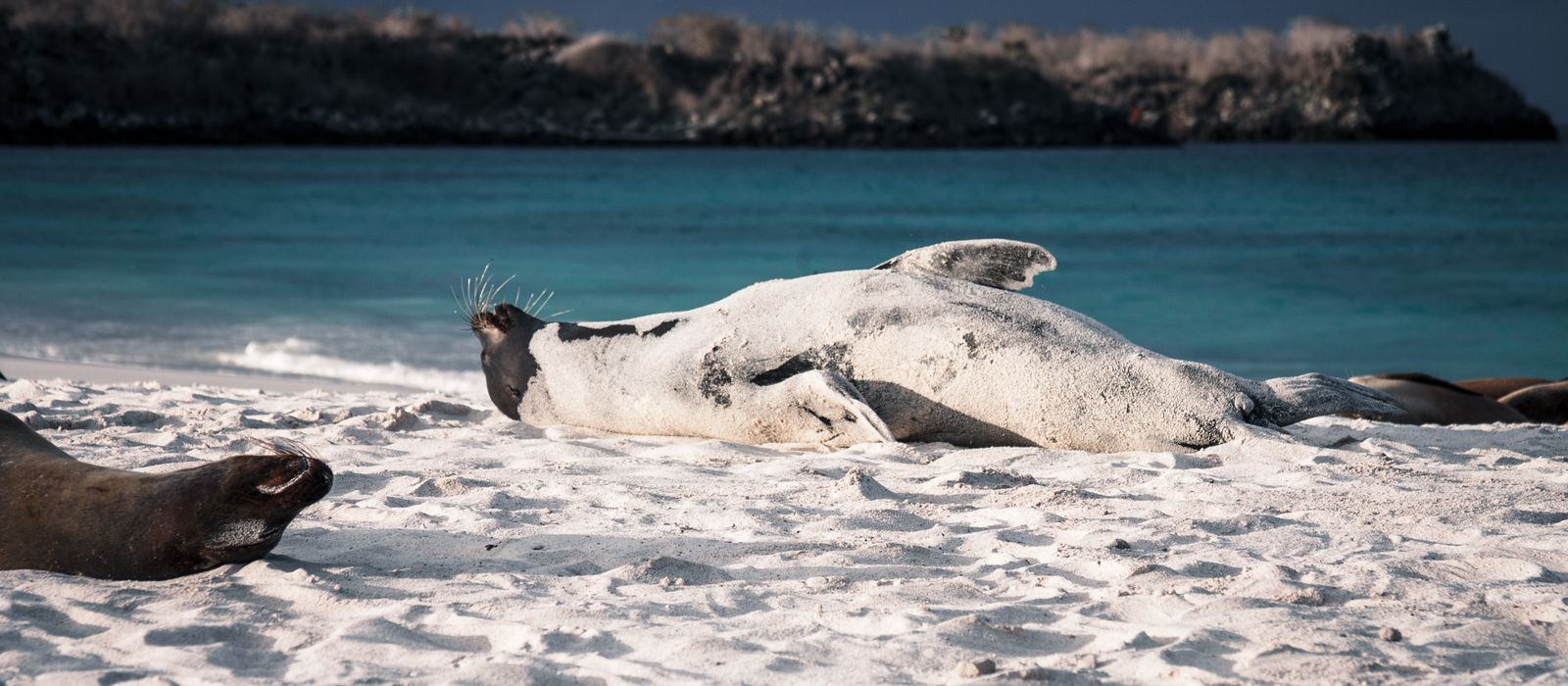
Completely. In the Galápagos, animals have no learned fear of people: sea lions sleep on the landing beach and boobies nest beside the trail. In the Amazon, biodiversity is far higher but animals are concealed in dense canopy, so the experience is one of searching, spotting and using optics.

| Factor | Peruvian Amazon | Galápagos Islands |
|---|---|---|
| Environment | Dense flooded rainforest and blackwater channels | Arid volcanic islands in open ocean |
| Wildlife viewing | Concealed in canopy; binoculars from a skiff | Close range, on foot, animals unbothered |
| Signature activities | Skiff cruising, jungle walks, kayaking, village visits | Landings, lava walks, snorkelling with sea lions and turtles |
| Water conditions | Flat river; seasickness effectively absent | Ocean swell between islands on some crossings |
| Climate | Hot and humid year-round, rain in every month | Dry and warm; cooler garúa season mid-year |
| Cultural element | Ribereño and Kukama river community visits | National park islands, largely uninhabited |
| Typical length | 3, 4 or 7 nights | 4 to 10 nights, often with mainland Ecuador |
Written from our own two Galápagos voyages on one side and from research and client reports on the other.
This is the single decision on this page. A traveller who wants photographs of animals at close range will find the Galápagos easier and the Amazon frustrating. A traveller who enjoys the hunt — a guide pointing into leaves, a shape resolving into a sloth — often finds the Galápagos almost too easy.
Our own Galápagos notes bear that out: the difficulty was never finding animals, it was remembering to look up from them.
What Do You Actually Do Each Day?
Both run two outings a day. In the Galápagos those are dry or wet landings, guided walks on lava and snorkelling from the beach or a panga. In the Amazon they are covered skiff cruises, forest walks when the water is low, kayaking and village visits, with an early start for the light.

Snorkelling is the Galápagos's other advantage and it is substantial — swimming with sea lions and turtles is not something the Amazon can offer in any form.
The Amazon offers piranha fishing and night caiman spotlighting on most vessels. Both are optional, one uses bait and the other uses a spotlight, and we set out plainly what each involves on Amazon wildlife and how we think about wildlife encounters.
Which Is More Comfortable to Travel?
The Amazon, in one specific respect: the river is flat, so seasickness is essentially a non-issue. Against that, it is hot and humid all year with insects to manage. The Galápagos brings ocean swell between islands but a dry climate and a far easier walking environment.
If motion sickness is the deciding factor, the river wins outright. If heat is the deciding factor, the islands do.
Packing is opposite too: see Amazon packing against the reef-safe, sun-first Galápagos kit.
How Do the Costs Compare?
They overlap heavily. Both are small-ship, all-inclusive products at broadly similar nightly rates, so total cost is driven mostly by length: Amazon sailings of three or four nights come in lower than a week in the islands simply because there are fewer nights.
Amazon fares by vessel class are on cost. Add the Lima–Iquitos flights on one side and the mainland Ecuador flights and national park fees on the other.
So Which Should You Book First?
If it is a first expedition-style trip, or there are children along, the Galápagos is the more reliable introduction — the wildlife delivers without any effort from you. Choose the Amazon first if the appeal is rainforest itself, if seasickness worries you, or if you already have the islands behind you.
We are also comfortable saying: do both, on separate trips. They are different enough that neither replaces the other, and returning to South America for the second one is no hardship.
If you are weighing families specifically, the Amazon with children covers the ages and ships side.
Amazon and Galápagos questions
Is the Amazon or the Galápagos better for wildlife?
The Amazon has far greater biodiversity; the Galápagos gives far better encounters. Amazon wildlife is concealed in canopy and found with binoculars, while Galápagos animals show no fear of people and are seen at close range on foot.
Which is better for a first expedition trip?
The Galápagos, for most travellers. The wildlife requires nothing of you, the walking is easy, snorkelling is exceptional, and the daily rhythm is a gentle introduction to small-ship expedition travel.
Will you get seasick on an Amazon cruise?
Very unlikely. Amazon riverboats sail flat water with no swell, which is one clear advantage over Galápagos itineraries that include open-ocean crossings between islands.
Can you combine the Amazon and the Galápagos in one trip?
It is possible but rarely advisable — they sit in different countries with separate flight networks and opposite climates. We usually suggest two trips, and pairing the Amazon with Machu Picchu instead.
Which costs more, the Amazon or the Galápagos?
Nightly rates are broadly comparable in the small-ship luxury class, so total cost follows length. A three or four-night Amazon sailing usually totals less than a week in the islands.