Where the animals have no idea they're supposed to be afraid of you
I've traveled to some pretty remarkable places, but there are certain destinations where you find yourself repeatedly saying, “Wait… is that really happening?”
The Galápagos Islands was one of those places.
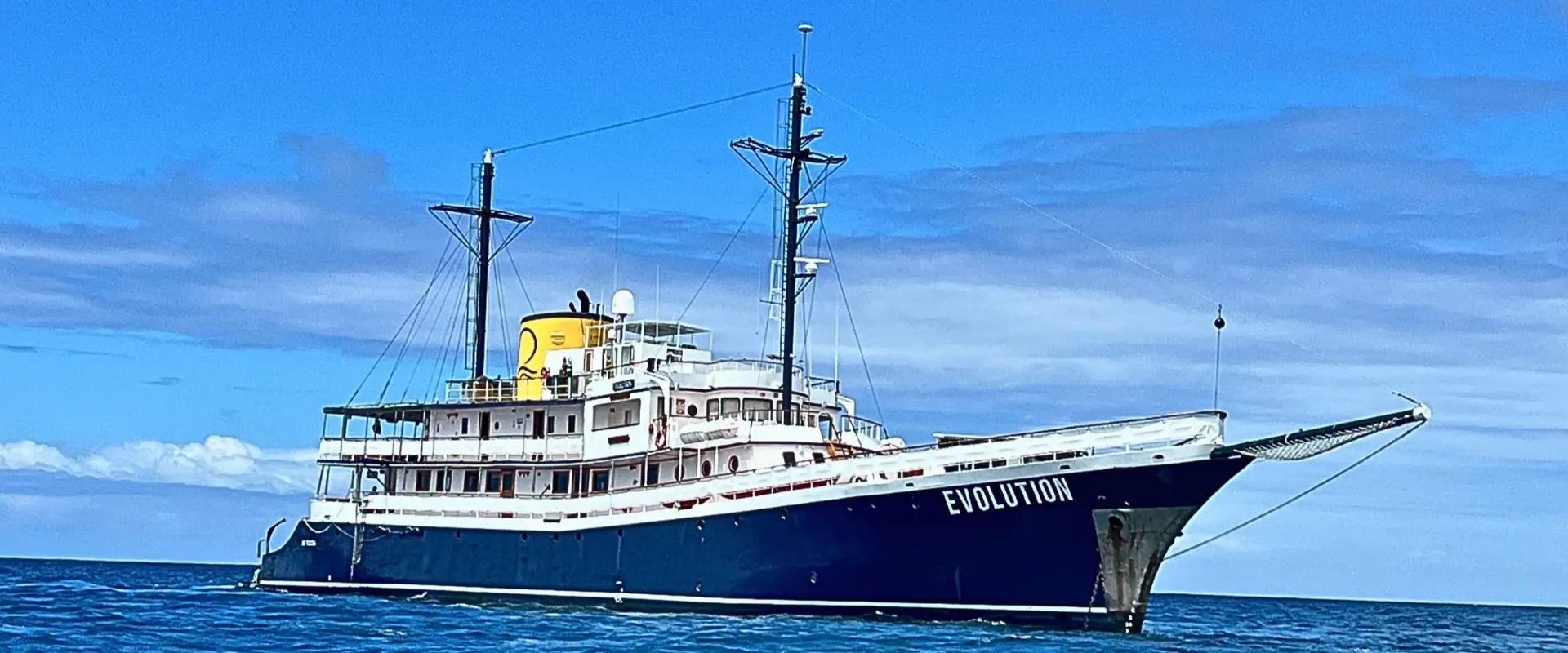
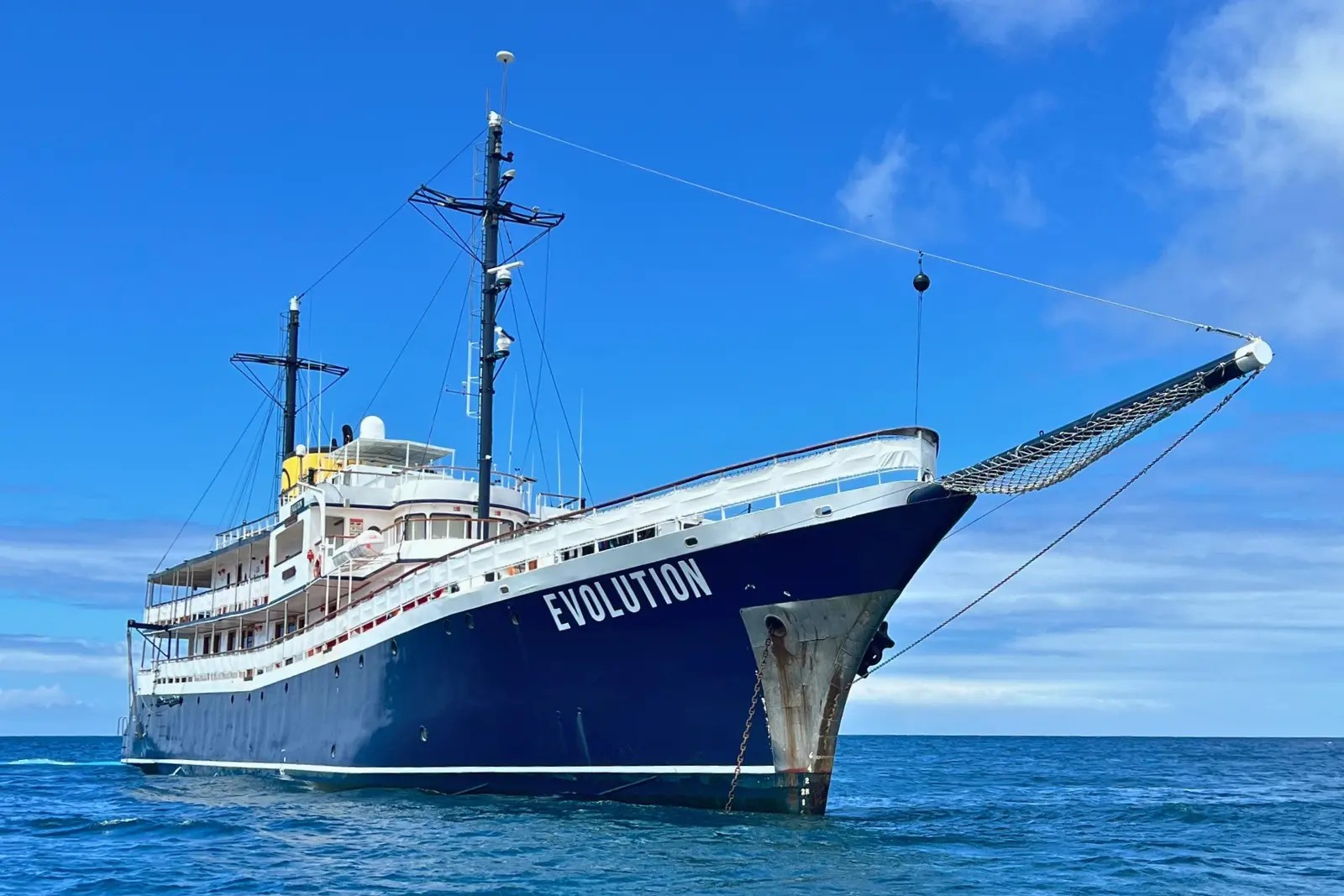
We spent late November 2023 exploring the islands aboard Quasar Expeditions’ Evolution, and what struck me almost immediately was how different this trip felt from other expedition experiences. The wildlife wasn't simply something we were hoping to spot in the distance. It was everywhere—on the beaches, beside the trails, swimming around our Zodiacs, and sometimes seemingly just hanging out on the rocks watching us go by.
And that’s really the magic of the Galápagos.
The animals don't seem particularly impressed by humans.
And I mean that in the best possible way.
Getting to the Galápagos
Our trip started with a flight to Chicago on November 23, followed by flights to Ecuador the next day.
We flew Copa Airlines, connecting through Panama, and the connection actually gave us an unexpected little preview of what was ahead. From the plane, we had a great view of the beginning of the Panama Canal and all of the ships waiting their turn to enter.
We arrived in Quito and had about a 40-minute ride to our hotel. After a long day of travel, we were happy to settle in—and even happier when we discovered locro de papa, a creamy Ecuadorian potato soup.
It was our first taste of Ecuadorian food, and as it turned out, it wouldn't be our last bowl.
The next morning we headed back to the airport for our flight to San Cristóbal Island.
One thing I appreciated right away was how organized the arrival process was. There are several steps involved in entering the Galápagos National Park area, including luggage inspection, immigration, the Transit Control Card, fingerprint control and park fees.
It sounds like a lot when you list it all out, but we were prepared for it, and the process went smoothly.
Two more rules matter once you are inside the park. Every visitor site requires a licensed naturalist guide, and visitors stay at least two metres from the wildlife. Neither is optional, and both are the reason the rest of this account is possible.
And then we walked outside.
That's when the Galápagos started.
Our First Five Minutes in the Galápagos
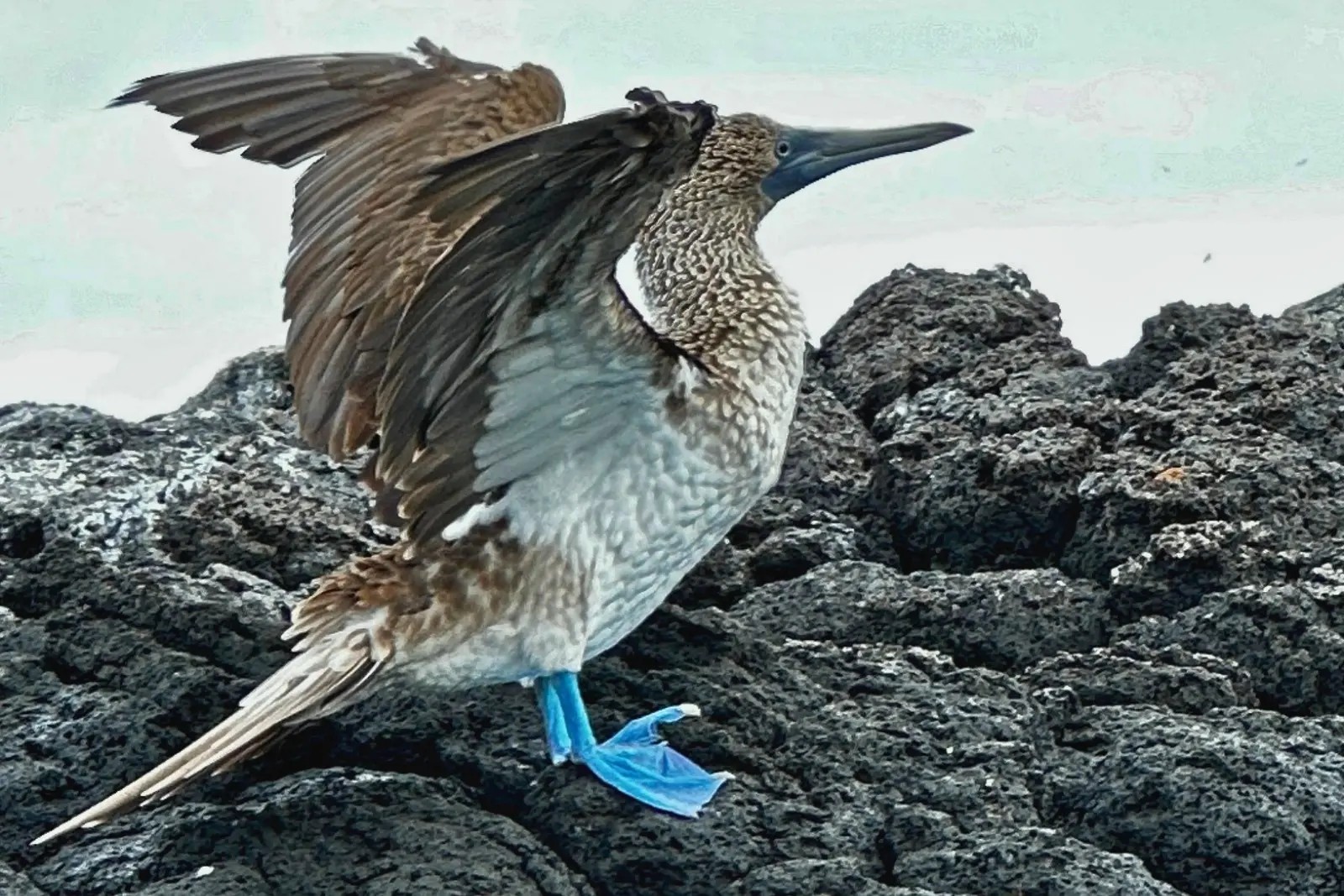
Before we even boarded the boat to the Evolution, we'd already seen marine iguanas, blue-footed boobies and Galápagos sea lions.
This is one of the things I don't think you can completely appreciate until you're actually there.
You don't arrive at a wildlife park and start looking for the animals.
You arrive in the Galápagos, and the animals are already there.
We loaded our luggage onto pangas and made our way out to the Evolution, our home for the week.
After check-in, introductions and a safety briefing, we were off on our first beach landing.
Not a bad way to start.
We saw Galápagos sea lions rolling around in the sand, brilliant red Sally Lightfoot crabs, a Galápagos yellow warbler, marine iguanas, blue-footed boobies and oystercatchers.
And then, as if the islands needed one more dramatic touch, we got an incredible sunset.
Day one was already going to be hard to beat.
The Galápagos Doesn't Really Do "Slow Days"
The next morning started with a frigate landing on top of the ship.
We decided to take that as a good omen.
It was.
Our first excursion was a hike around South Plaza Island, where we encountered huge land iguanas, sea lions, nesting and mating oystercatchers, and seabirds flying in seemingly every direction.
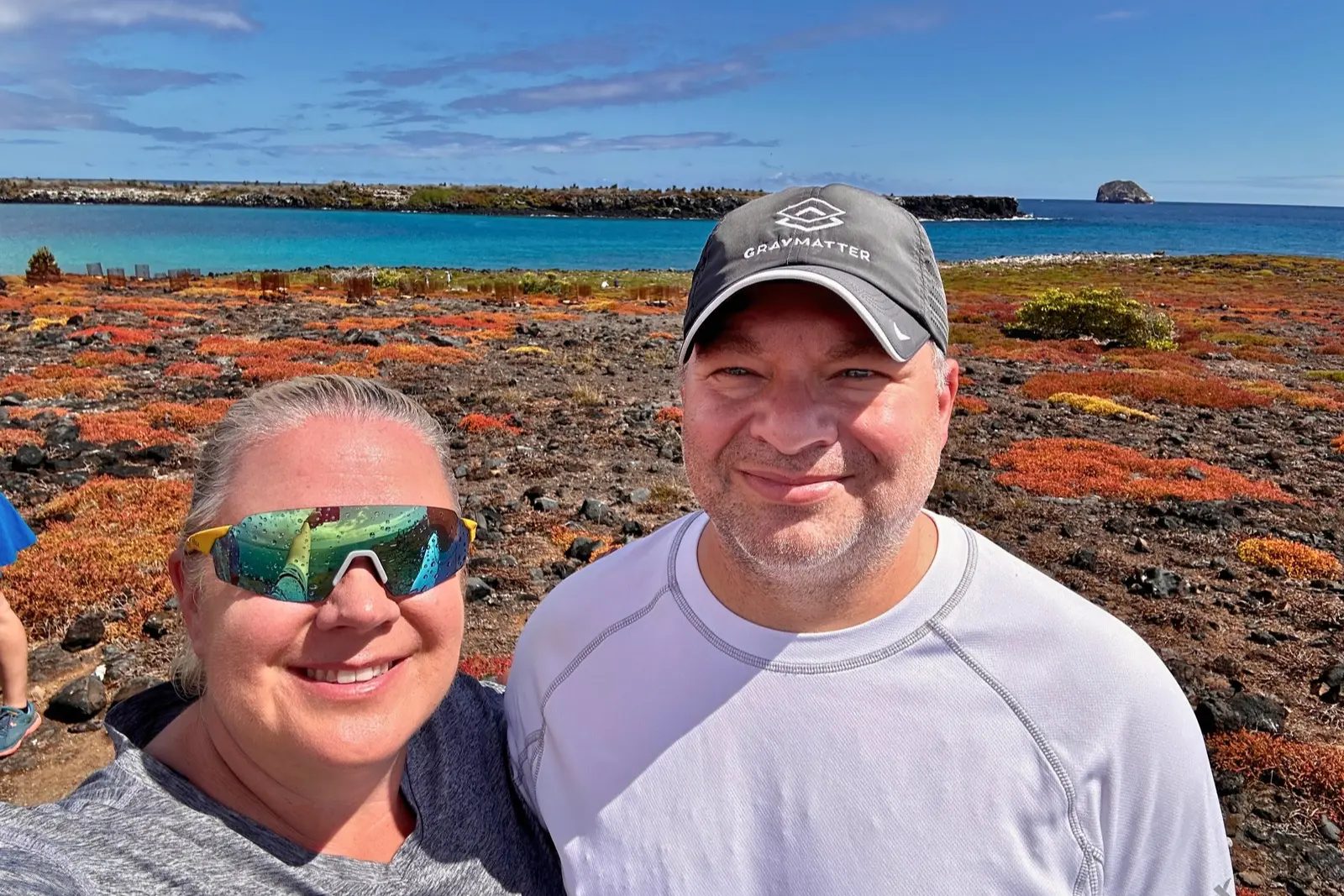
But once again, the sea lions stole the show.
The pups were playful and curious, and watching them interact with each other was far more entertaining than anything we could have scripted.
That afternoon we had our first real snorkeling experience at Punta Carrion.
The water was clear, and suddenly the trip changed from watching the Galápagos to actually getting into it.
We swam with sea lions, saw white-tipped sharks, hieroglyphic hawkfish and an enormous variety of tropical fish.
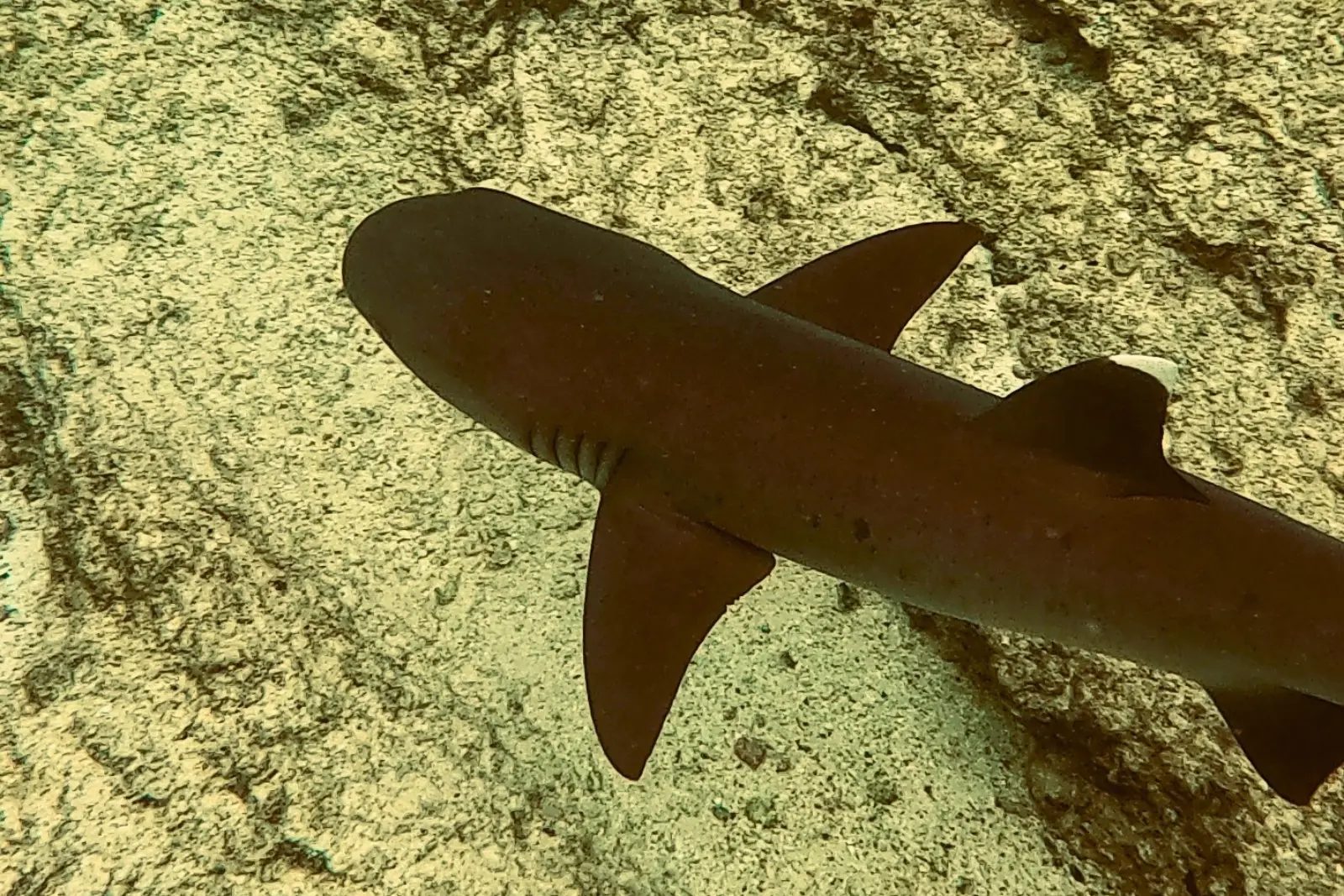
The expedition team also used this first snorkeling experience as a bit of a trial run. They were getting a feel for everyone's comfort level in the water before dividing us into groups for the rest of the trip.
That was something I appreciated about the expedition format.
It wasn't simply, “Here's your excursion. Good luck.”
The team was constantly watching how people were doing and adjusting the experience accordingly.
That evening we had more beach time with sea lions and another spectacular sunset.
At this point, we were beginning to wonder how many times we were going to say, “This has to be the best day.”
The answer was: a lot.
Penguins, Sharks and an Awfully Fast Sea Lion
The following day was another busy one—panga cruising, hiking and two snorkeling opportunities around Sombrero Chino and James Bay.
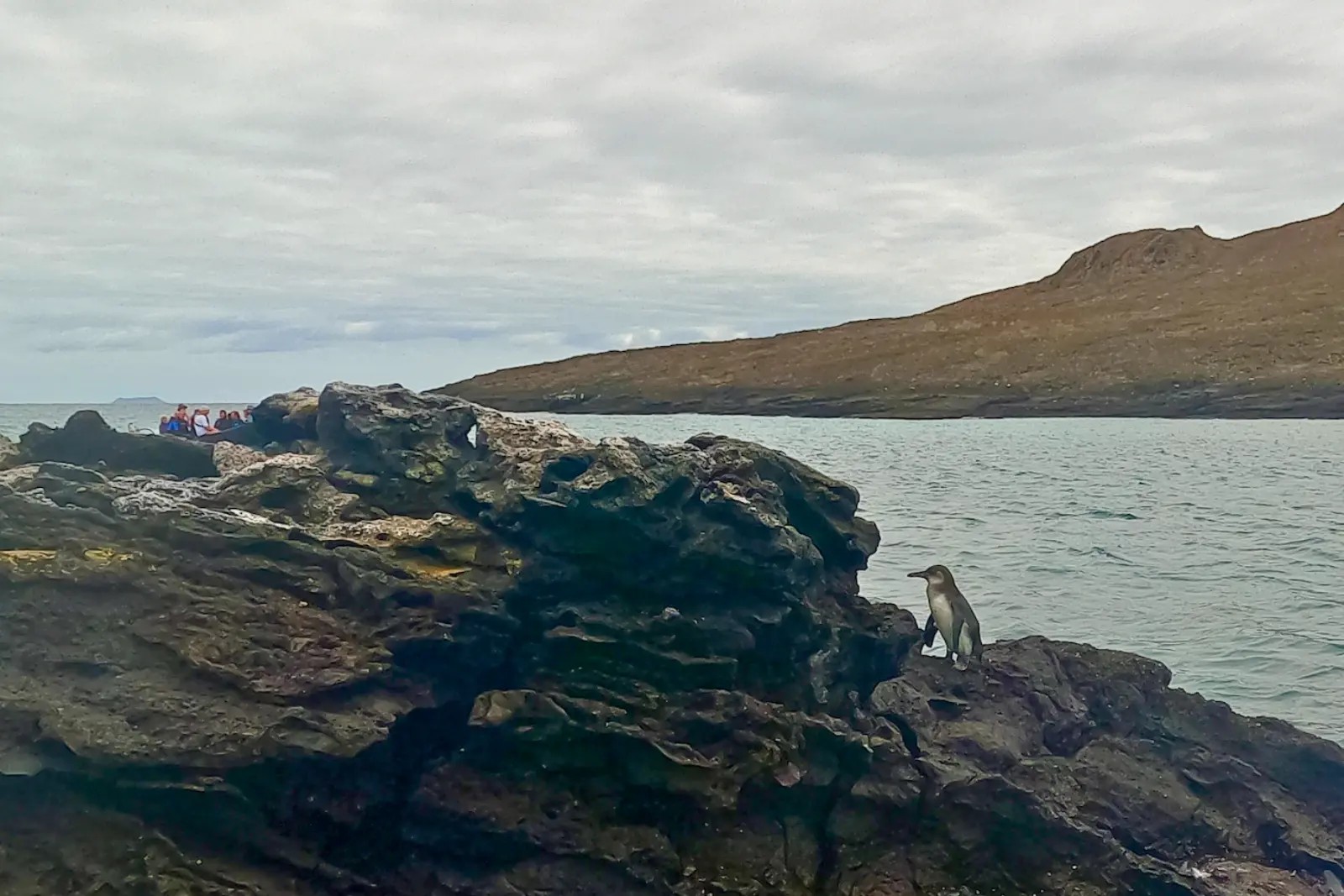
During the panga ride, we spotted a Galápagos hawk along the shoreline and a Galápagos lava heron fishing.
And then there was the penguin.
Or, more accurately, the almost penguin.
One of the guides spotted it and pointed it out, but it disappeared almost as quickly as it appeared.
That's expedition travel.
Sometimes you get an amazing wildlife encounter.
Sometimes you get a two-second glimpse of something that your guide saw clearly and you're left wondering if you imagined it.
The hiking was filled with more sea lions—especially mothers and pups along the shoreline—and marine iguanas stretched out on the rocks.
Then we got back in the water.
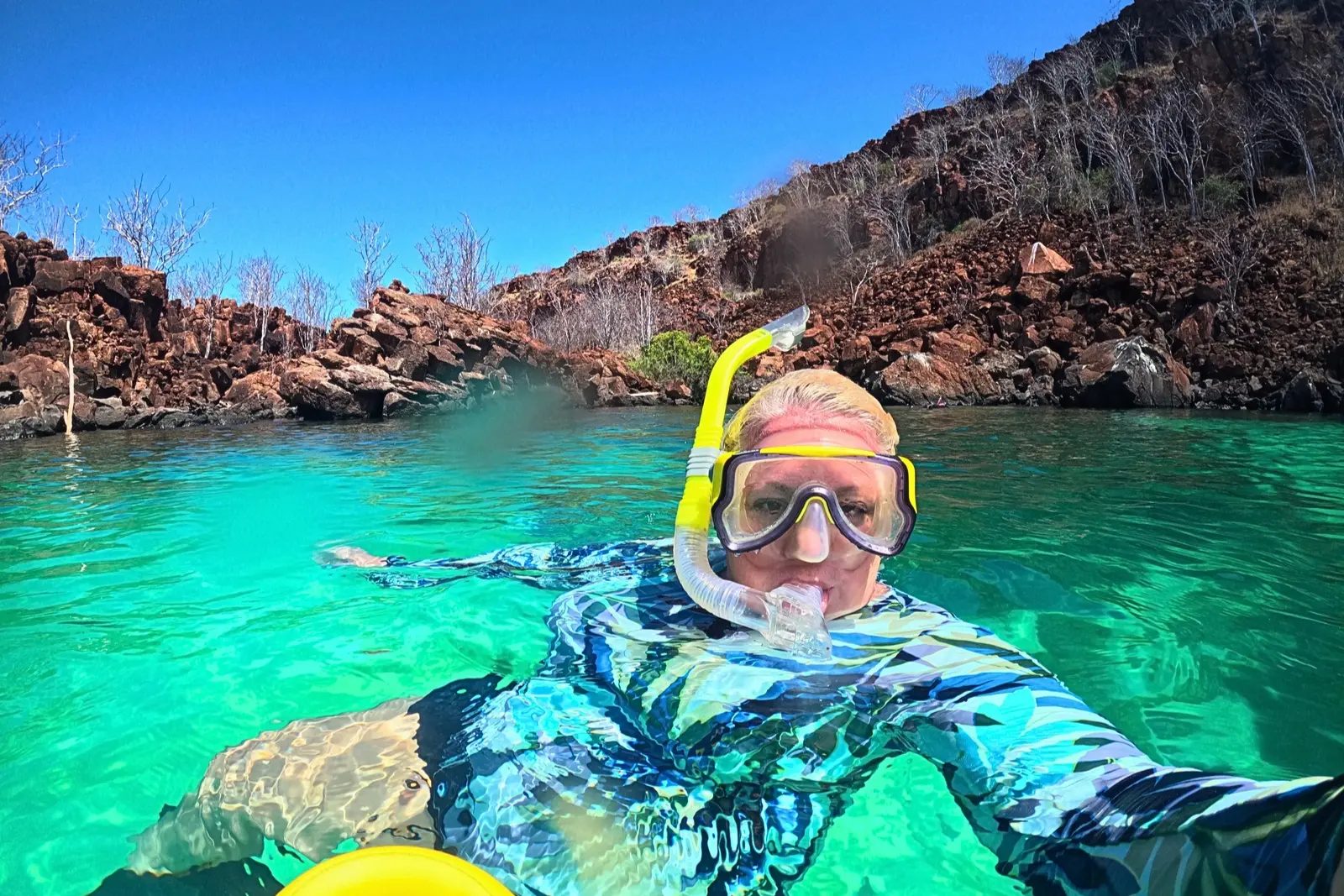
White-tipped sharks. Large puffer fish. Galápagos green sea turtles. Starfish. And more tropical fish than I could possibly keep track of.
One of the things that surprised me about the Galápagos was the variety of wildlife.
You might spend an hour on land watching land iguanas and sea lions, then climb into the water and find yourself surrounded by a completely different ecosystem.
And then you get back on the boat and do it all over again.
One Island, Two Very Different Experiences
At Espumilla Beach, we took a short hike toward a lagoon and found Galápagos flamingos.
The beach itself had this incredible dark-red color, which made the landscape feel almost otherworldly.
We also had another choice to make that day.
There was a shorter beach option and a longer hike that went up the mountain and back around.
I took the longer hike.
Erika stayed at the beach.
And, as sometimes happens on an expedition, we came back with completely different stories from the same morning.
I saw Darwin's finches along the trail.
Erika had an amazing experience watching Galápagos sea turtles using the beach for nesting.
Neither of us had the "better" experience. We simply chose different ways to experience the same place.
That's something worth knowing if you're considering a Galápagos expedition. Many days offer different activity levels or excursion choices. You don't necessarily have to be the person hiking every mountain to have an incredible trip.
And there was still time for snorkeling.
More fish. More sea lions. More sea turtles.
At this point, the wildlife sightings were becoming almost ridiculous.
In the best possible way.
The Days Just Kept Getting Better
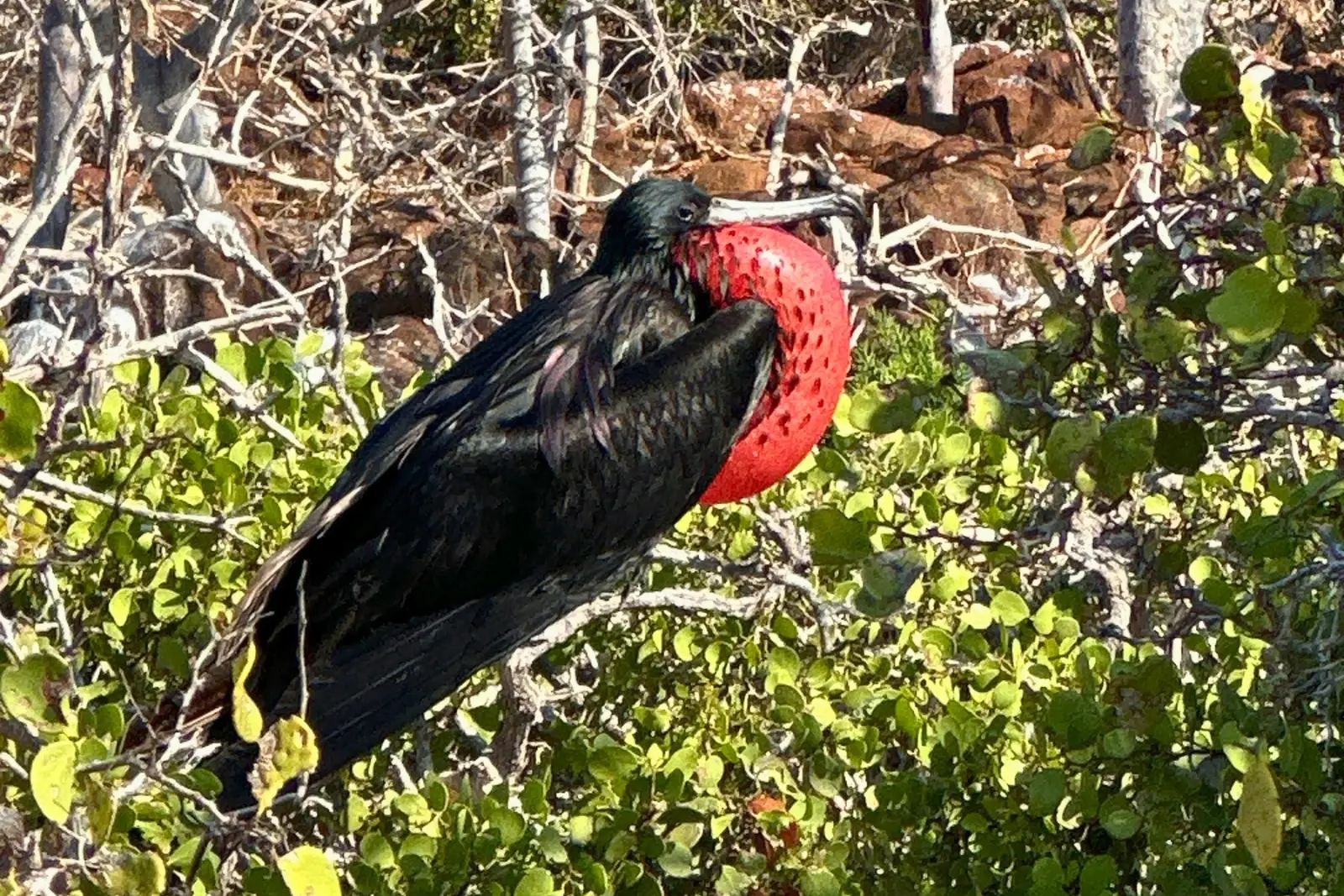
North Seymour Island gave us another full morning of hiking, with nesting blue-footed boobies, colorful frigates, land iguanas and lava lizards.
Then came a deep-water snorkeling opportunity.
Only a few of us decided to get in.
I did.
There were plenty of fish, and I spotted a large Galápagos shark and a ray.
Later, at Santa Fe Island, we hiked among land iguanas and giant Opuntia cacti.
And this became the rhythm of the trip: land, water, Zodiac, hike, snorkel, wildlife, back to the ship, repeat.
It was active, but it never felt like we were simply checking destinations off a list.
The activities were what allowed us to experience the islands from completely different perspectives.
Post Office Bay and the Galápagos Tradition That Takes a Little Patience
Floreana Island brought us to one of the more unusual stops of the trip: Post Office Bay.
The tradition is simple.
You leave a postcard for someone else to hand-deliver, and you look through the existing cards to see if there's one you can personally take home and deliver.
We didn't find one for us.
Other people in our group did.
Our own postcards eventually made their way back to us about a week later.
It was a fun reminder that some of the most memorable travel experiences aren't necessarily the biggest wildlife encounters.
Sometimes they're the quirky little traditions that have survived because travelers keep participating in them.
The expedition team also arranged a soccer game with some locals, which was another glimpse into life beyond the wildlife.
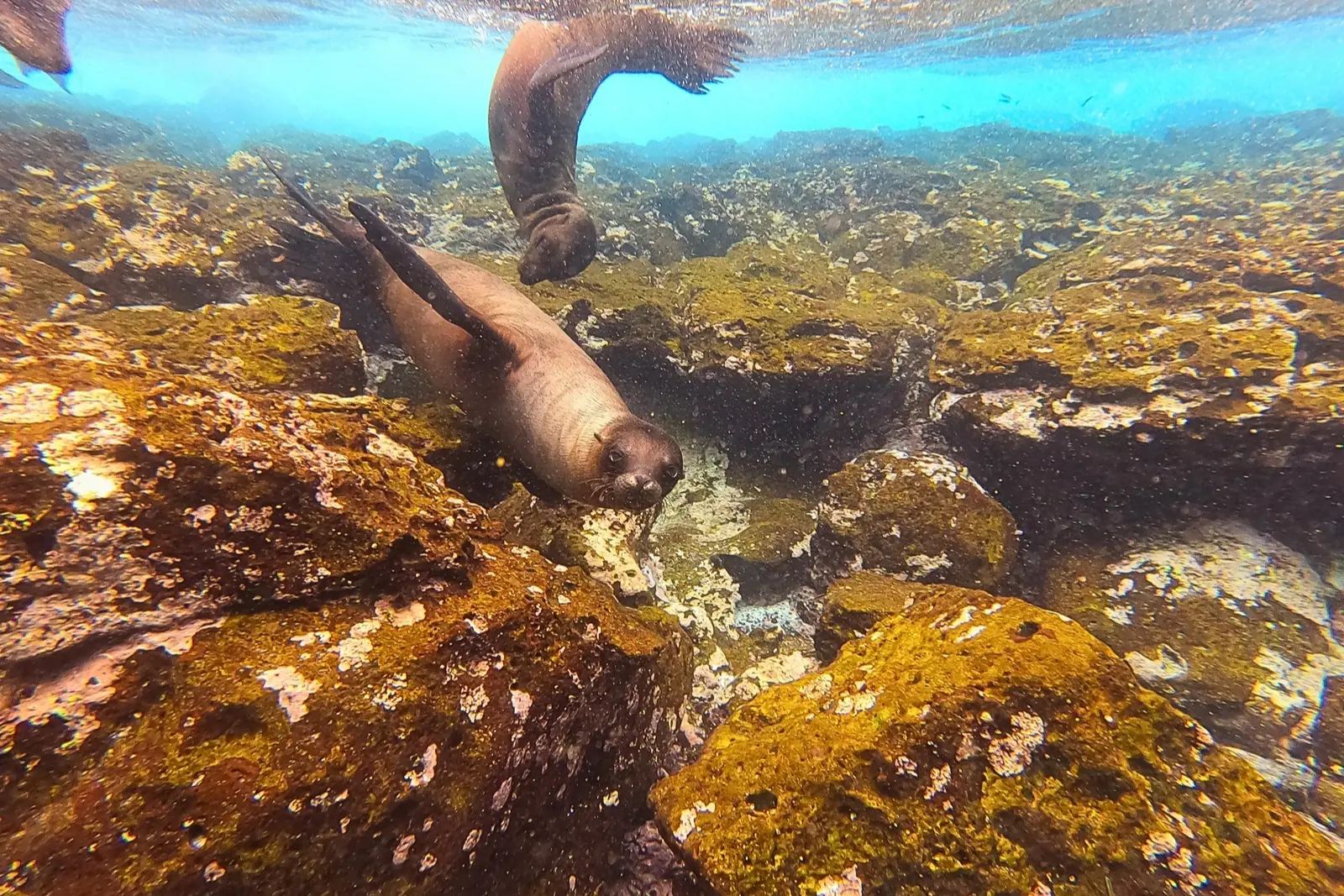
We also went snorkeling, although the water was rougher that day and only a couple of us decided to get in.
I was glad I did.
I swam with curious sea lions, saw sharks and hieroglyphic hawkfish, and watched massive schools of razor surgeonfish moving through the water.
Later we visited areas with flamingos and watched sea turtles rolling in the surf.
Again, somehow, this was all one day.
The Tortoises Were the Perfect Way to Finish
Our last full day took us to the Charles Darwin Research Station area and then to the El Chato 2 Ranch.
The Darwin Center gave us a much deeper understanding of the conservation work behind the Galápagos, including the giant tortoise breeding center and land iguanas.
Then we went to see giant tortoises in a much more natural environment.
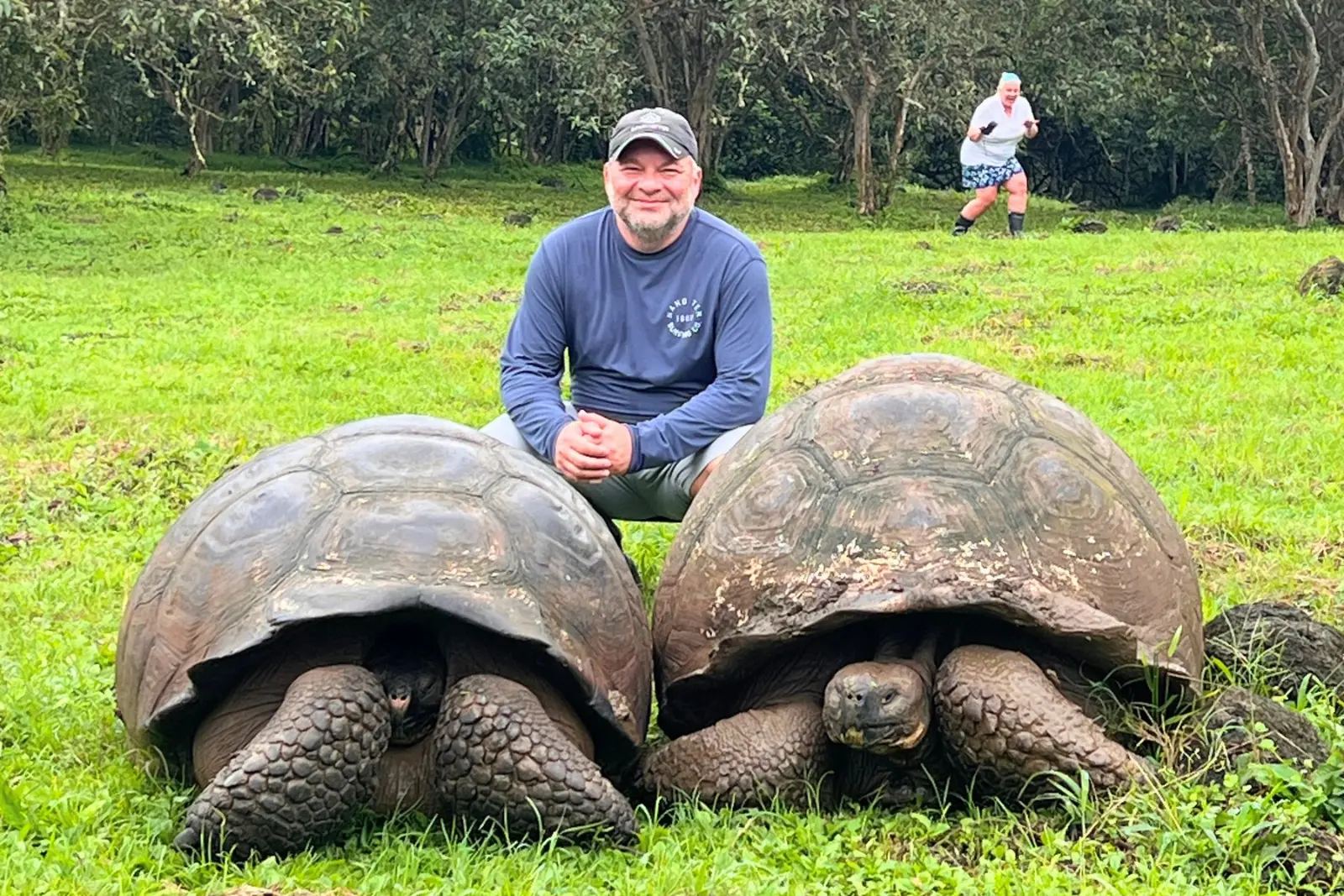
After a week of constantly moving from island to island and excursion to excursion, seeing these enormous tortoises was a fitting way to slow things down a little.
They have absolutely no interest in your itinerary.
They move when they're ready.
And if you're lucky enough to be standing nearby, you wait.
We finished the day in Puerto Ayora, where we had some local coffee and did a little shopping.
It was a nice final taste of everyday island life before heading back to the Evolution.
One Last Adventure Before Leaving
Our final morning brought one more panga ride, this time through a mangrove area.
And, because apparently the Galápagos wasn't quite finished showing off, we saw sharks, turtles, diving blue-footed boobies and our first marine iguana swimming.
Yes—swimming.
Marine iguanas are one of those animals that seem almost impossible when you first see them. They look prehistoric enough sitting on the rocks, and then you watch one disappear into the water.
It was a pretty great final morning.
We headed back to Quito, checked into the hotel, and ended the trip exactly where we'd started it.
With another bowl of locro de papa.
The perfect bookend.
So, What Is a Galápagos Expedition Actually Like?
If you're considering a trip to the Galápagos, one of the biggest things to understand is that this isn't really a traditional cruise.
The Evolution gave us a comfortable home base, but the ship was really our floating launch point for exploring the islands.
Most days involved some combination of Zodiac or panga rides, hiking, snorkeling, beach landings and wildlife observation.
And the itinerary isn't about racing from one port to another.
It's about finding the best experience the islands can offer that day.
That distinction matters.
Wildlife doesn't operate on a cruise schedule. Neither does weather. Neither do ocean conditions.
Some snorkeling opportunities were calm and easy. Others were rougher, and only a handful of us went in.
Some wildlife appeared exactly where we hoped it would.
Some disappeared before we could even get a photograph.
And sometimes the best moments were the completely unexpected ones—a sea lion pup playing on a beach, a penguin that vanished almost immediately, a marine iguana swimming past the panga, or a frigate deciding that the top of our ship looked like a perfectly reasonable place to land.
That's what makes an expedition different.
You have a plan.
But you also have to be willing to abandon the plan when the Galápagos gives you something better.
One last thing worth understanding. The animals do not move away from you, which means the distance is yours to keep rather than theirs. Two metres, every site, enforced by the guide. It feels restrictive for about an hour and then it stops feeling like anything at all — and it is exactly why the sea lions still roll around on the beach as though you are not there. More on how we think about found rather than arranged wildlife encounters.
Looking Back
What I remember most about the Galápagos isn't any one animal or one island.
It's the sheer variety of experiences packed into one trip.
We hiked through landscapes filled with land iguanas and giant cacti. We snorkeled with sea lions and turtles. We watched sharks below the surface. We walked beaches covered with wildlife that barely acknowledged our presence. We saw flamingos, penguins, frigates, boobies and tortoises.
And somehow, every day felt completely different.
The Galápagos is often described as a place where you can see wildlife up close.
That's true.
But I think there's something deeper happening.
You aren't just looking at the animals.
For a little while, you're entering their world.
And they are going about their day as if you aren't particularly interesting at all.
Honestly?
That's exactly how it should be.
And it's a pretty wonderful way to experience the Galápagos.