

Part of our Antarctica guide →
The season at a glance
- Season
- November through March — the Southern Hemisphere summer
- November
- Pristine, untouched snow and ice; penguin courtship
- December
- Nearly 24 hours of daylight; eggs begin hatching
- January
- Prime time — penguin chicks hatch in full force
- February
- Peak whale activity; ships reach further south
- March
- Quiet finale; dramatic light, peak whale sightings
Is there a bad time to visit Antarctica?
No. There is no bad time — only different months that suit different priorities. Photographers lean toward pristine November, wildlife lovers toward January or the February–March whale peak, and travelers who want fewer ships toward the season's bookends.
Planning a journey to Antarctica is unlike planning any other trip. This is not a destination with year-round tourism or daily flights. The expedition season runs November through March, when the Southern Hemisphere's summer makes the region accessible by ship — and within those months, the experience can look completely different depending on when you travel.
The month narrows the operator and ship list faster than almost any other question, so this is where we start with clients before we talk about ships at all.
November: a pristine beginning
November opens the season as the ice begins to open. Snow and ice are at their most untouched, penguins begin their courtship rituals, and you will often feel like one of the first explorers to arrive.
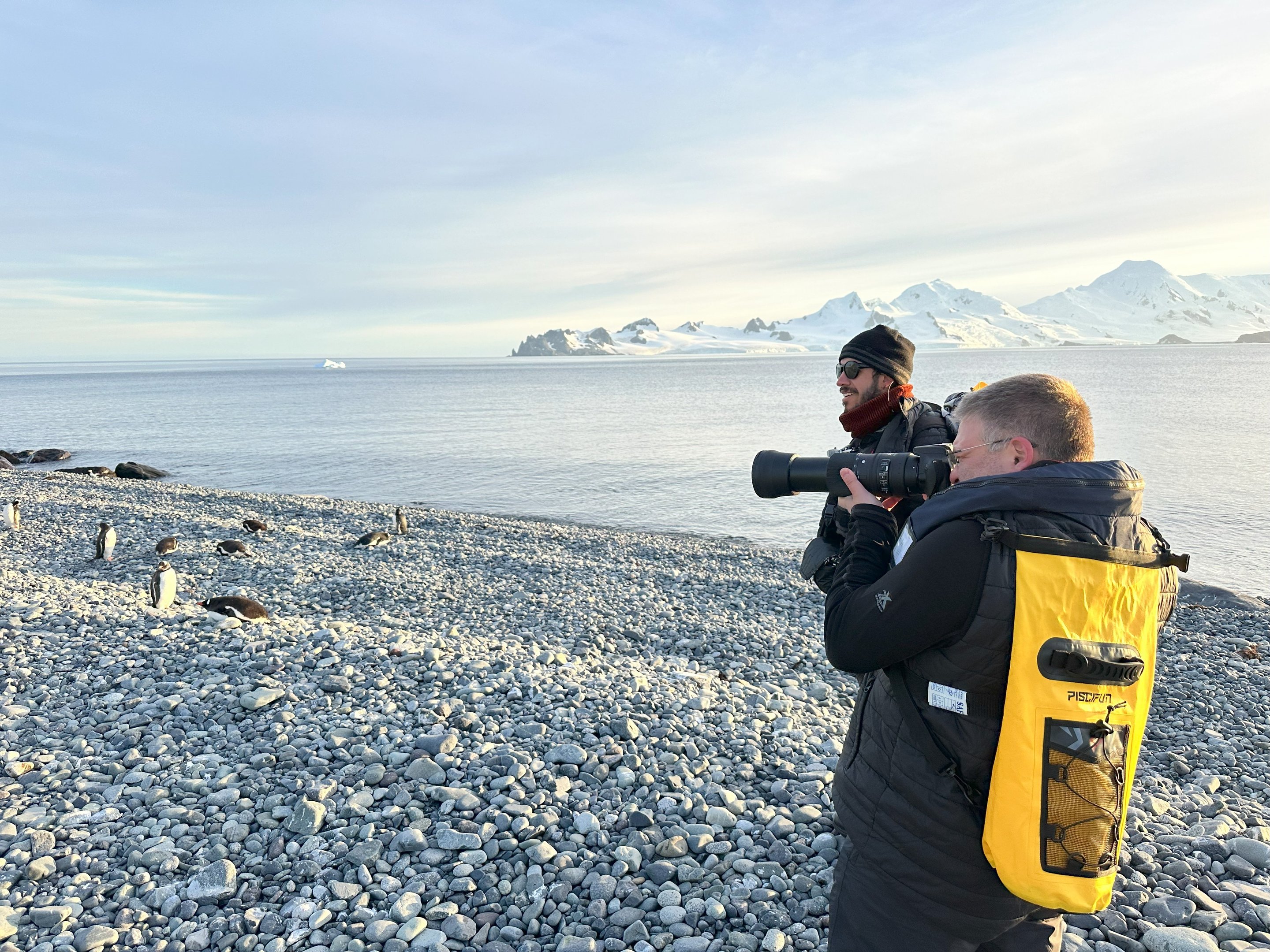
Scenery: snow and ice at their most untouched — a dramatic, almost surreal landscape.
Wildlife: penguins begin courtship rituals and seabirds are highly active.
Atmosphere: early season, so landings feel newly discovered — perfect for photographers.
December: the peak of the polar summer
December bathes Antarctica in nearly 24 hours of daylight. Glaciers gleam, penguin colonies are bustling, and you might spot eggs hatching. It is one of the most popular months to travel.
Scenery: glaciers gleam and icebergs sparkle; the weather is relatively mild.
Wildlife: penguin colonies bustling with activity; eggs may be hatching.
Atmosphere: long days and high activity make this one of the most in-demand months.
January: wildlife at its most active
January is considered prime time for Antarctic expeditions. Penguin chicks hatch in full force, parents are busy feeding, seal pups may be visible, and the days are filled with nonstop wildlife activity.
Scenery: snow melts at lower elevations, revealing rocky beaches.
Wildlife: penguin chicks hatch in full force; parents feed constantly; seal pups may be visible.
Atmosphere: dynamic days of nonstop wildlife encounters.
February: whales take the stage
February is when whales are most active — humpback, minke and orca become the stars of the show. Retreating sea ice lets ships reach further south, and conditions are excellent for Zodiac cruises and kayaking.
Scenery: sea ice has retreated, opening routes further south.
Wildlife: humpback, minke and orca whales at their most active; penguin chicks growing fast and beginning to molt.
Atmosphere: great conditions for Zodiac cruises and kayaking in calm waters.
March: a quiet finale
March offers a more tranquil Antarctica: dramatic sunrises and sunsets as daylight shortens, peak whale sightings, nearly grown penguin chicks — and fewer ships, giving expeditions a more exclusive feel.
Scenery: sunrises and sunsets grow more dramatic as daylight hours shorten.
Wildlife: whale sightings peak; penguin chicks nearly grown; seabirds prepare to migrate north.
Atmosphere: fewer ships operating — a more exclusive feel.
December versus February: what we saw
We have sailed Antarctica in both December and February, and they are close to different trips. In December we found penguins on eggs and whales feeding actively after their migration. By February the chicks had grown into curious juveniles and the whales were more playful before heading for open water.
December: penguins sitting on eggs, colonies at their busiest, and whales feeding hard after arriving from the north.
February: chicks grown into curious juveniles that will walk right up to a landing party, and whales that seemed more playful around the ship before heading out to open water.
The honest caveat: wildlife encounters can never be guaranteed. These are patterns we have seen across two seasons, not a promise about the week you sail.
Choosing your perfect month
Match the month to what matters most: photographers love pristine November, wildlife enthusiasts choose January for penguins or February and March for whales, and travelers who want fewer crowds enjoy the season's bookends.
So which month is best? The truth is — there is no bad time to visit Antarctica. It depends on what matters most to you.
Photographers may love the pristine landscapes of November. Wildlife enthusiasts may choose January for penguin activity or February and March for whales. Travelers who want fewer crowds may enjoy the bookends of the season.
When you are ready, we will match your ideal experience — penguin chicks, whales, or untouched snowscapes — with the right ship and itinerary. That is exactly what a planning call is for.
Frequently asked questions
When is the Antarctic expedition season?
November through March — the Southern Hemisphere summer, when the region is accessible by ship. There is no year-round tourism to Antarctica.
Which month is best for penguins?
December and January. Colonies are bustling in December with eggs beginning to hatch, and January is prime time, with chicks hatching in full force and parents busy feeding.
Which month is best for whales?
February and March. February is when humpback, minke and orca whales are most active, and March brings peak whale sightings as the season winds down.
Is November or March too cold or too quiet?
Neither — they are the season's bookends, not compromises. November offers the most pristine, untouched snow and ice, and March offers dramatic light and fewer ships. Travelers who want a quieter feel often choose exactly those months.
How far ahead should I plan for a specific month?
The popular months — December and January especially — sell out first on the best ships, so plan 12 to 18 months ahead. We will help you weigh month against ship, because the month narrows the operator list faster than any other question.
Does working with Glacial Expeditions cost more?
No. Our planning costs you nothing extra. Pricing matches booking direct with the cruise line, and Signature Travel Network amenities are added on top.
Keep planning your Antarctica expedition
Antarctica
The complete guide to the seventh continent.
Antarctica itineraries compared
Peninsula, Circle, Weddell Sea and the long way south.
What an Antarctica cruise costs
Fare ranges by voyage type, and what sits outside the headline price.
Drake Passage: sail or fly
Two days at sea against a two-hour flight, with the costs and risks of each.
Emperor penguins
The Weddell Sea voyages, and why they sail early in the season.
When to go
Expedition seasons across every region we plan.