

Part of our The Galápagos guide →
The Galápagos year at a glance
- Warm / wet season
- December to May — air in the 80s F, water 70–80°F, calm seas, lush green islands and peak terrestrial activity
- Cool / dry garúa season
- June to November — air high 60s to high 70s F, water 65–75°F, choppier seas and extraordinary marine life
- Shoulder months
- May, September and early December — fewer visitors, wildlife activity still high
- Year-round sightings
- Sea lions, boobies, giant tortoises and iguanas are present in every month
What are the two Galápagos seasons?
The warm, wet season runs December to May, driven by warm water from the Panama Basin: sunny days, short showers, calm seas and water at 70–80°F. The cool, dry garúa season runs June to November under the cold Humboldt Current: cooler air and water, choppier seas, and far richer marine life.
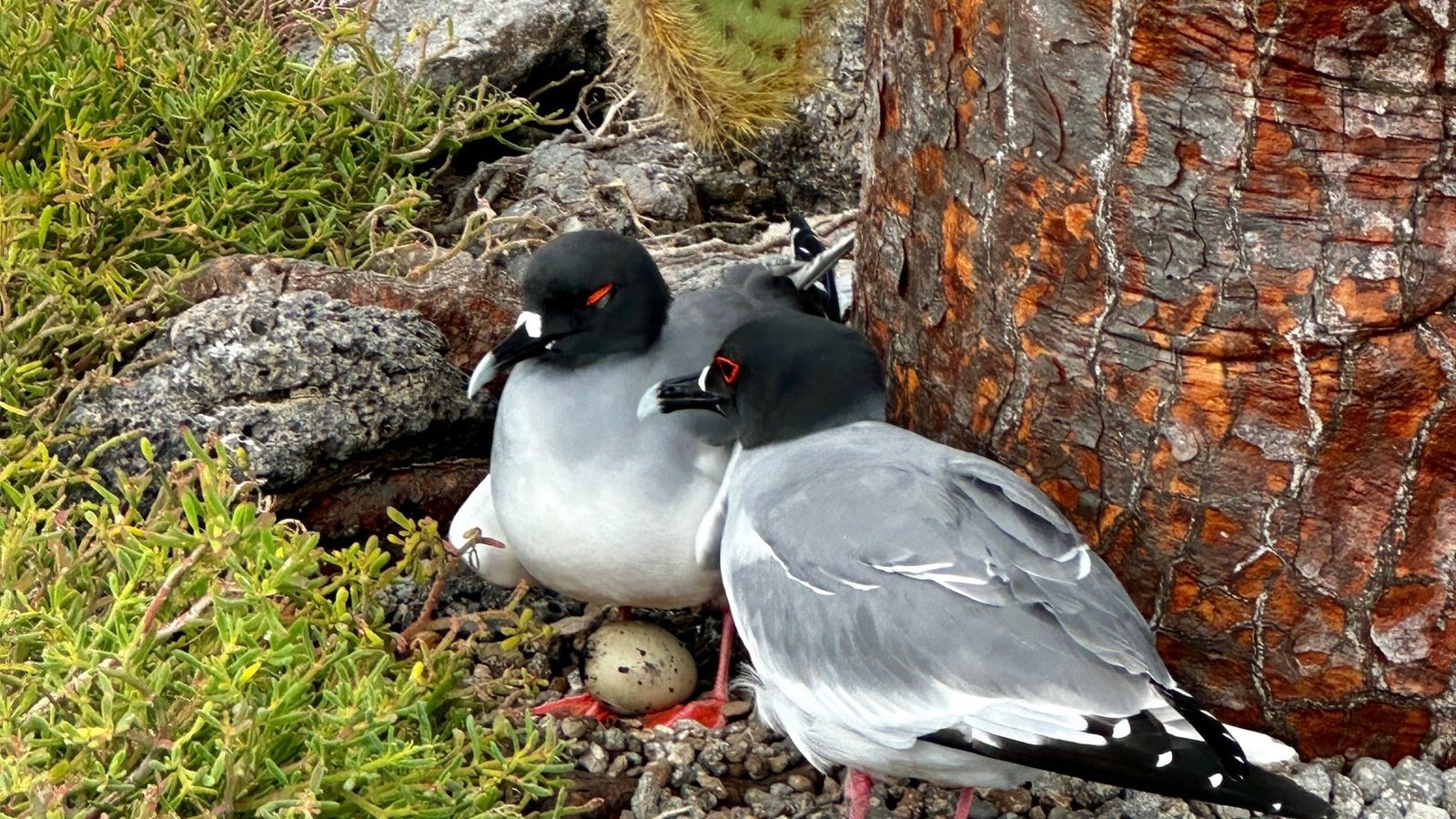
During the warm season the air sits in the 80s F (26–30°C) with high humidity. It is known as the rainy season, but the days are generally sunny with occasional showers that turn the islands vibrant green. That warmth and moisture is the engine of the land-based ecosystem, and it triggers a flurry of activity in giant tortoises and land iguanas.
The garúa season takes its name from the light mist that settles over the islands' peaks while the lowlands stay arid. The cold, nutrient-rich upwelling acts as a catalyst for a marine feast, drawing in fish, marine mammals and seabirds. Water at 65–75°F (18–23°C) usually means a wetsuit for snorkeling, but the reward is an unmatched density of life underwater, including migrating humpback whales and whale sharks.
Warm season or garúa season — which should you choose?
Choose December to May if you want comfortable weather, warm calm water and the terrestrial life cycles: nesting tortoises, mating iguanas, hatching sea turtles. Choose June to November if your trip is about the ocean: whales, whale sharks, manta rays, penguins and peak seabird breeding.
| Warm / wet (Dec–May) | Cool / dry garúa (Jun–Nov) | |
|---|---|---|
| Driving current | Warm water from the Panama Basin | Cold Humboldt Current |
| Air temperature | 80s F (26–30°C), humid | High 60s to high 70s F |
| Water temperature | 70–80°F (20–26°C) | 65–75°F (18–23°C), wetsuit advised |
| Sea conditions | Calm | Choppier, stronger surges |
| Landscape | Lush and green after short showers | Arid lowlands, garúa mist on the peaks |
| Wildlife focus | Terrestrial life cycles — nesting tortoises, mating iguanas, hatching turtles | Marine feast — whales, whale sharks, manta rays, penguins, seabird breeding |
Wildlife never truly hibernates here: sea lions, boobies, tortoises and iguanas are visible year-round.
What happens January to March?
The start of the warm season brings a boom in terrestrial activity. Darwin's finches and other land birds begin nesting, marine iguanas on Española turn vibrant green and red for mating, Pacific green sea turtles come ashore to lay eggs, and giant tortoises migrate to lower elevations to nest.
On Fernandina, marine iguanas begin their nesting season in March. The waved albatross — the only bird that truly migrates away from the islands — starts arriving on Española in March.
What happens April to June?
A period of transition and new life. April brings the mass arrival of waved albatrosses on Española for courtship while the islands are still lush. Giant tortoise and green sea turtle eggs hatch, and on Isabela the land iguana babies emerge from their nests.
May mixes both seasons: blue-footed boobies begin their comical mating dances on Seymour Island, and the first waved albatross chicks appear in June. June suits families particularly well — milder temperatures line up with school vacations, and birdwatching is at its peak with boobies courting and albatrosses nesting.
What happens July to September?
This is the height of the cool, nutrient-rich season, with the focus firmly on marine life. Cooler upwellings raise the odds of manta rays, whales and Pacific sunfish. July is a major seabird breeding season for blue-footed boobies and flightless cormorants, and the first sea lion pups are born.
August is a fine time to see giant tortoises grazing in the Santa Cruz highlands. September, the peak of the garúa season, is when Galápagos penguins become especially active and begin courtship on Bartolomé. It is also the peak of sea lion mating season, with males in competitive display — and the season when migrating humpback whales and whale sharks are in the water.
What happens October to December?
Baby animals in abundance. October brings blue-footed booby chicks and baby fur seals. In November the sea lion pups are older, playful and curious, often entertaining snorkelers, the trade winds diminish and the water warms into excellent swimming conditions.
Early December marks the start of the warm season, with the islands taking on their first tinge of green. It is an optimal time to visit — the clear skies and sunny days of the warm season without the crowds of the holiday period. Giant tortoise eggs begin hatching and green sea turtles can be seen mating.
Is there a shoulder season in the Galápagos?
Yes — May, September and early December. These months are generally low or shoulder season, so visitor numbers are significantly lower while wildlife activity stays consistently high. For travelers who value a quieter, more intimate archipelago, it is a favorable trade-off.
Galápagos seasons: common questions
When is the best time to visit the Galápagos?
There is no single best time. December to May is warm and wet with calm seas and peak terrestrial wildlife activity. June to November is the cool, dry garúa season with choppier seas, cooler water and exceptional marine life.
Do I need a wetsuit to snorkel in the Galápagos?
In the garúa season, June to November, water drops to 65–75°F and most travelers want a wetsuit. From December to May the water sits at 70–80°F and many people are comfortable without one. Most vessels provide wetsuits.
When can I see whale sharks in the Galápagos?
Whale sharks and migrating humpback whales are associated with the cool, nutrient-rich garúa season, roughly July to September, when the Humboldt Current draws large marine life into the archipelago.
What is the least crowded time to visit the Galápagos?
May, September and early December are the shoulder months. Visitor numbers are significantly lower while wildlife activity remains high.
Is the rainy season a bad time to visit?
No. The warm season is not a time of continuous downpours — days are generally sunny with short, refreshing showers that turn the islands green.
Keep planning your Galápagos trip
Galápagos routes and itineraries
Western, Eastern, Central and Southern routes, and what each one shows you.
Galápagos ships and yachts
How vessel size shapes the tone of the whole week.
Galápagos wildlife
The species you came for, and where they live.
Journal: Santa Cruz II, Northern Route
Chris's firsthand account of a January expedition.