


Part of our The Galápagos guide →
The Big 15 at a glance
- The Big 15
- Four reptiles, nine birds and two marine mammals considered the archipelago's iconic must-see species
- Year-round residents
- Giant tortoises, iguanas, sea lions, boobies, penguins and most others can be seen in any month
- Seasonal species
- The waved albatross is present on Española only from roughly April to December — the one Big 15 member with a true season
- Route-locked species
- The flightless cormorant, Galápagos penguin and Galápagos fur seal are concentrated on the western islands of Isabela and Fernandina
What is the Galápagos Big 15?
The Big 15 is the widely used checklist of the archipelago's most iconic species — the animals every visitor hopes to encounter. Think of it as the essential list for the ultimate wildlife safari: four reptiles, nine birds and two marine mammals, most of them found nowhere else on Earth.
There is no place on Earth quite like the Galápagos. It is an archipelago where animals rule and nature is on full display. While every moment here is a privilege, the Big 15 gives structure to that abundance: a way to organize your expectations, and in a few important cases, your choice of itinerary.
One honest caveat before the list: no single week-long route reliably delivers all fifteen. The flightless cormorant, Galápagos penguin and Galápagos fur seal are concentrated on the western islands of Isabela and Fernandina, the waved albatross breeds only on Española and is absent from roughly January to March, and the Santa Fe land iguana lives on one small island. If a particular species matters to you, tell your advisor before you book — the right route is the whole game. Our itineraries guide explains what each route covers.
Which reptiles are on the Big 15 list?
Four reptiles make the list: the Galápagos giant tortoise, the marine iguana, the Galápagos land iguana and the Santa Fe land iguana — the archipelago's ancient ones, and in the tortoise's case, the animal the islands are named for.
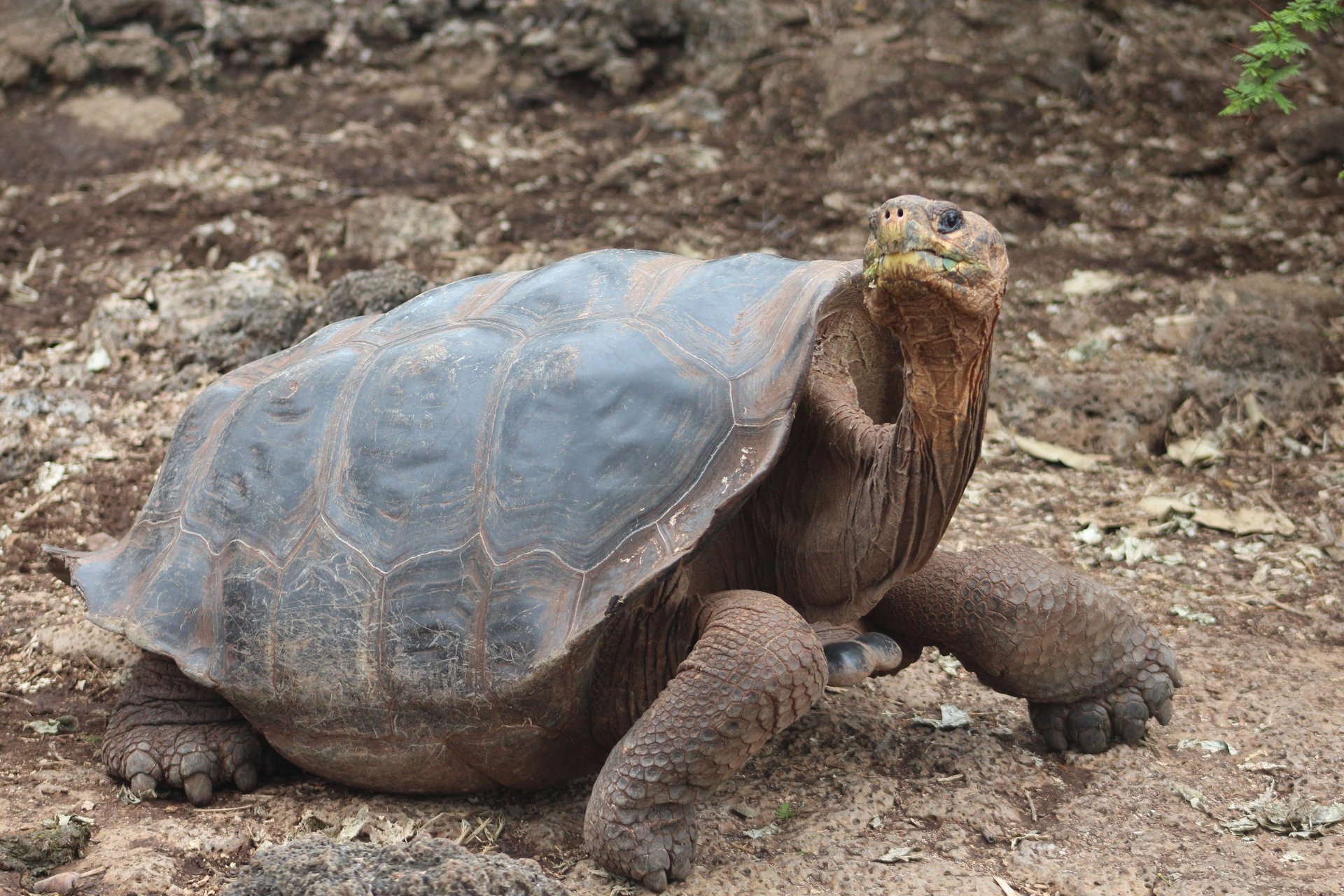
Galápagos giant tortoise. These gentle giants are the namesake of the islands — galápago means saddle, a reference to their shell shape. Watching them lumber through the misty highlands of Santa Cruz is a genuinely humbling experience, and the highland reserves make them one of the most reliably seen members of the list.
Marine iguana. The world's only sea-going lizard. Watching these cold-blooded creatures sunbathe on black lava rock before plunging into cool water to graze on algae is a stunning feat of adaptation — and you will see them on nearly every island, draped across the shore in heaps.
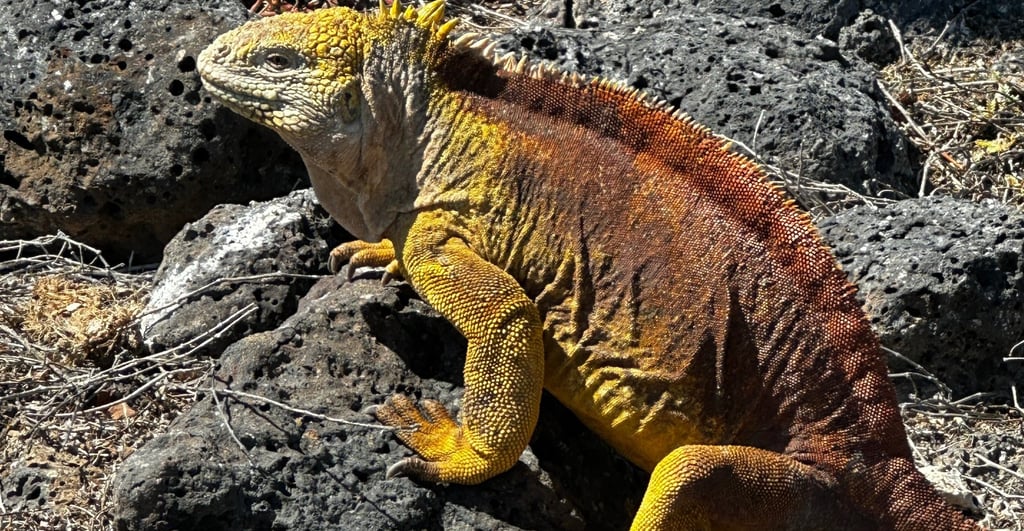
Galápagos land iguana. A beautiful, bright yellow cousin to the marine iguana, often found relaxing near prickly-pear cacti — its primary food source — looking every bit like a small golden dinosaur.
Santa Fe land iguana. A distinct, paler species of land iguana found exclusively on the small island of Santa Fe. A true endemic sighting, and the one reptile on the list locked to a single visitor site.
Which birds are on the Big 15 list?
Nine birds make the list: three boobies (blue-footed, red-footed and Nazca), the flightless cormorant, the waved albatross, the Galápagos penguin, the great and magnificent frigatebirds, the Galápagos hawk and the American flamingo.
Blue-footed booby. The clown of the islands. Their famously bright turquoise feet and comical courtship dance — the sky-pointing swagger — make them a perennial favorite, and they nest across many islands.
Red-footed booby. The most elusive of the three boobies. They are the smallest and prefer to nest in trees and shrubs rather than on the ground; Genovesa in the north hosts the largest colonies, so look up, not down.
Nazca booby. A striking bird with snow-white plumage and a fierce orange-pink beak. These larger boobies are often found nesting right at the edges of rocky cliffs.
Flightless cormorant. Evolution at work. Having evolved without predators, this bird traded flight for powerful legs and became a masterful diver. It lives only on the western islands of Isabela and Fernandina — a western-route exclusive.
Waved albatross. The largest bird in the Galápagos, with a wingspan that can stretch beyond eight feet. It breeds almost exclusively on Española, and only from roughly April to December; visit outside that window and the island's famous courtship dance — a quirky, rhythmic fencing of beaks — is nowhere to be found.
Galápagos penguin. The only penguin species found living in tropical waters, and one of the smallest in the world. They are concentrated in the cool western waters around Isabela and Fernandina, and snorkeling near one as it rockets past is an absolute dream.
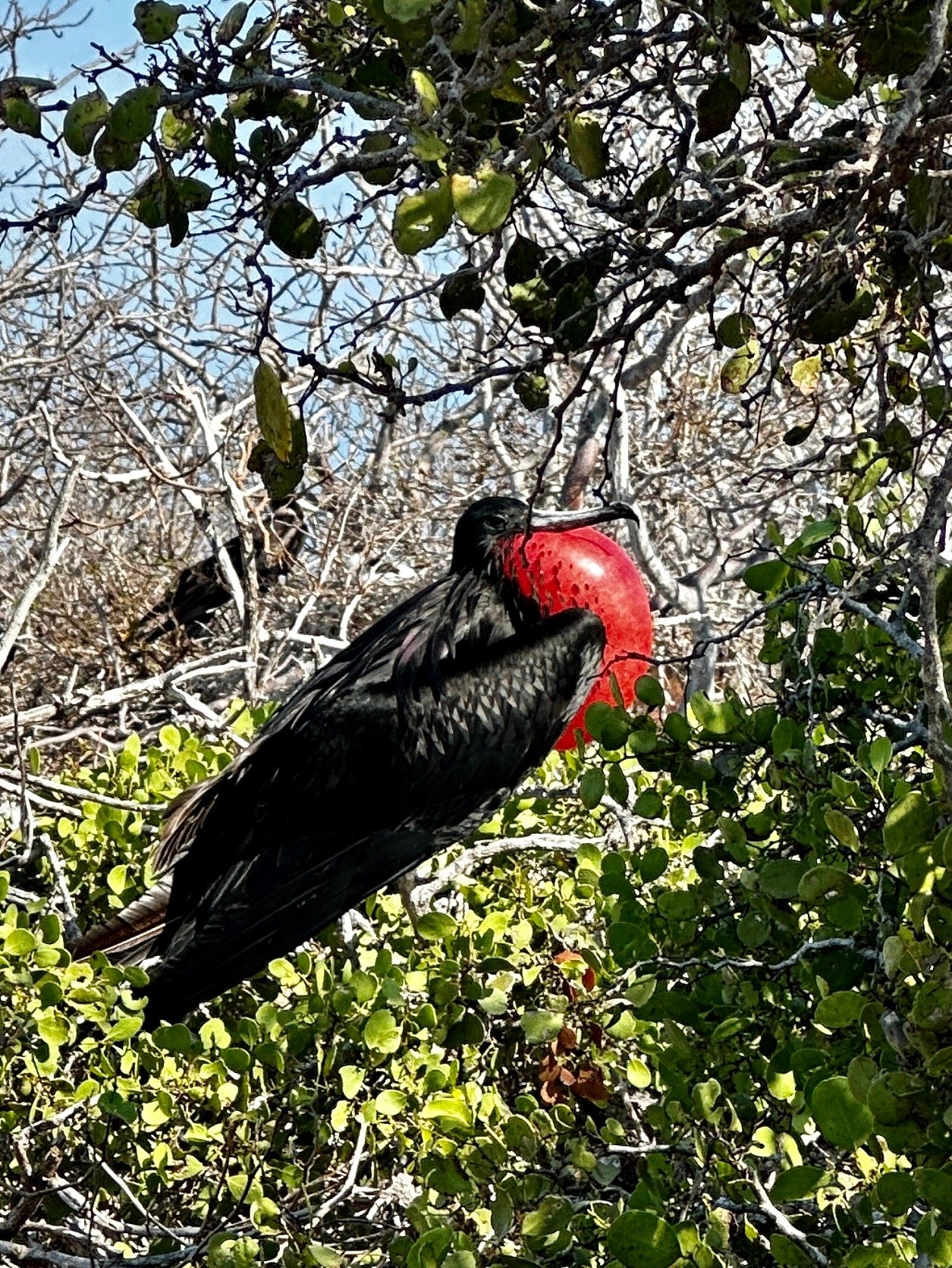
Great and magnificent frigatebirds. Look up for the male's extraordinary scarlet throat pouch, inflated like a balloon during breeding season. They are known as the pirates of the air for harrying other birds into dropping their catch.
Galápagos hawk. The apex land predator of the archipelago. This rare, powerful raptor is found on several islands, and because it evolved without fear of humans, an encounter can be remarkably close.
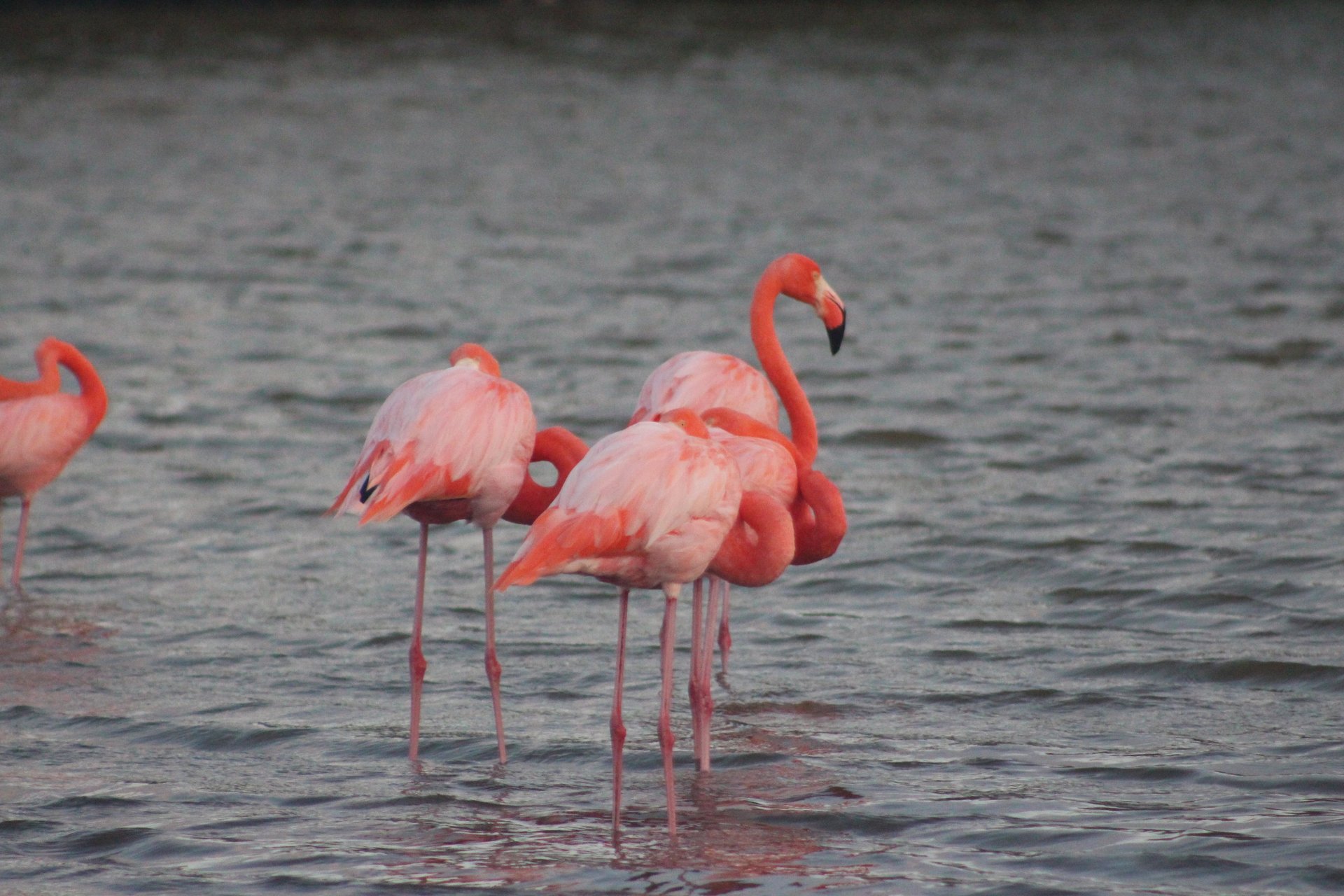
American flamingo. A welcome splash of pink. These wading birds filter-feed in brackish coastal lagoons, and their quiet elegance is a beautiful contrast to the volcanic landscape around them.
Which marine mammals are on the Big 15 list?
Two: the Galápagos sea lion — the islands' unofficial welcoming committee — and the shyer, smaller Galápagos fur seal, which prefers cool rocky crevices on the western islands.
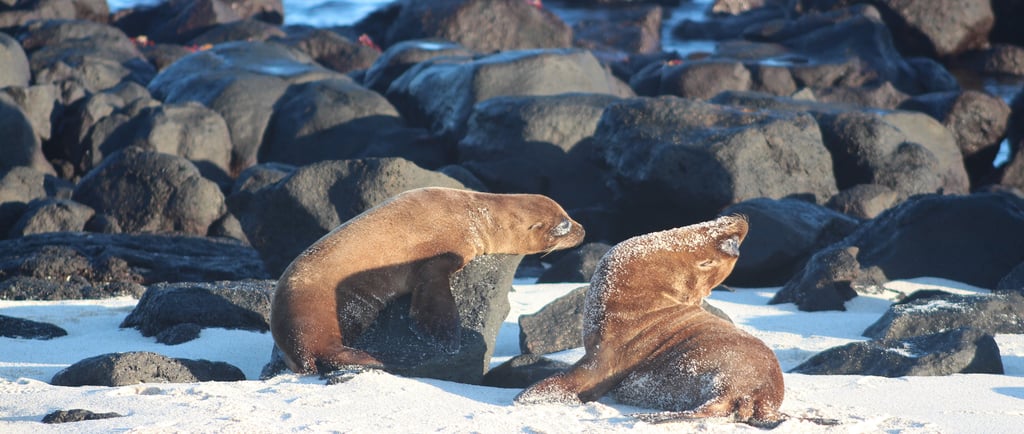
Galápagos sea lion. Fearless, playful and endlessly curious. You will find them napping on benches, draped across white-sand beaches and circling snorkelers. They are everywhere, in every month, and they set the tone for the whole trip.
Galápagos fur seal. Smaller and shyer than the sea lion, with large eyes and a thick coat. Fur seals favor the cool shade of rocky crevices and are most reliably seen on the western islands. Spotting one takes more effort — which makes the encounter even more rewarding.
What other species should you watch for?
Beyond the Big 15, three bonus finds are worth your attention: Darwin's finches, the Galápagos lava lizard and the Galápagos shark — each with its own story in the archipelago's natural history.
Darwin's finches. Not as flashy as the boobies, but arguably the most scientifically significant birds on Earth. Their diverse beak shapes — each adapted to a specific food source — gave Darwin crucial evidence for natural selection. A lesson in evolution in miniature.
Galápagos lava lizard. Quick, often colorful lizards that dart among the rocks of the arid zones. Males are larger and display vivid red or yellow markings when defending territory or courting.
Galápagos shark. A bold, inquisitive species that can reach nearly ten feet. Frequently seen by divers and snorkelers, and first described by science in these waters — forever linking its name to the islands.
Can you see all fifteen on one trip?
Rarely on a standard week — three species are concentrated on the western islands, the albatross is absent January to March, and the Santa Fe land iguana lives on one island. Most travelers see ten to thirteen. Choosing the right route and season decides the rest.
The practical approach is to decide which species are non-negotiable for you and let that drive the route. Penguins and flightless cormorants point to a western itinerary; the waved albatross points to Española between April and December; red-footed boobies point north to Genovesa. Everything else — tortoises, marine iguanas, sea lions, blue-footed and Nazca boobies, frigatebirds, hawks and flamingos — appears on most routes in most months.
The beauty of the Galápagos is that every day brings a new encounter. Use the Big 15 to build excitement and organize your priorities, but remember that the true magic lies in the unexpected moments — the sea lion pup that waddles past your feet, the booby that dives just feet from your boat.
Galápagos Big 15 FAQs
What animals are in the Galápagos Big 15?
Four reptiles (giant tortoise, marine iguana, land iguana, Santa Fe land iguana), nine birds (blue-footed, red-footed and Nazca boobies, flightless cormorant, waved albatross, Galápagos penguin, frigatebirds, Galápagos hawk, American flamingo) and two marine mammals (Galápagos sea lion and Galápagos fur seal).
Which Big 15 species can I only see on certain routes?
The flightless cormorant, Galápagos penguin and Galápagos fur seal are concentrated on the western islands of Isabela and Fernandina. Red-footed boobies are most easily seen on Genovesa in the north, and the Santa Fe land iguana lives only on Santa Fe.
When can I see the waved albatross?
The waved albatross breeds almost exclusively on Española Island and is present only from roughly April to December. Outside those months the entire population is at sea.
Is the Big 15 guaranteed on a Galápagos cruise?
No list is ever guaranteed with wildlife, but sea lions, marine iguanas, blue-footed boobies, frigatebirds and giant tortoises are seen on virtually every itinerary. The route- and season-dependent species are the ones to plan around.
Keep planning your Galápagos trip
Galápagos itineraries: which route is right for you
Western, Eastern and Central routes — and which islands, and species, each one reaches.
When to visit the Galápagos
Warm season versus garúa season, month by month — including when the albatross is home.
Galápagos wildlife guide
Beyond the Big 15: the full cast of the archipelago, island by island.
Galápagos destination guide
The pillar guide to the islands — logistics, seasons, routes and ships.