
Part of our The Galápagos guide →
Extension lengths at a glance
- Quito
- 2 nights minimum, at 9,350 feet
- Mashpi cloud forest
- 2 to 3 nights, about 3.5 hours from Quito
- Avenue of the Volcanoes
- 2 to 4 nights, Cotopaxi and Otavalo
- Amazon lodges
- 3 to 4 nights via Coca and the Napo River
- Sequence
- Mainland before the islands, buffer built in
- Altitude
- Quito and the Andes need a day to adjust
Why Add Mainland Time at All?
Because the island flight leaves once each morning and a delayed international arrival can cost you the ship. Two nights in Quito absorbs that risk and lets you adjust to 9,350 feet. Once you have built the buffer, adding a cloud forest, Andean or Amazon leg costs little extra travel time.
| Extension | Suggested nights | Getting there | Best for |
|---|---|---|---|
| Quito and the historic centre | 2 | Arrival city; everything within a short drive. | Colonial architecture, the equator line, altitude adjustment and flight buffer. |
| Mashpi and Mindo cloud forest | 2 – 3 | About 3 to 3.5 hours by road from Quito. | Birding, hummingbirds, canopy walks and night walks. |
| Avenue of the Volcanoes | 2 – 4 | Road south from Quito; Otavalo to the north. | Cotopaxi hiking, hacienda stays and Andean markets. |
| Amazon lodges on the Napo | 3 – 4 | Short flight to Coca, then motorised canoe. | Rainforest immersion, parrot clay licks and canopy towers. |
Nights exclude travel days. Altitude in Quito and the Andes affects sleep and appetite for the first 24 hours.
We treat the buffer as non-negotiable and the extension as optional. Firsthand: before the January 2026 Santa Cruz II sailing we spent time in Quito and the Mindo cloud forest, which is described in the Santa Cruz II journal entry.
What Is Worth Doing in Quito?
The colonial centre is a UNESCO World Heritage site and walkable in a day: churches, plazas and the Compañía de Jesús interior. Add the Teleférico cable car up Pichincha for the altitude view, and Mitad del Mundo, where you can stand on both sides of the equator line.
Quito sits at 9,350 feet. Walk slowly on your first day, drink more water than feels necessary, and keep the first evening free.
Is the Cloud Forest Worth the Detour?
Yes, if birds and forest interest you at all. The Mashpi and Mindo reserves northwest of Quito hold extraordinary biodiversity, with canopy cable cars, night walks, guided birding and hummingbird feeders that draw a dozen species in an hour. Two to three nights is enough.
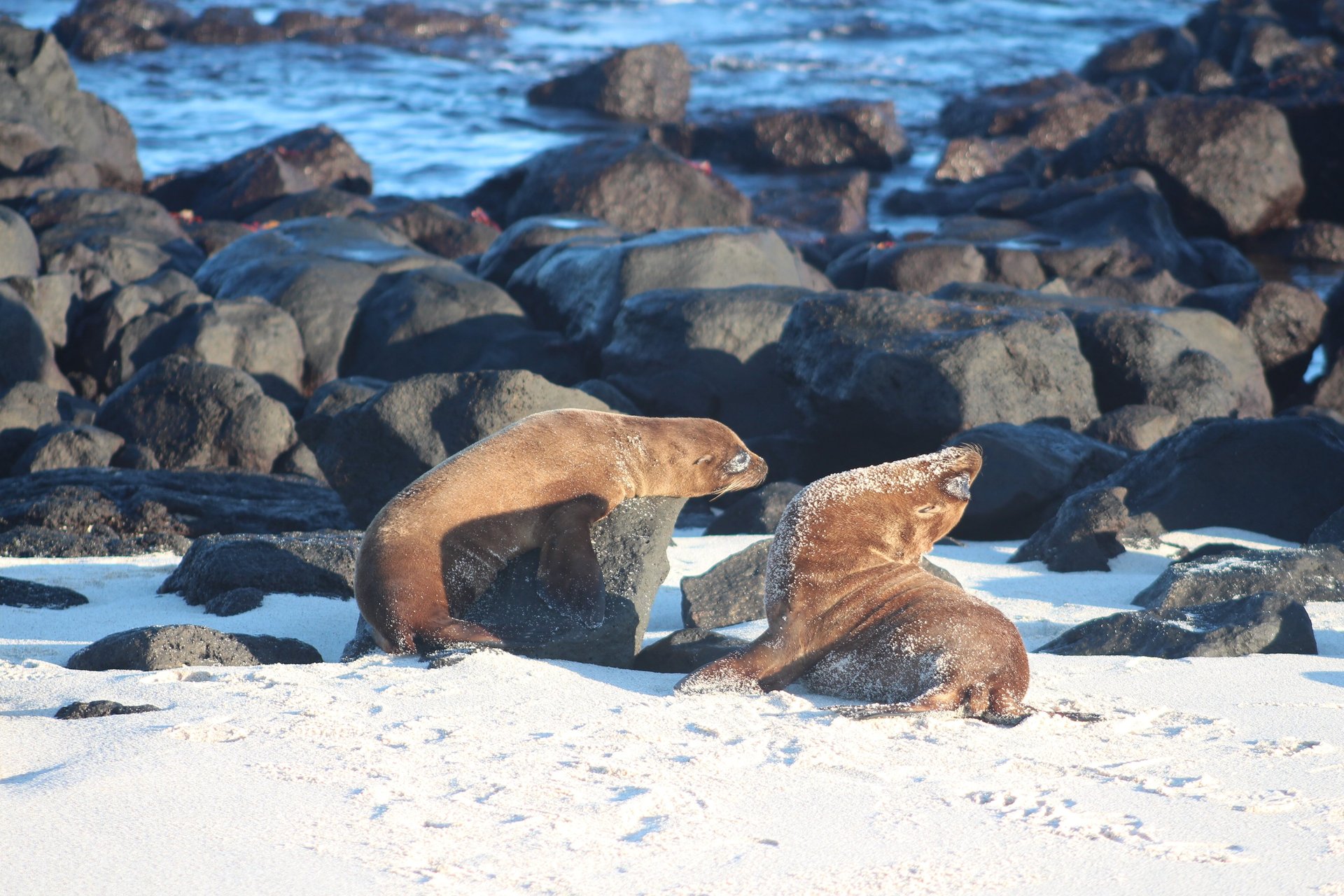
It is also a complete contrast to the Galápagos: wet, dense and green where the islands are arid and open. Travelers who do both usually rate the pairing higher than either alone.
What Does the Avenue of the Volcanoes Offer?
High-altitude Andean landscape south of Quito, with hiking around Cotopaxi, hacienda stays, and the Otavalo indigenous market to the north. It suits travelers who want scale and culture rather than wildlife, and it works well as a two to four night loop from Quito.
Cotopaxi hiking is at altitude and the weather turns quickly. It rewards a day of acclimatisation in Quito first, which you were building in anyway.
How Does an Amazon Extension Work?
Fly Quito to Coca, then travel by motorised canoe down the Napo River to a lodge, typically for three or four nights. Days run to canopy walkways, parrot clay licks, night walks and guided paddling. It is humid, buggy and genuinely remote, and unlike anything in the islands.
Do the Amazon before the Galápagos rather than after, so the humidity and early starts land while you are freshest.
Cost planning for extensions sits alongside the voyage in what a Galápagos expedition costs, and arrival logistics in entry requirements.
Ecuador extensions: common questions
How many nights should I spend in Quito?
Two before your island flight. One is a gamble against international delays, and the second helps with 9,350 feet of altitude.
Cloud forest or Amazon if I can only pick one?
Cloud forest for birds, comfort and short travel time. Amazon for genuine remoteness and rainforest scale, at the cost of two travel days.
Is altitude sickness a real concern?
Mild effects are common in Quito and the Andes: poor sleep, headache, low appetite. Slow first days, water and no alcohol on arrival handle most of it.
Should the mainland come before or after the cruise?
Before. The cruise has a fixed departure you cannot move, so put the flexible days ahead of it.
Can we do Otavalo market on any day?
The market runs daily but Saturday is the full version. Plan around it if handicrafts and the animal market interest you.