Arriving in Longyearbyen
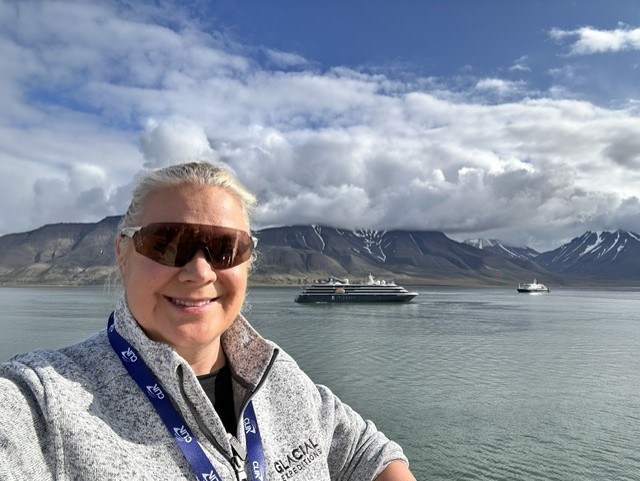
I flew London to Oslo, then Oslo to Longyearbyen. It was July, so there was no sunset — and none for the rest of the week.
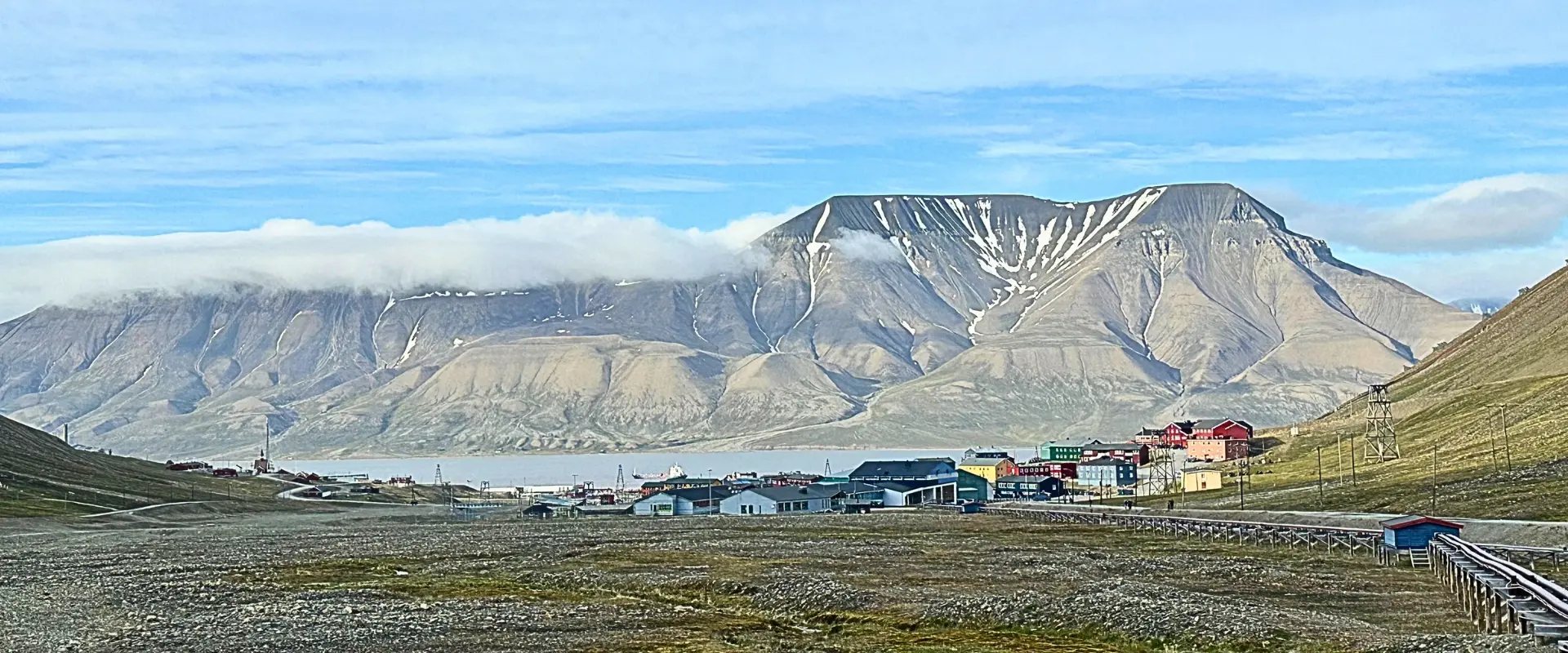
We did a walking tour of the town with the group that first afternoon, covering the whole of Longyearbyen including the old mine shaft above town.
Day one: the sessions
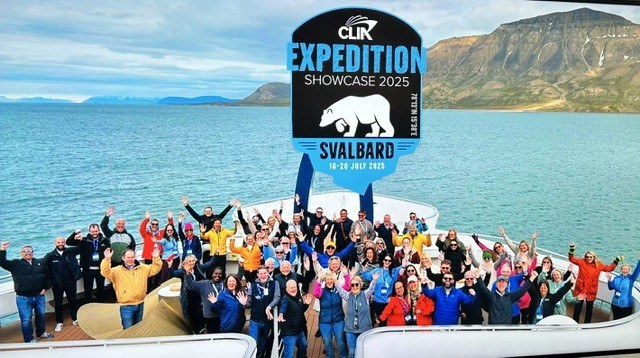
The summit proper started on the seventeenth. Presentations through the morning and afternoon covering Svalbard as a destination, expedition cruising generally, warm-weather expedition cruising, and the differences between East and West Greenland.
Day two: three ships
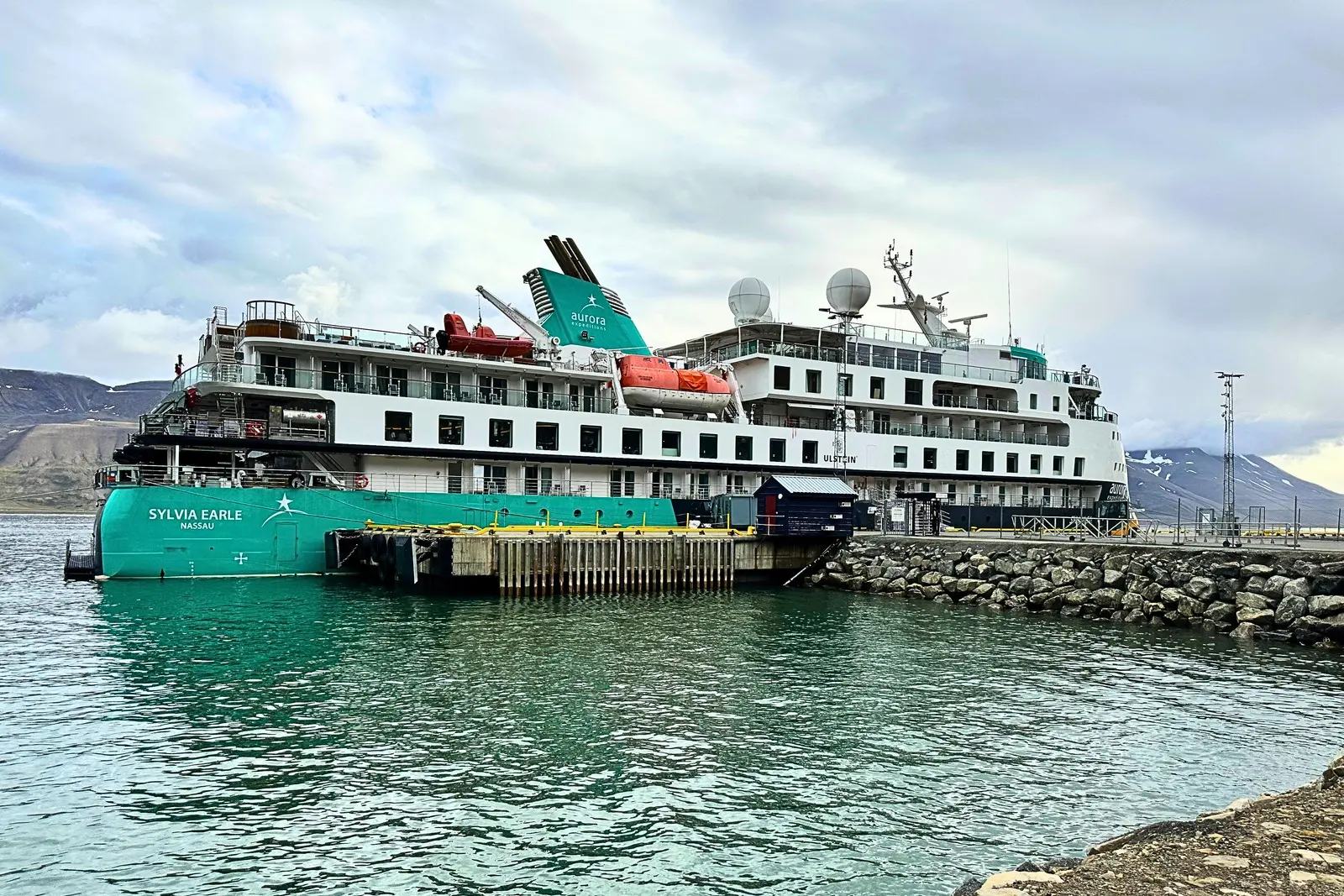
Sylvia Earle. Interesting to tour because we had just sailed her sister ship, the Greg Mortimer, and the similarities and differences were both obvious.
The cabin range is the same: solo occupancy, doubles, triples. Triples matter more than people realise — a family travelling with a small child can sleep three, and a solo traveller happy to share has a triple-share option rather than paying a supplement. We saw those categories and several of the suites.
Two differences from the Greg Mortimer stood out. The bow of the Sylvia Earle is solid glass, a two-storey lounge and library with an enormous amount of light. It is the place you would sit with a hot chocolate and watch the scenery when the weather is bad outside. And she has no igloos at the top aft the way the Greg Mortimer does.
She also has an additional restaurant open daily, upstairs by the hot tubs. Quick service, and a better option than the main dining room when you want a lighter or faster lunch — the main restaurant is à la carte and takes longer.
Otherwise the decor is very close to the Greg Mortimer. Both modern, both well kept, good open space, a proper mudroom where guests keep boots and jackets. We got a look at the kayak storage too.
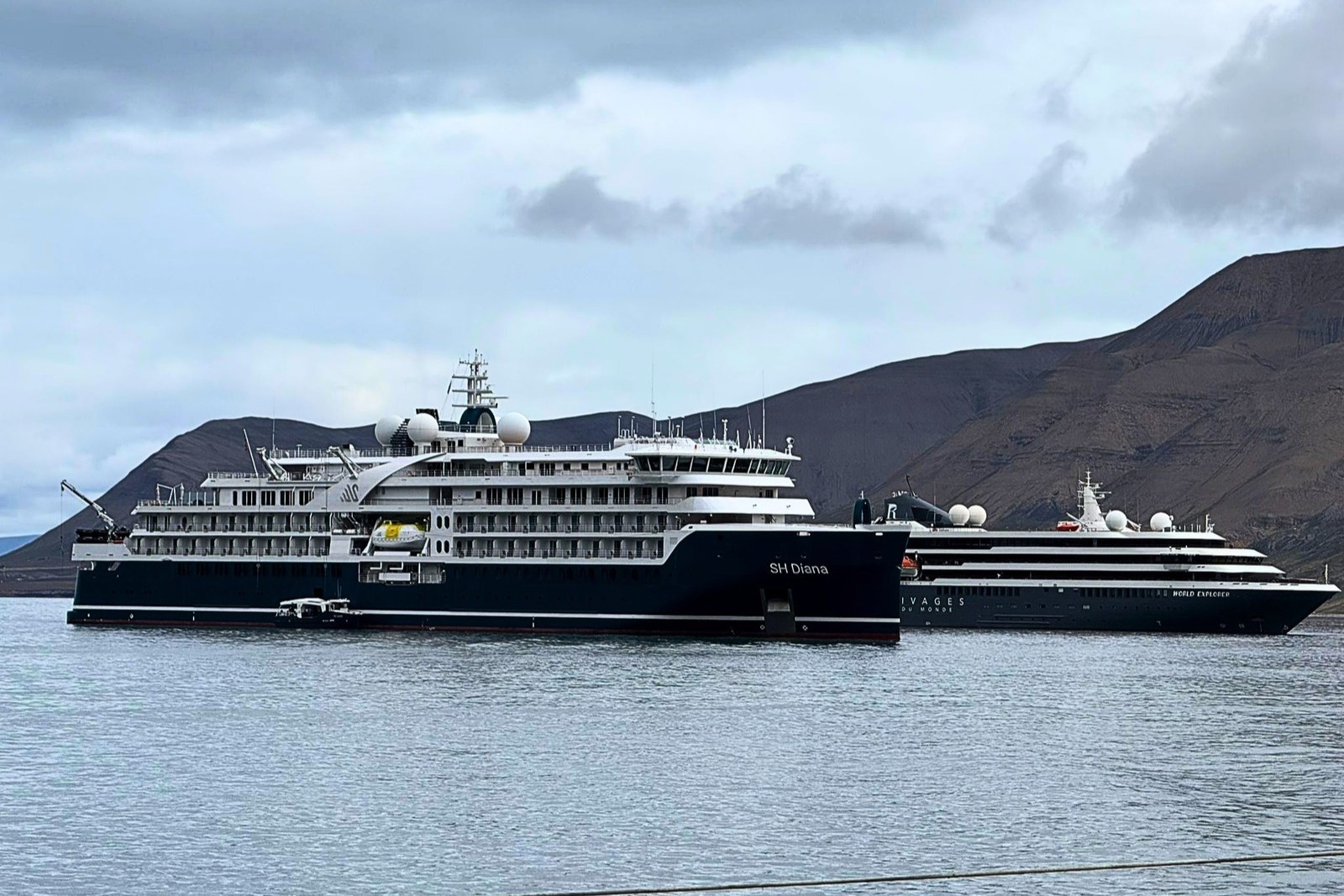
SH Diana. We Zodiaced over. My first time aboard a Swan Hellenic ship, and I was not expecting what I walked into.
You come in to a sleek modern foyer that looks like a high-end hotel. Look closer at the wood panelling and that is where the jackets and boots are kept — the SH Diana has no locker-room mudroom at all. It is open, light and airy, with a lot of space to get ready.
From there you walk straight into the lounge, which is beautiful and spacious. It feels like a gathering place rather than a lecture hall. There is a screen that can come up and monitors around the room, but the seating is arranged conversationally in small groups rather than all facing one focal point the way most expedition ships do. The ceilings are noticeably higher than on the other ships.
The restaurants are well laid out and do not feel like anyone else's. There is a pool aft overlooking the ocean and a large jacuzzi off to the side.
The thing that genuinely sets Swan Hellenic apart: most cabins have a gas fireplace. It looks like a lodge retreat, and it gives you instant warmth when you have come in from outside and need to thaw out. We toured several suites with a separate sitting area off the bedroom, and the bathrooms are all nicely done.
Up forward they have what they call the Nest — an outdoor area at the bow for watching scenery and looking for wildlife.
They carry Zodiacs, but they also carry a small tender of their own, which nobody else does. It is not a big-ship tender — it is a small boat with bench seating and an awning overhead, almost Willy Wonka-looking. Where a landing involves a dock or a walkway they can come alongside, which is a more comfortable ride and moves more people at once.
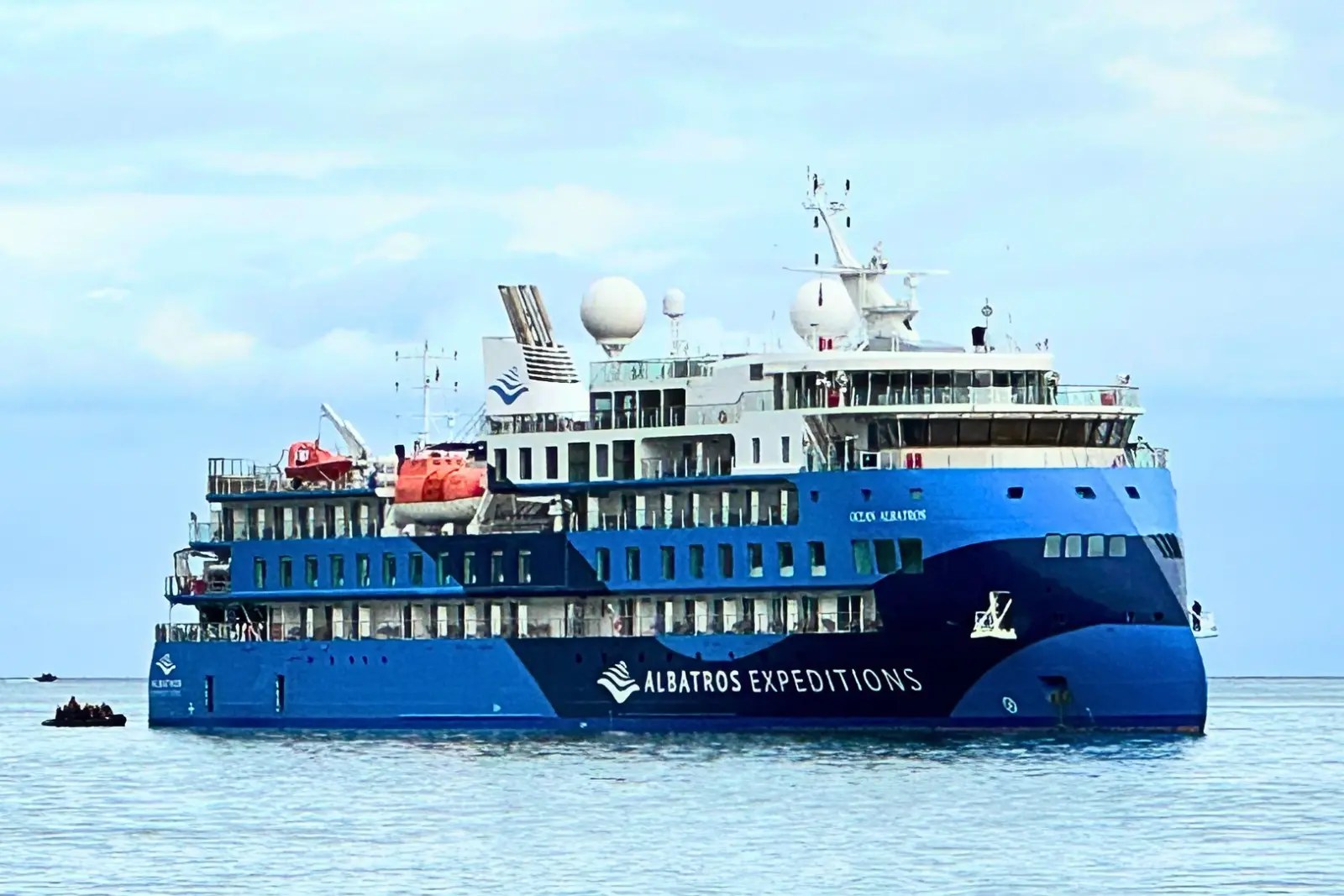
Ocean Albatros. Now part of Polar Latitudes, following the merger.
What is interesting about her is that she comes from the same shipbuilder as Quark's Ocean Explorer and the Aurora Expeditions ships. Same size, same shape from the outside, much the same cabin placement and design. What differs is the decor and how each company chose to lay out the common areas — which made touring three of them in two days unusually revealing.
We came in by Zodiac through the mudroom, laid out much like Aurora's, with a locker per cabin for boots, poles and jackets. Up to a well-arranged lounge with semicircle and bench seating, all pointing towards a lecture focal point, with a lot of windows.
Behind that lounge — where the Sylvia Earle has her two-storey glass front — Ocean Albatros has done something different. An open bow front with no furniture and open window frames rather than glass. You can be out on the bow with nothing between you and the shot, getting fresh air, but still sheltered from wind and weather. A very good spot for photography and wildlife spotting.
The cabins are modern and sleek, with photographs from the Arctic and Antarctica throughout, so it reads as a polar ship. Good outdoor areas up top for dining or a coffee. She has an infinity-style pool at the top aft and two outdoor hot tubs.
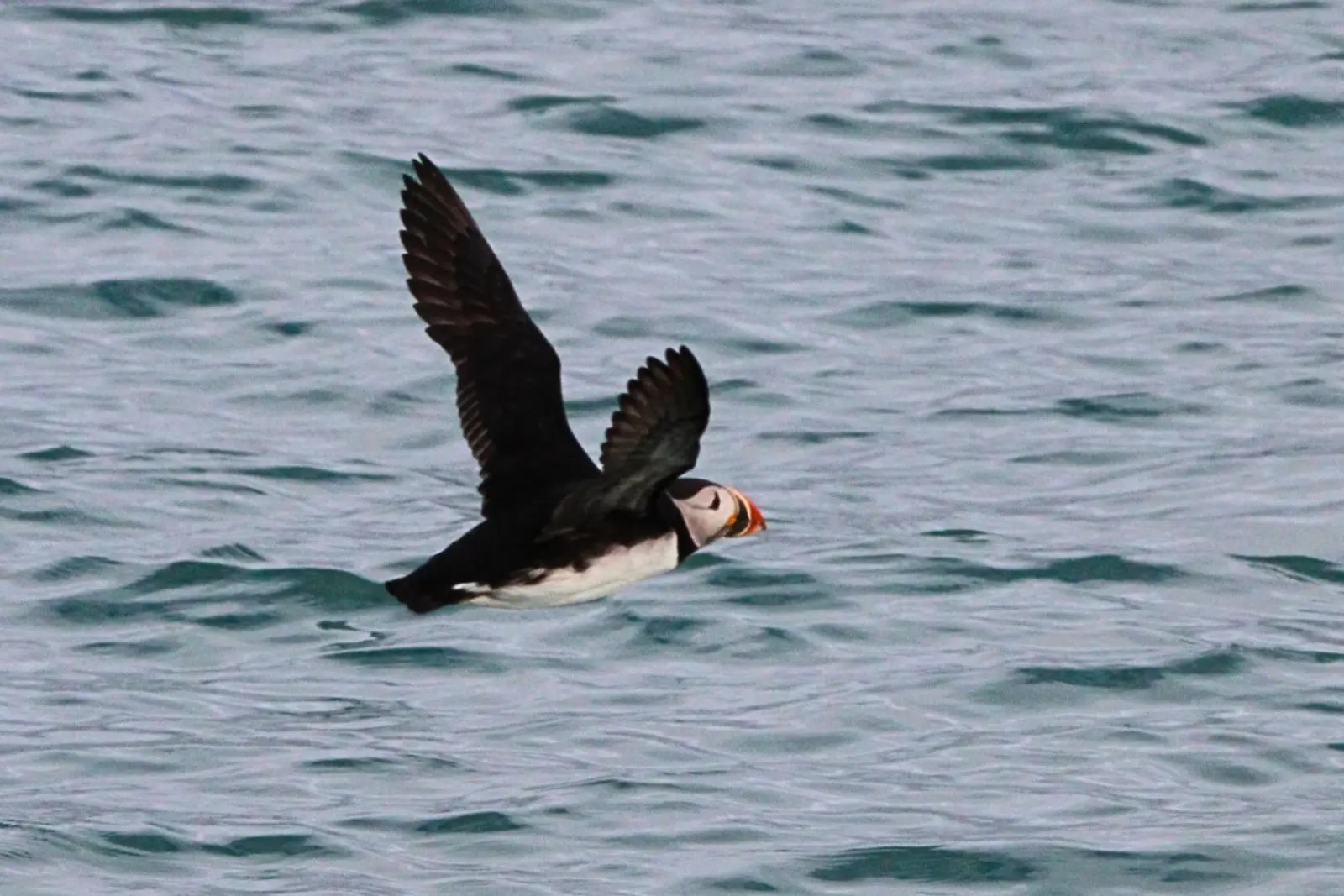
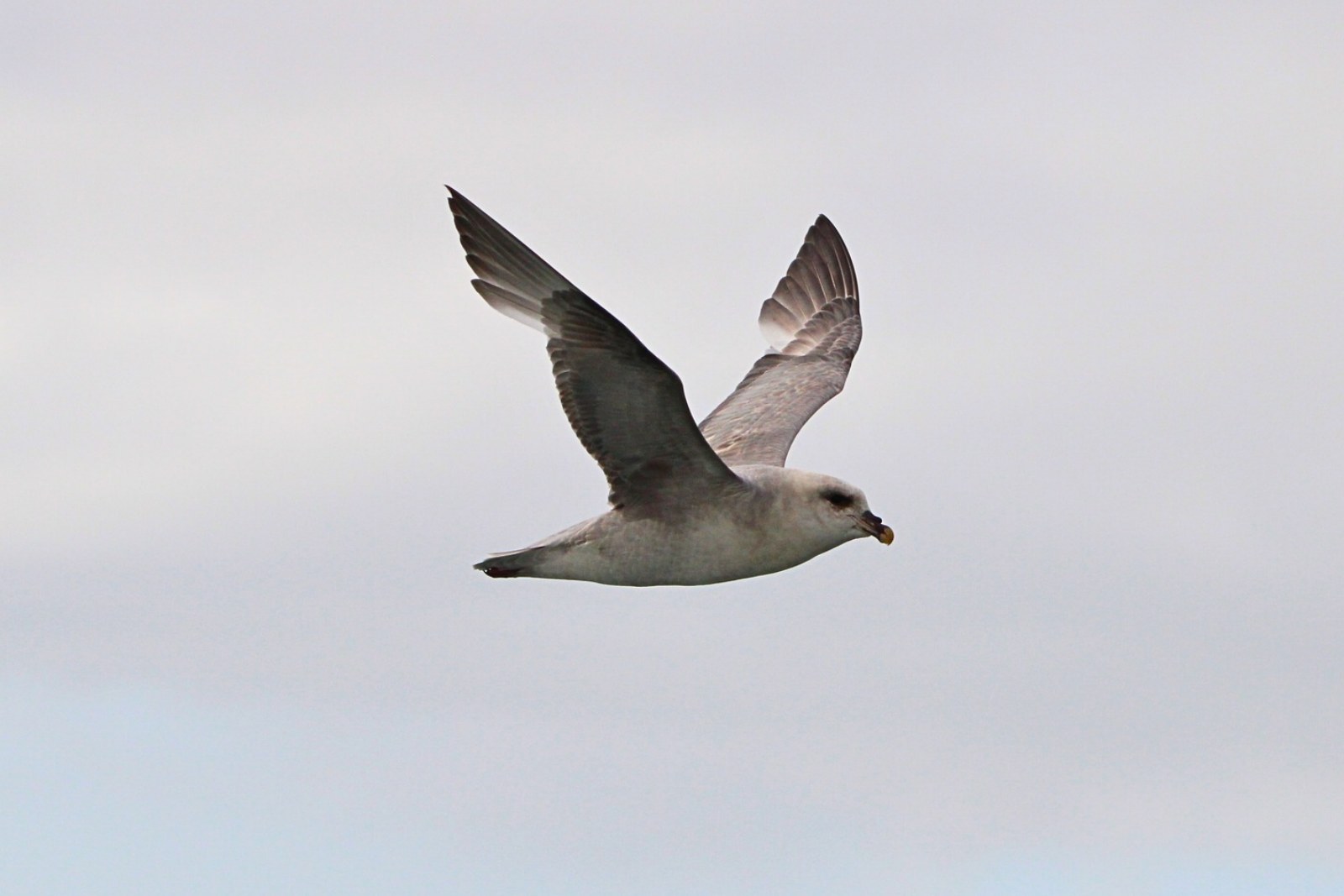
That afternoon we took a boat out around Svalbard. No polar bear, but several belugas, a walrus, and an enormous number of seabirds — puffins everywhere. A good afternoon on the water.
Day three: two more ships
Le Lyrial. Ponant, docked in town, so we walked straight aboard.
Luxurious — silvers, faux furs in the lounge, and you can tell it is a more premium line from the bar selection alone. There is a pool up on one of the top decks.
She was not originally designed for expedition, and it shows: there is no mudroom. Each stateroom has somewhere for boots and plenty of storage for a jacket, but that is not the same thing, and it was a disappointment. She does carry Zodiacs, boarded from a platform at the stern where the guide team helps you across.
The cabins are smaller than the ships we saw the day before, and laid out more like a conventional ocean cruise ship — balcony, small sofa, bed, bathroom nearest the door, closet opposite. Everything well kept.
Two good dining areas: a lovely indoor dining room, with the cheeses already out for that evening's buffet when we walked through, and a two-storey outdoor area aft where you can take lunch overlooking the pool and the wake. They do an outdoor barbecue there too.
Ocean Explorer. Quark. The third ship in two days with the same hull, the same dimensions and near-identical cabins — and by this point the comparison was the interesting part.
Like the Sylvia Earle, Quark have put a two-storey glass front at the bow. Somewhere to sit with a book and a coffee and watch scenery and wildlife without standing out in it.
The lounge doubles as the lecture space, much like Ocean Albatros. Cabins are appointed very similarly to both other ships.
This is Quark's only vessel of this design; their other ships are different. Seeing three interpretations of the same hull in forty-eight hours told me more about how these companies think than any brochure would.
That afternoon was an expedition cruise masterclass on destinations and the differences between operators, followed by a four-course farewell dinner.
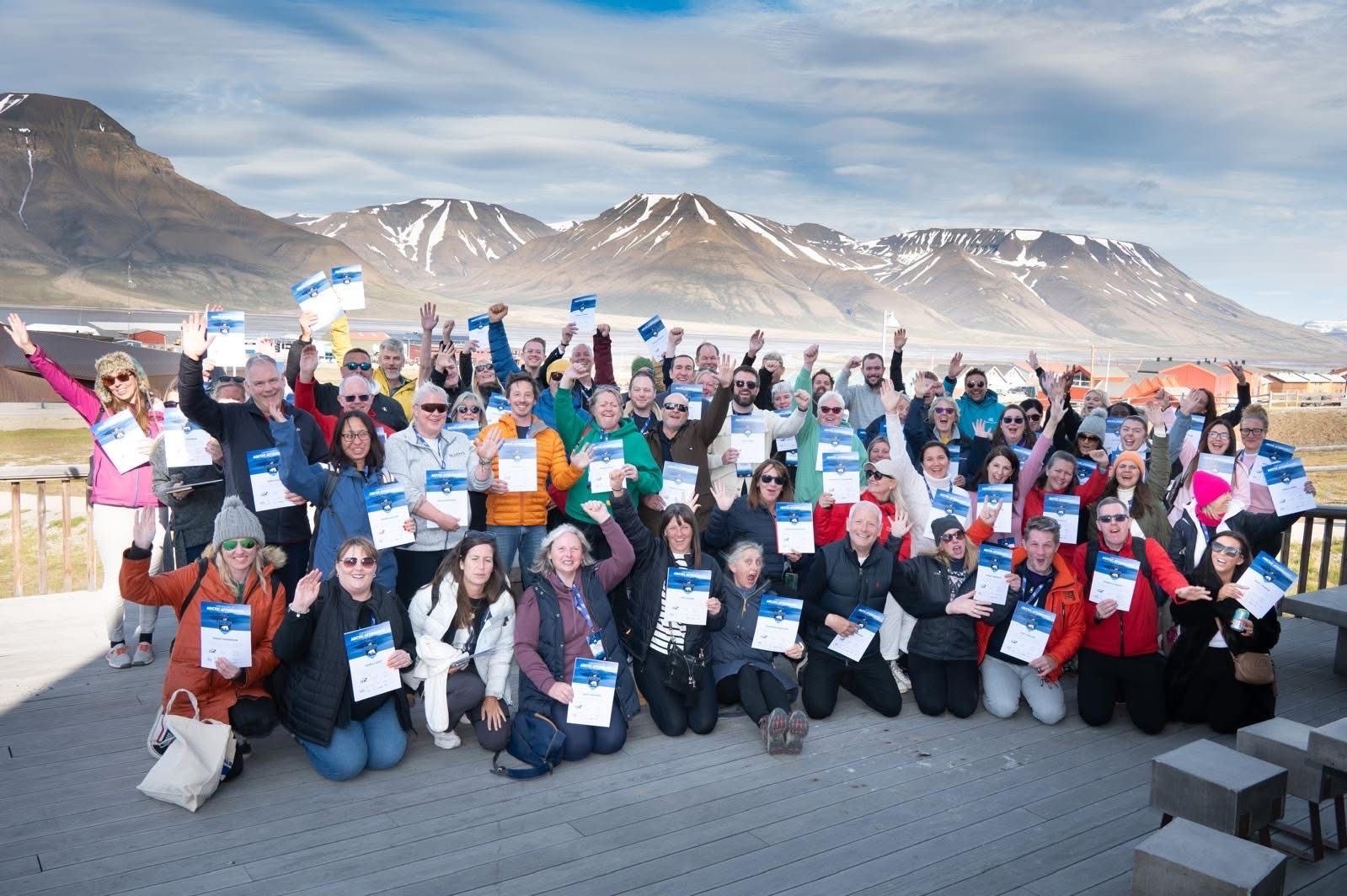
Day four: World Voyager
Atlas Ocean Voyages, and sister ship to the World Navigator, which we sailed to Antarctica.
There is not much between them. The main difference is the colour palette and the wood tones.
What I liked on the Navigator and still like here is the cabin size, even at entry-level balcony. Atlas offer two balcony types, which is unusual. There is the traditional balcony with a slider, two chairs, a table and a rail. And there is what they call the sunset balcony — a French balcony, the kind you would find on a river ship. It gives you the space that would have been outside, inside your room instead, with a full wall of window and a button that lowers the top section so you can look out and take photographs.
For an entry-level category the Atlas balconies are lovely. Good space, good storage, a nice bathroom with stone flooring in the shower and a rainfall head.
The World Voyager, like the other Atlas ships, has a proper lecture theatre — tiered seating, a small stage and a large screen. Outside that they have a lounge where they also run presentations, arranged in small seating groups with monitors around the room.
One main dining room, plus an indoor-outdoor dining area up on the top deck. A lot of good indoor and outdoor space for watching landscape and wildlife.
The pool and hot tub sit mid-ship rather than aft, which is a real difference. You can see out to either side, but you do not get the fully unobstructed view astern that the other ships give you.