


Part of our The Arctic guide →
Arctic wildlife at a glance
- Headline mammal
- Polar bear — Arctic only, usually seen at distance on sea ice
- Most reliable spectacle
- Walrus haul-outs and seabird cliffs holding tens of thousands of birds
- Whales
- Humpback, minke, fin, bowhead, beluga, and narwhal in high ice corridors
- Land mammals
- Svalbard reindeer, Arctic fox, and muskoxen in Greenland and Arctic Canada
- Behaviour
- Wary. Arctic animals evolved alongside land predators, including people
- Penguins
- None. Penguins live only in the Southern Hemisphere
Which Marine Mammals Will You See in the Arctic?
Polar bears are the apex species and depend on sea ice for hunting seals. Walrus are the most reliable large mammal, hauled out on gravel beaches and floes in groups. Whale sightings include humpback, minke, fin, bowhead and beluga, with narwhal in high northern ice corridors. Bearded, ringed and harp seals rest on floes throughout.
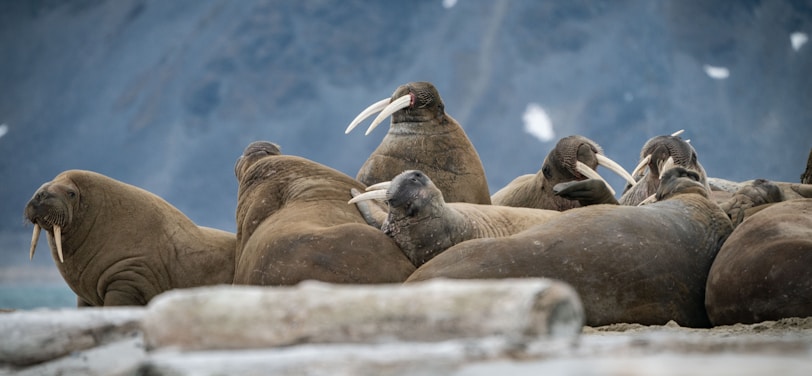
Walrus are the animal most travellers underestimate. A haul-out is heard and smelled well before it is seen, and it is approached slowly by Zodiac rather than on foot — a stack of one-tonne animals will stampede for the water if people appear above the beach, and the injuries in that scramble are to the walrus.
Our own encounters come from Svalbard aboard the MS Spitsbergen and East Greenland aboard the National Geographic Resolution, plus two land trips to Churchill for bears and belugas. Narwhal we have not seen; they remain the one Arctic animal we talk about without having watched.
What Land Mammals Live in the Arctic?
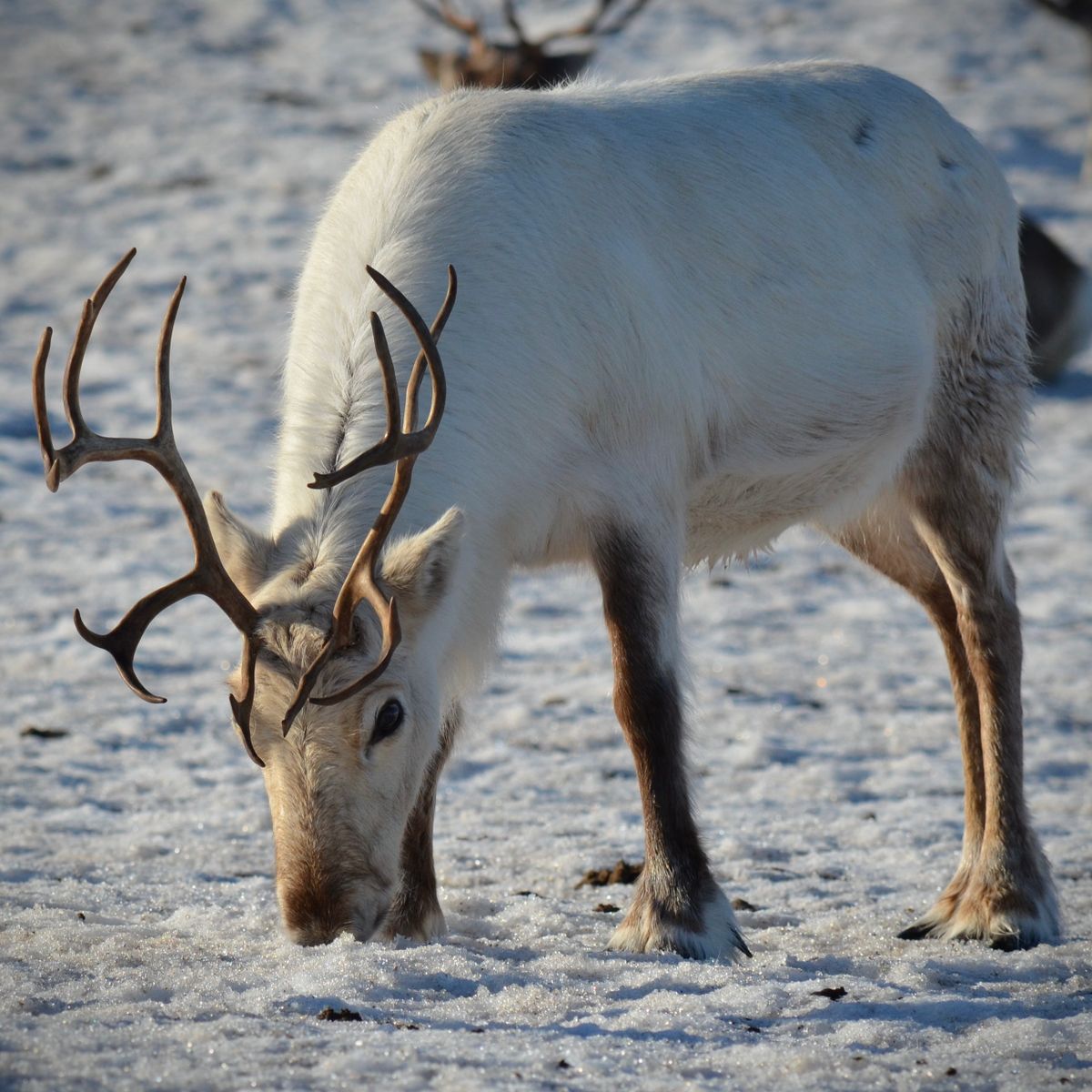
Svalbard reindeer are an endemic subspecies with short legs and heavy coats, and they are so unbothered by people that they wander through Longyearbyen. Arctic foxes work cliff bases and shorelines, their coats shifting from brown-grey in summer to white in winter. Muskoxen, shaggy and prehistoric-looking, live in Greenland and Arctic Canada.
Muskoxen are the reason a Greenland landing can feel like a different continent from a Svalbard one. On the East Greenland coast they graze the valley floors in small groups, watched from a respectful distance on foot.
Arctic fox sightings usually happen where the food is: beneath a bird cliff in chick season, or trailing a bear's kill at a careful distance.
What Birds Will You See on an Arctic Voyage?
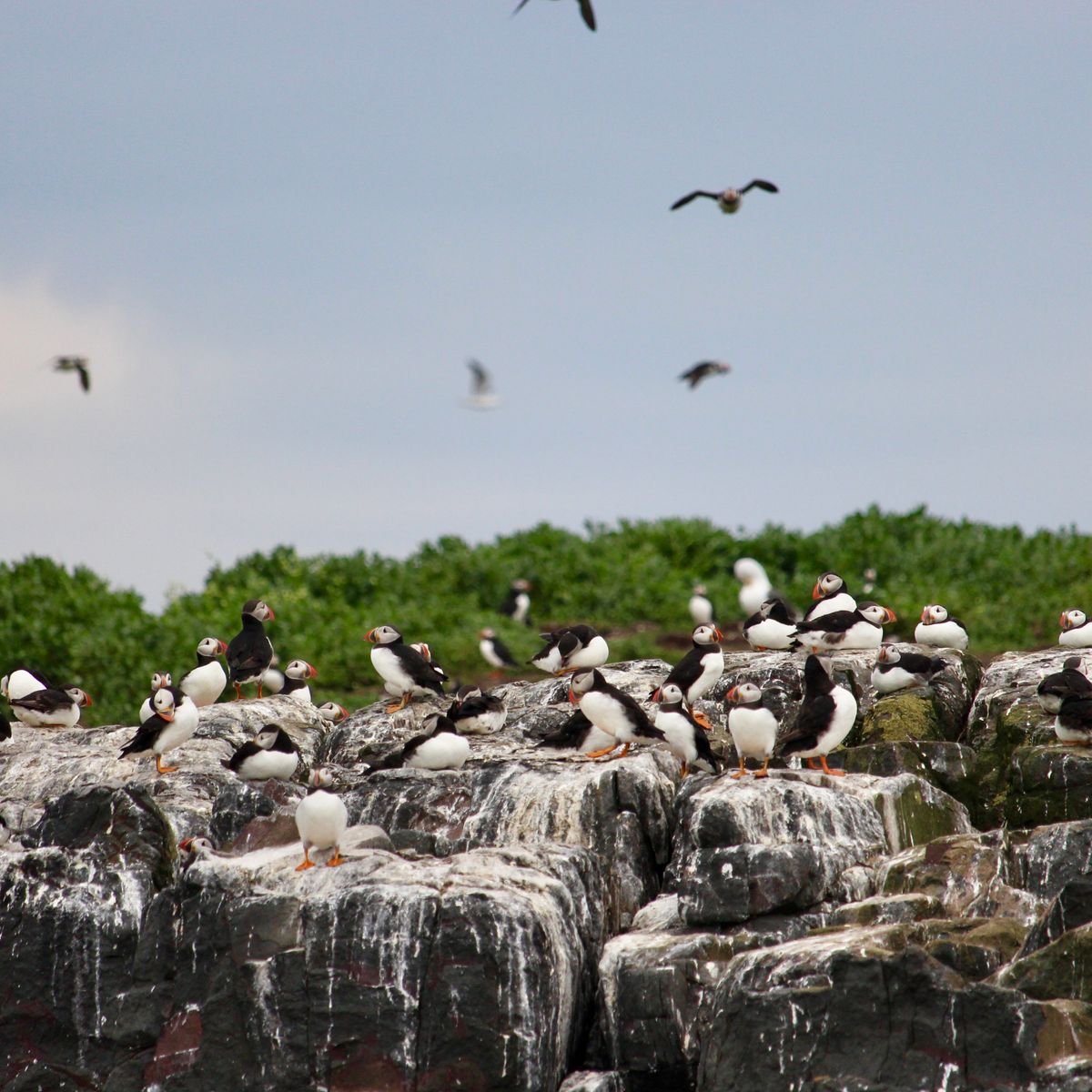
Millions of seabirds arrive each spring to breed. Expect Atlantic puffins, Brünnich's guillemots, black-legged kittiwakes, ivory gulls, king eiders and Arctic terns. Svalbard's Alkefjellet cliffs hold tens of thousands of nesting guillemots on basalt columns, with foxes working the base — one of the loudest, busiest wildlife scenes in the Arctic.
Arctic terns deserve a warning as well as admiration: they nest on open ground near settlements and will dive at your head to defend it. Walk where the guides walk, and raise a hand or a hat above your head.
Bird cliffs are also the best argument for going earlier rather than later. By late August many colonies have emptied as chicks fledge and the birds head to sea.
How Close Do You Get to Arctic Wildlife?
Further than in Antarctica. Arctic animals evolved alongside land predators, so they are genuinely wary — nothing here walks up to your boot the way a curious gentoo penguin does. Norwegian law sets minimum polar bear distances in Svalbard, 300 metres in spring and summer and 500 for fast craft, and the operators we book also follow AECO guidelines.
The reward is different in kind. A bearded seal holding its position on a floe as the Zodiac drifts past. A fox trotting a cliff base for fallen chicks. A herd of reindeer that lets you pass at thirty metres because it has decided you are not worth the energy.
It also means good binoculars change the trip more than a better camera does. Ships carry spotting scopes on the bridge wings, and the crew are generous with them.
Are There Penguins in the Arctic?
No. Penguins live only in the Southern Hemisphere, and they never share a landscape with polar bears anywhere on Earth. The Arctic's equivalent spectacle is its seabird colonies: puffins, auks, guillemots and kittiwakes in the tens of thousands on a single cliff face.
This is worth stating plainly because it changes trips. Travellers picturing penguins on ice are describing Antarctica, or in a warmer version of the same instinct, the Galápagos.
When Is the Best Time for Arctic Wildlife?
June and early July for polar bears on dense pack ice and for seabird colonies at their fullest. July and August for active walrus haul-outs, flowering tundra and peak whale activity. Late August and September for whales still feeding before migration, autumn colour, and bears gathering along coastlines and the remaining ice.
No single month wins everything, which is why we start with the animal you most want to watch and work backwards. The full breakdown sits in when to visit the Arctic.
Arctic wildlife: common questions
What animals will I definitely see in the Arctic?
Nothing is guaranteed, but seabirds, seals and Svalbard reindeer are close to certain on a summer Svalbard voyage, and walrus are highly likely. Polar bears and whales are strong probabilities rather than certainties.
Are there penguins in the Arctic?
No. Penguins live only in the Southern Hemisphere. The Arctic's signature birds are puffins, guillemots, kittiwakes and Arctic terns, and its signature predator is the polar bear.
Can you see narwhal or beluga?
Beluga are seen fairly regularly along Arctic coastlines, and reliably at Churchill in summer. Narwhal are far more elusive, keeping to high northern ice corridors, and no itinerary should be sold on the promise of them.
Why is Arctic wildlife more wary than Antarctic wildlife?
Because it evolved with land predators, including humans. Antarctic animals have no land predators and are largely indifferent to people, while Arctic animals keep their distance — which is why viewing distances here are longer and binoculars matter more.
What rules govern wildlife viewing in the Arctic?
National law plus operator guidelines. In Svalbard, Norwegian rules set minimum polar bear distances and protect reindeer and nesting sites, and the operators we book follow AECO guidelines on approach distances, engine noise and landing conduct.
Keep exploring Arctic wildlife
Seeing polar bears in the Arctic
Odds, timing, distances and what a real sighting looks like.
Svalbard expedition cruises
The archipelago where most of this wildlife is seen.
When to visit the Arctic
Which month suits which animal, month by month.
10 fascinating facts about the Arctic
Midnight sun, walrus society, street-wandering reindeer and more.
Wildlife viewing
How viewing works across every region we advise on.