
Part of our Antarctica guide →
The continent at a glance
- Ice cover
- Roughly 99% of the surface
- Fresh water
- About 70% of the world's supply, locked in the ice sheet
- Permanent residents
- None; research stations only
- Ice core record
- Ancient air stretching back close to a million years
- Driest place
- The McMurdo Dry Valleys, near-rainless for around two million years
- Most active volcano
- Mount Erebus, continuously active
- Visitor season
- November to March
- Tourist access
- Peninsula, Weddell Sea, South Georgia — not the interior
What are the hidden wonders of Antarctica?
Antarctica is 99% ice, and most of what makes it extraordinary sits under that ice or on the far side of the continent from the visitor routes: lakes sealed for millions of years, a buried mountain range, fossil forests, a blood-red waterfall, a Mars-like desert and an active volcano. A handful of them you can see from a ship. Most of them you will only ever read about — which is, in its way, the point.

At the very end of the Earth lies a vast, shimmering wilderness where ice meets infinity and you are surrounded by silence. For anyone planning an expedition, this is not a vacation so much as an odyssey to a continent of extremes.
We have kept the honest split running through this guide. Some of these wonders are part of a normal voyage. Others belong to the research stations and the deep interior, and no cruise, at any price, will take you to them. Anybody suggesting otherwise is selling you something.
For the practical side of a trip — routes, ships, months and cost — start with our complete Antarctica guide.
What lies beneath the ice? Antarctica's subglacial lakes
Entire lakes sit sealed beneath the ice sheet, untouched by sunlight for millions of years. Lake Vostok, under roughly four kilometres of ice, is the best known. These are biological time capsules, and they are studied as analogues for icy moons like Europa and Enceladus.
Nothing about them is visible from the surface. They were found by radar and seismic survey, not by eye, and reaching one means drilling through kilometres of ice while trying not to contaminate an ecosystem that has been isolated since long before humans existed.
For a traveler, the value is imaginative rather than logistical. Standing on the ice knowing that a lake the size of a small sea lies under your feet changes how the landscape reads — and it is exactly the kind of material the lecture programmes aboard expedition ships are built around.
The mystery of Blood Falls in East Antarctica
Blood Falls is a crimson stream of iron-rich brine seeping from the Taylor Glacier and staining the white ice a deep red. It is one of the most striking illustrations of Antarctic microbial life. It also sits inside an Antarctic Specially Protected Area and is not on any tourist itinerary.
The colour comes from iron in ancient, salty water oxidising as it meets air. Beneath it sits a microbial community that has survived without light or oxygen — the reason the site is protected in the first place.
We include it because people ask, and because the answer matters: this is a scientists' site, in a region visitor ships do not work. If you see it advertised as a shore excursion, that is a red flag.
The McMurdo Dry Valleys: Earth's Mars-like landscape
The McMurdo Dry Valleys are among the driest places on Earth, with no significant liquid precipitation for close to two million years. Wind-scoured rock, no ice, no snow. NASA-adjacent researchers use them as an analogue for Martian terrain — and, like Blood Falls, they sit far outside the visitor routes.
The valleys stay bare because katabatic winds pour off the polar plateau and strip away any moisture before it can settle. The result is a rocky, sculpted desert on a continent defined by ice, which is exactly why it is so useful to science.
It is worth knowing they exist if only to correct the mental picture. Antarctica is not one landscape; it is several, and only a narrow coastal band of it has ever been seen by travelers.
Antarctica's ancient frozen forests
Long before it froze, Antarctica was green. Fossils preserved in the rock record ancient forests and fern species from a time when the continent carried lush vegetation and flowing rivers. The ice is recent, in geological terms.
Fossil leaves and petrified wood recovered from Antarctic outcrops are among the more disorienting objects in polar science: proof that this place once had a climate you could walk around in without gear.
It reframes the continent as something in motion rather than something permanent — a useful thing to carry with you while looking at an ice shelf.
Wildlife encounters: home of the emperor penguin
Emperor penguins are the largest penguin species on Earth and a symbol of endurance on a continent that offers none. Seeing a colony hold together through a blizzard is the encounter travelers describe as humbling. It is also not part of a standard Peninsula voyage — emperors need a dedicated Weddell Sea expedition.
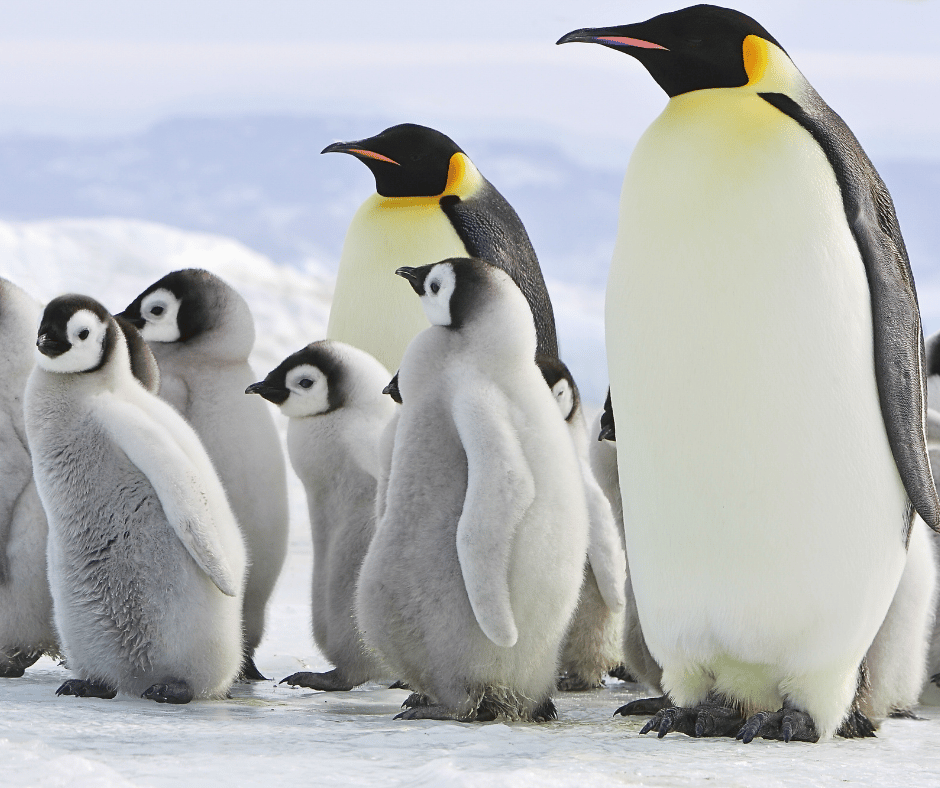
The Peninsula gives you gentoo, chinstrap and Adelie penguins, plus seals and whales, and it gives them generously. Emperors are a different trip: ice-strengthened ship, helicopter transfer, and a window running roughly November to early December.
We separate the two deliberately, because the disappointment of arriving in Antarctica expecting emperors and meeting three other species is entirely avoidable. Our Weddell Sea and emperor penguins guide covers how those voyages actually work, and the Antarctica wildlife guide sets out what you can expect on the standard routes.
A reservoir of fresh water and climate history
The Antarctic ice sheet holds roughly 70% of the planet's fresh water. It is also an archive: ice cores drawn from it carry bubbles of ancient air stretching back close to a million years, which is how researchers reconstruct how Earth's climate has changed.
Each core is a stacked record of snowfall, dust, volcanic ash and trapped atmosphere. Read in sequence, it becomes a timeline of the planet's past — and the basis for most of what is understood about the future of the global ocean.
Several expedition operators run citizen-science programmes that feed real data into that wider research effort, and travelers can take part directly. Our citizen science guide sets out which programmes run on which ships.
A continent without citizens: global collaboration
Antarctica is the only continent with no permanent residents and no sovereign owner. Instead it hosts international research stations working on glaciology, geology, biology and atmospheric science, under a treaty framework that reserves the continent for peace and science.

That governance is not an abstraction for visitors. It is the reason behaviour ashore is tightly regulated, and the reason the tourism industry operates under IAATO's rules on landing numbers, wildlife distances and biosecurity.
We cover what those obligations mean in practice — for you, on a beach, with a penguin walking toward you — in our responsible travel guidelines.
The Gamburtsev Mountains: peaks hidden under ice
An entire mountain range comparable in scale to the Alps sits buried beneath kilometres of the East Antarctic ice sheet. The Gamburtsev Mountains have never been seen. They were mapped by airborne radar, and their existence is still not fully explained.
Mountains of that size should have eroded away long ago, or should sit at the edge of a continent rather than its centre. They do neither, which is why they remain one of the more genuinely open questions in Antarctic geology.
Nothing marks them at the surface. You could fly over the range and see only a flat white plateau running to the horizon.
Fire and ice: active volcanoes in Antarctica
Antarctica is also a land of fire. Mount Erebus, on Ross Island, is one of the most active volcanoes on the planet and holds a persistent lava lake in its summit crater — molten rock sustained in sub-zero air.
Erebus is on the Ross Sea side of the continent, reached by a small number of long Ross Sea voyages rather than by the Peninsula fleet, and it is a distant sight even then.
Deception Island, by contrast, is squarely on the visitor map: a collapsed volcanic caldera in the South Shetlands that ships sail directly into through a narrow gap in the crater wall. It is the closest most travelers come to standing on active Antarctic volcanism, and it is one of the most memorable landings of any Peninsula voyage.
Giant icebergs and calving events
In 2000 the largest iceberg ever recorded — bigger than the country of Luxembourg — broke away from an Antarctic ice shelf. Calving events on that scale are rare, but the process itself is constant, and tabular icebergs are a defining sight of the Weddell Sea and the Antarctic Sound.
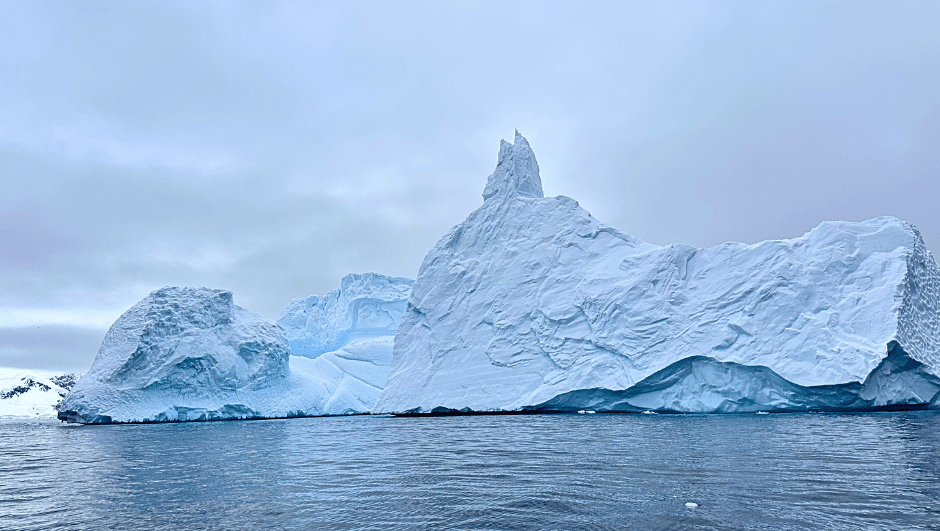
Tabular bergs are not the sculpted, jagged shapes of the north. They are flat-topped geometric slabs calved straight from an ice shelf, some of them miles long, and moving among them at low sun is the thing photographers come back for.
The Antarctic Sound is nicknamed Iceberg Alley for exactly this reason. Our Antarctica photography guide covers shooting them from a moving Zodiac, which is harder than it sounds.
Which of these can you actually see on an expedition?
Realistically: emperor penguins on a dedicated Weddell Sea departure, tabular icebergs and calving faces on most itineraries, Deception Island's caldera on Peninsula voyages, and the ice sheet itself everywhere. Subglacial lakes, Blood Falls, the Dry Valleys, the Gamburtsevs and Erebus are science-station territory or deep interior, and no tourist itinerary reaches them.
We would rather set that boundary plainly than let a beautiful article do the selling. What a voyage gives you is the coastline, the wildlife, the ice and the silence — which is more than enough, and is why people go back.
If your interest is the science rather than the scenery, the lever you have is the ship. Some operators carry serious lecture staff and run active research programmes aboard; others do not. That is a choice worth making deliberately, and our Antarctica cruise lines comparison is where to start.
Planning an expedition around the wonders
Most expeditions run between November and March, during the Antarctic summer, when wildlife activity peaks and the ice allows access. Within that window the month you pick changes what you see — emperor chicks in November, penguin chicks in January, whales in February and March.
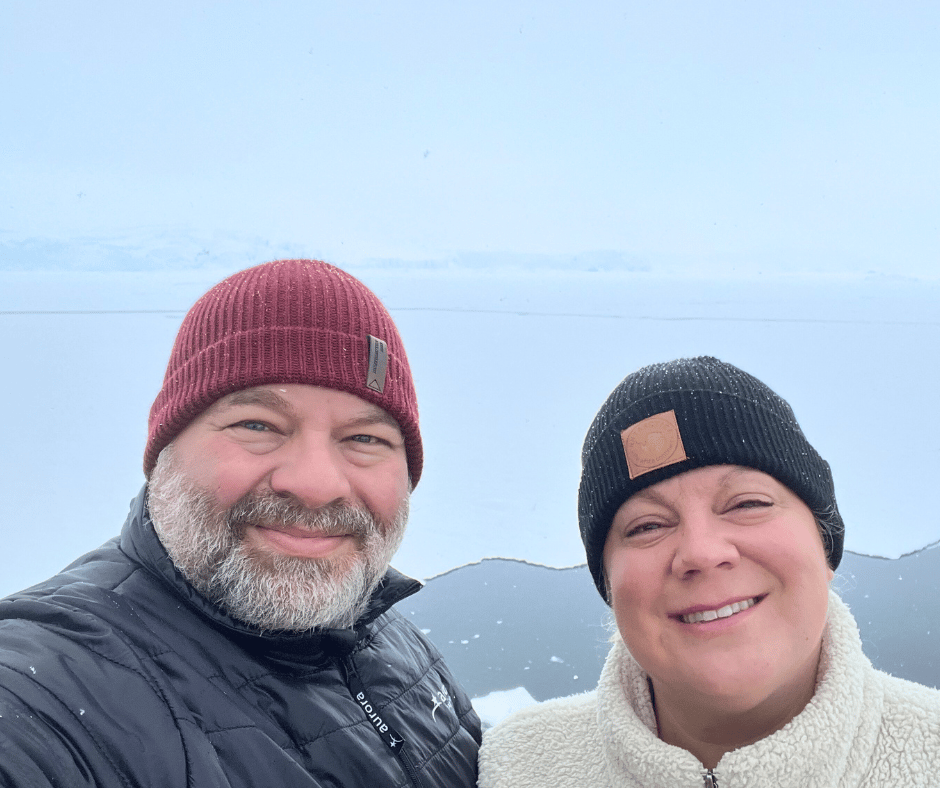
Traveling to the frozen heart of the world is an emotional and intellectual awakening as much as a journey, and the travelers who get the most from it are the ones who chose their month for a reason.
Our best time to visit Antarctica guide runs month by month, and our Antarctica cost guide sets out what a voyage costs and what sits outside the fare.
Hidden wonders: common questions
Can tourists visit Blood Falls or the Dry Valleys?
No. Both sit in the Ross Sea sector of the continent, far from the Peninsula routes, and Blood Falls is inside an Antarctic Specially Protected Area. They are research sites, not destinations.
Can you see Mount Erebus on an Antarctica cruise?
Only on a long Ross Sea voyage, and then at a distance. Peninsula travelers who want volcanic landscape should look instead at Deception Island, a flooded caldera that ships sail into through a gap in the crater wall.
Are emperor penguins part of a normal Antarctica cruise?
No. Standard Peninsula voyages deliver gentoo, chinstrap and Adelie penguins. Emperors require a dedicated Weddell Sea expedition on an ice-strengthened, helicopter-equipped ship, in a window running roughly November to early December.
How much of Antarctica has anyone actually seen?
A narrow coastal fraction. Around 99% of the surface is under ice, entire mountain ranges and lakes lie buried beneath it, and tourism operates along a small stretch of the Peninsula, the Weddell Sea and the sub-Antarctic islands.
When do expeditions run?
Between November and March, during the Antarctic summer. The month you choose changes what you see, from emperor chicks early in the season to peak whale activity at the end of it.
Does working with Glacial Expeditions cost more?
No. Our planning costs you nothing extra. Pricing matches booking direct with the cruise line, and Signature Travel Network amenities are added on top.
More Antarctica guides
Weddell Sea & emperor penguins
Snow Hill Island, helicopter operations, and the narrow November window.
Antarctica wildlife
Penguins, whales and seals, and how sightings shift across the season.
Citizen science on ice
The research programmes travelers can take part in, ship by ship.
Best time to visit Antarctica
November to March, and what each month gives you that the others do not.
Antarctica photography guide
Light, lenses and shooting icebergs from a moving Zodiac.
How much does an Antarctica cruise cost?
What a voyage costs, and everything that sits outside the fare.