
IAATO Associate
Responsible Travel Guidelines.
Antarctica is one of the last genuinely wild places on earth. These are the rules that keep it that way, and what they mean in practice.
Glacial Expeditions is an Associate member of the International Association of Antarctica Tour Operators. IAATO sets the visitor guidelines that govern how people behave ashore in Antarctica, and every operator we work with enforces them. Passengers who disregard the rules can lose landing privileges for the rest of the voyage.
We believe in responsible travel that protects the extraordinary places we explore. Whether navigating polar waters or remote island archipelagos, we're committed to preserving fragile environments, respecting wildlife, and honoring local cultures and histories.
Respecting Antarctic wildlife.
Stay at least 5 metres from wildlife and bird nests, and at least 15 metres from fur seals, which are the most dangerous animals visitors encounter. No more than 20 people should be within viewing distance of an animal at once. If an animal changes its behaviour because of you, you are too close — back away slowly.
- Move slowly and stay upright — never crouch, sit, kneel, or lie down in a wildlife area
- Never place equipment, bags, or tripods on the ground or snow near wildlife
- No selfie sticks, and no flash photography under any circumstances
- Never touch or feed an animal, or encourage any interaction
- Give animals the right of way; if a penguin is on the path, stop and let it pass
- Watch for signs of disturbance — altered posture, increased calling, or moving away from you
Biosecurity and avian influenza.
Seeds, spores, insects, and pathogens travel on boots, clothing, bags, and camera straps. Before you leave home, everything that may touch the Antarctic environment must be cleaned and disinfected. Ships run daily biosecurity checks between landings, and avian influenza has raised vigilance further in recent seasons.
- Vacuum pockets, cuffs, seams, and Velcro on all outer clothing before you travel
- Scrub boot treads and walking pole tips clean of soil and seeds
- Declare and clean any gear previously used outdoors, including tripods and backpacks
- Expect boot washing and disinfection every time you return to the ship
- If avian influenza is observed at a site, landings may be cancelled at short notice
Minimizing your environmental impact.
Nothing may be left behind and nothing may be taken. That includes feathers, bones, eggs, vegetation, soil, rocks, and fossils, all of which are protected. IAATO members have also committed to reducing single-use plastics as part of the UN Clean Seas campaign.
- Take no souvenirs of any kind, natural or man-made
- Leave nothing ashore, including food, litter, and cigarette ends
- Bring a reusable water bottle; most ships have eliminated single-use plastic
- Respect smoking restrictions, particularly near buildings — fire is a serious hazard in Antarctica's dry air
- Do not interfere with scientific equipment, marker posts, field camps, or study sites
Protecting Antarctic heritage.
Antarctica's historic huts and research stations are protected sites, some more than a century old. Visits are limited in number and supervised, and nothing inside may be touched or removed.
- Enter historic sites only with a guide and only in permitted numbers
- Touch nothing inside a hut — artefacts are fragile and irreplaceable
- Do not enter emergency refuges except in a genuine emergency; if you use supplies, report it afterward
- Follow the specific rules for any research station you visit, which vary by station
Health, safety and wellbeing.
There is no rescue service in Antarctica and no hospital within reach. Ships carry a doctor, evacuation insurance is mandatory, and self-sufficiency is the operating principle. Most incidents involve slips on wet rock or ice rather than anything dramatic.
- Never walk onto a glacier or snowfield without a guide and proper equipment — crevasses are hidden
- Stay with your group and follow the expedition team's instructions ashore
- Expect weather to change the plan without notice
- Confirm your travel insurance meets your operator's medical evacuation limits before you book
- Move deliberately on landings; uneven rock and wet ice cause most injuries
The same principles, everywhere.
Antarctica has the most formal rules, but the thinking applies across every region we plan. The Galápagos requires a licensed naturalist guide at every visitor site. Svalbard has its own wildlife distance rules and polar bear protocols. South Georgia has among the strictest biosecurity checks anywhere. Your operator will brief you before every landing — the guidance above is what those briefings have in common.
Distances and biosecurity are the settled part. The harder question is which encounters are found and which are arranged, and we set out our position on that separately in how we think about wildlife encounters.
Written by your expedition advisor
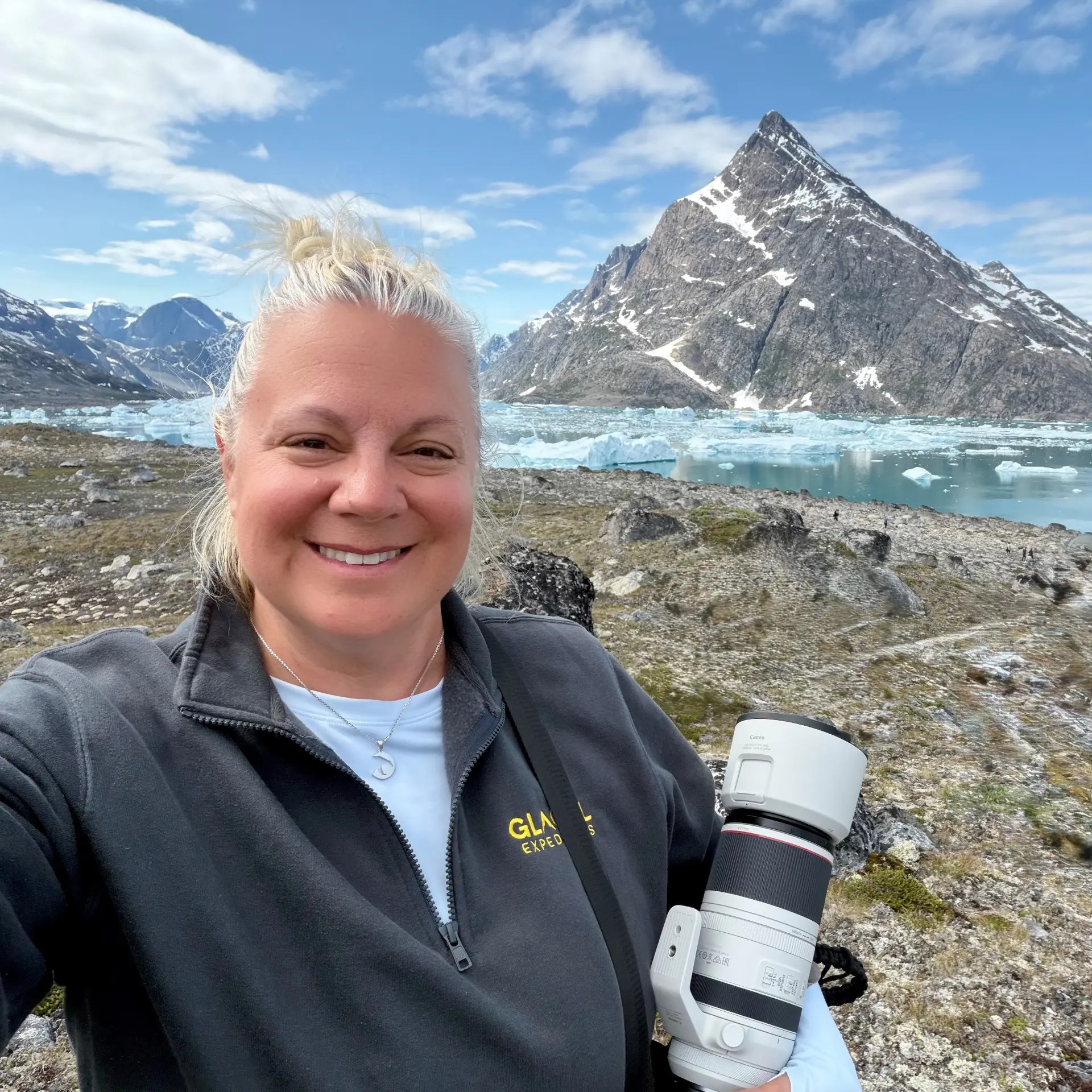
Erika Commisso · Travel Experience Architect
CLIA Elite Cruise Counselor · ASTA Verified Travel Advisor
Chris and Erika have personally sailed 18 expedition ships across eight expedition regions — and visited ten places in total, adding French Polynesia aboard the Paul Gauguin and Churchill by land.
Last updated .
Planning a polar expedition?
We'll make sure you know what to expect before you go, including the parts nobody mentions in the brochure.