


Lofoten at a glance
- Where
- Off Norway's northwest coast, above the Arctic Circle
- Landscape
- Alpine granite peaks straight out of the sea, sheltered bays, white-sand beaches
- Main villages
- Reine, Hamnoy, Henningsvaer, Svolvaer, A
- Signature wildlife
- White-tailed sea eagles, seabirds, occasional whales offshore
- Fishing season
- Winter skrei (cod) run, roughly February to April
- Best cruise months
- Late August and September for quiet trails and first aurora
- Our own experience
- Sailed past southbound in September 2024; not ashore
What Are the Lofoten Islands?
An archipelago off Norway's northwestern coast, above the Arctic Circle, where sharp granite peaks rise directly from the Norwegian Sea. Sheltered bays hold small fishing villages of red timber cabins, and the surrounding water has supported a cod fishery for a thousand years. Almost every Norway itinerary calls here.
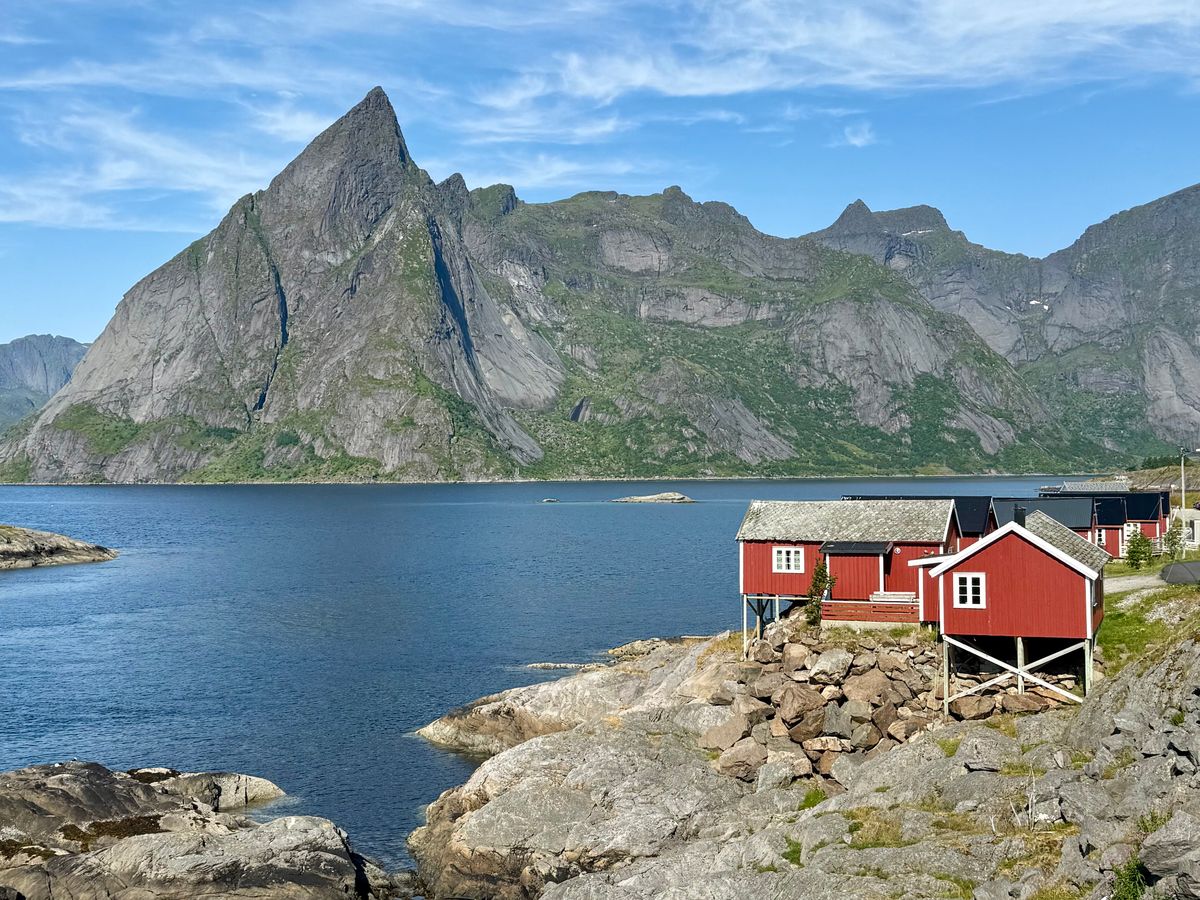
Lofoten is unusual in that the scenery and the working culture are the same thing. The cabins on stilts were built for fishermen, the wooden racks along the shore are still used to dry cod, and the villages exist because of the water rather than because of visitors. That is what separates it from a scenic stop.
Which Lofoten Villages Do Ships Visit?
Svolvaer and Stamsund are the scheduled coastal-service ports. Reine and Hamnoy are the postcard villages of red rorbuer on stilts over still water, usually reached by excursion. Henningsvaer sits on rocks at the end of a chain of bridges, and A, at the far southwestern tip, is where the road ends.
| Place | What it is | How ships reach it |
|---|---|---|
| Svolvaer | The main town, under the Svolvaergeita spire; departure point for Trollfjord boats | Scheduled coastal-service port; expedition ships berth or anchor |
| Stamsund | Working fishing port on Vestvagoy | Scheduled coastal-service call, often brief |
| Reine and Hamnoy | The red rorbuer villages on Moskenesoy; the classic Lofoten view | Excursion by coach, or Zodiac landing from a small ship |
| Henningsvaer | Village built across rocky islets, linked by bridges; galleries and cafes | Excursion from Svolvaer, or small-ship anchorage |
| A | The last village on the road at the southwestern tip; stockfish museum | Excursion or small-ship Zodiac landing |
| Trollfjord | Narrow inlet between Lofoten and Vesteralen; sea eagle cliffs | Small boat or Zodiac safari; only small ships enter the basin |
Rorbuer are the traditional wooden fishermen's cabins, built out over the water so a boat could tie up at the door. Many are now let to visitors, which is why they are maintained and why the villages still look the way they do.
Small expedition ships have an advantage here: they can anchor off a village like Reine or A and land by Zodiac, rather than being limited to the commercial ferry quays. On a large ship you see Lofoten from a coach.
What Is a Trollfjord Sea Eagle Safari?
Trollfjord is a narrow inlet between Lofoten and Vesteralen with an entrance barely 100 metres wide. Small boats and Zodiacs run in from Svolvaer, and white-tailed sea eagles nest on the surrounding cliffs. Operators often bring fish to the surface, so eagles dive within a few metres of the boat.
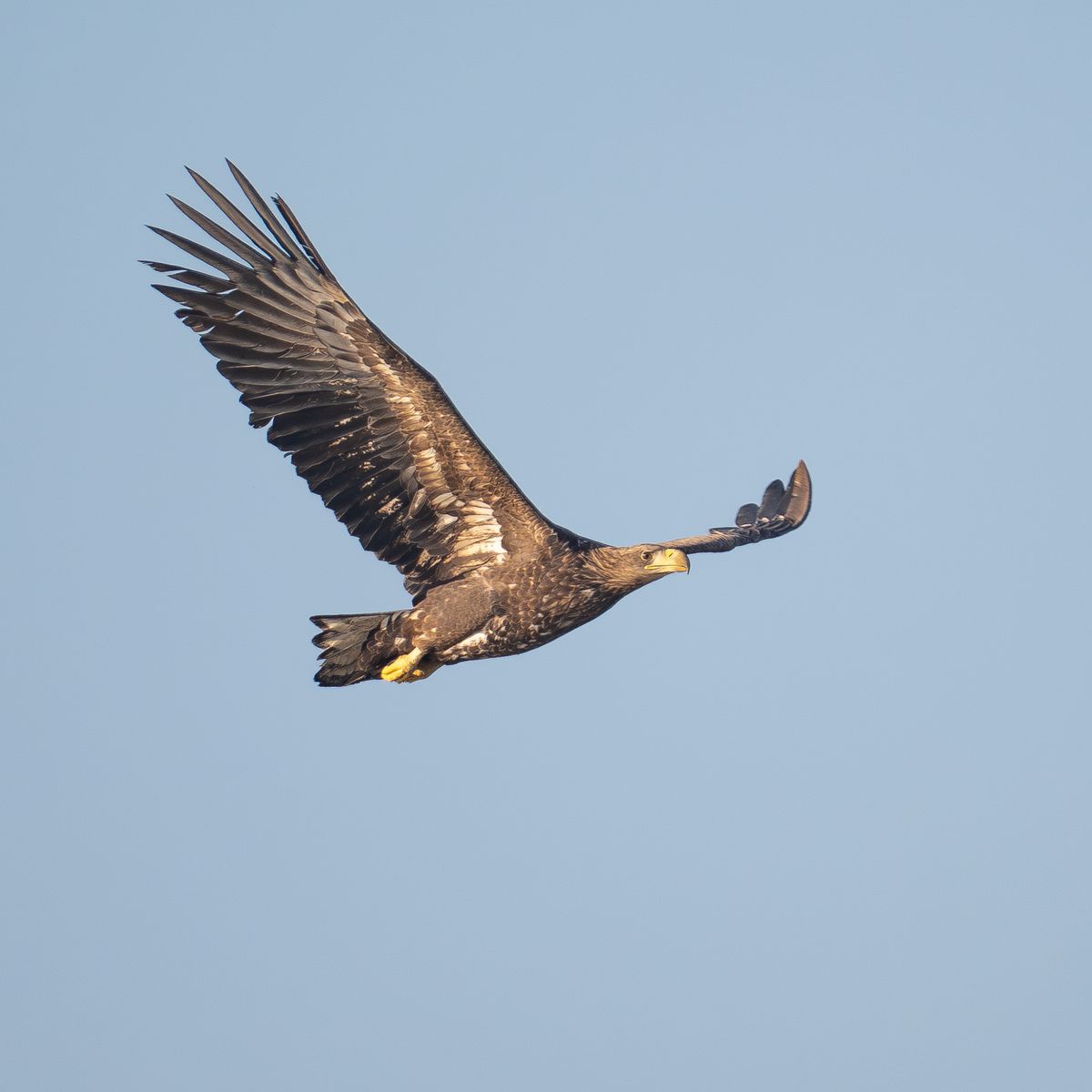
This page treats Trollfjord as a place you visit from Lofoten. The navigational side of it — which ships can physically enter, and the 360-degree turn inside the basin — is covered in the Norwegian fjords guide.
One naming point worth clearing up: Hurtigruten operates a ship called MS Trollfjord, named after the fjord. Sailing on the ship is not the same as entering the fjord, and the two get conflated constantly in itinerary descriptions.
What Are the Best Hikes in Lofoten?
Reinebringen, above Reine, is the famous one: a stone stairway up to a lookout over the village and the surrounding peaks. Ryten leads to a viewpoint above Kvalvika, a white-sand beach reached only on foot. Both are steep, and both are short enough for a port day.
These are hill walks with real exposure rather than strolls. Footing is often wet rock, and Lofoten's weather turns fast — rain to bright sun and back inside an hour. Waterproof boots with a proper lug sole matter more here than warm clothing does.
Why Is Cod So Important in Lofoten?
Skrei, the migrating Arctic cod, spawns in Lofoten waters each winter, and the fishery built every village you sail past. Fish are still hung on open wooden racks to air-dry into stockfish, which is why the racks appear in almost every photograph of the islands.
If you sail in summer or autumn the racks are mostly empty, and the smell that visitors are warned about belongs to the winter and spring drying season. The trade itself is medieval in origin and still commercially significant.
When Is the Best Time to Visit Lofoten?
Late August and September: the trails are quiet, autumn colour comes onto the mountain slopes, and nights are dark enough for the season's first northern lights over the peaks. July and August bring the warmest weather and the midnight sun, along with the crowds and the highest fares.
Winter is a different proposition again — short blue-lit days, the skrei fishery in full swing and strong aurora odds, but limited hiking and real weather risk. Season by season, when to cruise Norway sets out the trade-offs across the whole coast.
Have You Been to Lofoten Yourselves?
No. Neither of us has been ashore in Lofoten. Chris sailed the coast southbound from Longyearbyen to Bergen aboard Hurtigruten's MS Trollfjord in September 2024 and passed the archipelago, but did not land, hike Reinebringen or visit Reine, Hamnoy or Henningsvaer.
So what is on this page is advisor knowledge — operator itineraries, what our clients report back and the published record — not our own reporting. Where we have sailed and where we have not is listed in full on where we've been, and what Chris did see on that voyage is in the MS Trollfjord review.
Lofoten questions
Do cruise ships stop in the Lofoten Islands?
Yes. The year-round coastal service calls at Svolvaer and Stamsund, and most expedition and big-ship Norway itineraries include at least one Lofoten day. Small expedition ships can also anchor off villages that have no cruise quay.
What are the red houses in Lofoten called?
Rorbuer. They are traditional timber fishermen's cabins, built on stilts over the water so a boat could tie up at the door, and painted with a red iron-oxide paint. Many are now rented to visitors.
Can you see sea eagles in Trollfjord?
Yes. White-tailed sea eagles nest on the cliffs around the fjord, and safari boats out of Svolvaer are built around watching them fish. Sightings are usual rather than guaranteed.
How hard is the Reinebringen hike?
Short but steep. It is a built stone stairway of roughly 1,500 steps, climbing about 440 metres, and it is frequently wet. Most walkers allow two to three hours return and want waterproof boots with good grip.
When can you see the northern lights in Lofoten?
From roughly late September to late March, when the nights are dark enough. Lofoten sits at about 68 degrees north, inside the auroral zone, so displays are possible on any clear dark night in that window.
More on Norway
The Norwegian fjords
Trollfjord navigation and which ships can enter.
The coastal voyage explained
The working route that calls at Svolvaer and Stamsund.
Northern lights from a ship
Why a moving ship beats a fixed hotel for aurora.
When to cruise Norway
Season by season, including the September shoulder.
Norway cruise types
Which vessel class can land you off a village.