

Aurora by ship, in short
- Season
- Late September to late March; nothing during the midnight sun
- Latitude band
- 66N to 71N — Lofoten, Tromso, Alta, Kirkenes
- The ship advantage
- A captain can reposition to find clear sky
- What blocks a sighting
- Cloud, far more often than weak activity
- Nights to allow
- Several; a week-long coastal voyage gives you six or seven
- Camera
- Manual mode, f/2.8 or faster, ISO 1600 to 3200, 1 to 6 seconds
- Our own aurora nights
- Churchill, Manitoba, late August 2026 — not Norway
Why Watch the Northern Lights From a Ship?
Because the aurora is usually there and the sky often is not. A hotel or lodge is fixed under whatever cloud sits above it, while a ship spends the night moving along a coast of fjords and sounds and can put itself under a clear patch. You are also away from town lights every night, without a coach transfer.
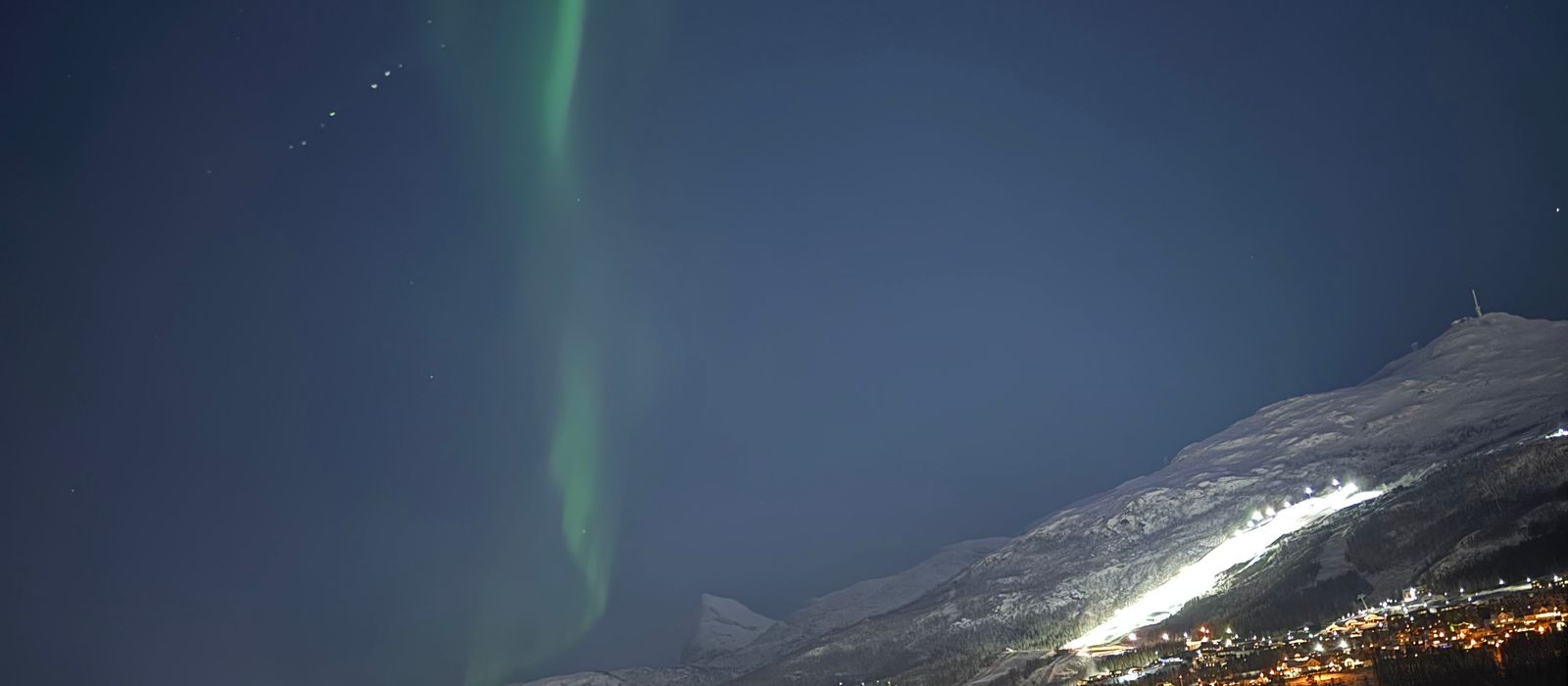
Officers on the northern coastal runs watch the forecasts as a matter of routine, and announcements are made when a display begins — often in the small hours. The practical consequence is that your viewing is not one three-hour excursion window; it is every dark hour of every night you are aboard.
The trade is honest: a ship rolls, decks are cold and wet, and you cannot set up a tripod on a moving vessel the way you can on frozen ground. If your goal is a portfolio of long-exposure aurora photographs, pair the voyage with land nights.
When Can You See the Aurora in Norway?
Roughly late September to late March. The aurora is active year-round, but it is only visible when the sky is genuinely dark, and above the Arctic Circle the midnight sun rules out the summer entirely. Late September brings the first real displays; midwinter gives the longest dark hours.
March is often the strongest single month to book: nights are still long, you also get usable daylight for the fjords, and the weather is generally more settled than in midwinter. Chris's mid-September coastal voyage was right at the front edge of the season, when the far north has just gone dark enough.
Which Part of the Norwegian Coast Is Best?
The band between about 66 and 71 degrees north, which puts a ship under the auroral oval — the ring where activity is concentrated. In practice that means Lofoten, Tromso, Alta, Hammerfest and Kirkenes. Further south, in Bergen or the western fjords, sightings are much less likely.
| Factor | What you want | Why it matters |
|---|---|---|
| Season | Late September to late March | True darkness is required; the midnight sun rules out the summer months entirely |
| Latitude | 66N to 71N: Lofoten, Tromso, Alta, Kirkenes | Places the ship under the auroral oval, where activity concentrates |
| Cloud cover | A gap anywhere within a few hours' steaming | The most common reason a sighting fails; the one factor a ship can act on |
| Light pollution | Open water or a dark fjord, not a lit quay | Faint early displays are lost against deck and town lighting |
| Nights aboard | Five or more dark nights north of the Arctic Circle | Turns a single chance into repeated chances, which is how sightings happen |
| Solar activity | Higher activity helps but cannot be booked | Stronger displays and more colour, though a quiet night can still deliver |
This is why the itinerary matters more than the ship's brochure language. A voyage that spends five nights north of the Arctic Circle is a genuine aurora trip; a fjords cruise from Bergen that turns around at Alesund is not, whatever the season.
How Should You Prepare for an Aurora Alert at Sea?
Lay your kit out before you go to bed: thermal base layers, an outer shell, hat, gloves and boots by the door, camera ready with a charged battery. Alerts come at unsocial hours and displays can fade in ten minutes. The people who see the most are simply the ones who get outside fastest.
Find your dark deck on the first evening, before you need it. Most ships have one corner shielded from deck lighting, and knowing where it is saves the five minutes that matter. Let your eyes adjust for a few minutes too — an early display looks like a grey smear until it does not.
What Camera Settings Work for the Aurora?
Manual mode, a wide lens at f/2.8 or faster, ISO 1600 to 3200, and exposures between one and six seconds. Focus manually on a bright star. On a moving ship keep exposures short and brace against a rail; on land use a tripod and you can go longer.
Modern phones in night mode do better than people expect, provided you can hold still. Whatever you shoot with, take a few frames and then stop and look. Our own experience of this, from Churchill rather than Norway, is that photographs of an overhead corona look nothing like standing underneath one.
Have You Seen the Aurora Yourselves?
Yes, but in Churchill, Manitoba, not Norway. We watched it on two consecutive nights in late August 2026. The first night was sharply defined and formed a corona directly overhead; the second was a heavy, saturated green but far less structured. Two nights, two completely different displays.
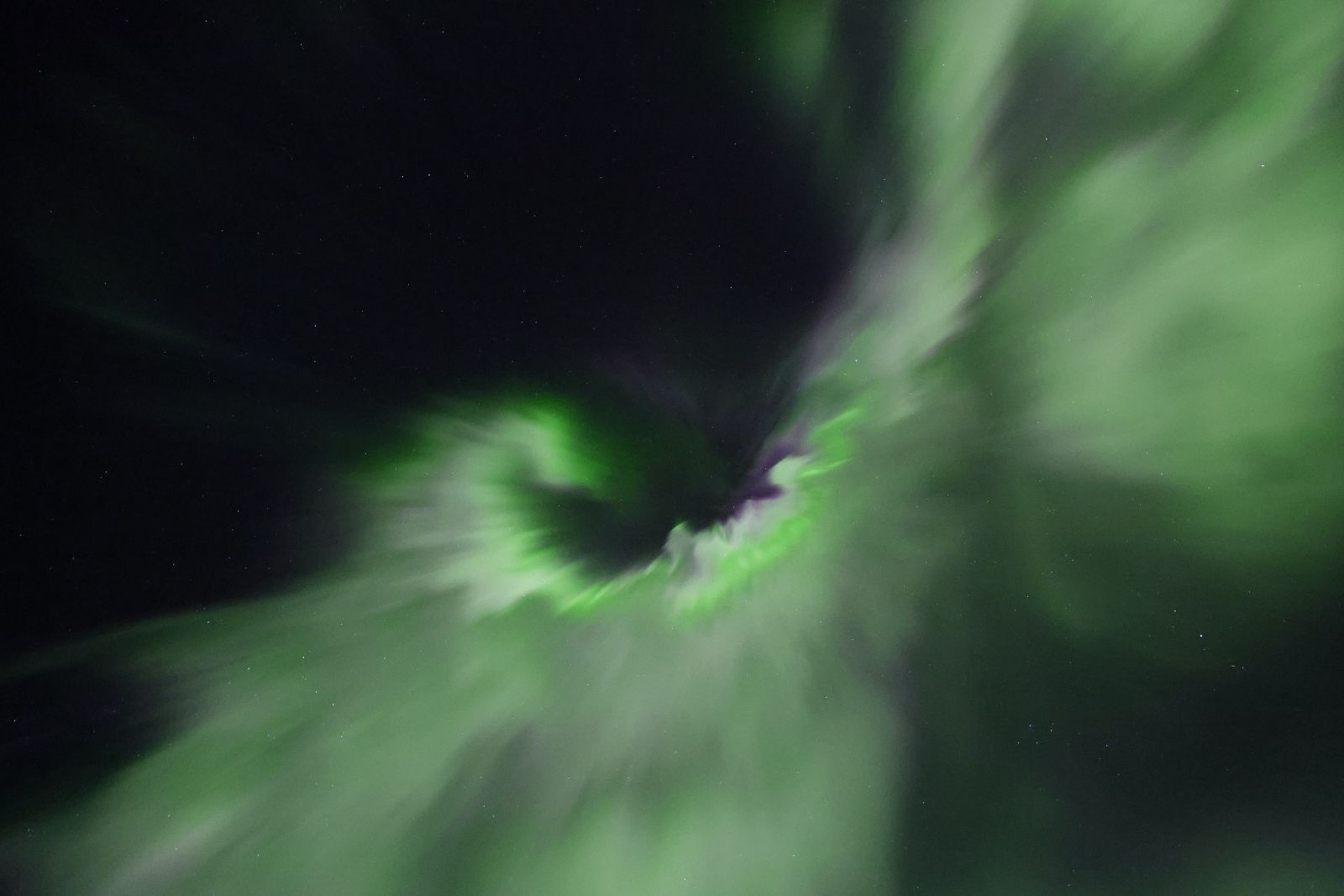
That is the observation that transfers to a Norway voyage: the aurora is not one thing you either see or miss. Its character changes night to night, which is the real argument for a trip that gives you several nights rather than one. Neither of us has watched the aurora on the Norwegian coast, and we will not pretend otherwise.
The Churchill nights are written up in our Churchill journal entry.
Where Should You Read About Aurora Forecasting and Odds?
Not here. This page is deliberately about the ship-based case on the Norwegian coast. The general science, the KP index, forecasting apps and how many nights you realistically need are covered in our Arctic guide, and the land-based lodge product in our Churchill guide.
For forecasting, activity cycles and realistic sighting rates, use the Arctic northern lights guide. For the land alternative — a fixed lodge, inland, with dependably clear cold skies — read northern lights in Churchill. The two products suit different travellers, and it is worth knowing which one you are buying.
Aurora at sea questions
Is a cruise a good way to see the northern lights?
Yes, and for one specific reason: the ship can move. Cloud is the usual reason people miss the aurora, and a captain can reposition along the coast to find clear sky, while a land-based hotel is stuck under whatever is overhead.
What months can you see the northern lights in Norway?
Late September through late March. Nothing is visible in the summer above the Arctic Circle because of the midnight sun. March combines long dark nights with usable daylight and generally more settled weather.
Where on a ship should you watch the aurora?
The darkest open deck, away from deck lighting and lit windows, usually aft or on an upper deck corner. Find it on your first evening and give your eyes a few minutes to adjust once you are out there.
How many nights do you need to see the aurora?
Plan on several. A week-long coastal voyage in the season gives six or seven dark nights, which is a far stronger position than a two-night trip. No itinerary can guarantee a sighting.
Have your advisors seen the northern lights?
Yes, in Churchill, Manitoba, on two consecutive nights in late August 2026 — not in Norway. The first night formed a corona overhead; the second was heavy green and less defined.
More aurora reading
Arctic northern lights guide
Forecasting, activity and how many nights to allow.
Northern lights in Churchill
The land-based alternative, inland under clear cold skies.
When to cruise Norway
Where the aurora season sits against the fjord season.
Tromso, the Arctic gateway
The city most aurora voyages sail from.
Winter whale watching
The other reason to sail Norway in the dark season.