

Norway by season
- Waterfalls at peak
- May and early June, driven by mountain snowmelt
- Midnight sun
- July to August above the Arctic Circle; 24-hour daylight
- Warmest coast
- July to August, roughly 15C to 22C / 59F to 72F
- Autumn shoulder
- September to October; crisp 5C to 12C / 41F to 54F, quiet ports
- Northern lights
- October through March, when nights are dark enough
- Orca and humpbacks
- November to January, Skjervoy and the northern fjords
- Svalbard crossings
- Roughly late May to September only
- Our own voyage
- Mid-September 2024, Longyearbyen to Bergen
What Are Norway's Two Cruise Seasons?
The light season, roughly late May to September, gives ice-free fjord navigation, hiking and kayaking, the midnight sun above the Arctic Circle, and the only window for Svalbard crossings. The dark season, October to March, gives the northern lights, herring-chasing orca and humpbacks, dog sledding and winter Sami culture. They do not overlap.
| Season | Operating focus | Daylight and climate | Highlights and wildlife |
|---|---|---|---|
| Late spring, May to June | Fjord navigation and waterfalls | 18 to 24 hours daylight; roughly 10C to 18C / 50F to 64F | Peak meltwater waterfalls, blossoming orchards, nesting seabird cliffs |
| Peak summer, July to August | Coastal exploration and hiking | 24-hour midnight sun above the Arctic Circle; roughly 15C to 22C / 59F to 72F | Deep-fjord kayaking, alpine hiking, Lofoten beaches, coastal village life |
| Autumn, September to October | Fjord photography and early aurora | Rapidly shortening days; crisp 5C to 12C / 41F to 54F | Golden mountain tundra, quiet ports, first northern lights of the season |
| Winter and polar night, November to March | Northern lights and winter safaris | Polar night north of the Arctic Circle; roughly minus 5C to 2C / 23F to 35F | Peak aurora viewing, herring-chasing orca and humpbacks at Skjervoy, dog sledding |
Temperatures are coastal averages. Inland and high-latitude figures run colder.
Deciding between them is the first real planning question, and it matters more in Norway than in most destinations, because the winter product here is genuinely as strong as the summer one. Travelers usually arrive picturing fjords in sunlight and are surprised that insiders often prefer the winter itinerary.
What Is Late Spring Like, May to June?
This is fjord navigation at its most spectacular. Snowmelt drives the waterfalls to maximum volume, the Hardanger orchards blossom, seabird cliffs fill with nesting birds, and daylight already runs 18 to 24 hours. Temperatures sit around 10C to 18C, or 50F to 64F, along the coast.
If waterfalls are the reason you are going, this is the window and nothing later comes close. Fares are also lower than midsummer, and the ports are quieter. The trade is cooler water, unsettled weather and less reliable hiking high up.
What Is Peak Summer Like, July to August?
The warmest and busiest window: roughly 15C to 22C, or 59F to 72F, on the coast, with 24-hour midnight sun above the Arctic Circle. It is the best time for deep-fjord sea kayaking, alpine hiking, the Lofoten beaches and coastal village life, and the core of the Svalbard crossing season.
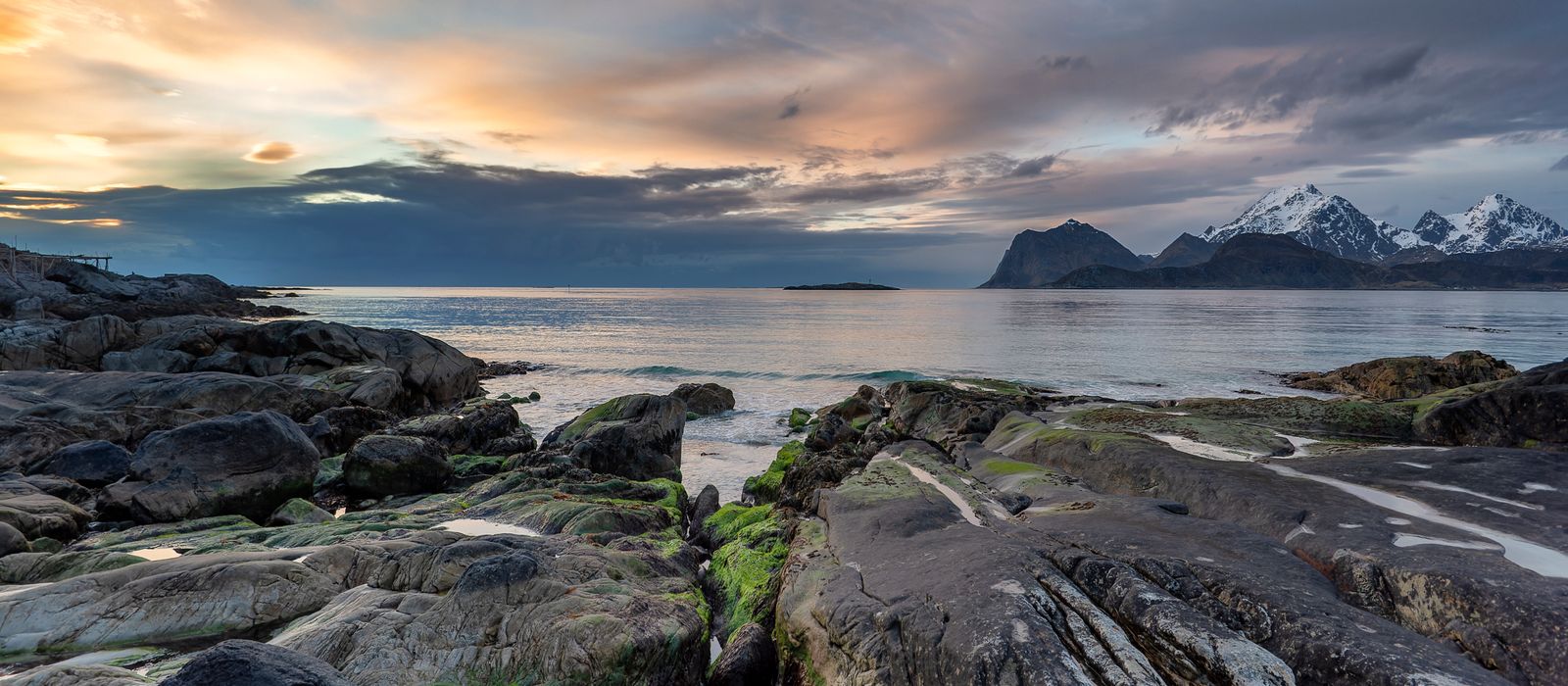
Peak season means peak prices and the most ships in the fjords. It also means you can be out on deck at midnight in daylight, which is a genuinely strange and memorable thing rather than a marketing line. If ice is what you want on a Svalbard crossing, June is the stronger month; if warmth and long hiking days are the priority, take August.
Is September a Good Month to Cruise Norway?
It is our own pick, and we have sailed it. September gives daylight for fjord navigation, autumn colour on the mountain tundra, ports emptied of summer crowds, and nights dark enough in the north for the season's first northern lights. Temperatures fall to roughly 5C to 12C, or 41F to 54F.
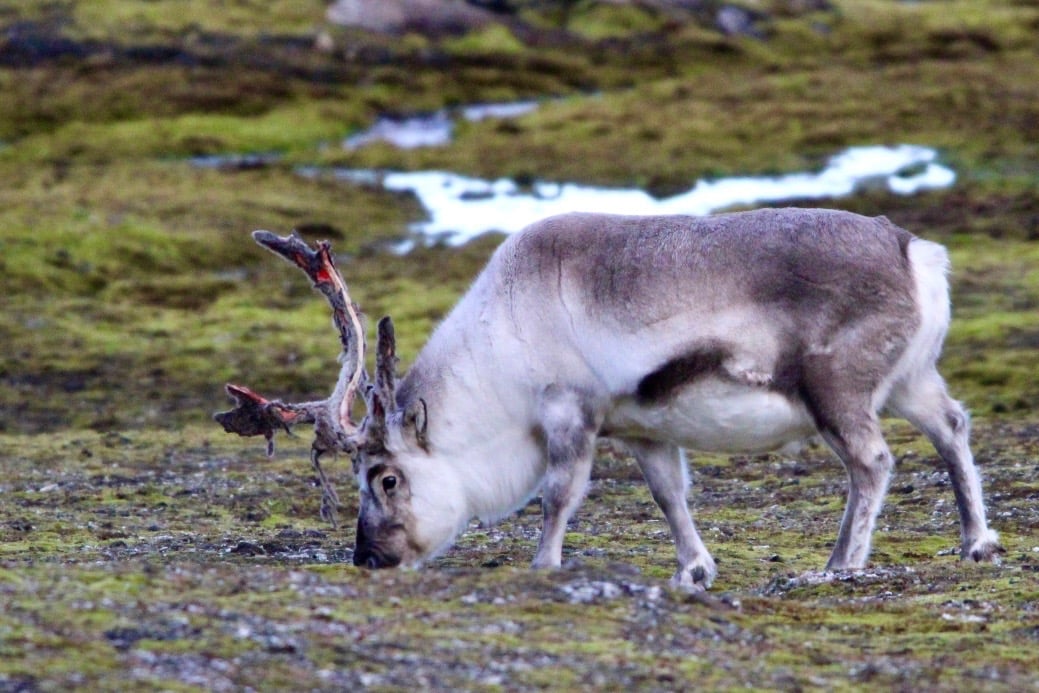
Chris sailed the coast from Longyearbyen to Bergen between 14 and 21 September 2024 aboard Hurtigruten's MS Trollfjord — southbound, out of the high Arctic and down the full length of Norway. In one week the ship went from glacier and sea-ice country, where we watched a polar bear on broken shore ice, to green farmed coastline and Bergen's wooden wharf. That transition is the argument for the shoulder season in a sentence.
What September costs you is the midnight sun and the June ice maximum. What it buys is the balance: light by day, dark by night, and a coast you largely have to yourself. Details of the voyage are in our MS Trollfjord review, and the crossing itself in Norway to Svalbard voyages.
What Is Winter and Polar Night Like, November to March?
North of the Arctic Circle the sun does not rise, giving continuous twilight and darkness and the best aurora viewing of the year. Coastal temperatures sit around minus 5C to 2C, or 23F to 35F. Orca and humpback pods gather in Skjervoy and the northern fjords to hunt overwintering herring, and dog sledding runs across the north.
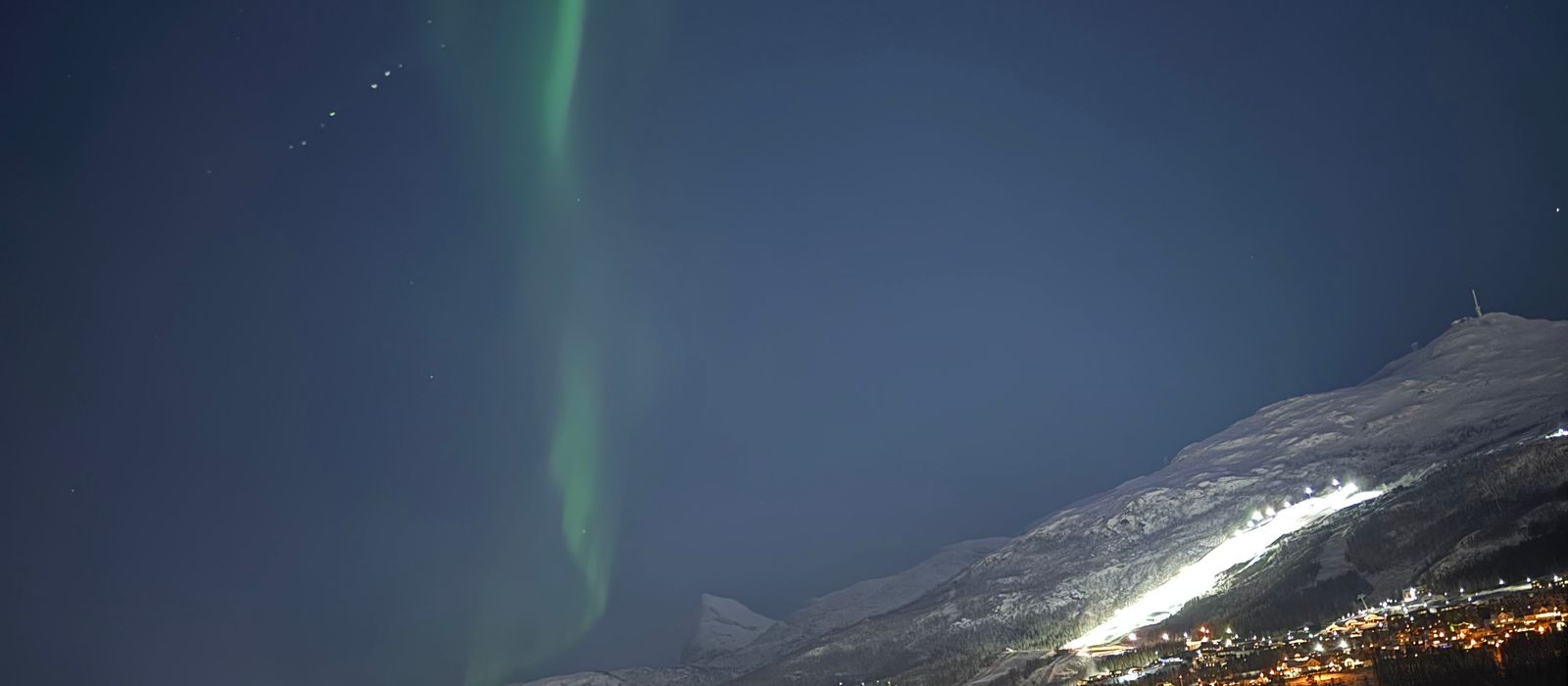
This is not a downgraded version of summer, it is a different destination. The coastal service runs year-round, so a winter voyage is entirely practical, and the whale gathering from roughly November to January is a real wildlife event rather than a brochure claim. Winter whale watching in Norway covers how those trips are run.
For aurora planning in general — forecasting, how many nights you need, what a realistic sighting rate looks like — use our northern lights guide rather than treating it as a Norway-only question.
When Is the Best Month for the Northern Lights?
October through March, because those are the months with nights dark enough along the northern coast to see the aurora at all. Tromso, Alta and Lofoten are the reliable viewing bases. March is often the strongest single month: long dark nights combined with real daylight and more settled weather.
September deserves a mention as the opening act. By mid-month the far north is dark enough for a first display, and you still have daylight hours for fjord scenery, which no midwinter departure can offer.
Norway timing questions
What is the best month to cruise Norway?
For fjords and waterfalls, May and early June. For warmth, the midnight sun and Svalbard crossings, July and August. For the balance of daylight, autumn colour and first aurora, September. For northern lights and whales, November to March.
When can you see the northern lights in Norway?
October through March, when nights along the northern coast are dark enough. Tromso, Alta and Lofoten are the main viewing bases, and March often combines the darkest nights with the most settled weather.
When do Norway's waterfalls peak?
May and early June, when melting mountain snowpack drives maximum volume through the western fjords.
When is the midnight sun in Norway?
Above the Arctic Circle the sun stays up through July and August, with 18 to 24 hours of daylight from late spring onwards.
Can you cruise Norway in winter?
Yes. The coastal service runs year-round, and winter is the season for aurora viewing, dog sledding and the orca and humpback gathering in the northern fjords from roughly November to January.
More on Norway
The Norwegian coastal voyage
The year-round working service, port by port.
Norway to Svalbard voyages
Why the crossing season ends in September.
The Norwegian fjords
Which fjords ships enter, and when they look best.
What a Norway cruise costs
How season moves the fare on the same cabin.
Northern lights guide
Forecasting, nights needed and realistic odds.