

The crossing at a glance
- Mainland ports
- Usually Tromso or Hammerfest; longer voyages start at Bergen or Oslo
- Archipelago port
- Longyearbyen, Svalbard
- Crossing
- The open Barents Sea, north past 75 degrees
- Halfway stop
- Bear Island (Bjornoya), a nature reserve with major bird cliffs
- Hull
- Ice-strengthened, typically Polar Class 6 or 5
- Season
- Roughly late May to September
- Wildlife
- Fin and humpback whales, walrus, polar bears at the ice edge
- Our own crossing
- MS Trollfjord, Longyearbyen to Bergen, 14-21 September 2024
What Is a Norway to Svalbard Crossing?
It is an expedition sailing that links mainland Norway — most often Tromso or Hammerfest — with the high-Arctic archipelago of Svalbard across the open Barents Sea. Longer versions run from Bergen or Oslo. The defining feature is the transition: coastal Norway's green fjords at one end, glaciers, tundra and sea ice at the other.
This page is about the passage, not the archipelago. What happens once you are among Svalbard's fjords — the landings, the bear protocols, Longyearbyen itself — is covered on Svalbard. Read that page for the destination and this one for how you get there and what the sea days are worth.
What Was Our Own Crossing Like?
Chris crossed southbound, in September rather than June, sailing Hurtigruten's MS Trollfjord from Longyearbyen to Bergen between 14 and 21 September 2024. Beginning in the high Arctic and ending on temperate farmed coastline reverses the usual arc: instead of building towards the ice, the voyage spends a week leaving it behind.
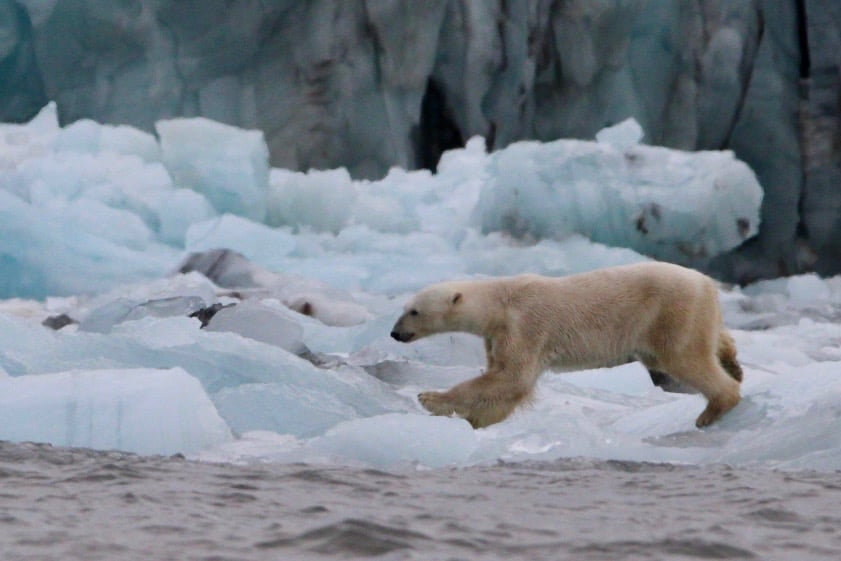
The southbound direction is the less common way to do it and, we would argue, the more interesting one. On day one the ship was in glacier and sea-ice country outside Longyearbyen, where we watched a polar bear work along broken shore ice in front of a glacier face. By the last morning the ship was tied up in Bergen among wooden wharf houses. Nothing in Europe compresses that range into one week.
September also changes the sky. The midnight sun is over, so the nights are dark enough for the first aurora of the season, and the tundra has turned. What you give up is the June ice maximum and the peak of the seabird colonies. Our MS Trollfjord review covers the ship itself — hybrid propulsion, Polar Class 6, capped at 500 guests on Signature Voyages against a roughly 860-guest maximum, an expedition team and Zodiacs, sitting between a coastal liner and a true expedition vessel.
What Is Bear Island and Do Ships Stop There?
Bear Island — Bjornoya — is an isolated nature reserve roughly halfway between mainland Norway and Longyearbyen. Expedition ships that call launch Zodiacs to view enormous seabird cliffs of guillemots and kittiwakes, and the remains of the island's whaling and hunting history. It is a weather-dependent stop, not a guaranteed one.
We have not been ashore or Zodiac cruising at Bear Island, and we will not describe it as though we had. What we can do is tell you which operators build it into the crossing, how often it gets cancelled for swell, and how to read a day-by-day that lists it as a possibility rather than a call.
What Kind of Ship Do You Need for the Barents Sea?
An ice-strengthened hull, typically Polar Class 6 or the stronger PC5, because the waters north of the crossing hold loose sea ice. Active fin stabilisers matter as much: the Barents Sea is open ocean, and two days of it is a very different motion from sheltered fjords. Ships without both belong on the coast.
| Requirement | Why it matters |
|---|---|
| Ice-strengthened hull, PC6 or PC5 | Svalbard's waters hold loose sea ice floes through the season |
| Active fin stabilisers | The Barents Sea is open ocean; roll is the main comfort issue |
| Zodiac fleet and expedition team | Landings and cruising where there is no dock |
| Range and endurance | Long stretches with no port of refuge |
Ice class is published by the operator. We confirm it against the specific vessel before quoting.
This is the practical reason a coastal liner on the Bergen to Kirkenes service cannot simply continue north. The scheduled coastal route is a different product on different vessels; see the Norwegian coastal voyage for what that service is, and Norway cruise types for how hull classes and guest counts sort the fleet out.
If you are prone to seasickness, say so before you book rather than after. Cabin position, ship size and stabiliser fit are all things we can weigh, and the crossing is the one part of a Norway trip where they genuinely matter.
What Wildlife Do You See on the Crossing?
The Barents Sea crossing is prime water for fin and humpback whales feeding along shelf edges, walrus hauled out on Svalbard's shores, and polar bears at the edge of the pack ice as the ship works north. Seabirds follow the ship throughout, and the cliffs at Bear Island hold guillemots and kittiwakes in enormous numbers.

Bears are the reason most travelers book, so set the expectation honestly: they are found on and near ice, which means the sighting odds depend on where the ice edge sits in the month you sail. Our own bear sighting came in Svalbard waters in September, from the ship, at a glacier front.
When Should You Cross?
June gives you sea ice at its most photogenic, seabird colonies at full volume and 24-hour daylight. Late August and September trade the ice and the midnight sun for autumn colour, quieter ports and dark enough nights for early aurora. The crossing season runs roughly late May to September and no ship offers it in winter.
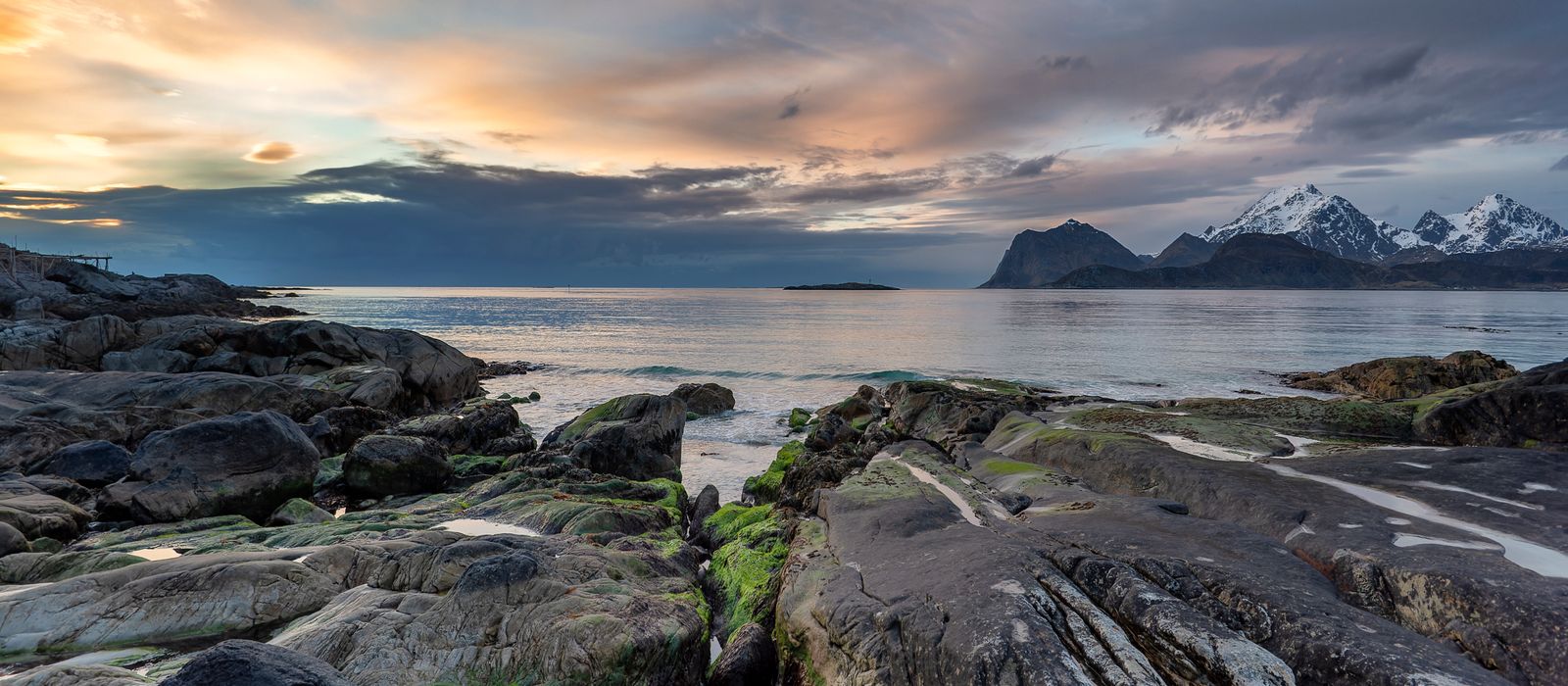
There is no wrong month inside that window, only a trade. If the ice itself is the point of the trip, go in June. If you want the transition from Arctic to temperate with a chance of northern lights at the end of it, September is the month we sailed and would sail again. When to cruise Norway sets both seasons out month by month.
How Is This Different from a Svalbard-Only Expedition?
A crossing spends roughly half its days on the mainland coast or at sea, so you get less time among Svalbard's fjords than a dedicated Svalbard voyage delivers. In exchange you get range: two entirely different landscapes and a coastline that changes daily. Choose by whether you want depth in the archipelago or the whole spectrum.
| Norway to Svalbard crossing | Svalbard round trip | |
|---|---|---|
| Length | Roughly 7 days from Tromso; 14 to 17 from Bergen or Oslo | Usually 8 to 12 days |
| Days among Svalbard's fjords | Roughly half the voyage or fewer | Nearly the whole voyage |
| Sea days | Open Barents Sea crossing, one to two days | Few; sheltered fjord sailing |
| Landscape range | Temperate coast to high Arctic in one trip | High Arctic throughout |
| Bear Island | Possible, weather dependent | Not on the route |
| Best for | Travelers who want range and one journey north | Travelers who want bears and ice above all |
If polar bears and pack ice are the entire reason for the journey, book a Svalbard round trip from Longyearbyen instead — Svalbard and the Arctic cover those. The crossing is for travelers who are unlikely to make two separate journeys north and want the transition itself to be the story.
Barents Sea crossing questions
How long does it take to sail from Norway to Svalbard?
Roughly a week from Tromso or Hammerfest to Longyearbyen, and 14 to 17 days on the longer voyages that begin at Bergen or Oslo and work up the whole coast.
Do you need an ice-class ship to reach Svalbard?
Yes. Svalbard's waters hold loose sea ice through the season, so crossings are run on purpose-built, ice-strengthened vessels — typically Polar Class 6 or the stronger PC5 — with active stabilisers for the open-water passage.
Is the Barents Sea rough?
It is open ocean and can be. Most crossings involve one to two days of it. Ships that run the route carry active fin stabilisers, and cabin position and vessel size both affect how much motion you feel.
Will you see polar bears on a crossing?
Bears are found on and near sea ice, so the odds depend on where the ice edge sits during your sailing. Crossings in Svalbard waters offer real chances; nobody can promise a sighting.
How is this different from a Svalbard cruise?
A crossing splits its days between the mainland coast, the open sea and the archipelago, so you spend less time in Svalbard's fjords than on a Longyearbyen round trip. You gain the transition from temperate coast to high Arctic in one voyage.
More on Norway and the Arctic
Svalbard
The archipelago itself: bears, pack ice and Longyearbyen.
The Norwegian coastal voyage
The working Bergen to Kirkenes service, port by port.
Norway cruise types
Which hull classes and guest counts can go north.
When to cruise Norway
June ice or a September shoulder crossing.
MS Trollfjord review
The ship we crossed on, Longyearbyen to Bergen.