

The coastal route at a glance
- Route
- Bergen to Kirkenes and back, over 1,000 nautical miles
- Ports
- 34 coastal communities, some called at in the middle of the night
- Operators
- Hurtigruten and Havila Voyages, two separate companies
- Northbound
- About 7 days, Bergen to Kirkenes
- Southbound
- About 6 days, Kirkenes to Bergen
- Round trip
- About 12 days, every port twice — once by day, once by night
- Season
- Daily departures year-round, which is unusual
- Our own voyage
- MS Trollfjord, Longyearbyen to Bergen, 14-21 September 2024
What Is the Norwegian Coastal Voyage?
It is a working passenger and freight service, not a cruise. Ships run the coast between Bergen and Kirkenes calling at 34 communities, dropping mail, cargo and local passengers on a fixed daily schedule. You travel on the same vessel Norwegians use to get between towns, and the ship keeps the schedule whether you are awake for it or not.
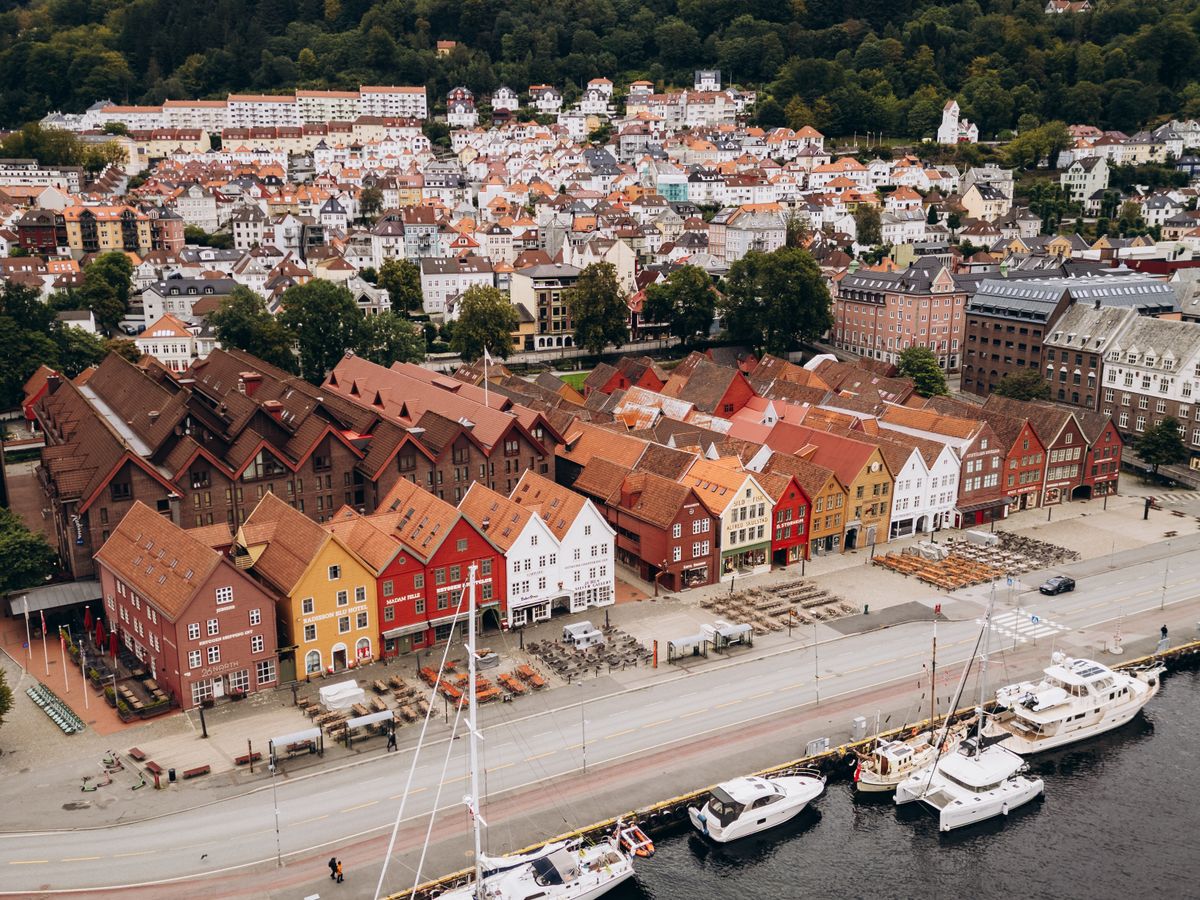
That distinction is the single most important thing to understand before you book. There is no casino and no production show. Some port calls last fifteen minutes. The reward is continuity: you see the coastline unfold hour after hour rather than in day-long snapshots from a handful of ports.
Hurtigruten has run the route since 1893. Havila Voyages now operates the same service on newer hybrid vessels that can run silently on battery power through the most sensitive stretches. Both are separate companies from HX, which sells expedition voyages rather than the coastal service — a distinction worth holding onto when you compare brochures.
What Was Our Own Coastal Voyage Like?
Chris sailed Hurtigruten's MS Trollfjord from Longyearbyen to Bergen from 14 to 21 September 2024 — southbound, in September, down the full length of the Norwegian coast from the high Arctic. Over one voyage the ship crossed from Svalbard's glaciers and sea ice into green, temperate, farmed coastline, and that transition is the thing worth planning a trip around.
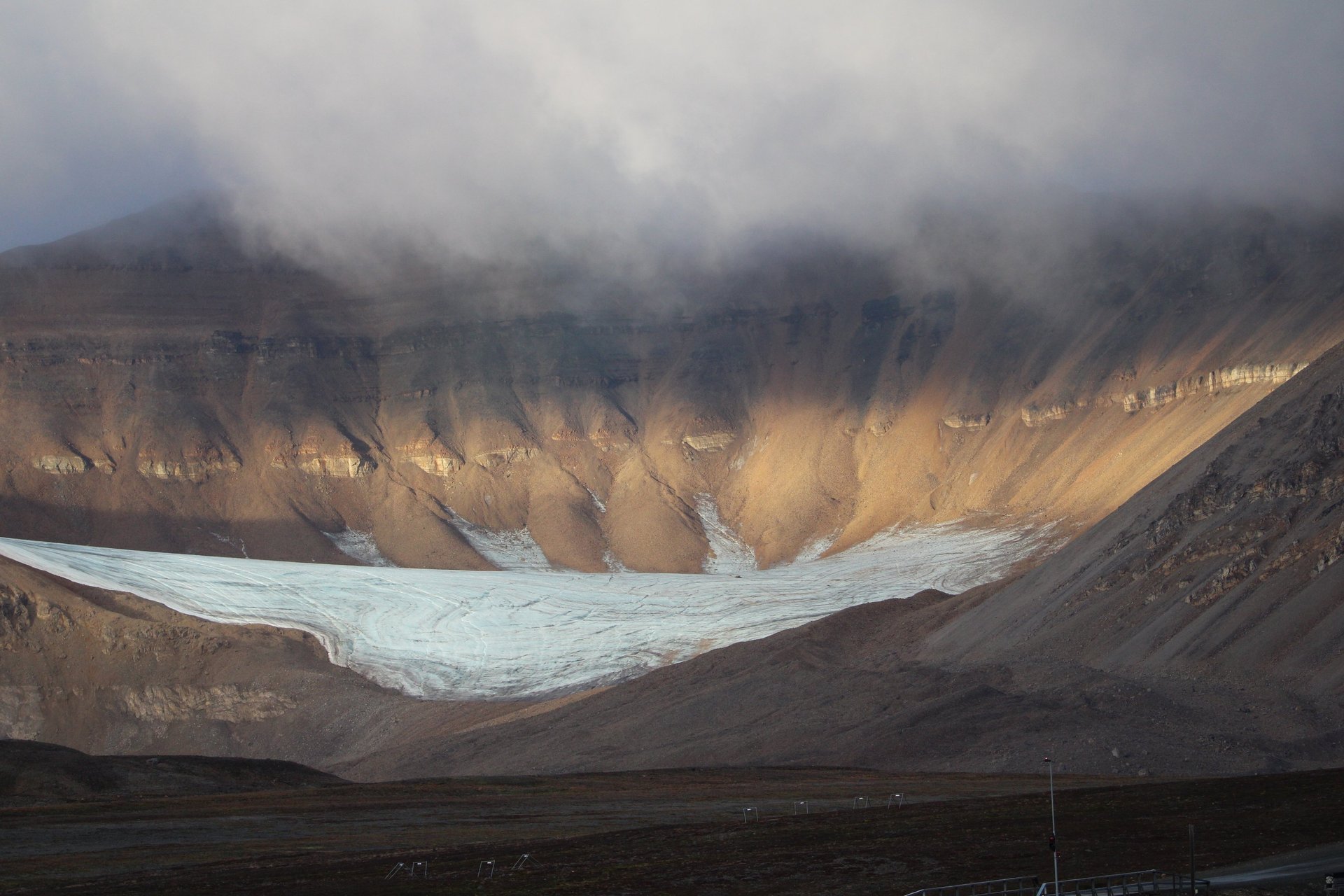
Sailing north to south, in autumn, is the less common way to do it. The advantage is that the trip runs downhill in every sense: you begin in the harshest landscape, with polar bear country and glacier fronts, and each day the coast becomes softer, greener and busier until Bergen's wooden wharf appears at the end of it. The reverse direction builds towards the Arctic; ours arrived from it, and the contrast landed harder for it.
The MS Trollfjord herself is a hybrid, Polar Class 6 ship capped at 500 guests on Signature Voyages against a roughly 860-guest maximum — larger and more comfortable than a purpose-built expedition vessel, and better equipped than a plain coastal liner. Our full MS Trollfjord review covers the cabins, the Rost dining venue and the expedition team in detail.
Should You Sail Northbound, Southbound or Round Trip?
Northbound takes about seven days from Bergen to Kirkenes and gives daytime fjord entries, the Arctic Circle crossing, Lofoten and Tromso. Southbound takes about six days and puts the Vesteralen archipelago, a daytime Hammerfest call and the Helgeland coast's Seven Sisters range in the light. The 12-day round trip covers all 34 ports twice, once by day and once by night.
| Northbound | Southbound | Round trip | |
|---|---|---|---|
| Length | About 7 days | About 6 days | About 12 days |
| Direction | Bergen to Kirkenes | Kirkenes to Bergen | Bergen to Kirkenes and back |
| In daylight | Scenic fjord entry, the Arctic Circle crossing, Lofoten, Tromso | Vesteralen archipelago, Hammerfest, the Seven Sisters on the Helgeland coast | All 34 ports twice, once by day and once by night |
| Best for | Travelers building towards the Arctic | Travelers who want the archipelago scenery in the light | Travelers who want the whole coast without choosing |
Fjord detours and port timings vary by season and operator. Confirm the day-by-day before booking.
Which direction suits you depends on which stretch you most want to see in daylight, because the schedule is fixed and half of any one-way leg happens in the dark. If your trip is a week rather than a fortnight, a one-way leg is usually the better buy — and you can fly the other direction.
One feature almost nobody hears about: the coastal route can be booked port to port rather than as a complete voyage. North by ship, south by air, or a few nights ashore in Tromso in the middle are all legitimate combinations. We build these regularly.
Coastal Liner or Expedition Ship?
A coastal liner is a combined passenger and cargo vessel on a fixed daily schedule, stopping briefly at working ports. An expedition ship ignores the ferry ports entirely: it anchors in wild fjords for hours, launches Zodiacs and runs guided hikes. One is authentic local transport, the other is off-ship wilderness access. Neither is a compromise version of the other.
| Coastal liner (Hurtigruten, Havila) | Small expedition ship | |
|---|---|---|
| What it is | Combined passenger and cargo service | Purpose-built expedition vessel |
| Schedule | Fixed daily departures year-round | Set departure dates in season |
| Ports | 34 working ports, some calls under an hour | Few ports; anchors in wild fjords |
| Getting ashore | Gangway in town | Zodiac landings and guided hikes |
| Excursions | Optional, bought port by port | Included and led by the expedition team |
| Guests | Roughly 400 to 800 | Roughly 90 to 200 |
If guided Zodiac excursions and long wilderness stops are the point of the trip, book a small expedition vessel. If you want to see how the coast actually works, and to share the ship with the people who live on it, book the coastal service. Our Norway cruise types guide sets the vessel classes side by side, and what a Norway cruise costs shows what each one does to the budget.
Which Fjords Does the Coastal Route Enter?
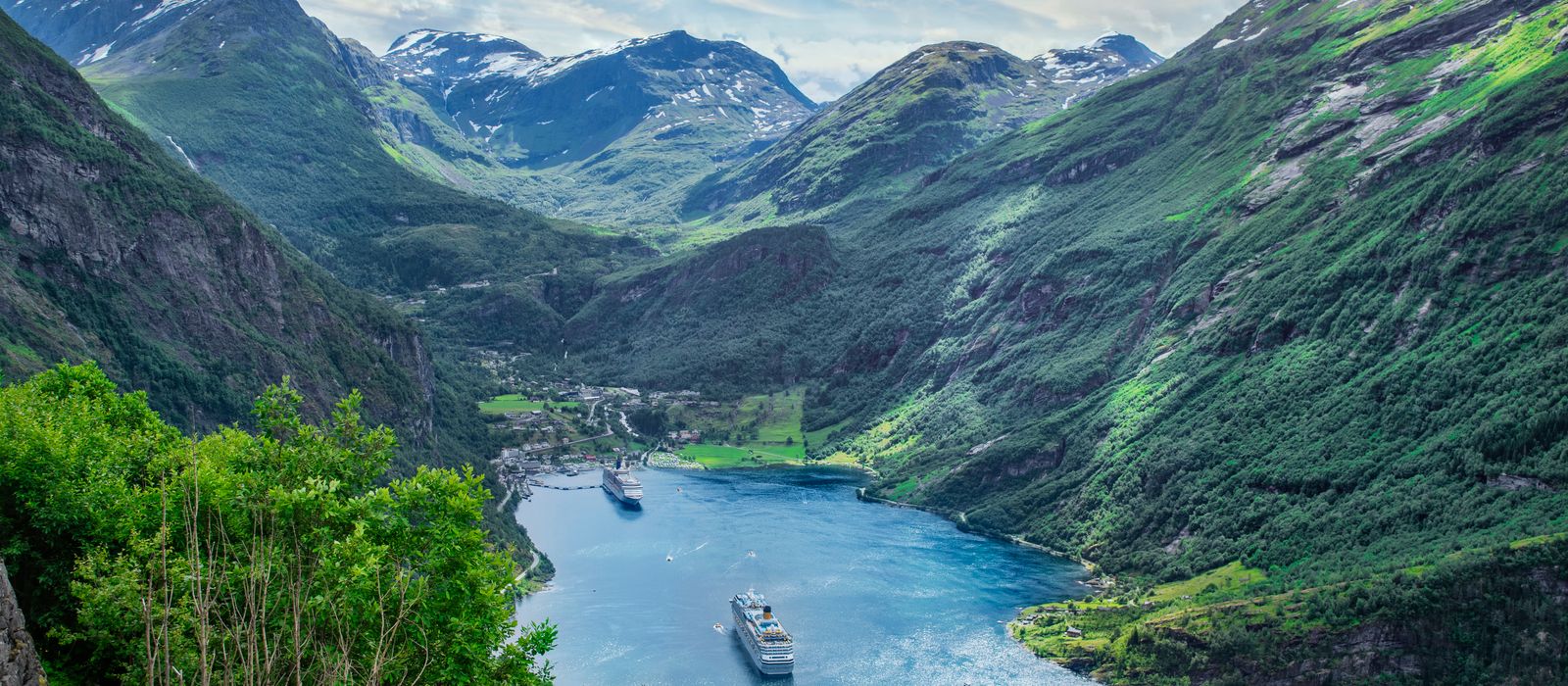
Northbound sailings add a scenic fjord detour — Geirangerfjord in summer, Hjorundfjord in autumn — and coastal ships are the vessels famous for entering Trollfjord in Lofoten and turning inside it. Which detours run depends on season and operator, so confirm the day-by-day rather than the brochure headline.
We should be straight about the limits of our own experience here: we have not been into Geirangerfjord, Naeroyfjord, Hardangerfjord or Hjorundfjord. We can tell you which itineraries enter them and how the day is structured, but we will not describe standing there. Our fjords guide sorts out which fjords ships actually enter, including the coincidence that Trollfjord is both a fjord in Lofoten and the name of the ship we sailed.
Note also that Norway is phasing in zero-emission requirements for the World Heritage fjords, which affects which vessels may enter Geirangerfjord and Naeroyfjord and when. The dates are in the fjords guide.
Can the Coastal Voyage Reach Svalbard?
The scheduled Bergen to Kirkenes service does not. Reaching Svalbard means a separate expedition-style crossing of the Barents Sea, which is what our own voyage was: Longyearbyen down to Bergen, joining the high Arctic to the coast in a single sailing of about a week.
Those crossings are a distinct product with their own vessels, ice-class requirements and season. We cover them in Norway to Svalbard voyages, and the archipelago itself — polar bears, pack ice, Longyearbyen — sits on Svalbard.
Coastal voyage questions
How long is the Norwegian coastal voyage?
About seven days northbound from Bergen to Kirkenes, about six days southbound, and about twelve days for the full round trip covering all 34 ports twice.
Is the coastal voyage a cruise?
No. It is a working passenger and freight service on a fixed daily schedule. Cabins and dining are comfortable but plain, and the ship calls at small ports at whatever hour the timetable requires.
Who operates the Norwegian coastal route?
Hurtigruten, which has run the route since 1893, and Havila Voyages, which operates newer hybrid vessels on the same service. They are separate companies, and both are separate from HX.
Can you book part of the coastal route?
Yes. The service can be booked port to port rather than as a full voyage, which lets you sail one direction and fly the other, or break the trip with a few nights ashore.
Does the coastal voyage go to Svalbard?
The scheduled Bergen to Kirkenes service does not. Reaching Svalbard requires a separate crossing of the Barents Sea on an ice-strengthened ship.
More on Norway
Norway cruise types
Coastal liner, expedition ship, hybrid or luxury.
Norway to Svalbard voyages
The Barents Sea crossing we sailed southbound.
The Norwegian fjords
Which fjords ships actually enter, and the new rules.
When to cruise Norway
Midnight sun, autumn shoulder or polar night.
MS Trollfjord review
The Hurtigruten ship we sailed from Longyearbyen to Bergen.