


Norway's headline fjords
- UNESCO fjords
- Geirangerfjord and Naeroyfjord, both World Heritage listed
- Geirangerfjord
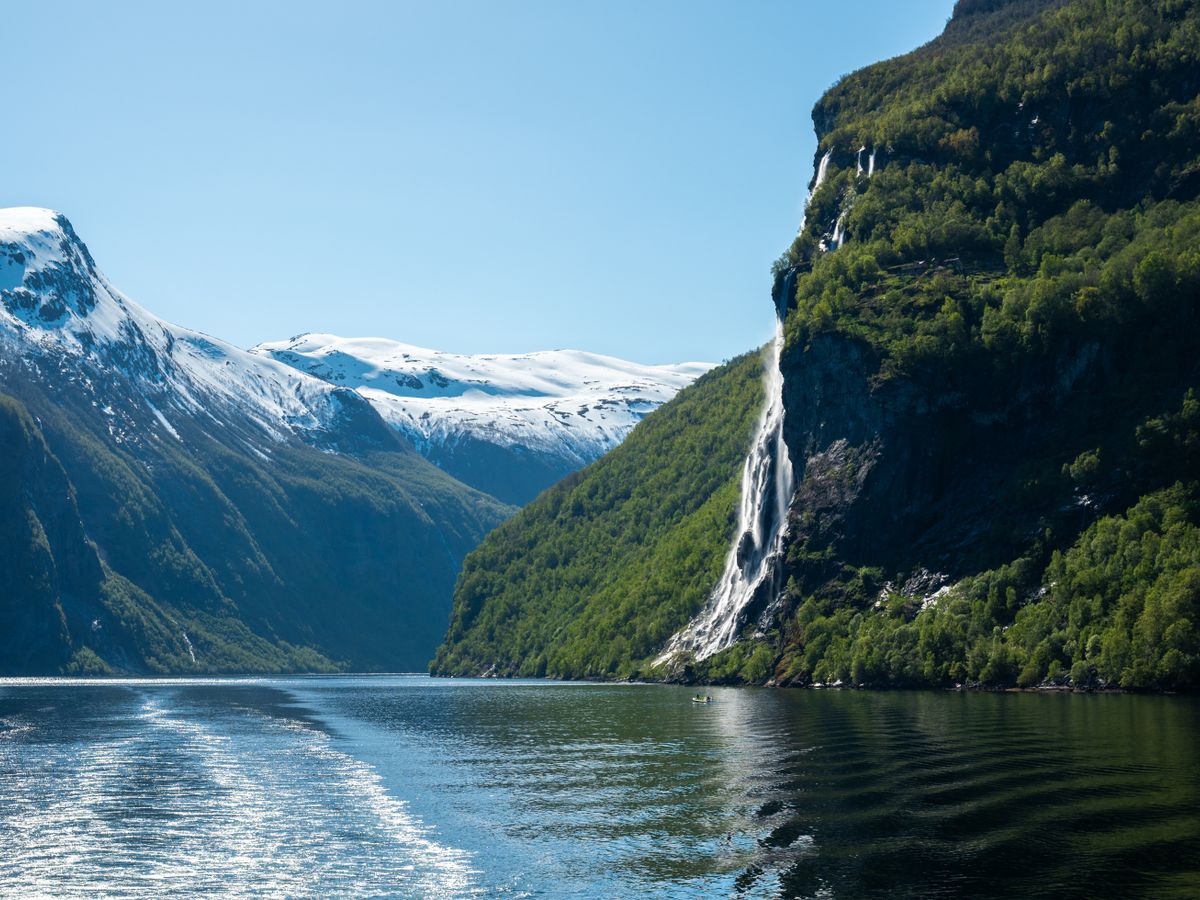
- Cliffs around 800 metres, with the Seven Sisters and the Suitor waterfalls
- Naeroyfjord
- About 250 metres wide at its narrowest point
- Trollfjord
- A 100-metre entry gap in Lofoten; small ships turn 360 degrees inside
- Hardangerfjord
- Mild microclimate, spring orchards, views to the Folgefonna glacier
- Hjorundfjord
- Secluded fjord through the Sunnmore Alps, a quiet alternative
- Zero-emission rules
- In force in the World Heritage fjords from 1 January 2026 for ships under 10,000 GT
Which Norwegian Fjords Are Worth Planning Around?
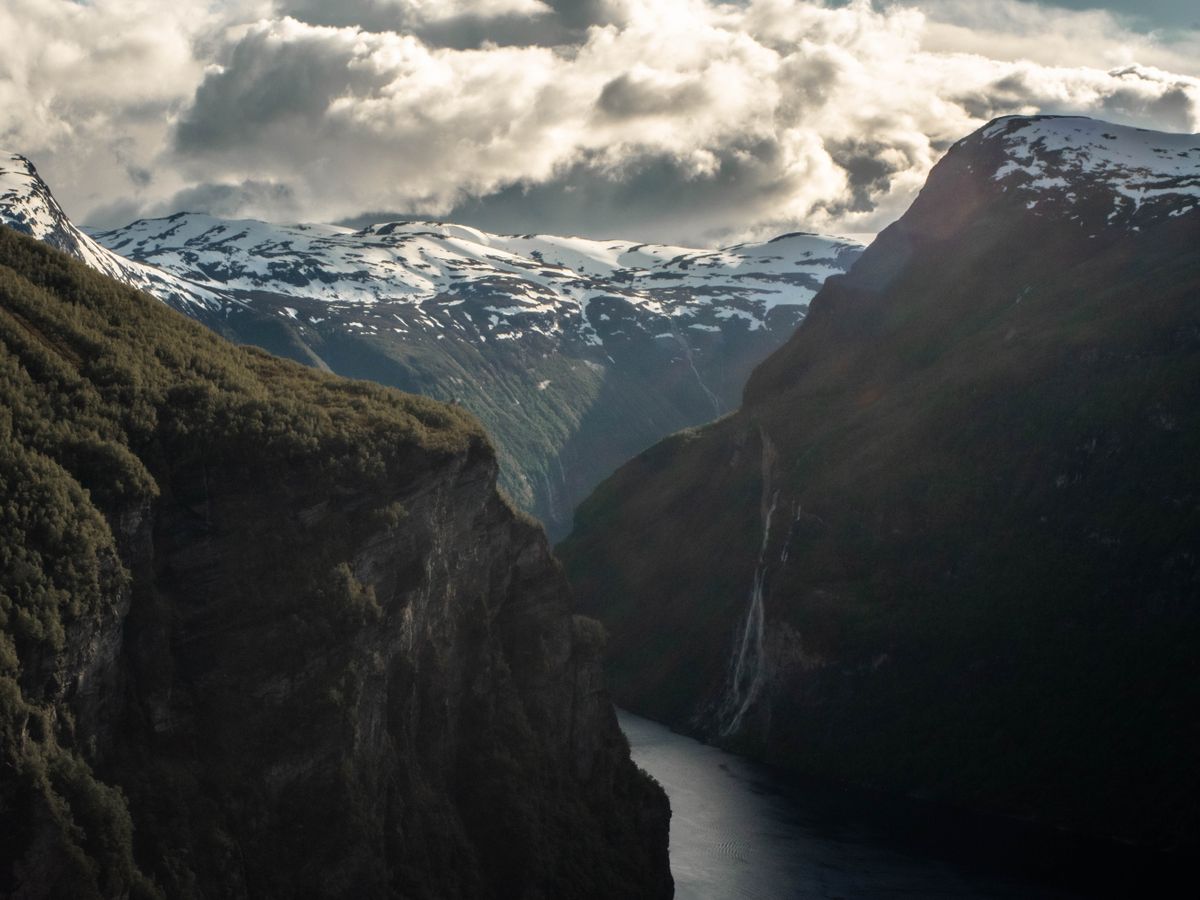
Five carry most itineraries. Geirangerfjord and Naeroyfjord are the UNESCO-listed pair and the postcard names. Trollfjord in Lofoten is the piece of seamanship. Hardangerfjord is the mild, orchard-lined one near Bergen. Hjorundfjord is the secluded alternative through the Sunnmore Alps, often substituted in autumn.
| Fjord | Where | Known for | Which ships enter |
|---|---|---|---|
| Geirangerfjord | Sunnmore, western Norway | UNESCO listed; about 800-metre cliffs, the Seven Sisters and the Suitor | Large ships, coastal liners and expedition vessels |
| Naeroyfjord | Sognefjord arm, via Flam | UNESCO listed; about 250 metres wide at its narrowest | Large ships and smaller vessels |
| Trollfjord | Lofoten and Vesteralen | A 100-metre entry gap; ships turn 360 degrees inside | Coastal liners and small expedition ships only |
| Hardangerfjord | Near Bergen | Mild microclimate, spring orchards, the Folgefonna glacier | Most vessel classes |
| Hjorundfjord | Sunnmore Alps | Secluded wilderness alternative to busy ports | Coastal liners and small ships; often an autumn substitute |
Entry depends on the specific itinerary, the season and, in the World Heritage fjords, the vessel's propulsion and tonnage.
Geirangerfjord is the most photographed: roughly 800-metre cliffs, the Seven Sisters waterfall and the Suitor facing it across the water. Naeroyfjord narrows to about 250 metres beneath towering peaks, which makes it feel more like a canyon than a sea inlet. Trollfjord is barely a slot — a 100-metre entry gap hemmed in by sheer rock, where small ships sail in and turn a full circle inside the basin.
Hardangerfjord trades drama for gentleness: a mild microclimate, fruit orchards in blossom in spring and views towards the Folgefonna glacier. Hjorundfjord is the one most travelers have never heard of, cutting quietly through the Sunnmore Alps away from the busy ports.
Trollfjord the Fjord, or Trollfjord the Ship?
Both exist, and the coincidence causes confusion. Trollfjord is a narrow fjord in the Lofoten and Vesteralen area. MS Trollfjord is a Hurtigruten ship named after it. Chris sailed the ship — from Longyearbyen to Bergen in September 2024 — which is not the same as having entered the fjord, and we will not claim otherwise.
Our MS Trollfjord review covers the vessel: hybrid propulsion, Polar Class 6, capped at 500 guests on Signature Voyages against a roughly 860-guest maximum, an expedition team and a fleet of Zodiacs. If entering the fjord matters to you, that is a question about the itinerary and the season, and we will check the day-by-day rather than assume the name on the hull means the fjord is on the route.
Which Ships Can Actually Enter Each Fjord?
Size decides. Large ocean liners can enter the wide UNESCO fjords and dock at Geiranger and Flam, but cannot physically navigate Trollfjord or work the small anchorages of Hjorundfjord. Coastal liners are the vessels famous for the Trollfjord turn. Small expedition ships go everywhere the water allows and put Zodiacs down where there is no dock.
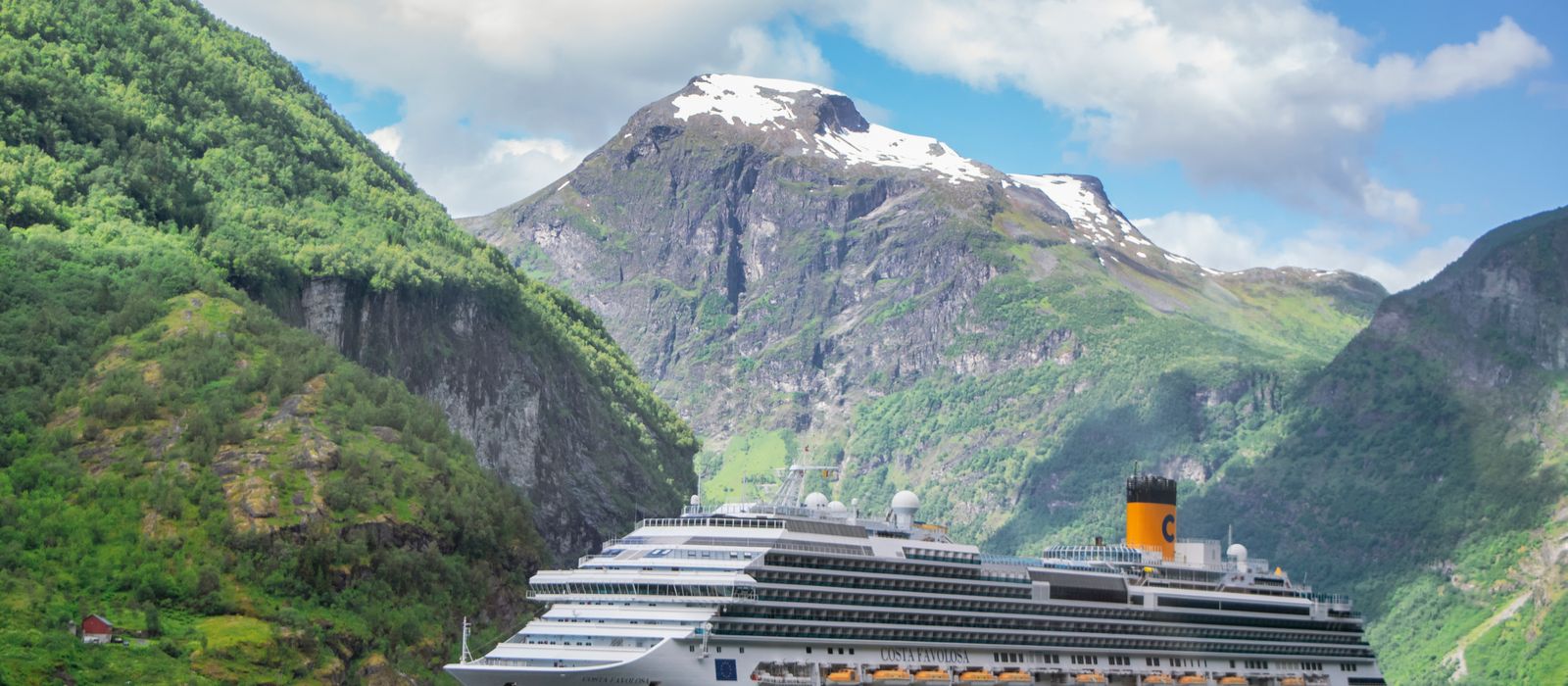
The practical consequence is that a fjord appearing in a brochure headline is not a promise that your ship enters it. Some itineraries pass the mouth, some anchor outside and tender in, and some substitute a different fjord entirely depending on the month. Ask which ones the ship enters, and whether the call is a berth, an anchorage or a scenic sail-past.
Our Norway cruise types guide sorts the fleet by size and capability, and the Norwegian coastal voyage covers the scenic fjord detours built into the Bergen to Kirkenes service.
What Are Norway's Zero-Emission Fjord Rules?
Norway is phasing in zero-emission requirements for the World Heritage fjords, Geirangerfjord and Naeroyfjord. The rules were adopted by the Norwegian Maritime Authority and take effect on 1 January 2026 for passenger ships under 10,000 gross tonnage, and on 1 January 2032 for passenger ships of 10,000 GT and above.
So the requirement is real, but it is phased by vessel size and date rather than a blanket ban that is already fully in force. Smaller tourist vessels and ferries are inside the first phase now; the large cruise ships that call at Geiranger have until 2032. Battery-hybrid vessels able to run silently on electric power through the sensitive stretches are the design response, and several operators already have them on the coast.
What this means for your booking is simple: if you are choosing a departure in the next few years and Geirangerfjord or Naeroyfjord is the reason, confirm the vessel's propulsion and its permitted access for your date. We do that check as a matter of course.
Which Fjords Have We Not Been To?
We have not been to Geirangerfjord, Naeroyfjord, Hardangerfjord or Hjorundfjord. Chris has sailed the Norwegian coast from Longyearbyen to Bergen, so the coastline, the ships and the working ports are firsthand — the four fjords above are not, and this page treats them as advisor knowledge rather than eyewitness reporting.
We keep that boundary visible everywhere on this site; the full list of where we have and have not been is on where we've been. What we can do for these fjords is read itineraries properly, tell you which vessels enter them, and be honest about which calls are scenic sail-pasts rather than landings.
When Do the Fjords Look Their Best?
May and early June, when snowmelt has the waterfalls at maximum volume and the Hardanger orchards in blossom. July and August are warmest and busiest. September turns the mountain tundra gold, empties the ports and brings the first dark nights of aurora season while there is still daylight for fjord navigation.
Winter is a different product rather than a worse one, but the classic fjord scenery belongs to the light half of the year. When to cruise Norway sets both seasons out month by month.
Norwegian fjords questions
Which Norwegian fjords are UNESCO World Heritage sites?
Geirangerfjord and Naeroyfjord. Both are protected as part of the West Norwegian Fjords World Heritage site, and both are covered by Norway's phased zero-emission requirements.
Has Norway banned cruise ships from the fjords?
No. Norway has adopted zero-emission requirements for the World Heritage fjords that take effect on 1 January 2026 for passenger ships under 10,000 gross tonnage and on 1 January 2032 for ships of 10,000 GT and above. It is a phased requirement, not a blanket ban already in force.
Can big cruise ships enter Trollfjord?
No. The entry gap is about 100 metres wide, so only coastal liners and small expedition ships navigate it, sailing in and turning a full circle inside the basin.
Which fjord is the most impressive?
Geirangerfjord is the most photographed for its cliffs and waterfalls, Naeroyfjord the most enclosed at about 250 metres wide, and Trollfjord the most dramatic piece of ship handling. They are different kinds of impressive.
When is the best time to see the fjords?
May and early June for maximum waterfall volume and orchard blossom, July and August for the warmest weather, and September for autumn colour, quiet ports and the first aurora nights.
More on Norway
Norway cruise types
Which vessel classes reach which fjords.
The Norwegian coastal voyage
The working service and its scenic fjord detours.
When to cruise Norway
Waterfalls, midnight sun or northern lights.
What a Norway cruise costs
Coastal ferry, expedition and luxury fares compared.
MS Trollfjord review
The Hurtigruten ship named after the fjord.