

Part of our Antarctica guide →
Antarctica packing essentials
- Usually supplied
- Expedition parka, often yours to keep, and loaned rubber boots
- You must bring
- Waterproof trousers, base layers, gloves, warm hat
- Base layers
- Two or three merino or synthetic sets. No cotton
- Gloves
- Waterproof outers plus thin liners for camera work
- Dry bag
- 20 to 30 litres for camera gear on Zodiacs
- Biosecurity
- Gear vacuumed, boots disinfected before every landing
How Does the Three-Layer System Work?
A wicking merino or synthetic base layer against the skin, an insulating fleece or light down mid-layer over it, and a fully waterproof, windproof shell on top. You add and drop the middle layer as activity changes. The system beats one heavy coat because Antarctic discomfort is usually damp and windy rather than deeply cold.
Two or three base-layer sets covers a ten-day voyage. Ships have laundry, and merino tolerates repeat wear better than anything else you own.
Cotton is the one fabric to leave behind. Jeans and cotton sweatpants lose all insulation once wet from spray and will not dry in a cabin overnight.
What Do Operators Supply and What Must You Bring?
Most operators give you an expedition parka, frequently yours to keep, and loan knee-high waterproof boots for wet landings. Very few supply waterproof trousers, and you need them on every Zodiac cruise. Confirm both the parka policy and the boot size range with your specific line before buying anything.
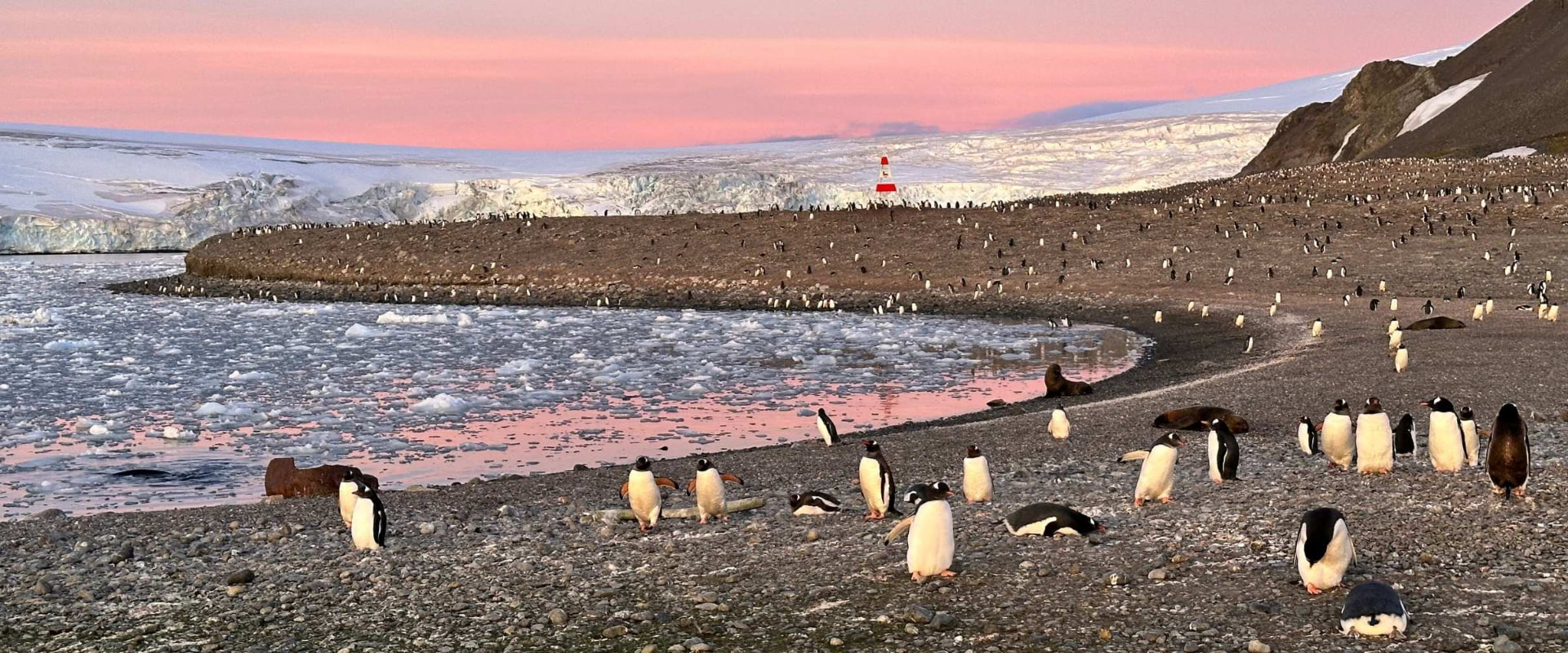
Firsthand: the Greg Mortimer with Aurora Expeditions in December 2024 and the World Navigator with Atlas Ocean Voyages in February 2024 both provided parka and loaned boots, and on both, waterproof over-trousers were ours to bring. See the Greg Mortimer journal and the World Navigator journal.
Breathable waterproof over-trousers are enough. Ski trousers are usually too warm once you are walking a colony in still air.
What About Gloves, Hats and Footwear?
Two pairs of gloves: waterproof outers for Zodiac work, and thin liners so you can operate a camera without bare skin on cold metal. A warm hat that stays put in wind and a neck gaiter rather than a scarf. Ashore you use loaned rubber boots over a liner sock and a tall merino sock.
Keep a spare sock pair in a sealed bag in the daypack. Splash over the boot top on a wet landing is common, and landings often run back to back with no chance to return aboard.
Onboard, ordinary shoes are fine. Ships are informal and cabins are warm.
What Do People Forget?
Sun protection, dry bags and binoculars. Light off ice burns exposed skin quickly and strains eyes, so polarised sunglasses, high-factor sunscreen and lip balm matter in cold air. A 20 to 30 litre dry bag keeps camera gear safe where spray is guaranteed, and 8x42 binoculars in your own hands beat waiting for a shared pair.

Spare camera batteries carried in an inside pocket are the other habitual omission. Cold flattens lithium-ion cells far faster than the specification sheet suggests. More in our Antarctica photography guide.
What Are the Biosecurity Rules?
Before the first landing you vacuum every outer garment, backpack, tripod and camera bag so no soil, seeds or organic material travels ashore. Boots are disinfected in a chemical bath before and after each landing. Velcro and pocket seams get checked because they trap seeds better than anything else you own.
It takes about twenty minutes on a sea day and the expedition team runs it. Bringing gear that is already clean, rather than straight from a hiking holiday, makes it painless.
Food ashore is prohibited outright, including a snack bar in a pocket.
What Can You Leave at Home?
Formal clothes, a second heavy coat, an umbrella and hiking boots for shipboard use. Expedition dress is informal throughout, the parka handles everything outdoors, and umbrellas are useless in polar wind. Drones are prohibited by most Antarctic operators and by IAATO site guidelines, so check before packing one.
Baggage discipline matters because the flight into Ushuaia or Punta Arenas is tighter than the long-haul leg that got you to South America.
Antarctica packing: common questions
Do I get to keep the parka?
On many lines, yes. Others loan it. Boots are almost always a loan rather than a gift, so confirm the size range before buying your own pair.
Do I really need waterproof trousers?
Yes. They are the item operators rarely supply and the one you use on every Zodiac cruise and wet landing. Breathable over-trousers with sealed seams are enough.
How cold does the Antarctic Peninsula get in summer?
Peninsula summer days usually sit close to freezing rather than far below it, roughly -2°C to 5°C. Wind and spray on an open Zodiac are what make it feel much colder.
Can I bring a drone?
Assume no. Most Antarctic operators prohibit recreational drone use and IAATO site guidelines restrict it. Ask before packing rather than at the mudroom door.
What do I wear for kayaking or camping?
Kayaking programmes supply drysuits, booties and buoyancy aids; camping supplies bivvy gear and sleeping systems. You bring base layers and gloves you do not mind soaking.
Keep preparing
What to pack for an expedition cruise
The general packing guide across every region.
Antarctica photography
Camera gear that survives cold, spray and Zodiacs.
First-time guide to Antarctica
What to decide before you shop for anything.
When to visit Antarctica
Conditions month by month, and what they mean for kit.
Antarctica for older travelers
Mobility, medical forms and pacing ashore.