


Part of our Antarctica guide →
Antarctica after 60: the essentials
- Age limit
- None. Operators assess health and mobility, not birthdate
- Core requirement
- Step gangway to Zodiac with crew assistance
- Ashore
- 30 to 90 minutes on pebbles, snow and wet rock
- Medical form
- Physician-signed, typically 6 to 12 weeks before sailing
- Evacuation cover
- Operator minimums commonly $100,000 to $500,000
- Opting out
- Every landing is optional; ship viewing always available
How Physically Demanding Is an Antarctic Expedition?
Moderate rather than athletic. You need to step between a moving gangway and a Zodiac using the crew's forearm grip, sit down on the inflatable tube and swing your legs across, then walk 30 to 90 minutes on loose pebbles, wet stone and packed snow. Stairs while the ship is moving matter more than distance.
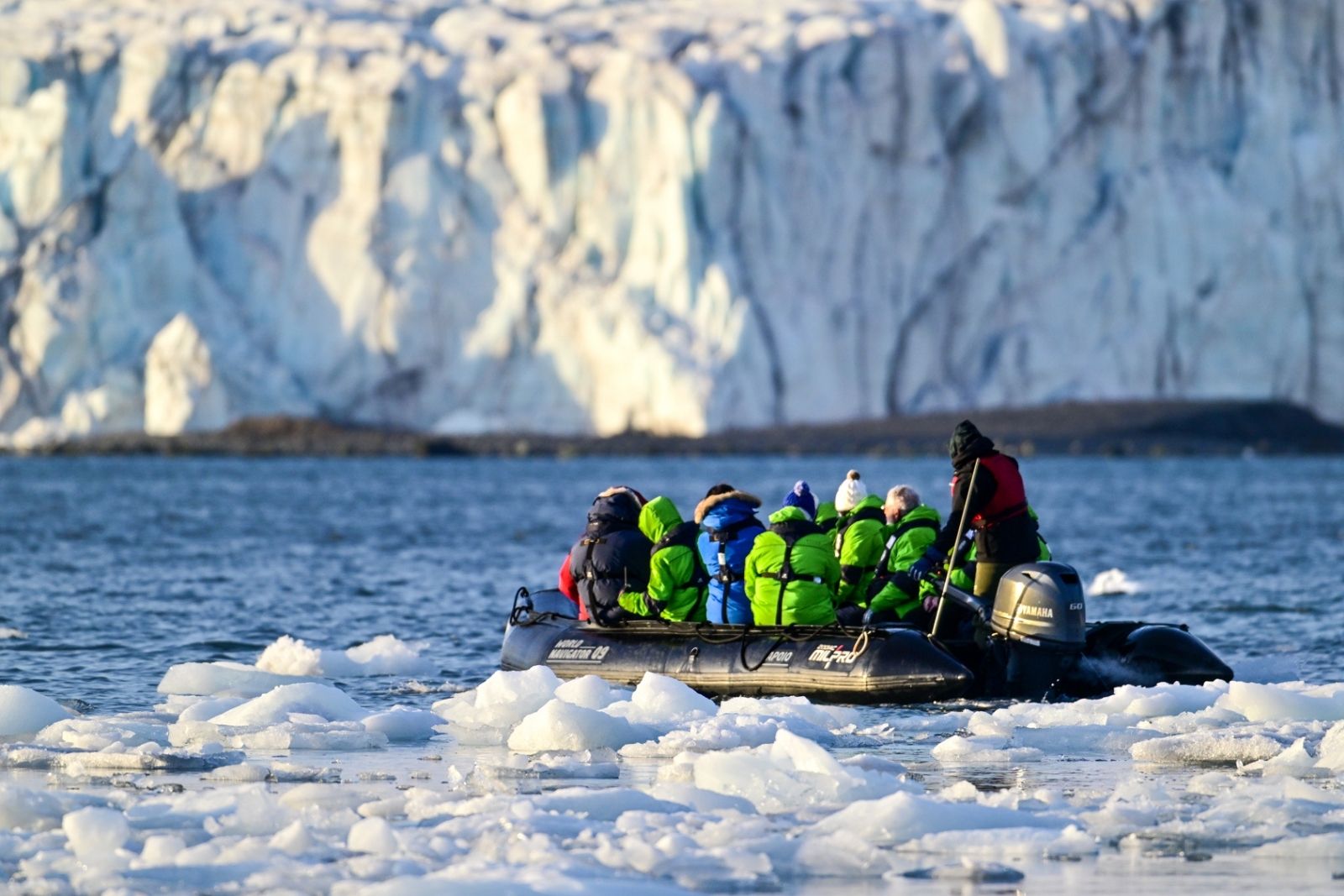
Nobody can take the gangway step for you, and that is the one thing worth assessing honestly at home rather than in a Drake swell. Balance, not stamina, is the usual limiting factor.
If you use a stick on uneven ground, say so early. It changes which ships we recommend rather than whether you can go: some vessels run a low marina platform that is far easier to board from than a shell door, and expedition teams differ noticeably in how well they assist.
What Medical Paperwork Do Operators Require?
Operators require a physician-signed medical questionnaire, typically 6 to 12 weeks before departure, covering history, medications and mobility. This is an operator requirement, not an IAATO rule, so the form, the deadline and the thresholds vary by line. Carry roughly two weeks of extra prescription medication in labelled containers with a dosage note.
Most expedition vessels carry an infirmary and a doctor equipped for primary care and stabilisation, not surgery. Treat the ship's clinic as a first responder rather than a hospital.
Evacuation insurance is where people get caught out. Operators set their own minimums, commonly between $100,000 and $500,000 of emergency medical evacuation cover, and the figure should be checked against your specific operator before you book rather than assumed. Our Antarctica cost guide and expedition cost breakdown cover where insurance sits in the total.
Which Ship Features Matter Most With Age?
Lifts serving every passenger deck, double handrails on internal stairs, a low-deck Zodiac boarding area sheltered from swell, and a cabin mid-ship and low where motion is least. A cabin near the mudroom saves two flights of stairs four times a day, which matters more by day six than it sounds on a deck plan.
Not every expedition ship has a lift to every deck, and some of the most capable ice ships are the least accessible internally. This is worth confirming vessel by vessel rather than line by line. Start with our Antarctica expedition ships guide.
Firsthand: on the Greg Mortimer with Aurora Expeditions in December 2024, boarding happened from a sheltered lower-deck platform rather than a swaying outer gangway, and the crew held both wrists at each end of the step. It is the single feature we would look for again.
How Should You Handle the Drake Passage?
Start motion-sickness treatment before you reach open water rather than after symptoms begin; patches and tablets both work better preventively. Modern ships use active fin stabilisers or a wave-piercing bow to reduce roll. If balance or seasickness is a real concern, fly the Drake instead and skip the crossing entirely.
Flying costs more and trades two days of ocean for a two-hour flight to King George Island, with weather delays as the risk you accept in exchange. We weigh both in sailing or flying the Drake.
Can You Slow the Pace Once You Are There?
Yes. Every activity is optional. On a typical landing you can choose a longer hike, a gentle shoreline walk, a Zodiac cruise with no landing at all, or the observation lounge. Staff monitor how people are doing ashore and run early return boats for anyone who is cold or tired.

Most travelers skip at least one excursion, and the ones who pace themselves generally enjoy the second half of the voyage more than the ones who do everything on day two.
Older travelers in Antarctica: common questions
Is there a maximum age for an Antarctic cruise?
No. Operators do not set age caps. Approval rests on the physician-signed medical questionnaire and on your functional mobility, particularly the ability to board a Zodiac with assistance.
Is the medical form an IAATO requirement?
No. It is an operator requirement. Each line sets its own form, deadline and thresholds, usually asking for a physician signature 6 to 12 weeks before departure.
How much evacuation insurance do I need?
Operators set their own minimums, commonly between $100,000 and $500,000 of emergency medical evacuation cover. Check the figure against your specific operator's terms before booking.
Do all expedition ships have a doctor?
Most Antarctic expedition vessels carry an infirmary with a qualified doctor for primary care and stabilisation. Confirm it for your ship, and understand that serious cases mean evacuation, not treatment aboard.
Can I skip landings and still enjoy the voyage?
Yes. Landings are optional and much of Antarctica is seen from the ship: channels, glacier faces, whales alongside. Plenty of guests choose Zodiac cruises over shore walks and are entirely happy.
Is a fly-cruise easier than sailing the Drake?
Physically, usually yes: you avoid two days of open ocean each way. It costs more, the itinerary is shorter, and flights to King George Island can be delayed by weather.
Keep planning
Antarctica expedition ships
Lifts, boarding platforms, stabilisers and landing capacity.
Sail or fly the Drake
The trade-off between two days at sea and a two-hour flight.
First-time guide to Antarctica
Duration, gateways, daily rhythm and what to decide first.
Antarctica packing list
What is supplied, and what you must bring yourself.
Expedition costs explained
Where insurance and evacuation cover sit in the total.