
Experiences
Photography on an Expedition Cruise.
What gear will I need, and will I actually be able to use it? That's the real question, and the answer changes by region.
The question that actually matters isn't what camera to buy — it's whether you'll be able to use whatever you bring. A 100–500mm lens earns its weight in Antarctica; a GoPro is the right tool underwater in the tropics; and on Lindblad ships you can try an expensive lens from the onboard locker before deciding you need one at all.
What it was like for us.
Our gear has changed on almost every voyage, mostly because each trip taught us something the last one hadn't. Aboard the National Geographic Sea Lion in Alaska in 2021, we used Lindblad's onboard camera locker to try lenses we didn't own and came home with our first genuinely good whale photographs — without having spent a cent on equipment we weren't sure we'd use again. That locker is, honestly, the most useful single fact in this whole page for a first-timer: you don't have to guess at what lens you need before you've even seen the wildlife.
In French Polynesia and the Galápagos we learned to use a GoPro underwater — fish, reef, sharks, manta rays, turtles, dolphins — and it remains the right tool there. No housing to worry about, no settings to fumble with while a manta ray glides past. In Iceland, on our first outing with a new mirrorless body, we were on puffins and got our first puffin-carrying-a-fish shot, which taught us more about timing a burst than any manual would have.
Antarctica changed our answer again. A 100–500mm lens is what makes the difference there — a penguin porpoising, a whale fluke lifting clear of the water, a leopard seal taking a penguin, all of it happening fast and often far enough away that anything shorter leaves you cropping a speck. In Churchill, working alongside Discover Churchill's professional photographer guides produced our best images of polar bears, belugas, foxes and the aurora — proof that local guiding sometimes matters more than the camera bag. And in East Greenland, our best single photograph exists because the captain put the ship in exactly the right position for a polar bear climbing onto the ice — no lens fixes a bad angle.
Our own onboard learning came from Lindblad's National Geographic photo instructor, Ralph Lee Hopkins. The most useful sessions were the walks ashore rather than the lectures. Three things he pushed us on in Greenland: reflections in still fjord water, putting something in frame to give an iceberg scale, and turning around to shoot macro — lichens, tundra flowers — when the big landscape is flat light.
What does expedition photography support involve?
Most expedition ships run some combination of onboard seminars, deck-side spotting help from naturalists, and Zodiac cruises timed or positioned for photography rather than just wildlife viewing. On the better-resourced lines this extends to a dedicated photo instructor, daily image review, and priority positioning in the boats.
What's provided?
What's provided ranges from nothing more than a naturalist willing to answer questions, up to a National Geographic-certified photo instructor, gear lockers with loaner lenses, and structured daily critique sessions. It is worth checking before you book if photography is the point of the trip for you.
What does it require of you?
Layers you can shoot in with cold hands, a dry bag or rain cover depending on region, and realistic expectations about what your existing gear can do. A phone is genuinely enough for most of a polar voyage's landscapes; distant wildlife and fast action are where a longer lens or a proper zoom starts to matter.
Which regions need which gear?
Gear needs shift sharply by region: long glass and fast shutter speeds in Antarctica for porpoising penguins and breaching whales, a wide lens for glacier fronts in Greenland and Svalbard, a GoPro or housing for reef life in French Polynesia and the Galápagos, and — in Churchill or East Greenland — as much reliance on where the guides put you as on what's in your bag.
For Antarctica specifically, see our regional guide to photography in Antarctica, and for the Arctic's night sky, see aurora photography in the Arctic. This page is the cross-region view on gear and support; those pages hold the regional detail.
Wildlife distances belong in the caption, not just the field.
On the Greg Mortimer, Aurora's briefing asked us to keep distances honest in what we post afterward, and to note in the caption when an image was shot at 600mm and cropped. It's a good rule, and one we've kept using since: a tightly cropped telephoto shot can make an encounter look closer than it was, which matters for how other travelers understand what's actually appropriate around wildlife.
Read more in our guide to responsible wildlife encounters, and the log of ten days to Antarctica aboard the Greg Mortimer, where that briefing happened.
How the expedition lines compare.
Photography support ranges from a naturalist who's happy to help to a dedicated instructor and a gear locker. This is what's currently on offer.
| Line | Programme |
|---|---|
| Lindblad Expeditions | Every ship carries a National Geographic-certified photo instructor who works both the field and shipboard seminars; select departures add a visiting National Geographic photographer. Lindblad's partnership with OM System means an onboard gear locker where you can test mirrorless bodies and telephoto lenses at no charge — the single most useful thing to know if you're deciding whether to buy a long lens before a trip. |
| Quark Expeditions | A structured Guided Photography Program led by a dedicated Photo Lead on polar sailings, capped at sixteen participants per group, with priority Zodiac positioning and daily image review in the lounge. |
| Aurora Expeditions | Masterclass photography options on select voyages aboard the X-Bow ships (Greg Mortimer, Sylvia Earle, Douglas Mawson), with small-group Zodiac cruises dedicated to photography rather than a standard landing schedule. |
| Oceanwide Expeditions and HX | Both run onboard workshops on exposure in snow, action technique and wildlife-stalking ethics, with guides positioning Zodiacs for light while holding regulatory wildlife distances. Neither has a dedicated page on our site under that programme name; see HX below for the line itself. |
| HX | Photo naturalists host onboard sessions covering field technique in polar light, with guides working to keep Zodiacs positioned for both the shot and the wildlife's comfort. |
More on photography.
Related experiences: wildlife viewing, sea kayaking, and Zodiac cruising. Back to all experiences.
Written by your expedition advisor
Chris Commisso · Expedition Expert
Signature Travel Expert
Chris and Erika have sailed ten expedition voyages and toured seven more expedition ships. Favorite explorations so far: Antarctica, Svalbard, Greenland, Iceland, Norway, Alaska, the Galápagos, the Scottish Hebrides, Churchill and French Polynesia.
Last updated .
From our journal
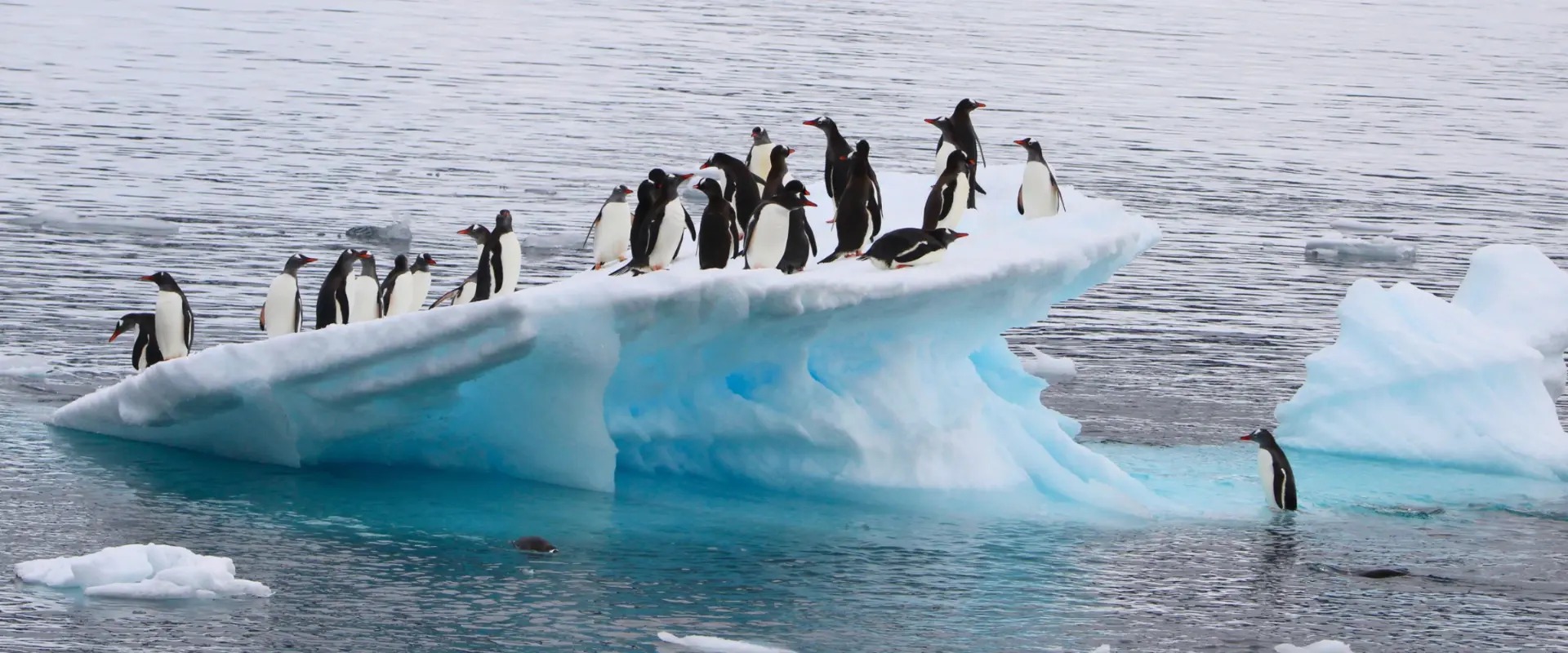
Ten Days to Antarctica Aboard the Greg Mortimer
7–19 December 2024 · Aurora Expeditions
In December 2024 we sailed Aurora Expeditions' Greg Mortimer round trip from Ushuaia to the Antarctic Peninsula. We Zodiac cruised the Melchior Islands and Paradise Harbour, landed at Port Lockroy and among nesting gentoos on Danco Island, watched whales in the bay all day, walked Deception Island, and sent five whale-tail photos to a citizen science project. Three were identified.
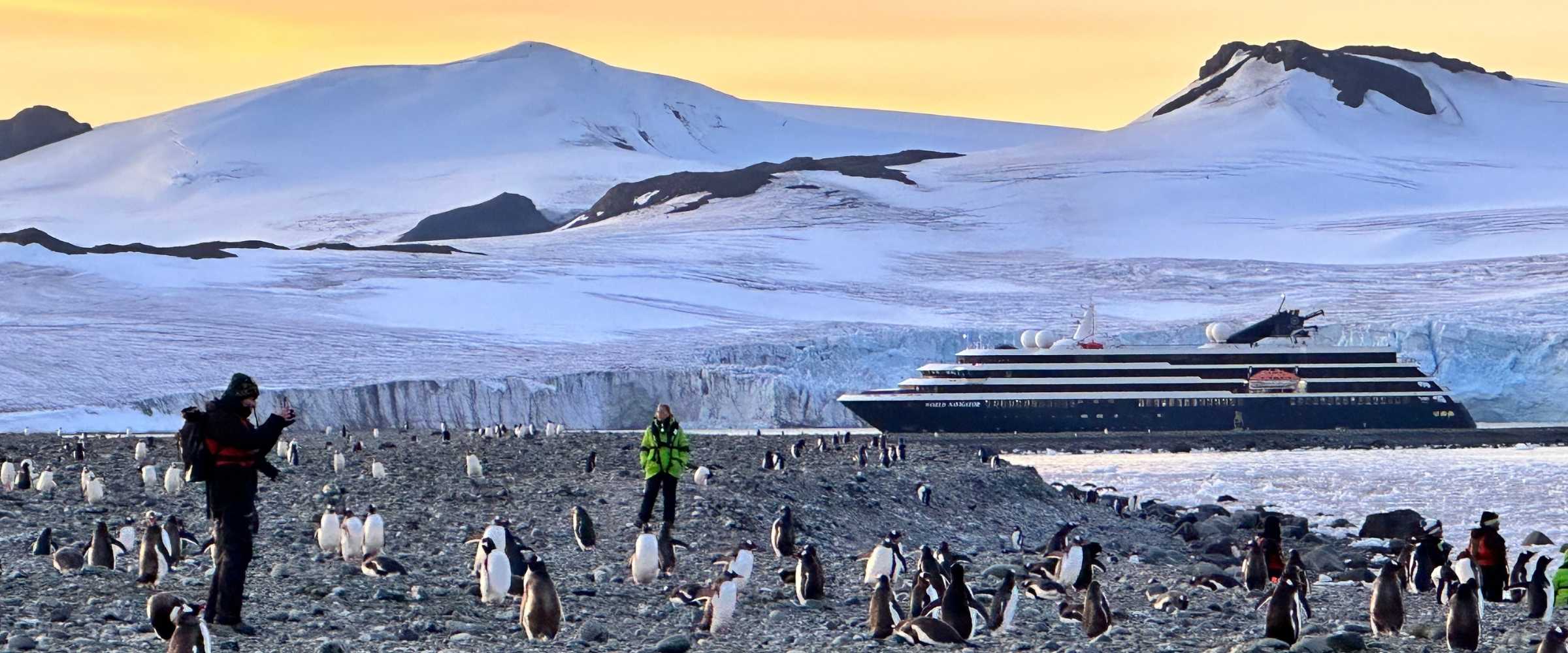
Antarctica Aboard the World Navigator: Our Journey to the White Continent
24 February–6 March 2024 · Atlas Ocean Voyages
Eleven days from Buenos Aires to the Antarctic Peninsula aboard Atlas Ocean Voyages' World Navigator. Humpbacks spyhopping around the Zodiacs in Fournier Bay, leopard seals hunting chinstraps at Duroch Island, and a night camping ashore at Eckener Point — nine hours, twenty-five minutes and forty-seven seconds off the ship, listening to glaciers crack.
Planning a trip around photography?
Tell us what you shoot with and where, and we'll match the ship and the season to it.
Request a Quote