
Experiences
Citizen Science on an Expedition Cruise.
Real field data, collected during activities you were already doing, and submitted to the researchers who can't get a dedicated ship to these regions often enough.
Citizen science turns a routine Zodiac cruise or shore landing into a small piece of ongoing research. Guests photograph whale flukes, lower Secchi disks to measure water clarity, or log seabirds and glacial melt, and the data is submitted to the institutions that run the programmes. No scientific background is required, it's included in the fare, and it doesn't take time away from wildlife viewing — it happens during it.
What it was like for us.
Firsthand: we do citizen science every chance we get. We've submitted Happywhale fluke photographs in Alaska and Antarctica, and taken part in Secchi disk and phytoplankton sampling in Antarctica and Scotland, alongside wildlife logging on every voyage we've taken.
Firsthand: the clearest result we've had came aboard the Greg Mortimer with Aurora Expeditions, where we submitted five whale-tail photographs to Happywhale. Three were identified against the database, and two of those three were new records — whales nobody had photographed before. That's the reason we tell every guest to bring a telephoto lens, even a modest one: it's the difference between a nice photo and a data point a researcher actually uses.
What does citizen science on a voyage involve?
Most programmes are built around data collection your naturalist staff are already doing informally: photographing whale flukes for identification, dropping a Secchi disk to measure water clarity, counting nests in a penguin colony, or logging bird sightings during open-water transits. An onboard briefing early in the voyage explains the active projects and how to log an observation correctly.
Happywhale (whale photo ID)
Guests photograph whale flukes and dorsal fins; image-recognition software matches individuals against a global database to track migration and population health.
FjordPhyto
A phytoplankton and water-sampling project developed with the Scripps Institution of Oceanography, studying how Antarctic glacier meltwater affects the marine food web.
Secchi disk water clarity
A simple disk lowered on a line to measure water clarity as a proxy for phytoplankton density.
eBird and seabird surveys
Run by the Cornell Lab of Ornithology; naturalists and guests log pelagic bird sightings during transits to track distribution and population trends.
Penguin colony counts
Guests are assigned a sector of a colony to count occupied nests or chicks, feeding into breeding-success monitoring.
Snow algae and microplastics
Photographing algae blooms that darken snow and accelerate melt, and sieving shoreline samples for microplastics on some voyages.
What is provided, and what does it require of you?
Sampling gear — plankton nets, Secchi disks, digital microscopes, field notebooks — is supplied by the ship. On better-equipped vessels there's a dedicated Science Center where samples get examined after a landing. For photo-ID projects like Happywhale, a standard camera or phone with a telephoto lens is enough; nobody needs a lens setup bought for this.
Nothing beyond willingness. Participation is voluntary and unticketed — you join as much or as little as you want, and it doesn't replace or delay your normal landing or Zodiac time. The only real requirement for photo-ID work is getting a clean, identifiable shot of a fluke or dorsal fin, which takes a bit of patience more than skill.
Which regions does this work in?
Whale photo ID runs wherever whales are reliably present — Antarctica, Alaska, and the North Atlantic. Phytoplankton and water-clarity sampling is concentrated in Antarctica and, on some itineraries, Scotland. Bird logging happens on any open-ocean transit. Penguin counts and snow algae observations are Antarctic-specific; Arctic voyages substitute polar bear and seabird logging instead.
For the Antarctic-specific version of this, including our own sampling notes, see citizen science in Antarctica. This page is the cross-region view; that page is the regional detail.
What does a serious science space look like?
Some operators build the room before the programme. Touring HX's Roald Amundsen alongside in Boston, the clearest thing aboard was her Science Center: microscopes, interactive screens and laboratory equipment in a dedicated space laid out for lectures and sampling, not a corner of a lounge with a few display panels.
That matters because it decides what the programme can actually do. Our own sampling has been the hands-on end of this — filling cloud and phytoplankton observations between landings — and the ships with a proper room for it are the ones where the work continues after the talk finishes rather than packing away with the projector. See the Boston ship visit for what the space looked like.
Which lines run the best programmes.
| Operator | Focus |
|---|---|
| HX | A dedicated onboard Science Center with a resident Science Coordinator and visiting researchers; FjordPhyto, Happywhale, Secchi disk and cloud observation with NASA. |
| Lindblad Expeditions | Hydrophones and underwater cameras feed real-time marine science; guests contribute to Happywhale and microplastic sampling. |
| Viking Expeditions | A purpose-built science lab on Octantis and Polaris with researchers from Cambridge and NOAA; weather balloon launches and ROV video analysis. |
| Aurora Expeditions | Dedicated Citizen Science Coordinators aboard the Greg Mortimer and Sylvia Earle — the programme we did our own sampling on. |
| Oceanwide Expeditions | Bird counts, Secchi disk drops and whale-tail submissions folded directly into daily landings, with no separate lab session required. |
| Quark Expeditions | Happywhale identification and sea ice and glacier monitoring integrated into polar itineraries. |
| Seabourn and Silversea | Open science briefings led by the expedition team, covering wildlife sightings, ocean temperature and meteorological logging. |
We could not link Viking Expeditions, since it doesn't yet have a page on this site — it's named above in plain text.
More on the ship, and elsewhere.
Citizen science pairs naturally with wildlife viewing and Zodiac cruising, since most sampling happens during those activities rather than separately. Back to all experiences.
Written by your expedition advisor
Chris Commisso · Expedition Expert
Signature Travel Expert
Chris and Erika have sailed ten expedition voyages and toured seven more expedition ships. Favorite explorations so far: Antarctica, Svalbard, Greenland, Iceland, Norway, Alaska, the Galápagos, the Scottish Hebrides, Churchill and French Polynesia.
Last updated .
From our journal
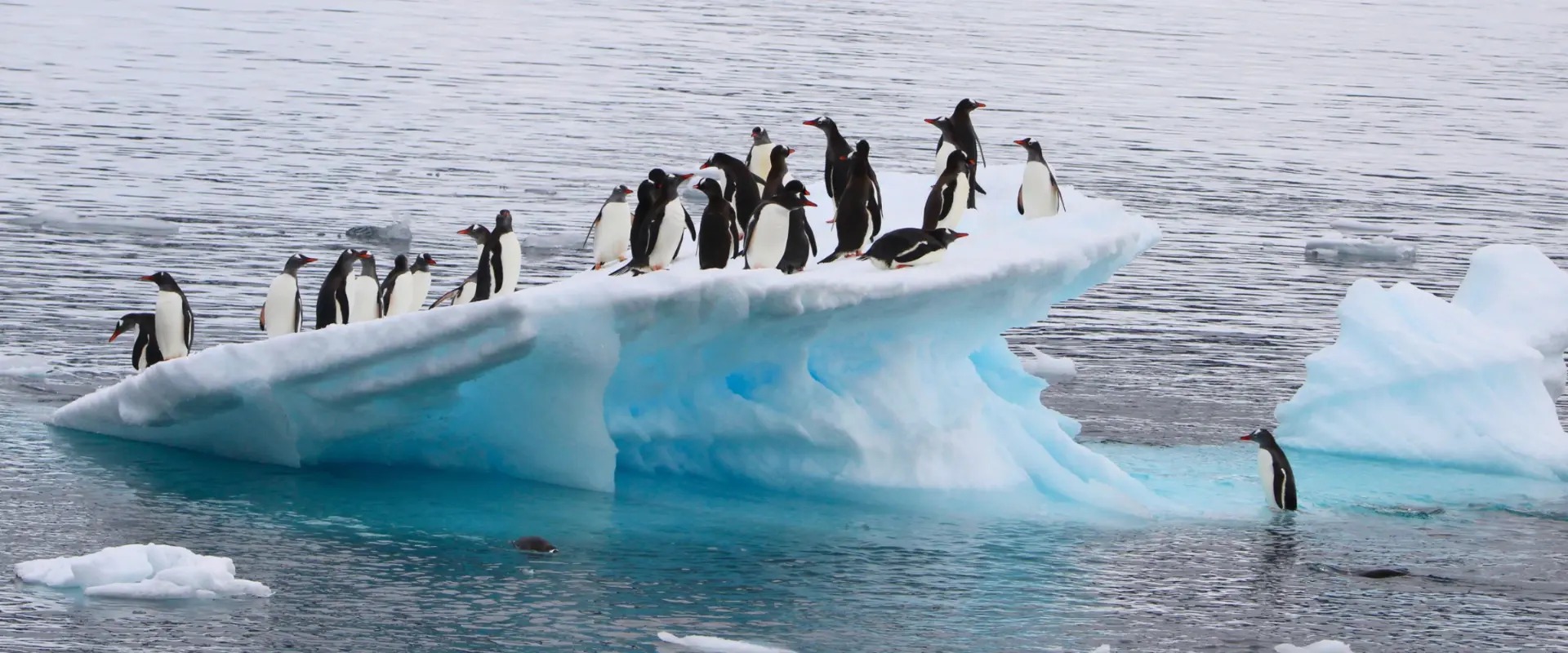
Ten Days to Antarctica Aboard the Greg Mortimer
7–19 December 2024 · Aurora Expeditions
In December 2024 we sailed Aurora Expeditions' Greg Mortimer round trip from Ushuaia to the Antarctic Peninsula. We Zodiac cruised the Melchior Islands and Paradise Harbour, landed at Port Lockroy and among nesting gentoos on Danco Island, watched whales in the bay all day, walked Deception Island, and sent five whale-tail photos to a citizen science project. Three were identified.
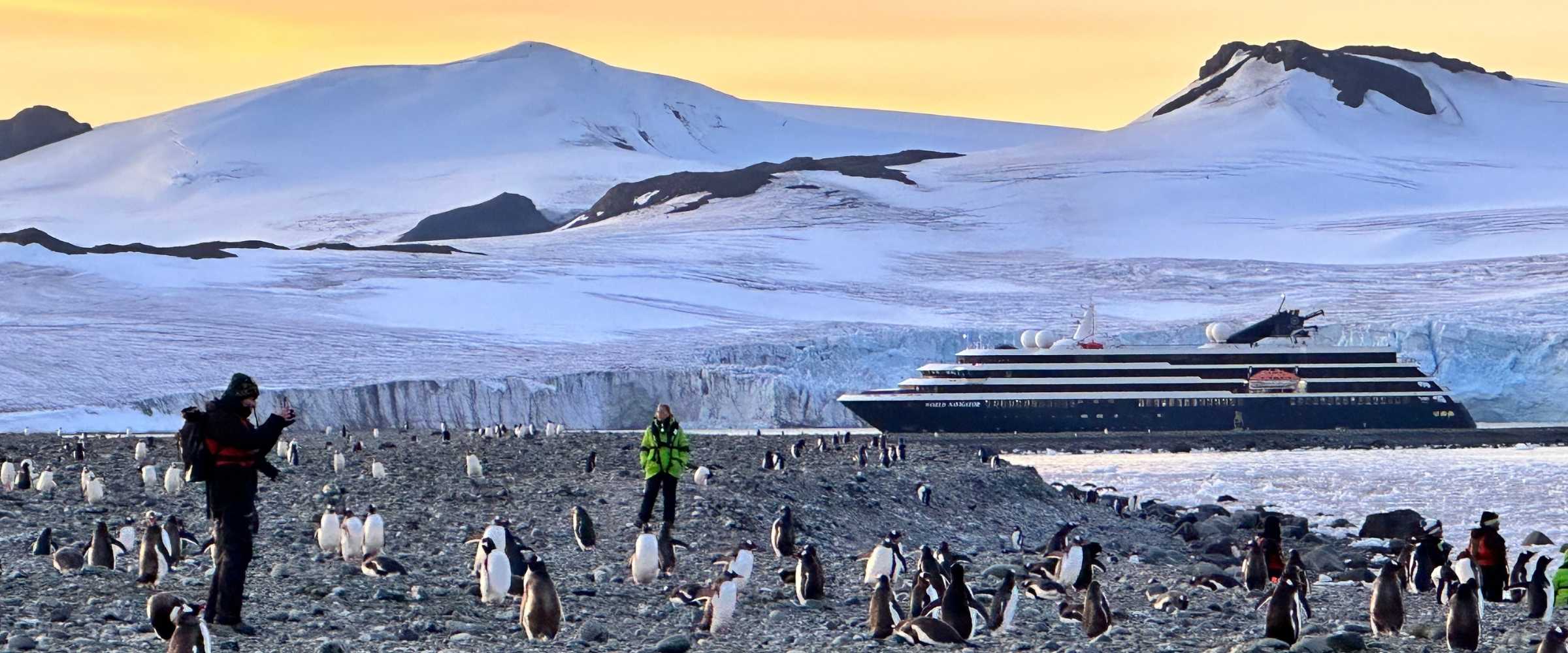
Antarctica Aboard the World Navigator: Our Journey to the White Continent
24 February–6 March 2024 · Atlas Ocean Voyages
Eleven days from Buenos Aires to the Antarctic Peninsula aboard Atlas Ocean Voyages' World Navigator. Humpbacks spyhopping around the Zodiacs in Fournier Bay, leopard seals hunting chinstraps at Duroch Island, and a night camping ashore at Eckener Point — nine hours, twenty-five minutes and forty-seven seconds off the ship, listening to glaciers crack.
Want a voyage with an active science programme?
Tell us it matters and we'll steer you toward the ships that run it properly.
Request a Quote