
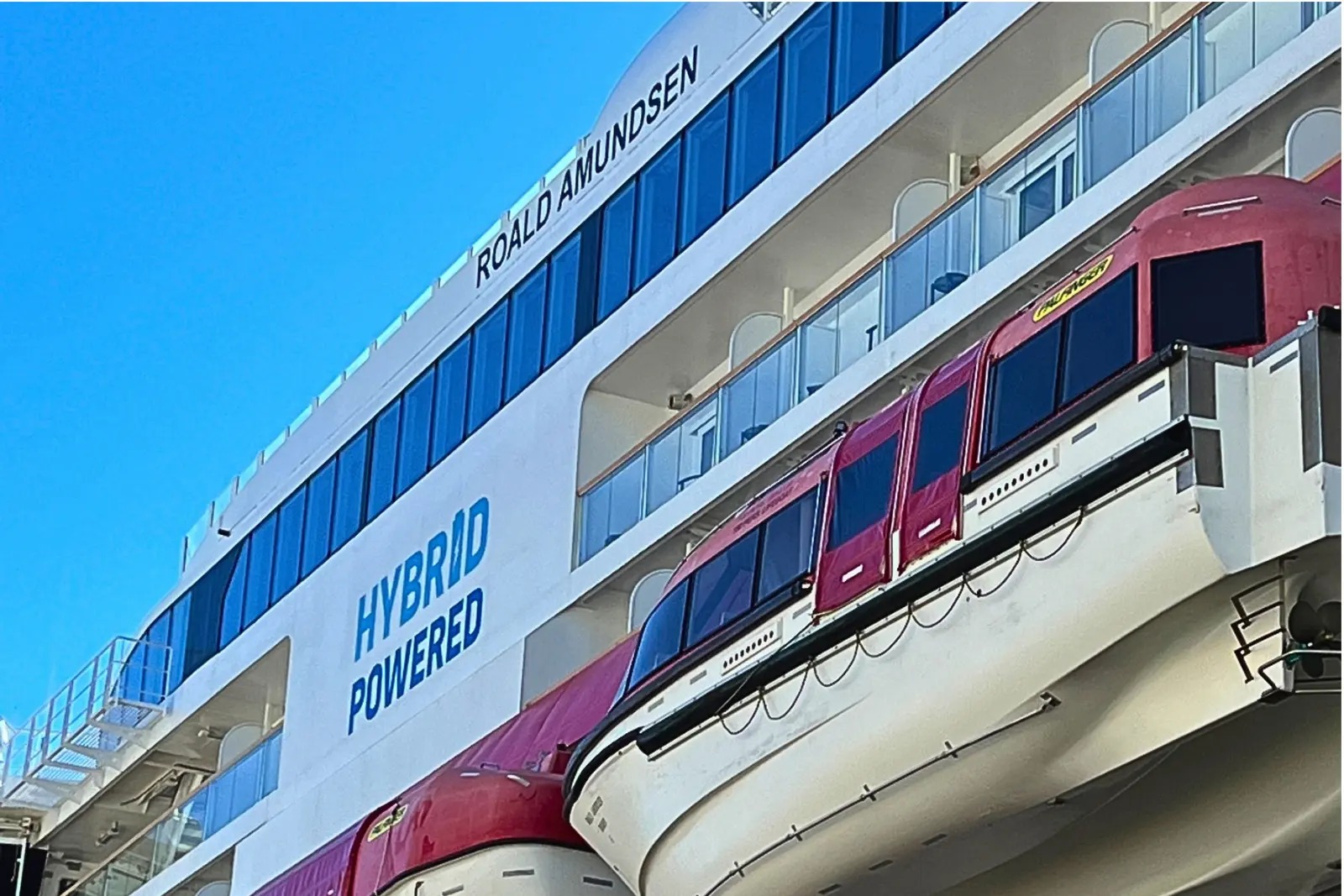
Sometimes you don't have to board an expedition ship and sail to the ends of the earth to learn what makes it special.
Sometimes, you just have to get yourself to Boston.
Living in the Midwest, opportunities to experience expedition ships firsthand aren't exactly around every corner. So when we had the chance to tour the **Roald Amundsen**, we jumped at it.
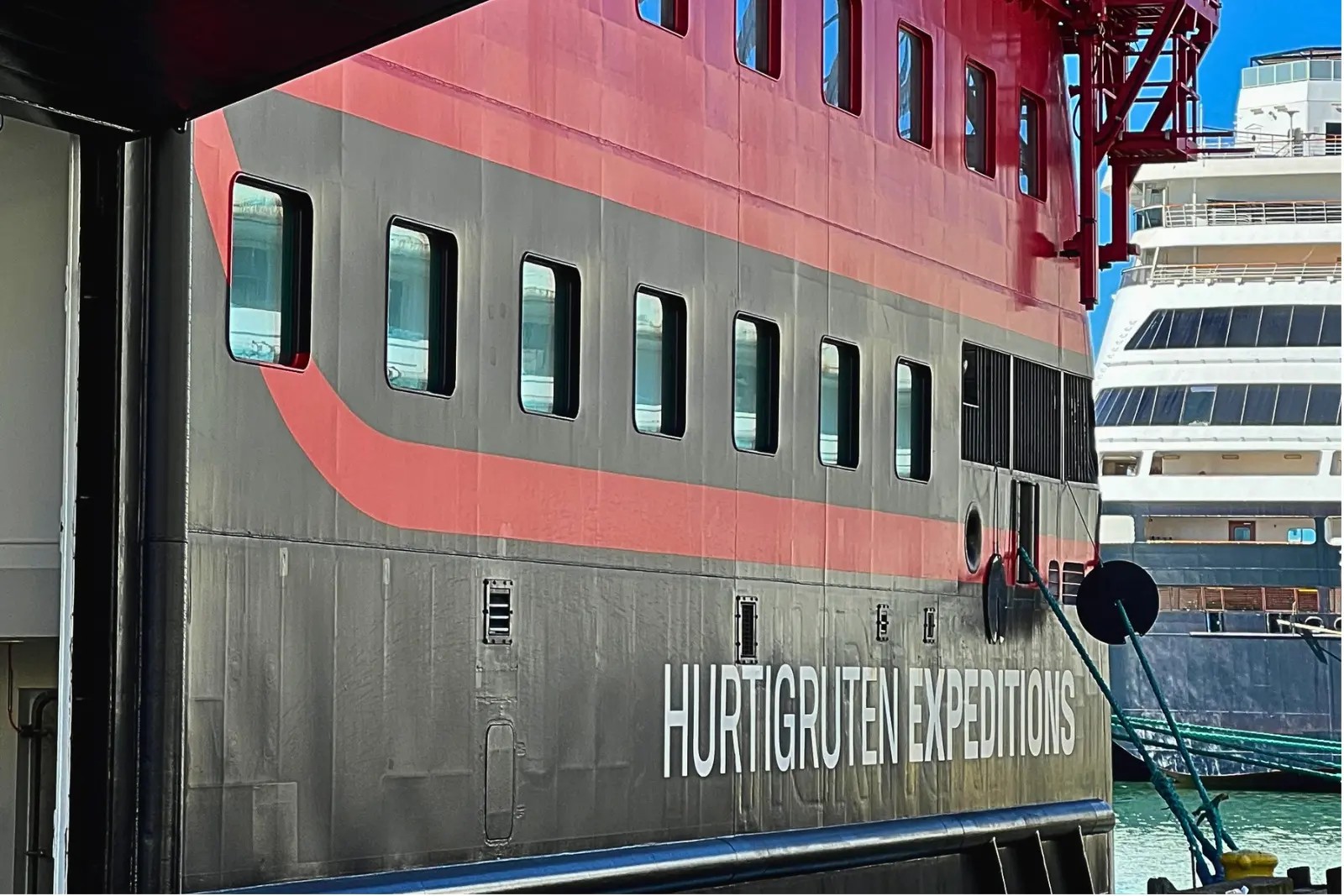
At the time of our visit, the ship was part of Hurtigruten's expedition operation. Today, the expedition brand is HX.
It wasn't quite Antarctica. There were no penguins waiting for us on the pier, no Zodiac rides, and definitely no icebergs.
But it was a pretty great way to spend a couple of days learning what life aboard an expedition ship is really like.
Hello, Roald Amundsen
We arrived at the port early in the morning and were welcomed aboard the Roald Amundsen. We started with a presentation covering the ship, its design, and some of the itineraries it would be sailing.
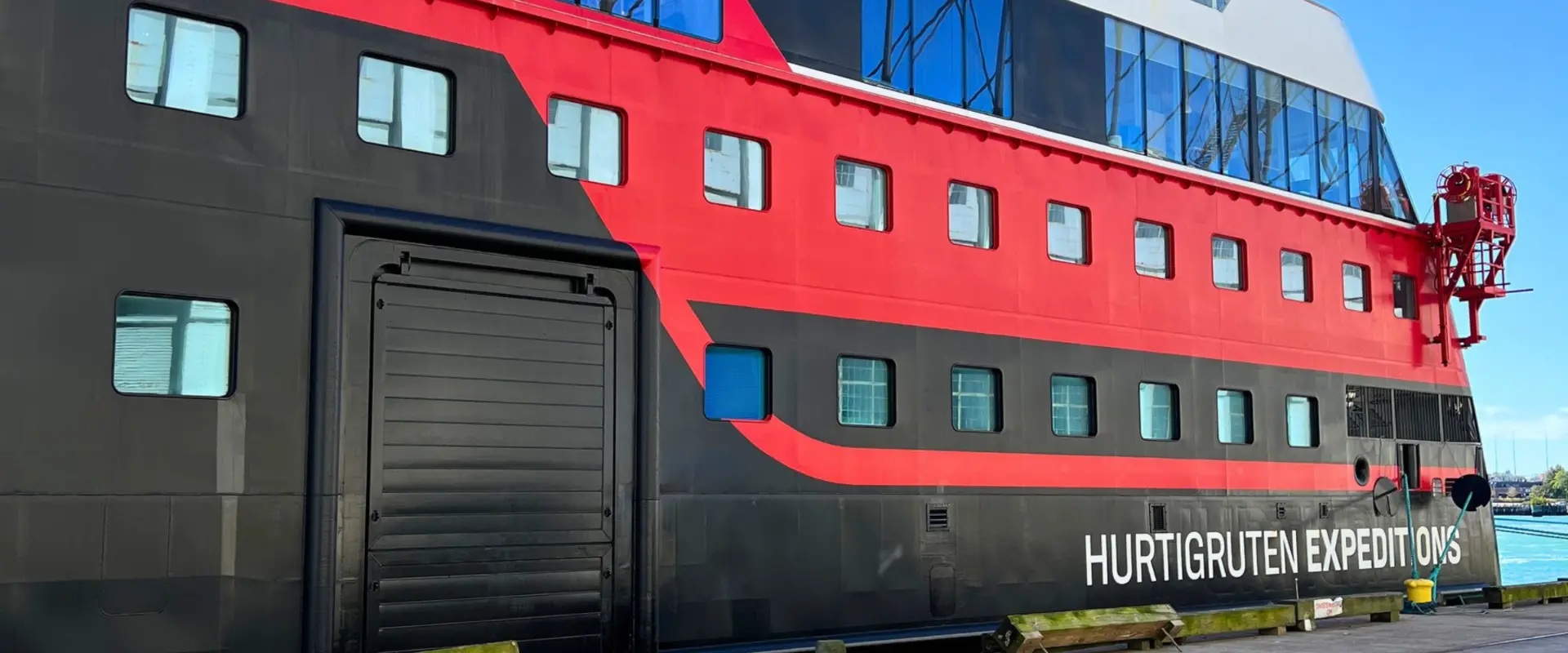
And there was a lot to take in.
Built in 2019 at the Kleven Shipyard in Norway, the Roald Amundsen is a 20,889-ton, 459-foot-long expedition ship with a Polar Class 6 ice rating. It can accommodate up to 530 guests, although capacity is capped at 500 when sailing in Antarctica.
But the numbers only tell part of the story.
What really caught our attention was how the ship was designed around the expedition experience.
Built for the expedition life
The Roald Amundsen was designed with hybrid propulsion, combining traditional marine engines with large battery packs. The system was designed to reduce fuel consumption and allow the ship to sail on electric power for periods of time — particularly valuable when operating in sensitive environments.
Then there was the Science Center.
This wasn't just a room with a few displays tucked into a corner. It was designed as a real hub for lectures, learning and citizen science, complete with microscopes, interactive screens and laboratory equipment.
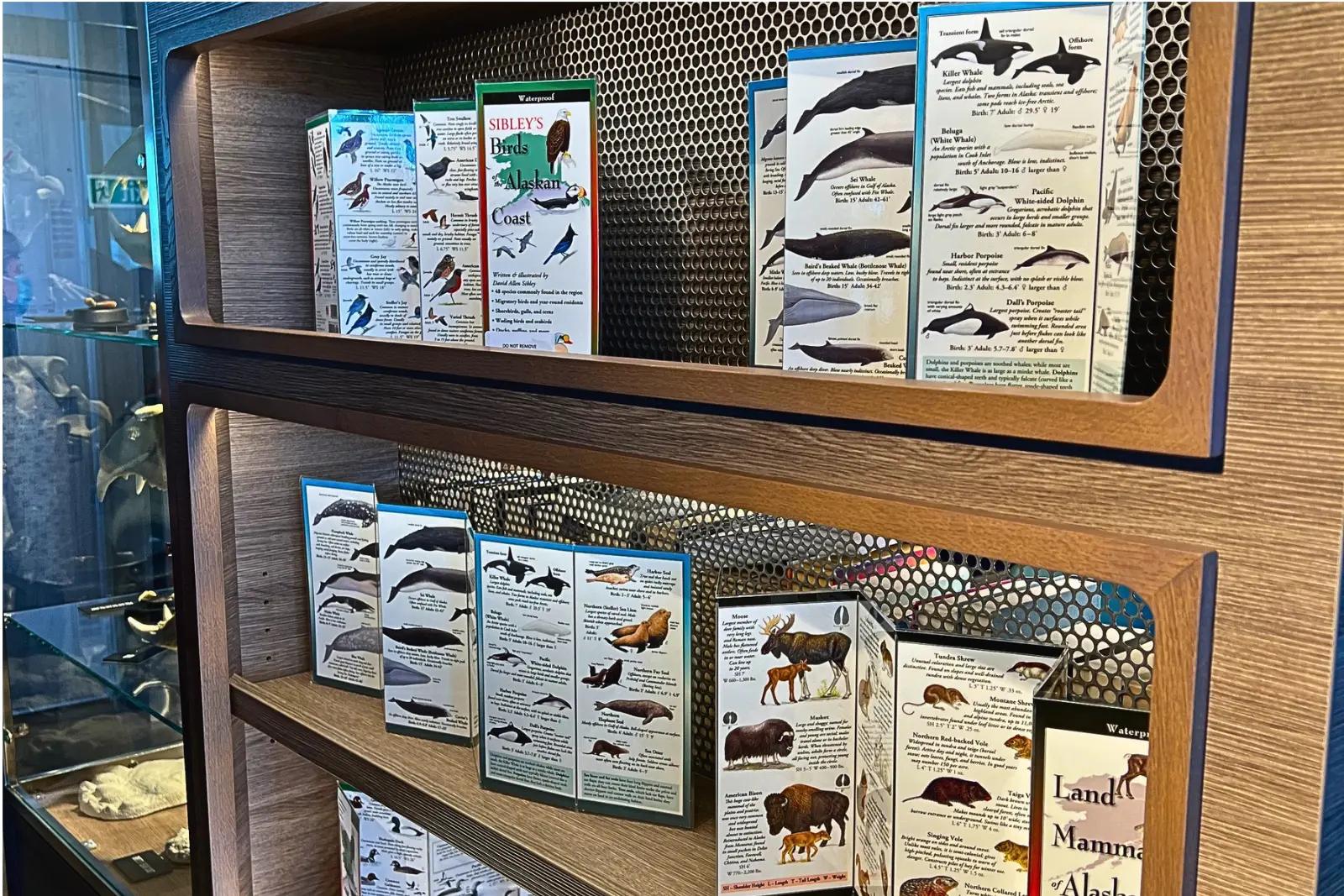
That's something I love about expedition cruising: you're not simply being taken somewhere beautiful. You're encouraged to understand what you're looking at when you get there.
And then there was the Scandinavian design.
Oak. Birch. Granite. Wool. Lots of natural materials and enormous windows.
All 265 cabins face outward, and more than half have private step-out balconies. Even when you're inside, the idea is clearly to keep you connected to the environment outside.
Let's take a tour
After the presentation, we started making our way through the ship.
We visited the restaurants, toured different cabin categories, checked out the Science Center and, perhaps most importantly for an expedition geek, got an up-close look at the mudroom and expedition gear area.
This is one of those things that's easy to overlook when you're looking at pretty pictures of an expedition ship online.
But the behind-the-scenes spaces matter.
The Roald Amundsen carries 17 custom Zodiac boats and has an internal launching bay, along with dedicated spaces for kayaking and expedition operations.
And the launch area was impressive.
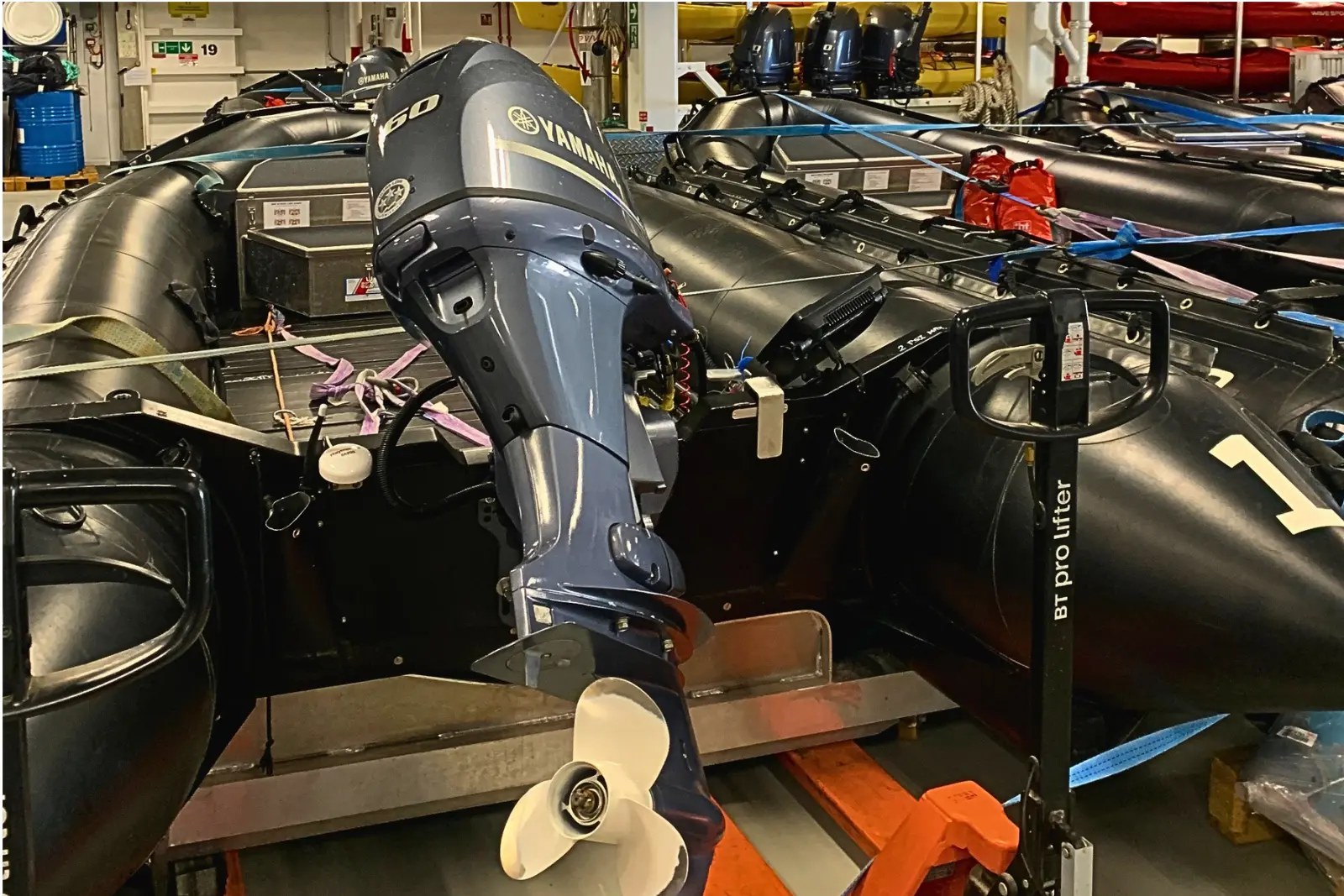
Because this is a larger expedition ship, I was curious about how efficiently everyone would actually get from the ship to the Zodiacs. Standing there and seeing the space firsthand, it was easy to understand how the layout was designed to keep people moving.
On an expedition cruise, that matters.
When you've spotted something amazing ashore, the last thing you want is a complicated game of human Tetris trying to get everyone into their gear and onto the Zodiacs.
There is, of course, food
One of the fun parts of touring any ship is discovering how many different ways there are to feed yourself.
The Roald Amundsen had three dining options.
Aune offered Scandinavian regional and international cuisine in the main dining room.
Fredheim brought a more casual atmosphere with street food and global comfort dishes.
And then there was Lindstrøm, the specialty restaurant serving modern Nordic cuisine. It was included for suite guests and available at an additional cost for other passengers.
So whether you wanted casual, classic or a little more special-occasion dining, you had options.
And yes… there is a pool
Expedition cruising doesn't mean giving up all the creature comforts.
The ship had an outdoor gym and running track, along with a wellness center, sauna and hot tubs.
There's also a two-deck indoor/outdoor Observation Deck, an Explorer Lounge with panoramic windows and an aft infinity pool.
And one feature I particularly loved: the panoramic ocean-view sauna.
Because apparently even when you're standing in a sauna, expedition cruise designers feel the need to remind you that you're somewhere spectacular.
The perfect ending
On our final day in Boston, we decided to keep the expedition theme going.
We headed to the New England Aquarium to visit the penguin exhibit.
Okay, so it wasn't quite the Antarctic.
But after spending the day aboard a ship designed to take travelers into some of the world's wildest environments, it seemed like a fitting way to finish the trip.
And that's really what this Boston visit gave us: a chance to get a feel for the ship before experiencing it in the places where it was designed to operate.
For us, ship tours like this are incredibly valuable.
When we're helping someone decide whether an expedition cruise is right for them, it's one thing to read a brochure or look at a deck plan.
It's another thing entirely to have walked the ship, seen the cabins, stood in the mudroom, looked at the Zodiacs, toured the restaurants and imagined what a day onboard might actually feel like.
That's the kind of firsthand knowledge we want to bring to our clients.
Because sometimes the best way to understand an expedition is to start before the expedition even begins.