


Torres del Paine at a glance
- Country
- Chile, Magallanes region
- Park area
- Roughly 180,000 hectares
- Nearest towns
- Puerto Natales, then Punta Arenas
- Season
- October to April for most travellers
- Typical stay
- 3 to 4 nights
- Signature hike
- Base of the Towers, a full day
- Reach by ship
- No. Road access only
What Is Torres del Paine and Why Does It Matter?
A Chilean national park of about 180,000 hectares covering mountains, ice fields, glacial lakes and open steppe, north of Puerto Natales. It matters to expedition travellers because it holds the landscapes ships cannot reach, and because it sits close enough to the fjord ports to attach to a voyage.
The park is compact enough to see properly in three or four days and varied enough that those days do not repeat themselves: one on the steppe among guanaco herds, one in the alpine amphitheatres, one on the water at a glacier front.
It is also windy in a way that surprises people who have prepared for cold instead. That distinction runs through our Patagonia packing list.
What Are the Main Sights in the Park?
Four dominate: Las Torres, the three granite monoliths above a glacial tarn; Los Cuernos, the two-toned horns above Lake Pehoé; French Valley, an alpine amphitheatre ringed by hanging glaciers; and Grey Glacier, which spills off the Southern Patagonian Ice Field into a lake full of icebergs.
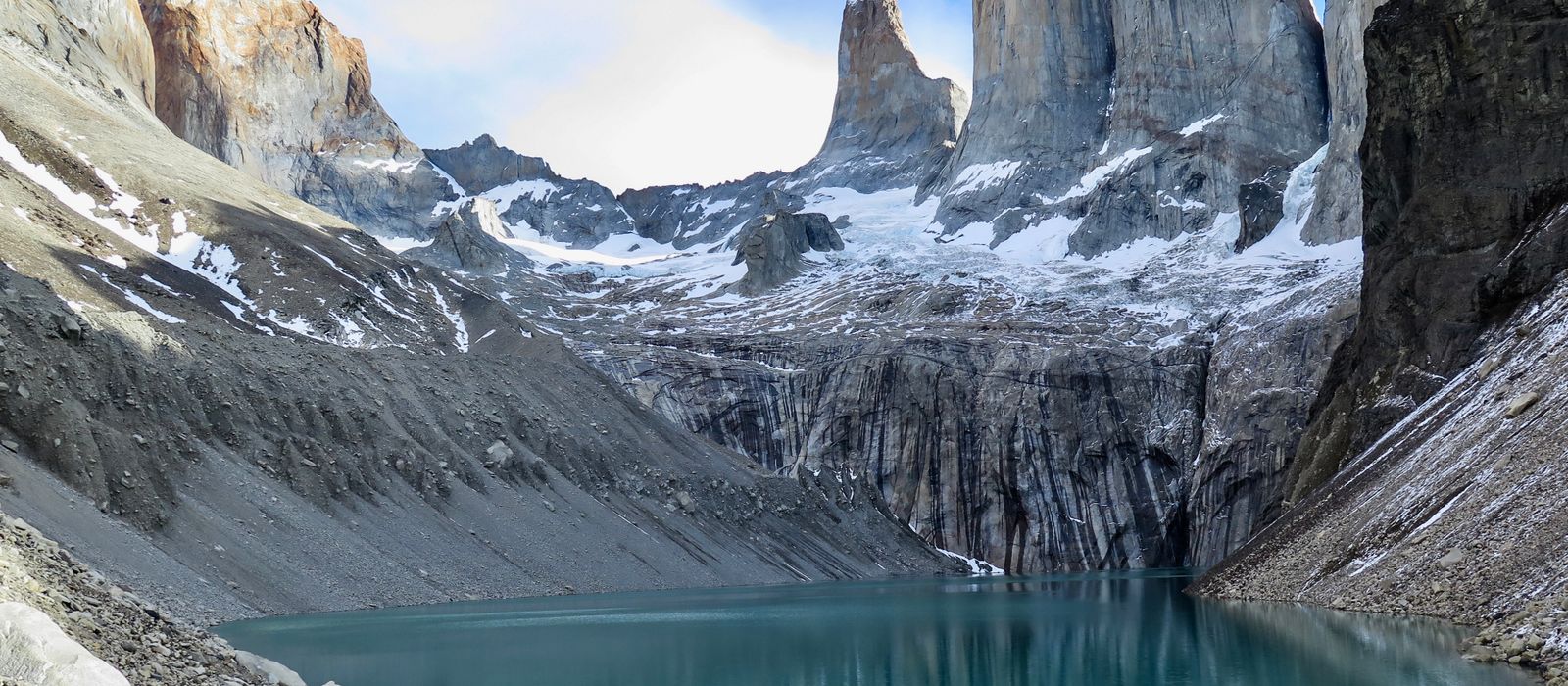
Grey Glacier is the one that reads most like an expedition day, because it is usually seen from a boat or a kayak among floating ice rather than from a trail. If a fjord cruise has already given you tidewater glaciers from a Zodiac, it will still feel distinct: this ice comes off a continental ice field rather than down a coastal valley.
The towers themselves are a full-day walk up the Ascencio valley with a steep boulder field at the end. It is the park's signature hike and not a gentle one.
Do You Have to Hike the W Trek to See Torres del Paine?
No. The W trek is a four to five day point-to-point route through the park's three main valleys, staying in refugios or camps. The same four headline sights can be seen as day hikes from a single lodge, which is how most travellers combining the park with a cruise do it.
The trade-off is straightforward. The W puts you in the landscape continuously and carries your own logistics with it. Lodge-based day hiking gives you a bed, a guide, hot food and the option of a short day when the wind gets up.
Where Do You Stay in Torres del Paine?
Three tiers: all-inclusive wilderness lodges inside or bordering the park, with private guided excursions; conventional hotels in and around Puerto Natales, an hour and a half out; and the refugio and camping network along the W and O routes for trekkers.
| Style | What it involves | Suits |
|---|---|---|
| All-inclusive wilderness lodge | Small properties in or bordering the park with private guided excursions, meals and transfers included | Travellers pairing the park with a cruise who want guiding handled |
| Hotel in Puerto Natales or nearby | Conventional hotels 1.5 to 2 hours from the park entrance, day trips bought separately | Flexible or shorter-budget trips willing to drive each day |
| Refugio and camping network | Connected backcountry huts and campsites along the W and O routes, booked separately and early | Trekkers walking the point-to-point routes |
Lodge and refugio inventory is small and sells out well ahead for December to February.
The all-inclusive properties price like safari lodges, for the same reason: everything arrives by road from a long way away, and the guiding is included rather than sold on. What a Patagonia expedition costs puts the land-extension figures next to the ship fares.
Availability is the real constraint. These are small properties in a short season, and the December to February window goes early.
How Does the Park Fit with a Fjord Cruise?
It attaches at Punta Arenas, which is both a fjord embarkation and disembarkation port and the road gateway to the park. A four-night fjord voyage plus three or four nights in the park is the standard pairing, and it usually continues across the border to Perito Moreno.
Sail first, then walk. Combining land and sea in Patagonia sets out the full circuit, day counts and the border crossing that follows.
What Wildlife Will You See in Torres del Paine?
Guanaco herds on the steppe are close to guaranteed, along with Andean condors on the updrafts, upland geese, caracaras and rheas. The park is also the best-known place in the world to look for wild pumas, which hunt those guanaco herds.
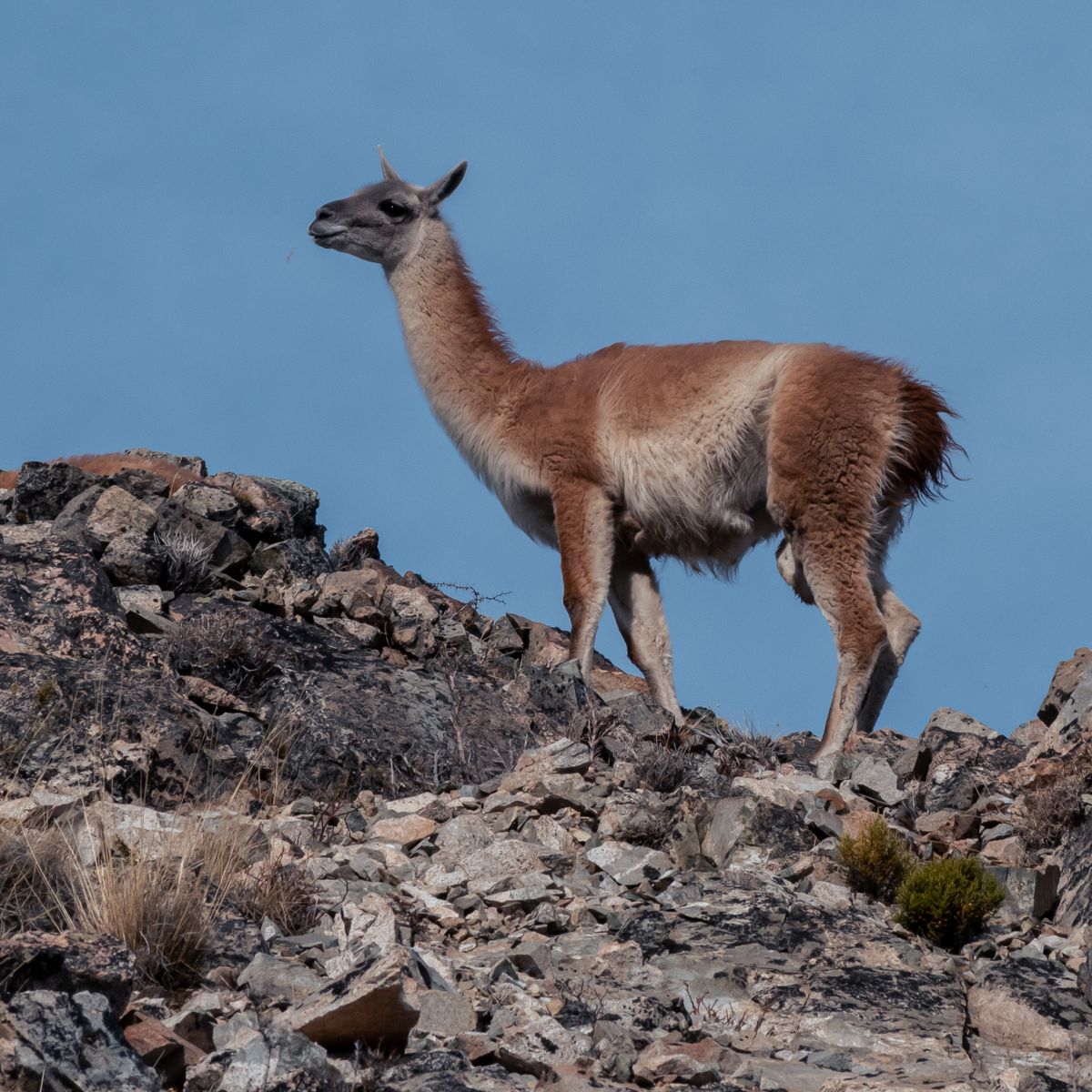
Puma sightings are a guided, early-and-late-in-the-day activity rather than something that happens on a hike, and there are field protocols that matter. See puma tracking in Patagonia and the wider Patagonia wildlife guide.
Have You Been to Torres del Paine?
No. Neither of us has been to Torres del Paine, and we have not stayed at any of the lodges or estancias described here. We have not walked the W, the towers or French Valley. We would rather say that plainly than write this page as though we had.
What sits behind this page is operator knowledge, current park information and what our clients report back. Our own southern experience is at the other end of the region: two embarkations from Ushuaia, a boat tour on the eastern Beagle Channel, and two Drake Passage crossings to Antarctica.
The full boundary of where we have and have not been is on where we've been.
Torres del Paine questions
How many days do you need in Torres del Paine?
Three to four nights covers the four headline areas as day hikes: the base of the towers, Los Cuernos and Lake Pehoé, French Valley and Grey Glacier. Trekkers walking the W need four to five days on the trail.
Can you visit Torres del Paine on a cruise?
Not directly. The park is inland with road access only, usually from Punta Arenas or Puerto Natales, so it is added to a fjord voyage as a land extension rather than visited from the ship.
When is the best time to visit Torres del Paine?
October to April. December to February brings the longest days and the strongest wind; November and March are calmer and quieter, and March adds autumn colour in the beech forest.
Is the hike to the base of the towers difficult?
It is a full day of roughly 18 to 20 kilometres with a steep boulder field in the final section. It is achievable for fit walkers but it is not a casual stroll, and wind can turn it back.