


Sapmi at a glance
- Who
- The Indigenous people of northern Norway, Sweden, Finland and northwest Russia
- Homeland
- Sapmi, which crosses all four national borders
- Languages
- Several Sami languages; North Sami is the most widely spoken
- Reindeer herding
- A protected Sami livelihood in Norway, still practised across the north
- The song
- Joik — luohti in North Sami; juoigan is the act of performing it
- Traditional dress
- Gakti, whose detail signals region and family
- Buying craft
- Look for the Sami Duodji certification mark
- Our own experience
- We have not visited a Sami community
Who Are the Sami People?
The Sami are the Indigenous people of the European Arctic, with communities across northern Norway, Sweden, Finland and northwest Russia. Their homeland, Sapmi, predates those borders. Norway has the largest Sami population, its own Sami parliament, and Sami as an official language in parts of the north.
That last point matters when you travel: this is a living contemporary culture with its own institutions, media and politics, not a heritage display. Many Sami work in ordinary modern jobs; some also herd reindeer, which in Norway is a legally protected Sami livelihood.
It is also a history with real damage in it. Norwegian assimilation policy suppressed Sami language and song for generations. Some of what a visitor now sees being taught to children was, within living memory, punished.
Why Is Reindeer Herding Central to Sami Life?
Herding shaped the calendar, the migration routes and the material culture: food, hides, tools, transport and trade all came from the herd. It still supports families across the northern plateaus, and it remains the clearest continuous link between contemporary Sami life and older ways of working the land.
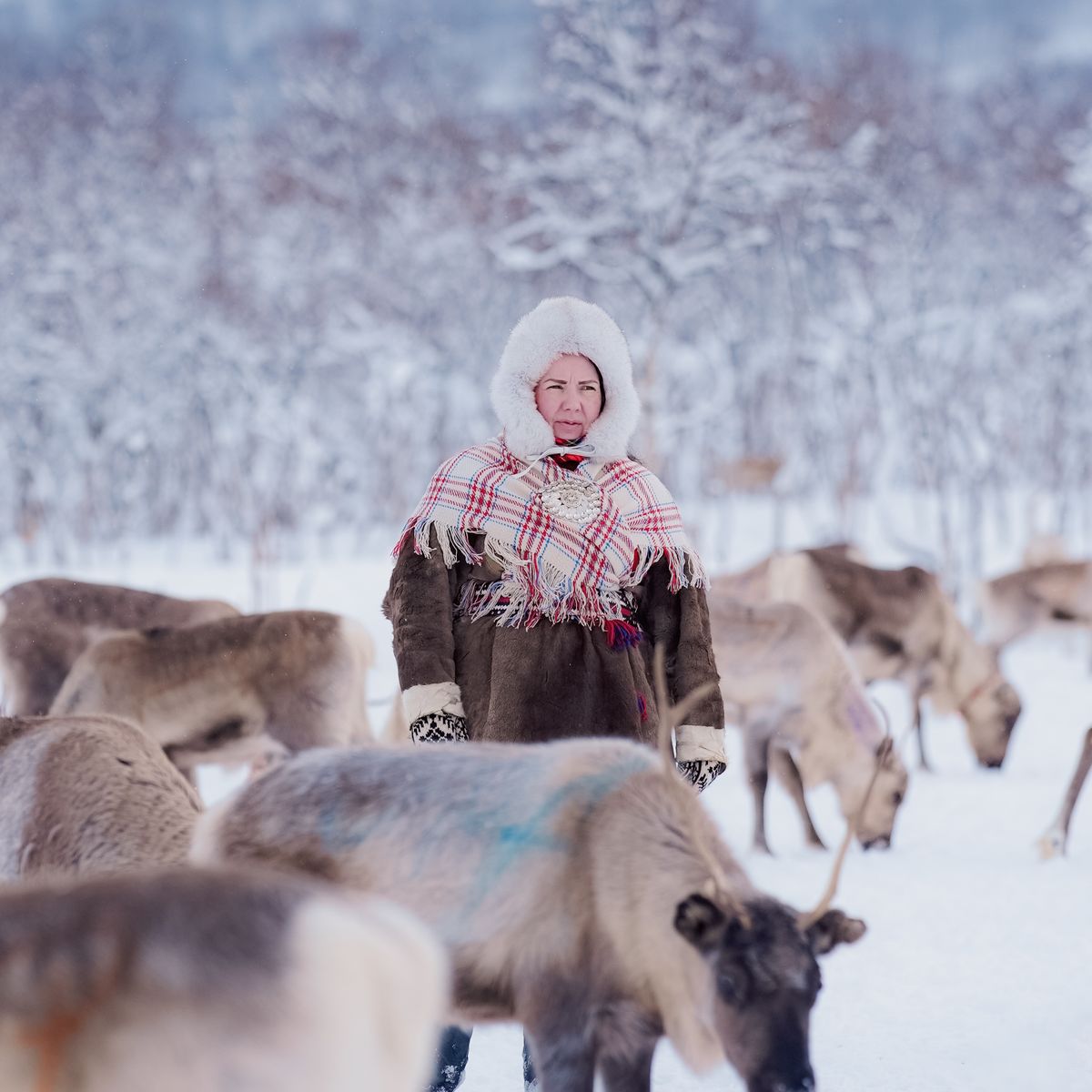
Herds move between inland winter pasture and coastal summer grazing, which is why a visit in February looks nothing like a visit in July. Modern herding uses snowmobiles, quad bikes and GPS collars, and that is not a loss of authenticity — it is how the work gets done now.
What Is a Joik?
Joik is the Sami vocal tradition — luohti in North Sami, with vuolle, vuelie and juoiggus in other Sami languages, and juoigan for the act of performing it. A joik does not describe its subject; it evokes it. You do not joik about a person, you joik the person, the animal or the place.
That distinction is the whole point, and it is why joik sits awkwardly inside Western ideas of song. There is often no fixed beginning or end, and a joik belongs to its subject rather than to a composer or performer.
It is an old tradition, and it is often described as one of the oldest song forms in Europe. We could not verify that superlative to a primary source, so we will put it the way the record supports: joik is documented from the earliest written accounts of Sami life and has been sung continuously since, despite long periods when it was actively suppressed.
One correction worth making because it appears in a lot of travel writing: gaddi is not a word for joik. It means shore or bank. If a brochure offers you "gaddi singing", the brochure has not checked.
What Are the Gakti and the Lavvu?
The gakti is Sami traditional dress: wool garments in strong colours with woven bands, embroidery and silverwork, whose details signal the wearer's region, family and sometimes marital status. The lavvu is the conical tent, built to shed high tundra wind around a central hearth.

| Element | What it is | What to understand |
|---|---|---|
| Reindeer herding | A protected Sami livelihood; herds move between inland winter and coastal summer pasture | Modern equipment is normal; the seasonal calendar shapes what you can see |
| Joik (luohti) | Vocal tradition that evokes a person, animal or place rather than describing it | The song belongs to its subject; juoigan is the act of performing it |
| Gakti | Traditional wool dress with woven bands, embroidery and silverwork | The details signal region and family; it is dress, not costume |
| Lavvu | Conical tent with a central hearth, built for high tundra wind | Still in working use; most cultural visits are hosted inside one |
| Duodji | The handicraft tradition: guksi cups, knives, antler and bone work, woven bands | The Sami Duodji mark certifies genuine Sami-made work |
| Bidos | Reindeer stew, traditionally served to guests and at celebrations | Usually part of a hosted visit; say in advance if you do not eat reindeer |
A gakti is not a costume, and it is read like a passport by people who know the codes — the cut of a collar or the pattern of a band places someone geographically. Buying and wearing one as a souvenir is not appreciated for that reason.
Lavvut are still used, particularly during herding work, and most cultural visits are hosted inside one, around a fire, which is where the conversation actually happens.
How Do You Choose an Ethical Sami Cultural Visit?
Choose Sami-owned and Sami-led. The good visits are hosted by a herding family on their own land, near Alta, Tromso, Karasjok or Kirkenes, and involve real conversation about modern Arctic life as well as tradition. The weak ones are staged folklore performances run by a third-party operator.
Useful questions: is the host Sami, is the enterprise Sami-owned, and does the money stay with the family? Groups should be small enough for conversation. A meal is usually part of it — bidos, a reindeer stew, is the traditional dish served to guests.
Photograph people only when you have asked. Our wider position on visiting Indigenous communities is set out in responsible travel, and the same principles apply in Greenland — see Greenlandic culture.
How Do You Buy Genuine Sami Craft?
Look for the Sami Duodji certification mark. It is a trademark owned by the Sami people and managed by the Saami Council, and it certifies that a handicraft was made by a Sami maker using traditional materials and forms. It exists precisely because imitation Sami-style souvenirs are widely sold to tourists.
Duodji is the craft tradition itself: the carved birch guksi cup, knives, bone and antler work, woven bands and wool textiles. Mass-produced imitations, often made far from Sapmi, take income from Sami makers and misrepresent the work. The mark is the reliable way to tell the difference 1.
A related mark, Sami Made, covers Sami-produced goods more broadly. Either one tells you the money is reaching the community whose culture you came to learn about 2.
Have You Visited a Sami Community?
No. Neither of us has visited a Sami community, attended a joik performance or spent time at a herding camp. Chris sailed the Norwegian coast in September 2024, which is not the same thing, and we will not present research as experience.
What we can do is tell you which operators work with Sami-owned hosts and which sell a staged version, because that is what our work involves. Our complete sailed-and-visited record is on where we've been.
Sami culture questions
Who are the Sami people?
The Indigenous people of the European Arctic, living across northern Norway, Sweden, Finland and northwest Russia in a homeland called Sapmi. Norway has the largest Sami population and its own Sami parliament.
What is a joik?
The Sami vocal tradition, called luohti in North Sami and juoigan when referring to the act of performing it. A joik evokes its subject — a person, an animal, a place — rather than telling a story about it.
Is 'Gaddi' another word for joik?
No. Gaddi means shore or bank. It appears in some travel writing as a synonym for joik, and it is incorrect. The correct terms are luohti, or vuolle, vuelie and juoiggus in other Sami languages.
What is the Sami Duodji trademark?
A certification mark owned by the Sami people and managed by the Saami Council, showing that a handicraft was made by a Sami maker in traditional materials and forms. It distinguishes genuine duodji from imitations sold to tourists.
Is it appropriate to visit a Sami community as a tourist?
Yes, when the visit is Sami-owned and Sami-led, groups are small and photography is asked about first. Staged folklore shows run by outside operators are a different product and worth avoiding.
Can tourists wear a gakti?
It is not appropriate. The gakti carries specific markers of region, family and status, and wearing one as a visitor is read as appropriation rather than appreciation.
More reading
Responsible travel
How we approach visits to Indigenous communities.
Greenlandic culture
The same questions, in another Arctic homeland.
Tromso, the Arctic gateway
The usual base for cultural visits in the north.
When to cruise Norway
Why a winter visit and a summer visit differ.
The coastal voyage explained
The route that reaches the Sami north.