

Cape Horn at a glance
- Where
- Hermite Islands, southern Tierra del Fuego, Chile
- Landing site
- San Martin Cove, a boulder beach in the island's lee
- The climb
- A 160-step wooden staircase to the headland plateau
- On top
- Albatross monument, Chilean Navy lighthouse, Stella Maris chapel
- Protection
- Cape Horn National Park, a UNESCO biosphere reserve
- Landing odds
- Weather-dependent; scenic sailing is the fallback
- Our fee
- None. Pricing matches booking direct
What and Where Is Cape Horn?
Cape Horn is the headland at the southern end of Hornos Island in Chile's Hermite Islands, the southernmost point of the Tierra del Fuego archipelago. It marks the traditional boundary between the Atlantic and the Pacific, and for four centuries it was the only sea route between them.
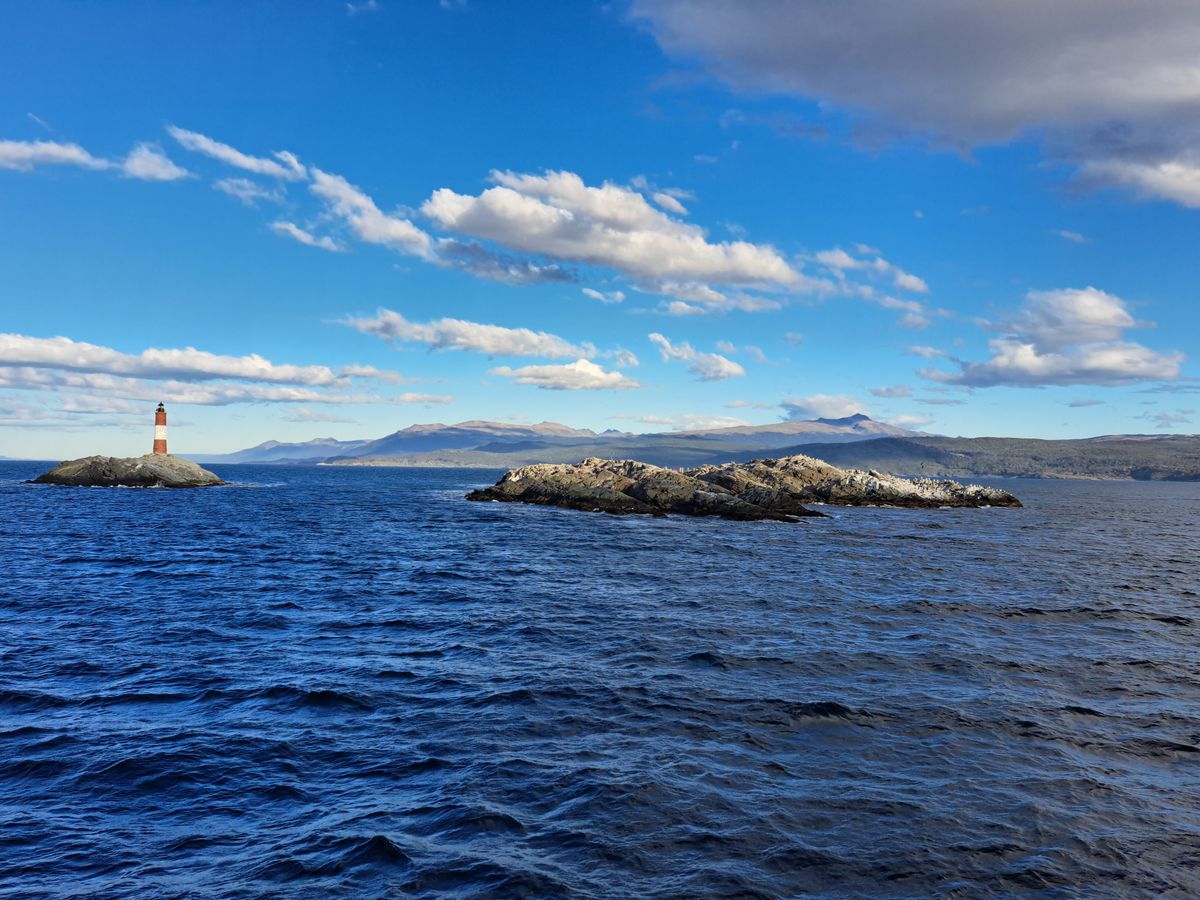
It is not the southernmost point of South America in the strict sense — the Diego Ramirez islands lie further south — but it is the one that matters to sailors, because rounding it meant clearing the continent.
Understanding that history is most of the point of going. The Horn's reputation was built on square-riggers beating west against the prevailing wind for weeks, and the monument on the plateau exists because so many of them did not clear it.
What Happens During a Cape Horn Landing?
The ship anchors in the island's lee and launches Zodiacs to a boulder beach at San Martin Cove. From there a wooden staircase of roughly 160 steps climbs the sea cliff to the exposed plateau, where the albatross monument, the Chilean Navy lighthouse and the Stella Maris chapel sit within a short walk of each other.
| Stage | What to expect |
|---|---|
| Anchoring | Ship anchors in the lee of Hornos Island; Navy clearance confirmed that morning |
| Zodiac transfer | Wet landing bow-on to a boulder beach at San Martin Cove |
| The staircase | Roughly 160 wooden steps up the sea cliff, exposed to wind at the top |
| The plateau | Boardwalk to the albatross monument, lighthouse and Stella Maris chapel |
| If conditions fail | Close-range scenic sailing past the headland instead of a landing |
Landings are assessed on the day by the Chilean Navy and the ship's captain.
The whole visit usually runs an hour or two. The plateau is boardwalked, and you are asked to stay on the boards to protect the sub-Antarctic mosses and lichens, which recover extremely slowly from footfall.
The lighthouse is staffed. A Chilean Navy keeper lives there with their family on a year-long posting, and on many calls one of them is at the door.
What Is the Albatross Monument?
A steel sculpture on the headland plateau formed from two facing plates that leave the silhouette of a wandering albatross in the gap between them. It commemorates the sailors who died attempting to round the Horn, and a plaque beside it carries a poem written from the albatross's perspective.
It is a good piece of public sculpture in a place with almost no other human mark, and it works precisely because it is negative space: the bird is the hole in the steel, filled by whatever the sky is doing that day.
How Likely Is the Landing to Happen?
Never guaranteed, and no operator should suggest otherwise. The Chilean Navy and the ship's captain assess swell and wind on the morning, and if the cove is unworkable the ship substitutes a close-range scenic sail past the headland instead. Plenty of voyages see Cape Horn without setting foot on it.
The failure mode is swell into San Martin Cove rather than wind on the plateau. A Zodiac has to land bow-on onto boulders, and a metre of surge makes that unsafe regardless of how pleasant the day looks from the bridge.
Book the itinerary for the whole route rather than for this one hour. If the landing happens it is memorable; if it does not, the voyage should still have been worth taking.
What Are the Rules Ashore?
Cape Horn National Park is a UNESCO biosphere reserve, and visits are tightly managed. Guests stay on the marked wooden boardwalks, take nothing and leave nothing, and follow the naturalist's briefing on the plateau. Landing permits are limited, which is part of why small ships dominate the route.
The vegetation is the reason. Sub-Antarctic cushion plants and lichen mats here take decades to recover from a single trampled line, and the boardwalk exists to concentrate all that wear onto timber instead.
Which Ships Can Land at Cape Horn?
Small expedition vessels — broadly under 200 guests — holding the specific Chilean permits, with their own Zodiac fleet and enough operational flexibility to wait out a swell. Large cruise ships sail past the headland at a distance and do not land guests, whatever the brochure photograph implies.
Guest numbers also decide whether everyone gets ashore inside the weather window. A ship of 180 can cycle its Zodiacs through a two-hour window; a ship of 900 cannot, so it does not try.
Patagonia cruise types sets out which categories hold landing permits, and the Chilean fjords covers the rest of the route that a Cape Horn call sits inside.
Have You Landed at Cape Horn Yourselves?
No. Neither of us has landed at Cape Horn or sailed the Chilean side of Tierra del Fuego. We have crossed the Drake Passage twice, southbound and northbound from Ushuaia, which passes to the east of the Horn, but that is not the same as calling at it.
What is on this page is advisor knowledge rather than our own reporting: operator itineraries, the Chilean park rules and what clients tell us on their return. The full list of where we have and have not been is on where we've been.
Cape Horn questions
Can you actually land at Cape Horn?
Yes, on small expedition ships holding Chilean permits, by Zodiac into San Martin Cove followed by a climb of about 160 wooden steps. Landings depend entirely on swell and wind on the day.
Is Cape Horn the southernmost point of South America?
It is the southernmost headland of the Tierra del Fuego archipelago and the traditional boundary between the Atlantic and Pacific. The Diego Ramirez islands lie further south but hold no comparable significance for sailors.
What is at the top of Cape Horn?
A steel albatross monument commemorating sailors lost rounding the Horn, an active Chilean Navy lighthouse with a resident keeper and family, and the small wooden Stella Maris chapel, all linked by boardwalk.
Why do Cape Horn landings get cancelled?
Because Zodiacs have to land bow-on onto boulders at San Martin Cove, and even a modest swell makes that unsafe. Ships then substitute a close scenic sail past the headland.
Do large cruise ships stop at Cape Horn?
They sail past it at a distance. They do not hold landing permits and could not cycle enough Zodiacs through a short weather window even if they did.