


Norway packing, in short
- The real enemy
- Rain and wind, not cold, on the summer coast
- Summer coast
- Roughly 15C to 22C / 59F to 72F in July and August
- September
- Roughly 5C to 12C / 41F to 54F; a warm layer starts to matter
- Winter coast
- Roughly minus 5C to 2C / 23F to 35F; full winter kit
- Non-negotiable
- Waterproof shell jacket and waterproof over-trousers
- Footwear
- Waterproof boots with lug soles, plus soft-soled shoes for indoors
- Leave at home
- Cotton base layers, heavy parkas in midsummer, formalwear
Do People Overpack for Norway?
Consistently, and in the wrong direction. Travellers read the latitude, picture the Arctic and pack heavy insulation for a summer coast that often sits in the high teens Celsius. The layer that gets used every single day is the waterproof shell, and it is the one people economise on.
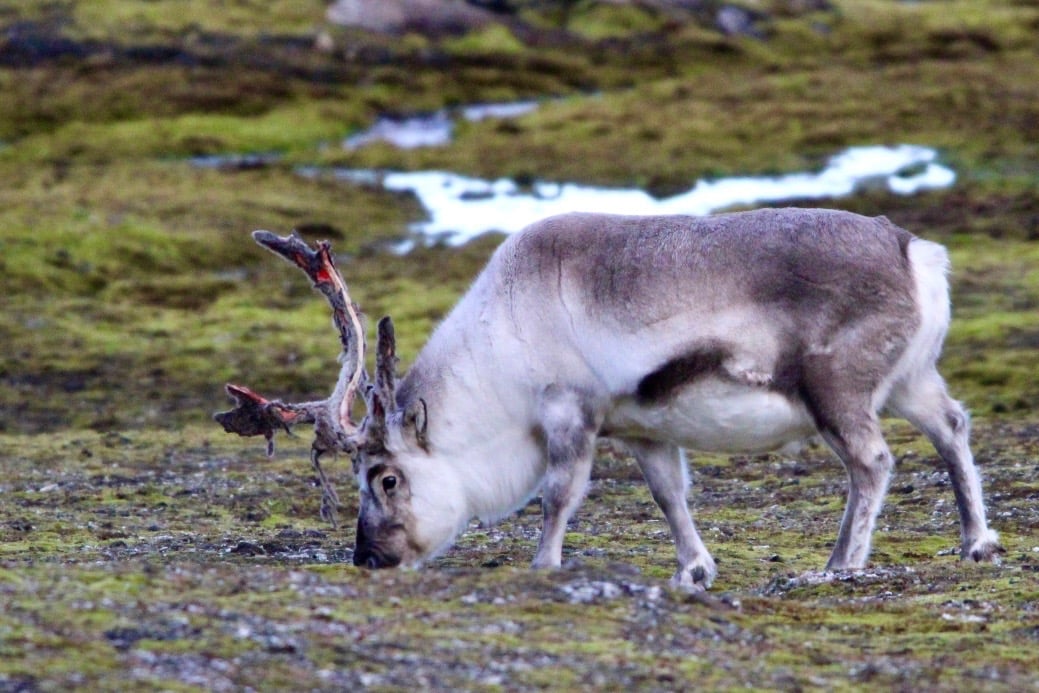
We make the same point about Greenland, and for the same reason. Erika hiked in East Greenland in July in shorts and a long-sleeved shirt — well north of anywhere a Norway coastal voyage goes. The Gulf Stream keeps the Norwegian coast milder still. Our Greenland packing list makes the case in more detail.
The honest exception is winter. A November-to-March voyage, standing still on deck for the aurora or a whale sighting, is genuinely cold and needs proper insulation. It is the summer and shoulder-season traveller who is carrying a suitcase of unused fleece.
What Is the Three-Layer System for Norway?
A base layer of merino or synthetic thermal to move moisture off your skin, a mid layer of fleece or light down to hold warmth, and an outer shell that is fully windproof and waterproof. You add and drop the middle layer through the day; the outer stays in the daypack whatever the forecast says.
| Layer or item | What to bring | Why |
|---|---|---|
| Base layer | Two or three sets of merino or synthetic thermal tops and bottoms; no cotton | Moves moisture off the skin; cotton stays wet and chills you |
| Mid layer | Fleece jacket, wool sweater or light down jacket | The layer you add and drop as the day changes |
| Outer shell | Fully waterproof, windproof jacket with hood, plus waterproof over-trousers | Rain is the daily reality on this coast, and squalls arrive fast |
| Boots | Waterproof hiking boots with rubber lug soles | Wet decks, wet rock and wet cobbles; grip beats insulation in summer |
| Indoor shoes | Comfortable soft-soled shoes or trainers | Ships are warm, and boots are miserable at dinner |
| Accessories | Beanie, neck gaiter, touchscreen gloves, polarised sunglasses, 20-litre dry bag | Wind, glare and spray; the dry bag protects camera and phone ashore |
| Winter additions | Insulated parka, insulated boots, mitts over liner gloves, hand warmers | Standing still on deck for aurora or whales in sub-zero wind |
Two or three base-layer sets are enough for a week, because merino can be worn several days without complaint. Avoid cotton against the skin: once wet it stays wet and pulls heat out of you, which is exactly the failure mode on a rainy deck.
How Waterproof Does Your Outer Layer Need to Be?
Genuinely waterproof, not water-resistant. Coastal Norway gets frequent rain, and squalls come over fjord walls with very little warning. That means a taped-seam shell jacket with a hood, and waterproof over-trousers you can pull on over what you are already wearing.
Over-trousers are the item people leave behind and then wish they had. They weigh almost nothing, live in the bottom of a daypack, and turn a written-off afternoon into a normal one. A 20-litre dry bag for camera and phone is the other small item that earns its space.
What Footwear Do You Need in Norway?
Waterproof hiking boots with rubber lug soles, for wet rock, wet cobbles and gangways, plus a comfortable soft-soled pair for indoors. On village streets and stone stairways like Reinebringen, grip matters more than ankle support or insulation.
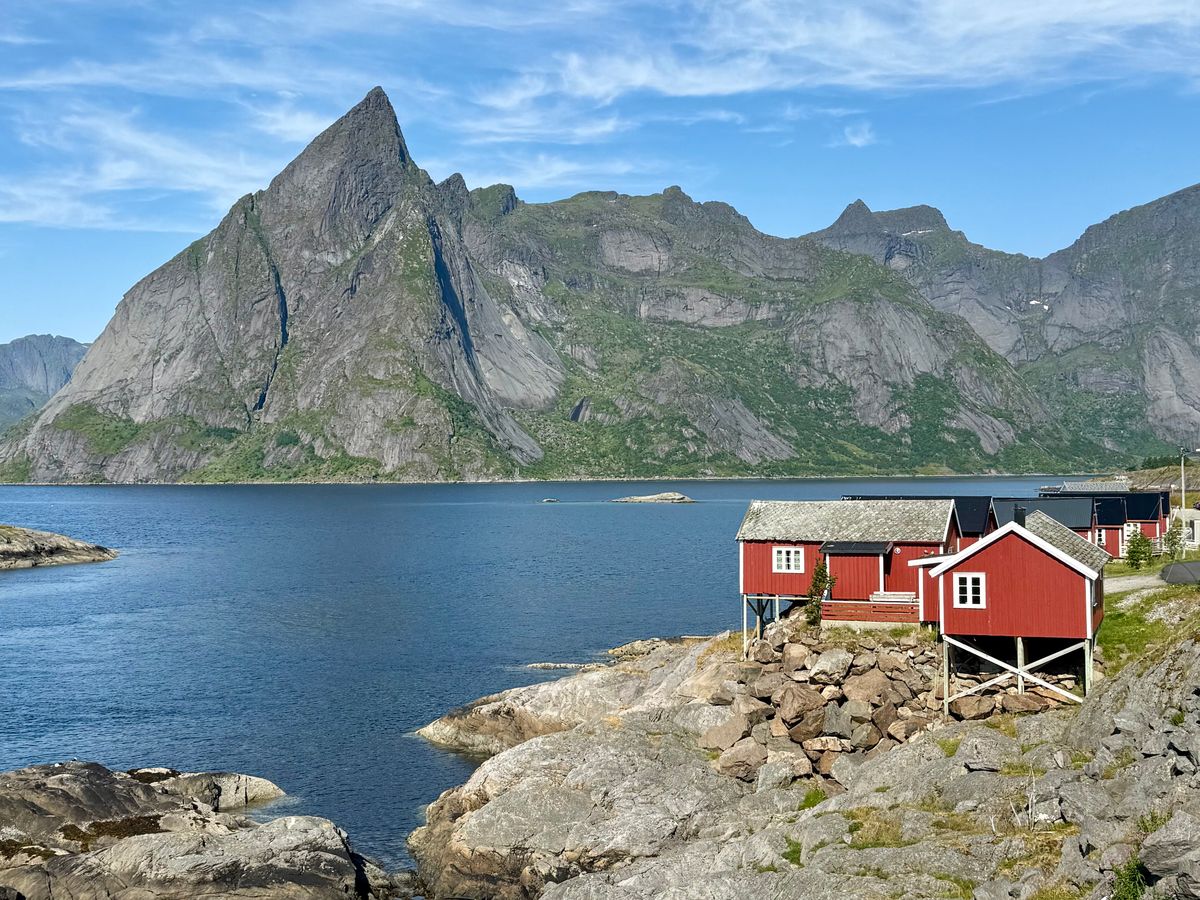
If your voyage includes Zodiac landings, check whether the ship loans rubber boots — most expedition operators do, which saves packing a second heavy pair. On a coastal-service voyage there are no Zodiac landings, so ordinary walking boots are the right answer.
What Accessories Are Worth the Space?
A fleece beanie, a neck gaiter, gloves you can use a touchscreen through, and polarised sunglasses for the glare off water and snow. In winter add warmer mitts over liner gloves. A small daypack with a rain cover carries the whole lot ashore.
Sunglasses surprise people on a northern trip, but glare off water, wet rock and snow is constant, and in summer the sun simply does not set. A power bank is worth having too: cold flattens phone batteries fast on an aurora deck.
What Camera Gear Should You Bring?
A weather-sealed body if you have one, a wide lens for fjords and a longer lens for eagles and whales. In the aurora season, a fast lens of f/2.8 or better and a spare battery matter more than a long zoom. A tripod is useful ashore and largely useless on a moving ship.
Bring more memory and battery than you expect to need, and something to dry the front element — spray and drizzle on the lens is the most common reason a good frame is ruined here.
How Does Packing Change by Season?
Summer: light layers, full rain kit, sunglasses, no heavy parka. September: add a proper mid layer and warmer gloves, since Chris's mid-September voyage ran from about 5C in the north to mild farmed coastline in the south. Winter: insulated parka, insulated boots, mitts, and a hat that covers your ears.
Season by season detail on what you are packing for is in when to cruise Norway. If your voyage continues to Svalbard, the requirement steps up again — see Norway to Svalbard voyages.
Norway packing questions
What should you wear on a Norway cruise in summer?
Light layers with a genuinely waterproof shell. Coastal temperatures in July and August often run 15C to 22C, or 59F to 72F, so a heavy parka is unnecessary. Rain gear, not insulation, is what you will use daily.
Do you need a heavy parka for Norway?
Only in the winter and polar-night season, or if your voyage continues to Svalbard. For a summer or early-autumn coastal voyage, a fleece or light down mid layer under a waterproof shell is enough.
What kind of boots do you need in Norway?
Waterproof hiking boots with rubber lug soles for wet decks, wet rock and village cobbles. Bring soft-soled shoes for indoors. Rubber landing boots are usually loaned by expedition ships.
Do you need waterproof trousers in Norway?
Yes. Rain is frequent along the coast and squalls arrive quickly, so waterproof over-trousers that pull on over what you are wearing are worth the small amount of space they take.
What should you not bring to Norway?
Cotton base layers, a heavy expedition parka in midsummer, formalwear, and a second or third fleece. Ships on this coast are informal, and the layers people actually use are few.
More on Norway
Greenland packing list
The same overpacking point, further north.
When to cruise Norway
What conditions you are actually packing for.
Norway to Svalbard voyages
Where the kit requirement steps up.
Winter whale watching
Dressing for standing still on a cold deck.
Expedition packing, generally
The system we use for every polar region.