
Experiences
Hiking and Snowshoeing.
Stepping ashore is the defining moment of an expedition day — the guide decides how far you go, and the rules of the place decide the rest.
Expedition ships run shore walks on nearly every landing, graded into tiers from easy coastal strolls to ridge and summit climbs, and snowshoes are provided free when deep snow covers the ground. Guests bring their own boots, base layers and a waterproof shell; the ship supplies snowshoes, poles and often insulated rubber boots for the wet landing itself. Which walk you get depends on the site, the season and the rules governing it.
What it was like for us.
In Southeast Greenland aboard the National Geographic Resolution, we went ashore for backcountry hikes with the expedition team at Schested Fjord — mosses, tundra flowers, ptarmigans and snow buntings in rocky valleys, and almost no sound. We logged what we found on iNaturalist; nobody had recorded a single species observation in those valleys before.
In the Galápagos aboard the Santa Cruz II we hiked at sunrise on Rábida, climbed the 372 steps to the summit at Bartolomé for the view over Pinnacle Rock, and climbed the steep Prince Philip's Steps on Genovesa to a plateau thick with nesting boobies and frigate birds — all on marked trails with a naturalist guide, as the park requires.
In the Scottish Hebrides aboard the Spitsbergen, we hiked the Fisherman's Trail on Arran with Brodick Castle and the Highland peaks behind us, walked the shores of Loch Scavaig under the Cuillins on Skye, and — on a landing that isn't guaranteed even when the ship reaches the anchorage — climbed from sea level to the stone survey marker on Hirta at St Kilda.
At Churchill, on the day the tide was fully out, we walked the flats to reach the wreck of the Ithaca and stood beside it — a hike rather than a Zodiac outing, and one of the best ways to see that stretch of coast.
In Antarctica aboard the Greg Mortimer, hikers and kayakers went ashore separately from the Zodiac-cruising groups at Paradise Harbour, and at Deception Island we hiked Telefon Bay for a beach walk after the sobering walk through the old whaling station remains at Whalers Bay.
What's provided, and what you bring yourself.
Most polar operators — Oceanwide Expeditions, Quark Expeditions, Aurora Expeditions, Lindblad Expeditions and HX among them — carry guest snowshoes (typically lightweight aluminium-frame models with adjustable bindings) and collapsible trekking poles at no extra cost, plus insulated rubber boots for wet Zodiac landings on many ships. What you bring yourself: a waterproof shell jacket and trousers, moisture-wicking base layers, thermal socks, glove liners, sunglasses, sun protection and a 20–30 litre waterproof daypack. On dry-land Arctic or sub-Antarctic trails where rubber boots aren't required, ankle-high hiking boots with real tread matter.
What it requires of you.
Moderate fitness — the strength and balance to walk two to three hours on uneven, snowy or sloping ground — rather than technical climbing skill. No prior snowshoeing experience is expected; guides run a short briefing on technique before the first outing. Groups split by pace and ambition, so a low-impact photography walk and a challenging ridge climb usually leave from the same landing site at the same time.
Which regions it works in — and the rules that shape it.
Antarctica, the Arctic (Svalbard, Greenland, Arctic Canada) and the Galápagos all offer hiking, but the rules differ sharply by region, and snowshoeing itself is seasonal: it's the main activity on early-season sailings when snow still covers the landing sites — November to December in Antarctica, May to June in Svalbard and East Greenland — and gives way entirely to standard hiking once the snow melts to bare rock and tundra later in the season.
| Region | What governs it |
|---|---|
| Antarctica (IAATO) | No more than 100 passengers ashore at one landing site at a time — larger ships rotate groups between hiking and Zodiac cruising. Minimum 5 metres from wildlife, more around fur seals, nesting skuas and giant petrels. Boots, poles, snowshoes and daypacks are inspected and washed in a biocide solution before the first landing and between every site. Nothing is left behind, nothing collected, and sitting or kneeling on bare ground or moss is not allowed. |
| Arctic and sub-Arctic (AECO and Svalbard law) | Where polar bears may be present, the expedition team runs a Zodiac reconnaissance and posts armed perimeter guards before anyone steps ashore. Norwegian law sets a minimum distance of 300 metres from a polar bear in Svalbard, rising to 500 metres from 1 March to 30 June — if a bear is seen near a landing, the outing ends immediately and everyone returns to the ship [1](https://www.sysselmesteren.no/en/news/2024/12/new-environmental-regulations-enters-into-force-on-1-january/). Hikers keep to marked paths or walk single file across tundra to limit erosion of the permafrost. |
| Galápagos National Park | Landings are restricted to marked trails maintained by the park service — no off-trail walking. A certified naturalist guide must accompany every group, at a maximum ratio of one guide to sixteen passengers (tighter on some luxury ships, such as Silversea's one-to-ten). Trekking poles need rubber tips; bare metal spikes are banned to protect lava fields and nesting habitat. |
Weather has the final say everywhere. High winds, heavy swell, katabatic gusts, fog or packed sea ice can cancel a Zodiac transfer outright, and the expedition leader adjusts the day in real time rather than sticking to a printed itinerary.
One name in this space no longer operates independently: Albatros Expeditions merged with Polar Latitudes in 2025.
More to read.
This page is the cross-region view. For the regional detail, see Arctic kayaking and camping in Antarctica. Related experiences: shore landings, Zodiac cruising and wildlife viewing. Back to all experiences.
Written by your expedition advisor
Chris Commisso · Expedition Expert
Signature Travel Expert
Chris and Erika have sailed ten expedition voyages and toured seven more expedition ships. Favorite explorations so far: Antarctica, Svalbard, Greenland, Iceland, Norway, Alaska, the Galápagos, the Scottish Hebrides, Churchill and French Polynesia.
Last updated .
From our journal
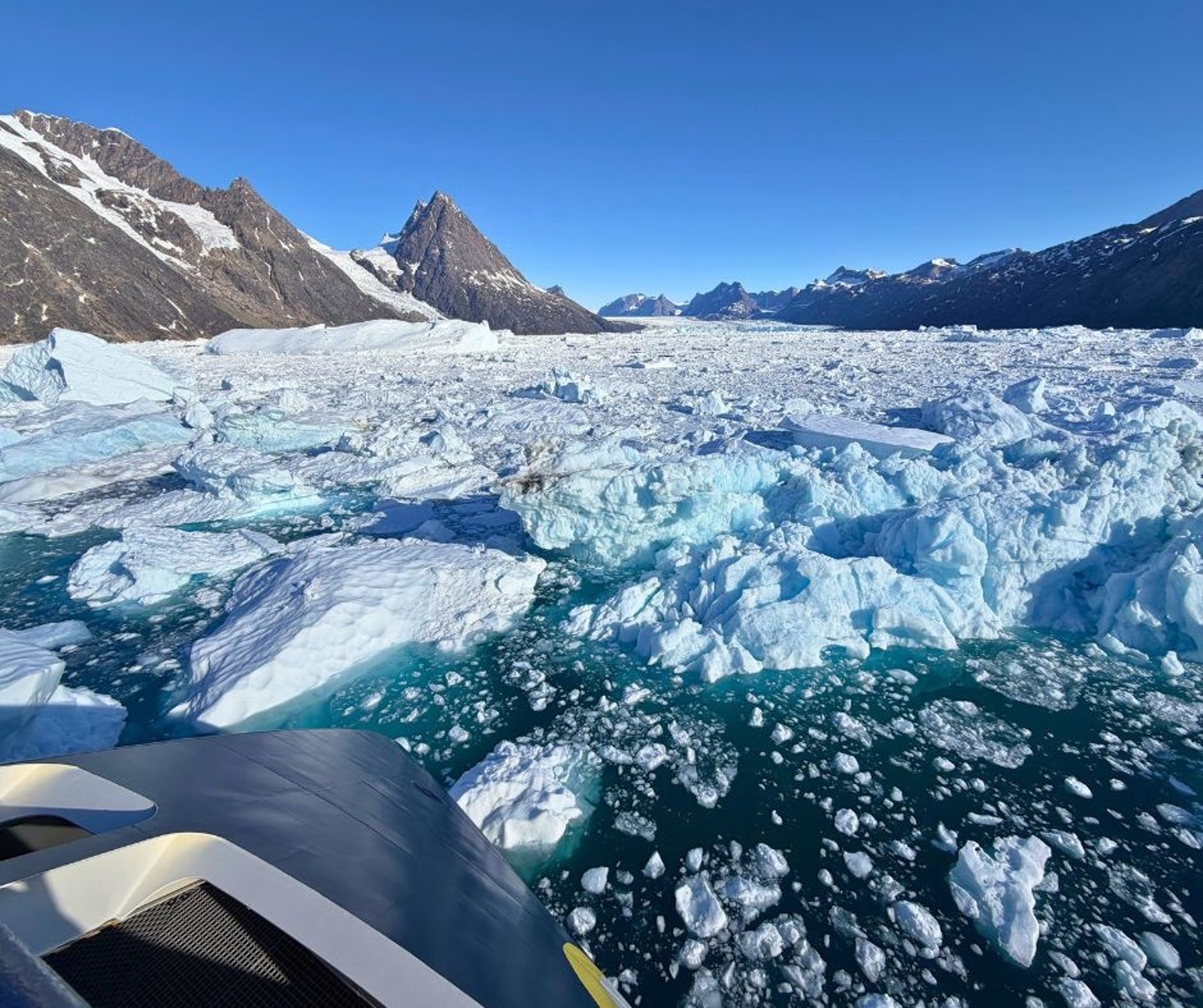
Ten Days in Southeast Greenland Aboard the National Geographic Resolution
5–14 July 2026 · Lindblad Expeditions
In July 2026 we sailed Lindblad's National Geographic Resolution round trip from Reykjavík on a new itinerary into the fjords of Southeast Greenland, some of them mapped as we sailed. We saw three polar bears, four sperm whales and about thirty pilot whales. A guest's medical emergency sent us north to Kulusuk, and gave us an unplanned day in Tasiilaq.
Want a voyage built around walking?
Tell us your fitness level and pace and we'll match the ship and itinerary to it.
Request a Quote