
French Polynesia guide
French Polynesia Wildlife Guide
This is a marine destination first. Blacktip and grey reef sharks, stingrays and eagle rays, green and hawksbill turtles and a great deal of reef fish are all common, most of it visible while snorkelling in shallow water. Humpback whales visit in the austral winter. Land wildlife is limited: these are young, remote islands with few native land animals.
In the water
Reef sharks are the encounter people ask about most. Blacktips patrol lagoon shallows and are usually the first thing a nervous snorkeller sees; grey reef sharks gather in the atoll passes where current concentrates food. Neither behaves aggressively toward snorkellers under ordinary conditions, and guides brief you properly before you get in.
Rays are the other constant. Stingrays over sand flats and eagle rays along the reef edge. Some Society Island sites feed rays to draw them in for visitors; wild encounters in the passes and along the drop-offs are less staged and, to our mind, better.
Turtles — green and hawksbill — are regular rather than rare, and reef fish are present in a density that surprises first-time visitors: parrotfish, wrasse, butterflyfish, triggerfish, and Napoleon wrasse where the reef is healthy.
Whales and dolphins
Humpback whales come north from Antarctic feeding grounds to breed and calve in warm Polynesian water in the austral winter, roughly July to November. Spinner dolphins are resident around several islands and often meet boats in the mornings.
Where swimming with humpbacks is permitted at all it is regulated, with licensed operators, limits on group size and required distances. We explain what a specific island and operator actually allow rather than repeating what a brochure implies. More in our guide to humpback whales.
Birds and land life
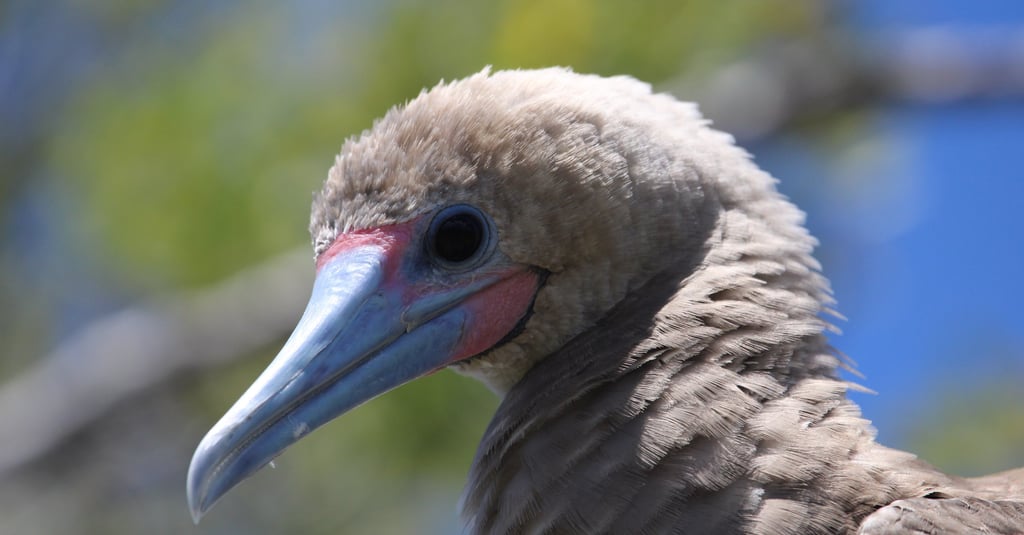
Seabirds are everywhere: terns, noddies, boobies, frigatebirds and tropicbirds, with significant colonies on uninhabited motu across the Tuamotus. Several endemic landbirds survive on individual islands and are of real interest to birders, though most are hard to see on a cruise schedule.
There are no large native land mammals. Anyone arriving expecting an African or Galápagos-style land wildlife programme will be disappointed, and it is better to know that before booking. With one exception, below.
Bird Island, Tikehau: the exception
Motu Puarua — Bird Island — is a small coral islet in the Tikehau atoll, about forty minutes by boat from the main village and resort side. We made the crossing on a recent visit and it is the closest thing to a Galápagos-style landing we have found in the South Pacific: thousands of nesting seabirds that are not merely tolerant of people but genuinely unafraid.
Tikehau means "Peaceful Landing" in the local dialect, and the atoll has a long conservation pedigree. Polynesian ancestors placed these motu under rahui — a traditional restriction on harvesting — and that historical protection is likely why the birds remain so fearless. Jacques Cousteau visited the lagoon in 1987 and is said to have called it the most fish-rich atoll in French Polynesia.
The birds of Motu Puarua
The island is famous above all for its Brown and Black Noddies, which coat the pisonia trees and fill the sky in every direction. Red-footed Boobies and White Terns nest alongside them. Because the birds have no fear of people, you photograph them at close range with an ordinary lens — though if you own a long lens, bring it.
The ground has its own wildlife. Toward the wet, marshy centre of the island the canopy gives way to the domain of large Brown Land Crabs, present in a density we have not seen anywhere else. In the shallows off the beach we watched a juvenile blacktip reef shark, barely eighteen inches long, working water clear enough to read by.
Visiting Bird Island responsibly
Bird Island is treated as a sanctuary, with local regulation and the rahui tradition limiting the impact of visits on the nesting birds and the land crabs. This is not a beach you wander onto; you visit with a guide.
If birding or nature photography is a priority, book the excursion through a responsible local operator who works within those rules — keeping distance from active nests, staying off sensitive ground, and limiting group size. We help our travelers choose operators who take that seriously, because the fearlessness of the birds is exactly what careless tourism destroys first.
Honest expectations
Everything here is wild and nothing is scheduled. Sharks, rays and turtles are likely rather than certain, and whales are seasonal and mobile. A good expedition team improves your odds considerably by reading the tide and the weather; nobody can promise a sighting.
Common questions
Are the sharks dangerous?
Blacktip and grey reef sharks are the species you will normally encounter, and neither is considered a threat to snorkellers or divers behaving sensibly. Follow the guide's briefing, do not touch or feed anything, and treat a strong current with more respect than the wildlife.
Can you see wildlife without getting in the water?
Some. Seabirds, dolphins from the bow, whales in season, and rays visible from a boat over clear sand. Bird Island in Tikehau is the great exception — a dry-foot landing among thousands of unafraid nesting seabirds. But the great majority of what makes this destination remarkable is below the surface, so a traveler who will not snorkel is choosing the wrong place.
How do you visit Bird Island in Tikehau?
By boat from the main part of the atoll, roughly forty minutes each way, with a local guide. The islet is treated as a sanctuary under local regulation and the Polynesian rahui tradition, so visits go through responsible operators who protect the nesting noddies, boobies and terns — and the land crabs underfoot. We arrange this as part of a Tikehau stay.
Related guides
Written by your expedition advisor

Chris Commisso · Expedition Expert
Signature Travel Expert
Chris and Erika have sailed ten expedition voyages and toured seven more expedition ships. Favorite explorations so far: Antarctica, Svalbard, Greenland, Iceland, Norway, Alaska, the Galápagos, the Scottish Hebrides, Churchill and French Polynesia.
Last updated .